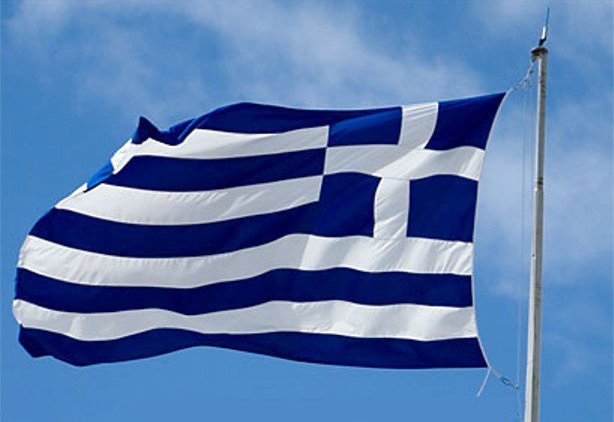
The Greek Flag Code consists of some strict rules which must be followed to the letter as a sign of respect for the Flag. Honor to the Flag reflects honor to the Nation and honor to ourselves.
1. The Greek Flag represents our Nation, our Motherland and our state entity. In case of war the flag must be guarded and protected even with our lives. A typical example of this is the fact that when the Germans occupied Athens on 27 April 1941, the Standard Bearer on the Parthenon, the 17-year-old Kostas Koukkidis wearing the uniform of the Greek youth of the time, rather than handing it over to the Germans, submitted her, and after wrapping her around him, fell with her from the sacred rock of the Acropolis, in the void.
2. In case a flag is worn, then it burns, but it is NEVER thrown in the trash. Only ashes can be thrown in the garbage.
3. The Flag is used only in pride of place on the web. Any other use is prohibited. (B.C. hanging curtain, decorative, garment, etc)
4. During the raising of the Greek Flag we all stand at attention. The Ensign rises quickly. During the Raising of the Flag, the National Anthem is sung.
5. If there are several flags then the Greek flag must be at the same height, or higher than the rest.
6. At the flag submission we stand at attention. The Ensign slows down.
7. During the day of mourning the Flag is flown at half-mast and after the flag-bearer finishes flying, then it proceeds to subduction until the middle of the tissue.
8. It is FORBIDDEN for the Greek Flag to touch the ground for any reason. In case the flag is too big, the hoisting must be done by the flag bearer and with the help of the bystander. The same must be done when lowering the Flag.

 160 black and white and color photos testify to his daily life in Thessaloniki 1900 through its people.