|
|
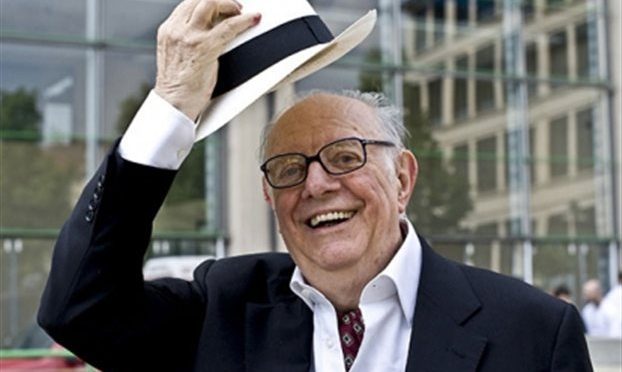
"Step, step…». The last words of the Euripidean dance "Iphigenia in the Land of the Bulls" produced by the State Theater of Northern Greece. Darkness follows in the Epidaurus orchestra and then the applause from…
 ethnos.gr|By Pegasus Interactive |

|
|
"Step, step…». The last words of the Euripidean dance "Iphigenia in the Land of the Bulls" produced by the State Theater of Northern Greece. Darkness follows in the Epidaurus orchestra and then the applause from…
ethnos.gr|By Pegasus Interactive |
|
|
"Step,
step…». The last words of the Euripidean dance "Iphigenia in country of the Bulls" produced by the State Theater of Northern Greece. Darkness follows in the orchestra of Epidaurus and then the applause from…  ethnos.gr|By Pegasus Interactive |
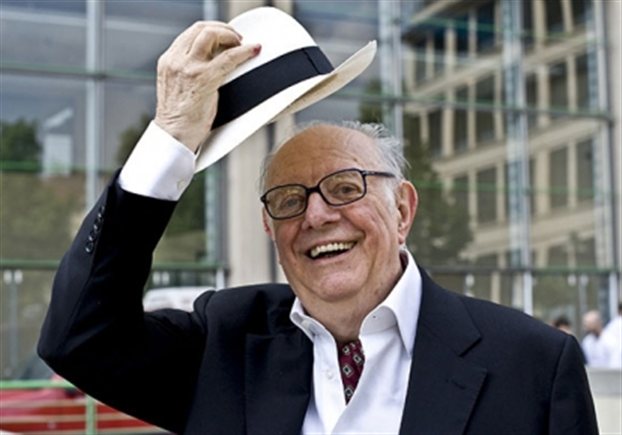
Message from the Italian comedian, author, theater director and composer Dario Fo
It has been celebrated for half a century now World Theater Day at 27 Of March: From the 1962 that the institution was established by the International Theater Institute, the world honors an art that looks like it, despite the problems, not to be daunted by anything. A text, an actor, a stage and light constitute the essence of theater which is enriched by sets and costumes, colors, effects and video.
Nobel laureate Dario Fo was chosen for this year's message. It's a habit, every year, a recognized personality to write the message, which is read and transmitted all over the world. They have preceded, including, Jean Cocteau, Arthur Miller, Laurence Olivier, Jean Louis Barot, Peter Brook, Pablo Neruda, Eugene Ionesco, Luchino Visconti, Martin Eslin, Iakovos Campanellis, Arian Mnuskin, Robert Lepage, Augusto Boal, Judi Dench, John Malkovich.
The message of the Italian comedian, author, theater director and composer Dario Fo is as follows:
“Many years ago, the authorities solved the problem of their tolerance towards the actors of the Commedia dell’ Arte driving them out of the country.
Today, actors and troupes have trouble finding public stages, theaters and spectators, because of the crisis.
Therefore, the rulers, they have no problem controlling those who express themselves through irony and sarcasm, since there is no room for the actors, but neither an audience to which they can address themselves.
On the contrary, during the Renaissance, in Italy, the rulers had to try hard to put the comedians in a difficult position since they were enjoyed by a large portion of the public.
It is known that the great exit of the actors of the Commedia dell’ Arte took place in the century of the Counter-Reformation, with the institutionalization of the abolition of all theaters, especially in Rome, where they were accused of desecrating the Holy City. The 1967, Pope Innocent XII, under the constant pressure of the conservative side of the bourgeoisie and the clergy, ordered the demolition of the Tordonina Theatre, which according to moralists, had featured the largest number of obscene scenes.
At the time of the Counter-Reformation, Cardinal Carlo Borromeo, who operated in the north of Italy, had devoted himself to the redemption of "the children of Milan", setting for art a clear division, as the highest form of spiritual education, and the theater as the expression of obscenity and vanity. In a letter he addressed to his associates, which I quote almost verbatim, expressed his beliefs roughly as follows: “I am concerned about the elimination of the bad seed, we have made every effort to burn the texts that contain odd reasons, to obliterate them from the memory of men, and at the same time prosecute those who circulate these texts in printed form. But apparently while we were sleeping, the devil was at work with renewed zeal. What the eyes can see can be more penetrating to the soul than’ what they can read in such books! How destructive to the minds of young men and women can be verbal speech and indecent movements, than a lifeless word printed in books. For’ this is urgent to rid our cities of those who make theater, as we do with unwanted souls".
Therefore the only solution to the crisis is to hope that the great witch hunt is organized against us and especially against the young people who wish to be taught the art of the theatre.: a new dispersion of Comedians, creators of the theater, who through this restriction will create unimaginable benefits for a new representation".
Born on 24 March of 1926 _closed them 87 of years, Fo received the Nobel Prize in Literature 1997. With his work, which picks up the thread from Italian Comedy of’ until, criticizes societies, in political corruption, in the dogmatism of the church, in the bad texts of everyday life. Together with his wife, the actress Franka Rame was founded, the 1959, the Theater Company that bears their names and started with humorous television sketches. They soon became known and so they developed, gradually a "resistance" theater, often blasphemous and mocking. At the end of the 60s they founded an acting school, were actively associated with the Communist Party of Italy and the 1970 they created the Collective Communist Theatre (La Comune Theater Collective), while also starting factory tours, parks and gyms.
Dario Fo has to his credit around 70 projects, several of which he co-signs with Rame: "The Accidental Death of an Anarchist" stands out (is being performed this year at the Alexandrakis Theater by Spyros Papadopoulos), the “I don't pay! I don't pay", which for years was uploaded by Stefanos Linaios with her Elli Fotiou at the Alpha Theater, while in the list of his plays performed in Athens is also this year's great success of "Mister Bufo", directed by Thomas Moschopoulos at the Thision Theatre.
Source : tovima.gr

Message from the Italian comedian, author, theater director and composer Dario Fo
It has been celebrated for half a century now World Theater Day at 27 Of March: From the 1962 that the institution was established by the International Theater Institute, the world honors an art that looks like it, despite the problems, not to be daunted by anything. A text, an actor, a stage and light constitute the essence of theater which is enriched by sets and costumes, colors, effects and video.
Nobel laureate Dario Fo was chosen for this year's message. It's a habit, every year, a recognized personality to write the message, which is read and transmitted all over the world. They have preceded, including, Jean Cocteau, Arthur Miller, Laurence Olivier, Jean Louis Barot, Peter Brook, Pablo Neruda, Eugene Ionesco, Luchino Visconti, Martin Eslin, Iakovos Campanellis, Arian Mnuskin, Robert Lepage, Augusto Boal, Judi Dench, John Malkovich.
The message of the Italian comedian, author, theater director and composer Dario Fo is as follows:
“Many years ago, the authorities solved the problem of their tolerance towards the actors of the Commedia dell’ Arte driving them out of the country.
Today, actors and troupes have trouble finding public stages, theaters and spectators, because of the crisis.
Therefore, the rulers, they have no problem controlling those who express themselves through irony and sarcasm, since there is no room for the actors, but neither an audience to which they can address themselves.
On the contrary, during the Renaissance, in Italy, the rulers had to try hard to put the comedians in a difficult position since they were enjoyed by a large portion of the public.
It is known that the great exit of the actors of the Commedia dell’ Arte took place in the century of the Counter-Reformation, with the institutionalization of the abolition of all theaters, especially in Rome, where they were accused of desecrating the Holy City. The 1967, Pope Innocent XII, under the constant pressure of the conservative side of the bourgeoisie and the clergy, ordered the demolition of the Tordonina Theatre, which according to moralists, had featured the largest number of obscene scenes.
At the time of the Counter-Reformation, Cardinal Carlo Borromeo, who operated in the north of Italy, had devoted himself to the redemption of "the children of Milan", setting for art a clear division, as the highest form of spiritual education, and the theater as the expression of obscenity and vanity. In a letter he addressed to his associates, which I quote almost verbatim, expressed his beliefs roughly as follows: “I am concerned about the elimination of the bad seed, we have made every effort to burn the texts that contain odd reasons, to obliterate them from the memory of men, and at the same time prosecute those who circulate these texts in printed form. But apparently while we were sleeping, the devil was at work with renewed zeal. What the eyes can see can be more penetrating to the soul than’ what they can read in such books! How destructive to the minds of young men and women can be verbal speech and indecent movements, than a lifeless word printed in books. For’ this is urgent to rid our cities of those who make theater, as we do with unwanted souls".
Therefore the only solution to the crisis is to hope that the great witch hunt is organized against us and especially against the young people who wish to be taught the art of the theatre.: a new dispersion of Comedians, creators of the theater, who through this restriction will create unimaginable benefits for a new representation".
Born on 24 March of 1926 _closed them 87 of years, Fo received the Nobel Prize in Literature 1997. With his work, which picks up the thread from Italian Comedy of’ until, criticizes societies, in political corruption, in the dogmatism of the church, in the bad texts of everyday life. Together with his wife, the actress Franka Rame was founded, the 1959, the Theater Company that bears their names and started with humorous television sketches. They soon became known and so they developed, gradually a "resistance" theater, often blasphemous and mocking. At the end of the 60s they founded an acting school, were actively associated with the Communist Party of Italy and the 1970 they created the Collective Communist Theatre (La Comune Theater Collective), while also starting factory tours, parks and gyms.
Dario Fo has to his credit around 70 projects, several of which he co-signs with Rame: "The Accidental Death of an Anarchist" stands out (is being performed this year at the Alexandrakis Theater by Spyros Papadopoulos), the “I don't pay! I don't pay", which for years was uploaded by Stefanos Linaios with her Elli Fotiou at the Alpha Theater, while in the list of his plays performed in Athens is also this year's great success of "Mister Bufo", directed by Thomas Moschopoulos at the Thision Theatre.
Source : tovima.gr

Yiannis Zouganelis, with the valuable help of thousands of viewers, cured the "Sex life of Mr. and Mrs. . . .
Nikolaidis" and now tackles the "Sex life of Mr. and Mrs. Papacharalambous".
That's what the sequel will be called, the number two, the new version or, if you prefer, the sequel sold out (for two theatrical seasons) comedy by Dimitra Papadopoulou. This year's psychoanalysts are Gerasimos Skiadaresis and Joyce Eveidi. Through their own relationship, a new condition of psychoanalysis takes shape on stage.
Mr. and Mrs. Nikolaidis found each other and successfully redefined their sexuality. For’ this and they safely introduced the sexologist Giannis Leonardo to their good friends Gerasimos and Joyce.
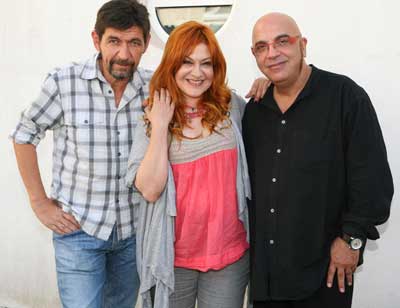
What exactly is going on?; Mr. and Mrs. Papacharalambous are going through a sexual crisis in the financial crisis and the most famous psycho-sexologist in Greece (Giannis Zouganelis) undertakes to solve their problem, putting them in a group therapy, in which… the audience also participates! Spectators and actors become a psychotherapy group under the direction of the strange doctor, who seeks to guide everyone to sexual happiness.
In relation to 2010, when the project was first uploaded, now the economic problems are even worse and the libido of the Greeks is even more depressed. In this particular case, the couple was illegitimate for years, until their relationship was legalized. Now, he experiences his sexuality under conditions of married life and is subject to the wear and tear of routine and everyday life, which combined with the pressure of the economic crisis, it makes the situation seem out of control. Add in the dissonance of characters on a political level. Both, once KNITES. Now no more, Gerasimos, on the other hand, is a journalist by profession- became Tsipras, Miss Joyce - hairdresser, with her own business - voted Samara. All this and much more, such as unconfessed passions, strange desires and repressed are revealed, recorded and psychoanalyzed.
While the couple performs on stage "en iko en Dimos" the audience participates in decompression exercises, of relaxation and laughter therapy and expels years of pent-up anger. It also guides the fate of the couple in the most democratic way. Elections!
The "Sex Life of Mr. and Mrs. Papacharalambous" is our daily life. Gerasimos and Joyce's sessions capture the lives of all of us. Dimitra Papadopoulou writes yet another realistic fiction that mirrors us, on the subject of human relations, their wear and tear and the attempt to regenerate them. She explains: "While sex since ancient times has been the cheapest entertainment, with the crisis many couples are now obliged to pay (SS.: the doctor) to remember how it's done".
More at the "Chora" theater . "The sexual life of Mr. and Mrs. Papacharalambous" with Yiannis Zouganelis, Gerasimos Skiadaresi and Joyce Eveidi before you soon!
Source : culturenow.gr
Yiannis Zouganelis, with the valuable help of thousands of viewers, cured the "Sex life of Mr. and Mrs. . . .
Nikolaidis" and now tackles the "Sex life of Mr. and Mrs. Papacharalambous".
That's what the sequel will be called, the number two, the new version or, if you prefer, the sequel sold out (for two theatrical seasons) comedy by Dimitra Papadopoulou. This year's psychoanalysts are Gerasimos Skiadaresis and Joyce Eveidi. Through their own relationship, a new condition of psychoanalysis takes shape on stage.
Mr. and Mrs. Nikolaidis found each other and successfully redefined their sexuality. For’ this and they safely introduced the sexologist Giannis Leonardo to their good friends Gerasimos and Joyce.
What exactly is going on?; Mr. and Mrs. Papacharalambous are going through a sexual crisis in the financial crisis and the most famous psycho-sexologist in Greece (Giannis Zouganelis) undertakes to solve their problem, putting them in a group therapy, in which… the audience also participates! Spectators and actors become a psychotherapy group under the direction of the strange doctor, who seeks to guide everyone to sexual happiness.
In relation to 2010, when the project was first uploaded, now the economic problems are even worse and the libido of the Greeks is even more depressed. In this particular case, the couple was illegitimate for years, until their relationship was legalized. Now, he experiences his sexuality under conditions of married life and is subject to the wear and tear of routine and everyday life, which combined with the pressure of the economic crisis, it makes the situation seem out of control. Add in the dissonance of characters on a political level. Both, once KNITES. Now no more, Gerasimos, on the other hand, is a journalist by profession- became Tsipras, Miss Joyce - hairdresser, with her own business - voted Samara. All this and much more, such as unconfessed passions, strange desires and repressed are revealed, recorded and psychoanalyzed.
While the couple performs on stage "en iko en Dimos" the audience participates in decompression exercises, of relaxation and laughter therapy and expels years of pent-up anger. It also guides the fate of the couple in the most democratic way. Elections!
The "Sex Life of Mr. and Mrs. Papacharalambous" is our daily life. Gerasimos and Joyce's sessions capture the lives of all of us. Dimitra Papadopoulou writes yet another realistic fiction that mirrors us, on the subject of human relations, their wear and tear and the attempt to regenerate them. She explains: "While sex since ancient times has been the cheapest entertainment, with the crisis many couples are now obliged to pay (SS.: the doctor) to remember how it's done".
More at the "Chora" theater . "The sexual life of Mr. and Mrs. Papacharalambous" with Yiannis Zouganelis, Gerasimos Skiadaresi and Joyce Eveidi before you soon!
Source : culturenow.gr
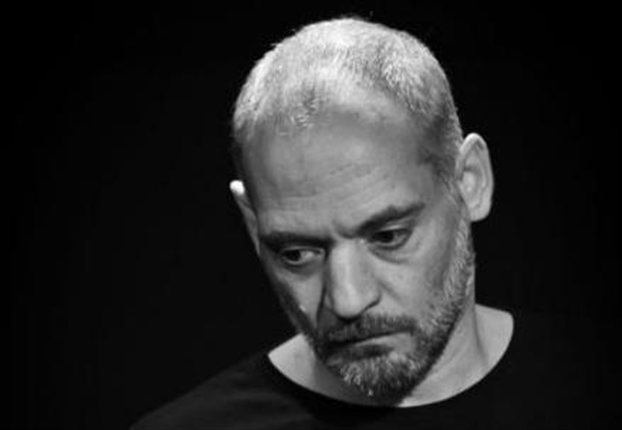
Vana Pefani attempts to immerse herself in the universe of the provocative creator
Having chosen, and very reasonable, the prison as the main theatrical space, the show "Somebody's Paradise 2" introduces us and takes us on a tour of the life and work of Jean Genet, wanting to bring us face to face with both the harsh world of the French writer and our wild world.
With questions about justice, punishment and reward, and mainly with the subject of good and evil, Vana Pefani attempts to immerse herself in the universe of this misunderstood and provocative creator who managed to "find beauty in evil", as Baudelaire would say, and make it a theater, novel, poem.
In the theatrical version that we will see from 10 September at the Michalis Kakogiannis Foundation, Vana Pefani brings Genet himself into focus, where imprisoned again, he is trying to finish another book of his. And there, between reality and fantasy, all his heroes spring up, they either love or hate their creator, creating a new universe, ours.
Marginalized, imprisoned, murderers, whores, slaves and masters make the puzzle of searching for a paradise _elusive perhaps, but absolutely necessary.
Unknown father, inmate of reformatories and prisons, petty thief and petty swindler, deserter and homosexual, Jean Genet found an outlet in writing and managed to turn the violence and ugliness of life into words, verses, pictures.
Born in 1910 (died in Paris on 1986) it did not take long to find an outlet in writing. He became famous through novels ("The Name of the Rose", "Our Lady of Flowers", "Diary of a Thief", "Death processions" etc.) as well as from his plays ("High Surveillance", "The Slaves", "The Balcony", "The Negroes", "The Screens"), while in the monumental work dedicated to him by Jean-Paul Sartre "Saint Genet: Commodus and Martyr" owes part of their recognition from the international philological community.
The project "A certain paradise 2" was first staged in Patras in March 2012 with the same title, but without the number 2, which signals the fact that the extension has been reworked and is returning….
WHEN & WHERE
"Some Heaven" – an ongoing performance based on the life and work of Jean Genet
Michalis Kakogiannis Foundation – Piraeus 206, Taurus
Premiere 10 September on 21.30 _performances as 23/9
Room: Specially Designed Underground Space
Unsuitable under 18 years
Tickets 12 – 9 euro
PERFORMANCE IDENTITY
Text-directed by Vana Pefani, scenery Giorgos Lyntzeris, costumes by Ioanna Zafeiropoulou, lighting design Katerina Maragoudaki, video Nikos Giavropoulos, music by Panagiotis Kalatzopoulos, lyrics by Aris Davarakis , edited by Sofia Michael. They play: Panagiotis Petrakis, Kyriakos Kosmidis, Hieronymos Kaletsanos, Kostas Falelakis, George Striftaris, Vassilis Afentoulis, Vana Pefani, Nikolina Mouaimi, Dimitris Katsis, Stavroula Oikonomou, Margarita Papantoni