All posts by litt le mac

Jordan, with Marina Aslanoglou from the State Theater of Northern Greece State Theater of Northern Greece

The State Theater of Northern Greece presents the work "Jordan", by Anna Reynolds and Moira Buffini, directed by Nikos Mastorakis.
             
The monologue, who is interpreted by Marina Aslanoglou, will premiere on Wednesday 3 April 2013, at 21.00.

The State Theater of Northern Greece presents the play "Jordan", by Anna Reynolds and Moira Buffini, directed by Nikos Mastorakis. A shocking testimony, based on the true story of Shirley Jones comes to life on stage at the Theater Royal, from Wednesday 3/04/13.

The heartbreaking monologue is performed by Melina Merkouri, who won the Audience Award 2011 of "Athinorama" magazine, Marina Aslanoglou.

A few words about the project:
In a court waiting room, Shirley awaits the verdict of the judges. Her brutal lover, but also welfare want to take her child, but she can't live without Jordan, nor Jordan without her.  A true story, where the central person, Shirley Jones revealed to Anna Reynolds, one of the two authors, when the two of them were inmates in prison.

"Jordan", a play that was presented with great success in Athens during the theater seasons 2010-11 & 2011-12, with Marina Aslanoglou performing – according to the excellent reviews-  with passion, sensitivity and heartbreak Shirley and, finally, to manage to give the viewer no melancholy, but euphoria.

COEFFICIENTS:
Translation: Marios Ploritis
Direction: Nikos Mastorakis
Performed by Marina Aslanoglou

The theater celebrates… on his International Day

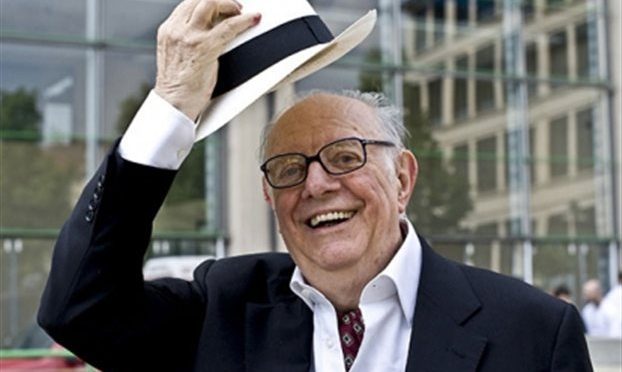
Message from the Italian comedian, author, theater director and composer Dario Fo

It has been celebrated for half a century now World Theater Day at 27 Of March: From the 1962 that the institution was established by the International Theater Institute, the world honors an art that looks like it, despite the problems, not to be daunted by anything. A text, an actor, a stage and light constitute the essence of theater which is enriched by sets and costumes, colors, effects and video.

Nobel laureate Dario Fo was chosen for this year's message. It's a habit, every year, a recognized personality to write the message, which is read and transmitted all over the world. They have preceded, including, Jean Cocteau, Arthur Miller, Laurence Olivier, Jean Louis Barot, Peter Brook, Pablo Neruda, Eugene Ionesco, Luchino Visconti, Martin Eslin, Iakovos Campanellis, Arian Mnuskin, Robert Lepage, Augusto Boal, Judi Dench, John Malkovich.

The message of the Italian comedian, author, theater director and composer Dario Fo is as follows:

“Many years ago, the authorities solved the problem of their tolerance towards the actors of the Commedia dell’ Arte driving them out of the country.

Today, actors and troupes have trouble finding public stages, theaters and spectators, because of the crisis.
Therefore, the rulers, they have no problem controlling those who express themselves through irony and sarcasm, since there is no room for the actors, but neither an audience to which they can address themselves.

On the contrary, during the Renaissance, in Italy, the rulers had to try hard to put the comedians in a difficult position since they were enjoyed by a large portion of the public.

It is known that the great exit of the actors of the Commedia dell’ Arte took place in the century of the Counter-Reformation, with the institutionalization of the abolition of all theaters, especially in Rome, where they were accused of desecrating the Holy City. The 1967, Pope Innocent XII, under the constant pressure of the conservative side of the bourgeoisie and the clergy, ordered the demolition of the Tordonina Theatre, which according to moralists, had featured the largest number of obscene scenes.

At the time of the Counter-Reformation, Cardinal Carlo Borromeo, who operated in the north of Italy, had devoted himself to the redemption of "the children of Milan", setting for art a clear division, as the highest form of spiritual education, and the theater as the expression of obscenity and vanity. In a letter he addressed to his associates, which I quote almost verbatim, expressed his beliefs roughly as follows: “I am concerned about the elimination of the bad seed, we have made every effort to burn the texts that contain odd reasons, to obliterate them from the memory of men, and at the same time prosecute those who circulate these texts in printed form. But apparently while we were sleeping, the devil was at work with renewed zeal. What the eyes can see can be more penetrating to the soul than’ what they can read in such books! How destructive to the minds of young men and women can be verbal speech and indecent movements, than a lifeless word printed in books. For’ this is urgent to rid our cities of those who make theater, as we do with unwanted souls".

Therefore the only solution to the crisis is to hope that the great witch hunt is organized against us and especially against the young people who wish to be taught the art of the theatre.: a new dispersion of Comedians, creators of the theater, who through this restriction will create unimaginable benefits for a new representation".

Born on 24 March of 1926 _closed them 87 of years, Fo received the Nobel Prize in Literature 1997. With his work, which picks up the thread from Italian Comedy of’ until, criticizes societies, in political corruption, in the dogmatism of the church, in the bad texts of everyday life. Together with his wife, the actress Franka Rame was founded, the 1959,  the Theater Company that bears their names and started with humorous television sketches. They soon became known and so they developed, gradually a "resistance" theater, often blasphemous and mocking. At the end of the 60s they founded an acting school, were actively associated with the Communist Party of Italy and the 1970 they created the Collective Communist Theatre (La Comune Theater Collective), while also starting factory tours, parks and gyms.

Dario Fo has to his credit around 70 projects, several of which he co-signs with Rame: "The Accidental Death of an Anarchist" stands out (is being performed this year at the Alexandrakis Theater by Spyros Papadopoulos), the “I don't pay! I don't pay", which for years was uploaded by Stefanos Linaios with her Elli Fotiou at the Alpha Theater, while in the list of his plays performed in Athens is also this year's great success of "Mister Bufo", directed by Thomas Moschopoulos at the Thision Theatre.

Source : tovima.gr

15the Thessaloniki Documentary Festival: The triumph of a greengrocer!

The public loved Dimitris Koutsiabasakou's documentary and gave him his award

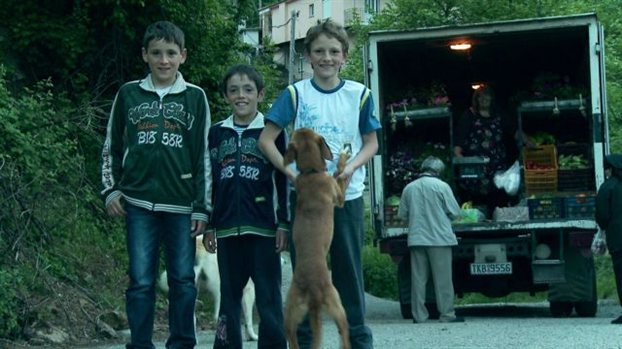
The film "The Greengrocer" by Dimitris Koutsiabasakos that "To Vima" first highlighted in July 2012 before it is even fully completed, finally won the audience award for Greek film over 45′ at the 15th Thessaloniki documentary festival. Koutsiabasakou's film is sensitive and realistic, records the course of a street vendor in the villages of Diodytiki Pindos during the four seasons of the year (see related report entitled "The mountain grocer").
The awards of the 15th Thessaloniki documentary festival were awarded on Saturday night at the Olympian in Aristotelous Square. Best Foreign Documentary Production Over 45′ is for the public of Thessaloniki the "blood brother" («Blood Brother») of the American Steve Hoover, the story of Rocky a man who decided to dedicate his life to caring for children suffering from AIDS in India.
In movies under 45′ "A heritage" was considered the best Greek: With the soul in the mouth" by Kyriaki Malama in which the actor Akyllas Karazisis appears: Kyriakos Poimenidis gives a shocking account of his terrible days 1920 in Kavac, on the outskirts of Samsounda, and the painful wandering of the Greek Orthodox women and children of the village on the streets of exile to the South of Turkey, near the border with Syria.  
Best Foreign Production Under 45′ the "High Price of Gold" was judged, a DRC/UK co-production directed by Ross Domony. The film points out that Eastern Democratic Republic of Congo is the most dangerous place in the world for a woman and that every hour that passes, about 48 women are being raped in a country famous for its mineral wealth.
At the awards of the international committee of film critics FIPRESCI, the film "They Glow in the Dark" directed by Panagiotis Evaggelidis was judged the best Greek film over 45′  and the “Parts of a Family| (Netherlands, Mexico) directed by Diego Gutierrez, best foreigner.
ERT3's television viewing award in a documentary in the "Society and Environment" section was awarded half-way to the films "Little Land" (Hellas, France) directed by Nikos Dayatas and "Winter Nomads" (Switzerland) directed by Maniel von Stirler. The ERT "Doc on Air" award for the best film project proposed by the Pitching Forum of the European Documentary Network EDN and corresponds to a cash prize 7.000 euro was awarded to "Playing With Fire" (Hellas) of Anneta Papathanasiou and the international award for the documentary "Lege me Koutsou" (USA) directed by Kathryn Fairfax Wright and Malika Zuhali- Warroll.
Source : tovima.gr

Musicbox: Depeche Mode confirm their legend

David Bowie was worth the wait, Justin Timberlake releases one of the albums of the year

What a great month; It's not a small thing to hear Bowie's new album after ten years, The,what this might mean for each, the best Justin Timberlake you could imagine, Depeche Mode on form and a new artist like Assaf Avidan to move you. That's all!

Justin Timperlake – «20/20 Experience»


WWG-RCA

I declare myself a fan of Justin right off the bat, but that doesn't mean I accept that he effortlessly pitches to me.. But how can I remain unmoved in this storm of ideas and inspiration that came upon me from the first moment I heard this news, his third album.

I had a fear because I thought his relationship with Timbaland would end in fiasco, since the latter has long since run out of ideas, in addition to the fact that his very good works bear the signature of the beloved Missy Elliott. But Justin is a smart guy.

He knows and gets what he needs from everyone he works with, as all the greats of the past did, and so does his new co-producer Jerome “J-Roc” Harmon. But above all, he has a vision. In this album he manages in a magical way to bring together the great things from the past, see The Chi-Lites, Isley Brothers, Stevie Wonder, Prince with the so-called neo-soul of our day and to present a bold project for an artist of this scope.

Instead of presenting easy-to-digest sketches of three to four minutes and adding two or three rhymes from some well-known rappers and ending, he worked hard and blended almost everything in his personal blender.

Groovy Oriental and African rhythms on 'Let The Groove Get In', sweet seventilla on "Spaceship Coup", Prince's looks in 'Tunnel Vision'. No doubt, one of the albums of the year, and one of those that challenge you to explore them constantly. I didn't like it, when he answered about the long duration of the songs how: "I don't understand why Led Zeppelin and Pink Floyd had the right and we didn't". A soul messiah was born. I hope the obsession with color stays in music and doesn't follow in Michael's footsteps!

9/10

Depeche Mode – «Delta Machine»


Columbia

If Delta refers to selling their soul to the devil in order to gain maximum inspiration for their music, perhaps Depeche Mode should try harder. On the other hand because I belong to those whose DNA has been watered by the Holy Trinity of their discography "Black Celebration" – «Music For The Masses» – "Violator" and I accept like a good boy any of their offers, especially in a period when we are not even shocked by innovations.

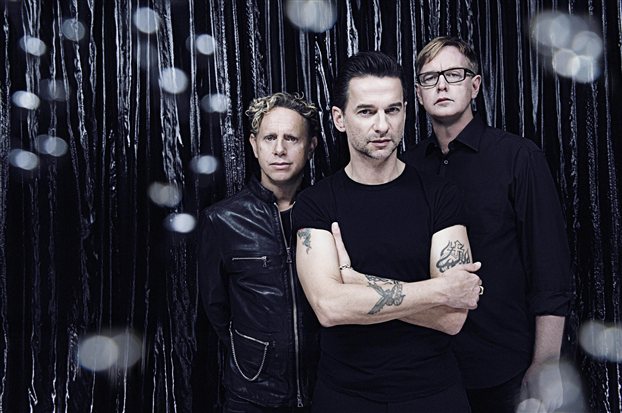
"Delta Machine" according to Dave Gahan is the last part of a trilogy, that no one realized, with producer Ben Hillier. But it magically contains all the elements and reasons why we loved this band from Britain. Maybe not, it's the first time their work takes on that dark dimension we loved in the Alan Wilder era, especially in songs like 'Angel' and 'Secret To The End'.

Electronic vignettes of high aesthetics and deep introspection as always happens with Martin Gore's speech. There are many reasons to love 'Delta Machine', I pick 'Should Be Higher' a twist, post-dance dynamite with vocals beyond imagination.

8/10


 David Bowie – «The Next Day»


Sony Music

I wanted some time to die down with all this fuss about David Bowie's new release, already No. 1 in all countries of the world. I wanted to see more calmly not only if it was worth all this ten-year wait, but also if he finally had a reason to break his silence and release an album of new songs on 66 his years and after all he has done.

I'm not going to fall into the trap of ranking it, it has become boring to have every new album of his judged as 'the,what's better than the 70s" or "o,what better last ten, twenty or thirty years". We'd better make up our minds that with such an offer as he had throughout the 70s it's impossible for him to ever record anything like it. On the other hand, in the last thirty years, he has released albums that put the glasses on many newcomers, such as the excellent "1. Outside' or 'Heathen'.

In this context, "The Next Day" also moves and goes even further I would say. It is Bowie's attempt to read himself after the countless copies that have preceded him by others. His Bowie 2013 he opens his colorful palette and chooses the ones that make him happy or at least the ones that help him express himself today.

Starting with an inventive cover that takes us back to 'Heroes' as the title heralds the future, we are in the song of the same name whose intro is 'Repetition' from 'Lodger' to later become the,anything from "Scary Monsters". Valentine's Day is new-glam, becomes the crooner we loved in the past with 'Heat', "How Does The Grass Grow" with its chorus is reminiscent of "Soul Love", 'Dirty Boys' his collaborations with Iggy and 'Love Is Lost' his industrial vignettes '1. Outside».  Το «Where Are We Now?” was just the right introduction for this self-reading with the flashback to the Berlin days that everyone likes to refer to today. But nothing in "The Next Day" sounds outdated and outdated. Very neat production by Visconti as always and flawlessly performed music by experts like guitarist David Thorne and of course the beloved Earl Slick.

The 2004 after the health problem he had, very wisely he had said that he was not going to write warmly about o,what happened to him, he followed it and did well. The references to death now especially through the wonderful track "You Feel So Lonely You Could Die" are not so much about the shock of the fear of death but more about the awareness of mortality.

In short a solid piece of work from an Artist who has absolutely nothing to prove and still knows how to market some of the most adventurous music around like no other..

9/10

Asaf Avidan – «Different Pulses»

Universal

One of the biggest surprises of the year is without a doubt this awesome kid from Israel. The "spiritual child of Dylan and Joplin" as they call him did not come from heaven after he has recorded in recent years with his band Asaf Avidan & The Mojos and became known to the wider public both with the hit 'One Day / Reckoning Song" as well as for his participation in the Who tribute at Carnegie Hall and his support appearances with Bob Dylan.

The big asset in Asaf Avidan's case is his unique voice and that's what's interesting about his first solo album, that while it could remain in the ease of impressing us lists a dozen songs of excellent writing, mature verse and most importantly amazing choruses. Songs that you can identify with for one reason or another but mostly you can sing along _ a rare thing these days.

8/10

Source : tovima.gr

Cyprus: Stolen heirlooms are returned from the occupied

With a very important decision of the Munich Court of Appeal

A big win, unfortunately only in a cultural context did Cyprus after the decision of the Munich Court of Appeal return them to the Church of Cyprus 173 ecclesiastical relics, such as pictures, mosaics, murals etc. a. which had been collected from temples and monasteries in the occupied territories, by the Turkish antiquarian Aydin Dickmen.
 
This is a case that has been pending for fifteen years as Dickman had managed to convince - partially of course - that the heirlooms belonged to him through legal tricks (!), so he demanded in return 6 million. euro. Decisive though, was the opinion of the German professor of Byzantine studies Mr. Johannes Dekker, who proved that the relics are works of Cypriot hagiographers.
 
Note however, that all the works seized from the hands of the Turkish antiquarian were 232 but the 60 they will still remain in Germany, as most are antiquities, for which Mr. Decker cannot comment.
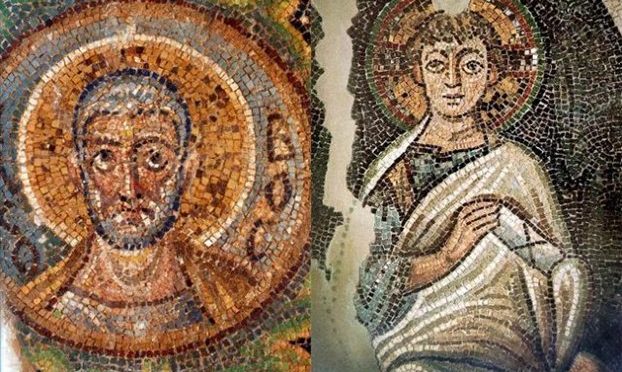
Dikmen's greatest looting took place in the frescoes of the church of Agios Euphemianos in Lysi, which were bought by the Menil foundation in Texas but last year it was possible to return them to Cyprus as well as the 6th century wall mosaics from the church of Panagia Kanakaria in Lythrangomi.
 
Among the works that will be returned, however, are pieces of mosaics from Panagia Kanakaria, fragments of frescoes from Panagia Absinthiotissa in Synghari, like the head of St. Ignatius, heartbreaks too, frescoes from the church of Panagia Pergameniotissa in Akanthou, dating back to the 12th century, frescoes from the 9th century church of Agia Solomoni and from the church of Antiphonitis (approx. 1200 and the end of the 15th c.) as well as a large number of pictures and old manuscripts.
 
"These are works that come from about fifty different looted temples in Turkish-occupied Cyprus, which have been fully identified, while unfortunately a large part of them has not been fully identified due to incomplete files", reported by the Delegation of the Church of Cyprus to the European Union.
Moreover, with the same decision of the Court of Appeal, Dickmen must return to the Church of Cyprus approx 90 thousands of euros, which had been seized along with the heirlooms in his apartment in Munich by the Bavarian Police in 1997.
.
Source : tovima.gr

BBC 'sells out' Lonely Planet travel guides

American NC2 Media will acquire the drivers for 51,5 million pounds from BBC Worldwide, whom he had bought the 2011 130,2 million pounds.

The British BBC has decided to sell the Lonely Planet travel guides to an American group, and at a much lower price—reduced by almost 80 million pounds— from the one he had bought the publishing company from.
American NC2 Media will acquire the drivers for 51,5 million pounds from BBC Worldwide, the commercial arm of British public television. The acquisition of Lonely Planet by the BBC was done in two phases, the 2007 and 2011 and had cost in total 130,2 million pounds.
The BBC Trust, the BBC's watchdog, said that this buying and selling should become a lesson for the "significant financial losses" it caused.
BBC Worldwide's purchase of Lonely Planet was criticized at the time as falling short of the core aims of public broadcasting. Until then BBC Worldwide was limited to exploiting domestic television producers.
The Lonely Planet Company, which is headquartered in Melbourne, Australia, concerns 400 workers. It also has offices in London, California and New Delhi. The company's financial performance has deteriorated in recent years due to the appreciation of the Australian dollar, of the reorganizations in the publishing area and the global recession that affected tourism, notes the BBC in its announcement.
“The BBC will not make such acquisitions in the future.", BBC Trust vice-chairman Diane Coyle assured, stressing that Lonely Planet did not turn out to be a good investment.
Source : kathimerini.gr

A historian is wanted for Greek literature

The old Stories are exhausted and the new ones await their author. What do the proceedings of a conference published by the University Press of Crete show

With 600 pages, 33 studies and a subject matter spanning a century, since the beginning of his decade 1920 until the first decade of the 21st century, the proceedings of the conference held in memory of the critic and historian of Greek literature Alexandros Argyriou (1921-2009) in May 2011 at the Faculty of Philosophy of the University of Crete in Rethymno and were printed in the volume For a history of Greek literature of the twentieth century. Reconstruction proposals, themes and currents (University Publications of Crete – Benaki Museum, 2012), are a document.

On the one hand, the volume captures the diaspora, the situation and dynamics of modern Greek studies at a critical moment in history in which modern Greek philological studies are shrinking not only with the gradual abolition of seats in famous universities abroad, but also with the upcoming changes of the "Athina" plan in the Greek area. On the other hand, it does not reflect the path and the searches of the historiography of modern Greek literature in the post-Argyrio era, in which post-political and modern Greek literature turns its historian.

Most of the contributors to the volume are in their sixties and fifties, members of the cream of modern Greek literature, represent the golden age of modern Greek studies (1970-2000), when foreign researchers were intently studying the modern Greek language (Peter McGridge), they were researching the history of Greek literature in vain (Mario Vitti) and were interested in making early texts of the Modern Greek tradition known and attractive to the non-speaking public (Roderick Beaton).

Parallel to the explosion of research on modern Greek literature abroad, scholars in Greece, coordinated with the new literary theories, develop lively research and interpretive activity as evidenced by the conference's theme of Argyriou and the range of approaches: The literature of the 20th century is observed through the lens of the language issue, classified in terms of species, interpreted on the basis of national expediencies and ideological conflicts, it is examined with the tools of gender discourse, its harmonization with European aesthetic currents is appreciated.

A series of stories of modern Greek literature written during this golden age – beginning with the History of Modern Greek literature (MED, 1978) of the University of Thessaloniki professor Linos Politis (1906-1982), who is considered to have contributed "to the formation of modern Greek philology into a real science" – contribute to the systematic development of the historiography of modern Greek literature.

Only in the last fifteen to twenty years, thanks to the Introduction to modern Greek literature (Cloud, 1996) by Roderick Beaton, in the ninth edition of the History of Modern Greek Literature (Knowledge, 2000) of K. Θ. Dimara, in the news, rewritten, History of modern Greek literature (Odysseus, 2003) by Mario Viti and in the eight-volume History of Greek literature and its reception (Kastaniotis, 2001-2007) of Alexandros Argyriou, the dialogue about the historical narrative of our literature and the conditions of its writing was in the topicality of the philological debates.

The constant recurring request to write a new one, multivolume and collective History of Modern Greek Literature – the outcome of these discussions – it is hidden in a wording in the preface of the volume at hand, signed by curators Angela Kastrinaki, Alexis Politis and Dimitris Tziovas. The studies of the volume, they write, «συγκροτούν μια εναλλακτική, πολυπρισματική και ιστορικά προσανατολισμένη θεώρηση της Νεοελληνικής Λογοτεχνίας του 20ού και των αρχών του 21ου αιώνα».

Το ερώτημα στο οποίο δεν δίνουν απάντηση ούτε οι επιμελητές ούτε οι μελετητές που πραγματεύονται στο τέταρτο μέρος ζητήματα της ιστοριογραφίας της Νεοελληνικής Λογοτεχνίας είναι πώς θα συγκροτηθούν όλες αυτές οι προσεγγίσεις σε μια νέα αφήγηση, πώς από τις προτάσεις «για μια Ιστορία της Νεοελληνικής Λογοτεχνίας», όπως δηλώνεται στον τίτλο του τόμου, θα περάσουμε στο ιστοριογραφικό αποτέλεσμα.

Οι ερευνητές που επισκέπτονταν τον Αλέξανδρο Αργυρίου στο διαμέρισμά του στην Πλουτάρχου στο Κολωνάκι είτε για να τον συμβουλευθούν για πραγματολογικές πληροφορίες που θησαυρίζονταν στο απύθμενο μνημονικό του είτε για να ανατρέξουν σε κάποιο τεκμήριο της τεράστιας βιβλιοθήκης του τον έβρισκαν τις τελευταίες δεκαετίες της ζωής του διαρκώς απασχολημένο με τη συγγραφή της Ιστορίας του. Οσο ζούσε ο Αργυρίου είχαμε τη βεβαιότητα ότι μια Ιστορία της Νεοελληνικής Λογοτεχνίας γραφόταν. Ως τις τελευταίες στιγμές του ετοίμαζε τον ένατο τόμο της Ιστορίας του, με τις κριτικές αποτιμήσεις του για το ογκώδες υλικό που είχε καταθέσει στους προηγούμενους τόμους. Today, τέσσερα χρόνια αργότερα, ξέρουμε ότι προς το παρόν μια νέα Ιστορία της Νεοελληνικής Λογοτεχνίας δεν γράφεται.

Ο Αργυρίου και οι διάδοχοι
Ο διάδοχος του Αργυρίου θα πρέπει να αναζητηθεί στον χώρο των καθηγητών Νεοελληνικής Λογοτεχνίας στα πανεπιστήμια, διότι είναι γνωστή η σύνδεση των Ιστοριών της λογοτεχνίας με την πανεπιστημιακή διδασκαλία, όπως υποστηρίζει σε αναλυτικό μελέτημά της στον εν προκειμένω τόμο η Βενετία Αποστολίδου. Στο πρώτο μισό του 20ού αιώνα ο κριτικός Αλέξανδρος Αργυρίου αποτελούσε εξαίρεση σε μια σειρά ιστοριογράφων της λογοτεχνίας (K. Θ. Dimaras, Λίνος Πολίτης, Mario Vitti, Roderick Beaton) που ήταν πανεπιστημιακοί δάσκαλοι.

Στον χώρο της πανεπιστημιακής κριτικής ανήκουν στην πλειονότητά τους και οι συμμετέχοντες στον τόμομε την εξαίρεση των λογοτεχνικών κριτικών Αλέξη Ζήρα, Ελισάβετ Κοτζιά και Βαγγέλη Χατζηβασιλείου -, several of whom have publicly stated the direction that Modern Greek Literary Historiography should follow after Argyrio.

Το νέο που εισήγαγε ο Αργυρίου στην ιστοριογραφία της Νεοελληνικής Λογοτεχνίας ήταν η συγχρονική προσέγγιση του λογοτεχνικού φαινόμενου. Αφήνοντας στη σκιά τον μελετητή που κρίνει και αξιολογεί εκ των υστέρων, κατέγραψε την πρόσληψη των έργων τη στιγμή που εμφανίζονται και συνέδεσε το λογοτεχνικό έργο με την εποχή του και την κοινωνική πραγματικότητα μέσα στην οποία παράγεται.

Τι επιτάσσει η εποχή
Διευρύνοντας την οπτική του και αξιοποιώντας την πλούσια παρακαταθήκη του Αρχείου Αργυρίου που έχει δωρηθεί στο Μουσείο Μπενάκη και του ηλεκτρονικού αρχείου του Αργυρίου που παραχώρησε ο ίδιος στο Πανεπιστήμιο Κρήτης, έχει διατυπωθεί με διάφορες ευκαιρίες πρόσφατα και παλαιότεραόπως στη στρογγυλή τράπεζα με θέμα τις Ιστορίες της Νεοελληνικής Λογοτεχνίας, που διοργάνωσε στην Αθήνα το 2004 the Greek Language Center, in the presence of Argyrio and Viti – that the historians of polytomy, συλλογικής και πολυσυλλεκτικής Ιστορίας της Νέας Ελληνικής Λογοτεχνίας θα πρέπει πλέον να ενσωματώσουν στη μελέτη και στην αισθητική αποτίμηση του λογοτεχνικού προϊόντος και την ιστορία των ειδών, των μεταφράσεων, του περιοδικού Τύπου, των εκδοτικών οίκων και των βιβλιοπωλείων, του γούστου του αναγνωστικού κοινού, των μπεστ σέλερ, των λογοτεχνικών βραβείων, της λογοτεχνίας στην εκπαίδευση.

Η εποχή μας απαιτεί να κατακτηθούν τα ανεξερεύνητα εδάφη της λογοτεχνίας ως θεσμού, ως επικοινωνιακού φαινομένου και ως εμπορικής δραστηριότητας και να συνεκτιμηθούν σε μια αφήγηση για τις συνθήκες παραγωγής και κατανάλωσης της λογοτεχνίας μας, όχι μόνο στον 20ό αιώνα, αλλά και στους προηγούμενους οκτώ αιώνες παρουσίας της. Αν στο συνέδριο συζητήθηκαν οι προϋποθέσεις και οι τρόποι υλοποίησης μιας τέτοιας Ιστορίας της Λογοτεχνίας, αυτό δεν αποτυπώνεται στα πρακτικά.

Βρίσκουμε όμως νύξεις για την αναγκαιότητα του εγχειρήματος: «Τα ζητήματα τα σχετικά με το αναγνωστικό κοινό και το αγοραστικό κοινό της εποχής, την έκδοση, τη διακίνηση και την εμπορία του βιβλίου, την κατοχύρωση των πνευματικών δικαιωμάτων κτλ. παραμένουν σχεδόν terra incognita» γράφει στο μελέτημά του για την κριτική της δεκαετίας του 1920 ο Χ. L. Καράογλου. Πρώτες παρατηρήσεις για την οικονομία της ποίησης επιχειρεί στο μελέτημά της η Τιτίκα Δημητρούλια και η Ελισάβετ Κοτζιά καταπιάνεται με την εμφάνιση του ευπώλητου μυθιστορήματος στην Ελλάδα μετά το 1985.

Η αναγκαιότητα της σύγχρονης οπτικής
«Οι εθνικές κρίσεις δημιουργούν πάντα την ανάγκη της ιστορικής γνώσης» σημειώνει στο δικό του μελέτημα στον τόμο ο Αλέξης Πολίτης, οδηγώντας στη σκέψη ότι στην εθνική κρίση που βιώνουμε τα τελευταία χρόνια στον χώρο της οικονομίας αλλά και του πολιτισμού και του βιβλίου η κατάκτηση της ιστορικής γνώσης επιβάλλεται. Αφενός επειδή, σύμφωνα με τις πρώτες παρατηρήσεις, η νέα γενιά συγγραφέων διαβάζει κυρίως μεταφρασμένη λογοτεχνία και αγνοεί ή έχει λειψή γνώση της νεοελληνικής λογοτεχνίας εξίσου του απώτατου όσο και του πολύ πρόσφατου μεταπολεμικού παρελθόντος. Αφετέρου επειδή η έλλειψη στέρεης ιστορικής γνώσης διευκολύνει την εξάπλωση αυτού που ο Νάσος Βαγενάς αποκαλεί στο μελέτημά του στον τόμο «θεωριακό ιμπρεσιονισμό»: το θάμπωμα από τη θεωρία, που οδηγεί μερίδα της νεοελληνικής κριτικής σε ερμηνευτικά εξαγόμενα τα οποία συσκοτίζουν και παραμορφώνουν το πεδίο που επιχειρεί αυτή η κριτική να φωτίσει.

Στην εποχή της παγκοσμιοποίησης στην οποία το τοπικό και το παγκόσμιο, το εθνικό και το αλλότριο επαναπροσδιορίζονται με καινοφανείς όρους, η ελληνική λογοτεχνία έχει ανάγκη από μια Ιστορία ιδωμένη μέσα από μια σύγχρονη οπτική. «Η Ιστορία της λογοτεχνίας μοιάζει με συνεχή ανακατώματα της τράπουλας, δηλαδή διαρκείς ανασυγκροτήσεις, ανακατατάξεις και επινοήσεις νέων οπτικών και νέων ερωτημάτων» γράφει στον τόμο ο Δημήτρης Τζιόβας. Το ζητούμενο τώρα είναι: πόσος χρόνος χρειάζεται στη μετά Αργυρίου εποχή για να αρχίσει η νέα παρτίδα, για να ξεκινήσει η υλοποίηση της προσδοκίας για μια νέα αφήγηση της νεοελληνικής λογοτεχνίας;

Source : tovima.gr