All posts by litt le mac

Cultural route in the ancient theaters of Epirus

Initiative of the association "Diazoma" for the promotion of the monuments

A cultural route with stops and visits to the ancient theaters of Epirus is proposed by the association "Diazoma". Its aim is to highlight monuments, which are largely unknown to visitors to the area, but at the same time to the rise of tourism and the benefits that may arise from the program.
For this purpose, the relevant proposal has been made to the Region of Epirus. According to it, "Diazoma" intends to draw up an "itinerary", a composition i.e. a visit to ancient theaters, securing the necessary documentation and permits, selecting the people who will guide each site and generally drawing up the non-tourist part of the visit program.
 The fact that Epirus was chosen as a pilot proposal is important, a non-tourist area (except for its beaches), which, however, has interesting monuments. In fact, the theaters of ancient Epirus reach the number ten, with that of Dodoni being the most important and also the largest, as well as that of Nikopolis, of Kassope,the small theater of Amvrakia, of Apollonia, of Bouthrotos, of the Gypsies, of Nice etc.
 The proposal also gains more interest due to the latest trend internationally to create specialized branded programs in the form of routes or networks, something that has not been done sufficiently in our country. These routes end, they are aimed at people with special interests and a high educational level, such as archaeologists, historians, architects, dramatists, directors, actors.
Source : tovima.gr

The "concentration camp" that illuminated Athens

The Industrial Gas Museum in Technopolis "tells" the story of working life in Greece from the mid-19th to the end of the 20th century

If today's Athenian could go back a century and a half and face his working environment 1857, the year that the light gas factory was founded in today's Technopolis of the Municipality of Athens, he would discover conditions that perhaps reminded him of concentration camps.  In one of the first industries of the capital, the kerosene plant created to meet the needs for public lighting, the work exceeds eight hours – which will be established in Greece as soon as 1919. Employees work without protective masks and work uniforms (factory safeguards were established around the decade 1930).
From the medical records of the factory it appears that the workers have respiratory problems and also the disease of cancer, with the most difficult conditions prevailing in the ovens, where the flue gas is cleaned of tar, the ammonia, naphthalene and hydrogen sulfide, materials unhealthy for the human body. The penal code also states that a day's wages will be deducted from anyone who does not pour the required amount of coal into the mouth of the furnace.
"The factory belongs to the category of heavy industry, but… it's still 19th century. The trade union movement took shape in the interwar period (1920-1930), so the claims for workers' rights started to become more intense. No one was forcing them to work under these conditions, but only the financial need" notes the historian Mr. Yannis Stogiannidis, who consulted historical records and collected testimonies in collaboration with the scientific team that supported the creation of the Industrial Gas Museum, which opened its doors last Sunday in Technopolis. The visitor has the opportunity to tour the factory facilities, to follow the gas production line and discover a now forgotten chapter of Athenian history.
"Light gas as the 1890 it is mainly used for lighting the streets and maybe for the shops and some shop windows" says Mr. Stogiannidis. "Homes until then were lit by candles or oil lamps and people were warmed by wood stoves. The upheaval it brings 1890 the kerosene is that it enters the house, gives basic uses, such as heating, the lighting, the operation of the kitchen and water heater".
The light gas factory is founded by the Frenchman Francis Theofilos Feraldis and when he takes over, the 1887, the Italian mineralogist Giovanni Battista Serpieri is not long in reaching his prime. The use of kerosene enters many homes. “The 1880 the factory numbers from 800 as 1.000 workers, number maintained until the 1930s".
The factory is male-dominated. In contrast to the same type of factories in other countries, here women work only in administrative services, in secretarial support or cleaning. The workers come from low social strata, mainly from areas neighboring Athens, but also several from insular and mainland Greece, while there are no immigrants.
"The great population change in Gazochori (the surrounding densely populated district where workers had begun to settle from the 1860) just brings it 1970 and 1980 the arrival of the Pomaks" says Mr. Stogiannidis. “The living conditions from the 1890 until the 1930 in Gazochori they were degraded. There was crime and outbreaks of epidemic diseases such as tuberculosis and malaria. Residents have been complaining about living conditions since the beginning of the 20th century. The factory created problems in their daily lives, first and foremost the exhaust gas that covered their houses and clothes".
The onslaught of electricity
Η ελπίδα τους να κλείσει αρχίζει να διαφαίνεται ως προοπτική όταν το 1950 ιδρύεται η Δημόσια Επιχείρηση Ηλεκτρισμού (PPC), η οποία παρέχει ηλεκτρισμό στα σπίτια – whereas until then electricity was mainly used in industries and street lighting. "It was natural that the use of gas lighting would decline. Ο ηλεκτρισμός ήταν πολύ πιο ασφαλής για τη χρήση στο σπίτι, prof’ ότι το φωταέριο προκαλούσε αρκετές παθήσεις, όπως ασφυξία και δηλητηρίαση, όταν κανείς ξεχνούσε ανοιχτή την παροχή. Αυτό επηρεάζει τους εργαζομένους οι οποίοι μειώνονται περισσότερο του 50% στη δεκαετία του 1950. Οταν μια νέα ενέργεια κερδίζει το καταναλωτικό κοινό της πόλης και της χώρας και κάνει άλματα τις δεκαετίες του 1950 and his 1960, το φωταέριο παρακμάζει. The 1938 αποχωρούν οι ξένοι επιχειρηματίες. Και το 1952 ιδρύεται η Δημοτική Επιχείρηση Φωταερίου Αθηνών».
Fri.’ όλα τα προβλήματα η κατάσταση των εργαζομένων βελτιώνεται. From the 1950 το προσωπικό αρχίζει να μειώνεται, αυξάνονται όμως τα δικαιώματα και οι παροχές προς τους εργαζομένους, βελτιώνονται οι αμοιβές τους ενώ αυξάνεται δραστικά η εσωτερική οργάνωση του εργοστασίου, το οποίο αποκτά ένα πιο εταιρικό προφίλ. Το φωταέριο εξακολουθεί να χρησιμοποιείται, κυρίως από κάποιες αθηναϊκές μονοκατοικίες, από νοσοκομεία και από λίγες αλλά μεγάλες βιομηχανίες, όπως η ΕΒΓΑ, η ΟΣΡΑΜ κ.ά. Κοστίζει περίπου κατά 1/5 λιγότερο από τον ηλεκτρισμό, αλλά τελικά η εποχή θα το προσπεράσει: the 1984 το εργοστάσιο κλείνει οριστικά.
«Ευτυχώς στη δεκαετία του 1980 το έργο διασώθηκε ως βιομηχανικό μνημείο και κηρύχτηκε διατηρητέο» λέει ο κ. Κωστής Μπιτζάνης, διευθύνων σύμβουλος της Τεχνόπολης. «Στη δεκαετία του 1990 έγινε η αποκατάσταση του εξοπλισμού και των κτιρίων. Το μόνο που απέμενε ήταν να γίνει μουσείο και να διηγηθεί την ιστορία του, κάτι που συνέβη με πρωτοβουλία της τωρινής δημοτικής αρχής και με εντυπωσιακά χαμηλό προϋπολογισμό».
According to Mr. Μπιτζάνη, δεδομένου ότι δημιουργήθηκε ένας Τομέας Μουσείων του Δήμου και οι αμοιβές όσων συνεργάστηκαν για το Μουσείο Φωταερίου καλύφθηκαν από την Τεχνόπολη, το κόστος του δεν ξεπέρασε τις 300.000 euro. The 50% καλύφθηκε από εταιρείες φυσικού αερίου («που θεώρησαν τους εαυτούς τους συνεχιστές της ιστορίας»), το υπόλοιπο από τα έσοδα της Τεχνόπολης.
«Ο Καραγκιόζης γκαζιέρης»
«Οι τέχνες συναντούν τη βιομηχανία» είναι ο τίτλος του αφιερώματος που φιλοξενείται από τις 27 Ιανουαρίου στον χώρο του Βιομηχανικού Μουσείου Φωταερίου. Περιλαμβάνει την έκθεση δώδεκα εικαστικών με τίτλο «Υποπροϊόντα», σε επιμέλεια του Αλέξανδρου Ψυχούλη, την έκθεση «Εργάτες» σε επιμέλεια του Πλάτωνα Ριβέλλη, μια φωτογραφική έκθεση αφιερωμένη στα βιομηχανικά θεματικά μουσεία του Πολιτιστικού Ιδρύματος του Ομίλου της Τράπεζας Πειραιώς, προβολές κινηματογραφικών ταινιών με θέμα τη βιομηχανία, σε επιμέλεια της Σώτης Τριανταφύλλου, καθώς και παραστάσεις θεάτρου σκιών από τον Σωτήρη Χαρίδημο με τίτλο «Ο Καραγκιόζης γκαζιέρης».
Το πρώτο Σαββατοκύριακο λειτουργίας του περισσότεροι από 2.000 Αθηναίοι επισκέφθηκαν το Βιομηχανικό Μουσείο Φωταερίουμια πρώτη δικαίωση των υπευθύνων της Τεχνόπολης, οι οποίοι επιδιώκουν η χρηματοδότησή του να καλύπτεται από τις επισκέψεις (1 ευρώ η είσοδος) και το πωλητήριο. Να σημειωθεί ότι στον ιδιαίτερο χώρο του πωλητηρίου όλα τα αντικείμενα, από τα κοσμήματα ως τα σημειωματάρια και τις κασετίνες, συνδέονται με την ιστορία και την αισθητική αυτού του τόσο αναγνωρίσιμου τοπωνυμίου της Αθήνας.
Source : tovima.gr

Diana Krall in the summer at Herodeo

Her latest work was released in October 2012 and is titled "Glad Rag Doll"

One of the most important contemporary jazz performers, Diana Krall, will appear again in Greece in the summer, specifically in Irodeion.
The Canadian singer and pianist, will appear on July 1st 2013 in Herodion.
At the request of the Canadian Embassy in Greece, the members of the Central Archaeological Council unanimously gave the "green light" to granting the use of the monument.
Diana Krall, wife of the well-known British musician Elvis Costello from 2003 and mother of two twin boys from the 2006, it is not the first time it will appear in our country.
In July of 2006 she had amazed those lucky enough to enjoy her at the Herodeion as part of the Athens Festival with her soulful voice and her exceptional skill on the piano, while his summer 2010 more than rewarded her few but loyal fans at Terra Vibe in Malacca.
She is considered one of the most successful singers worldwide, as it has sold more than 15 millions of albums in the world, of which the 6 from. only in the US.
He has won two Grammy Awards, nine gold, three platinum and seven multi-platinum albums. Her latest work was released in October 2012 and is titled "Glad Rag Doll".
Newsroom USD, with information from ΑΠΕ-ΜΠΕ
Source : tovima.gr

The "global" Kiki Dimoula was applauded in the Concert Hall

The anthology of 79 of her poems in English

As soon as she appeared and the presence of Kiki Dimoula was noticed in the packed "Alexandra Trianti" hall of the Athens Concert Hall on Tuesday afternoon (29/1) the first scattered applause also fell. When the spotlights lit up her white hair, not a few stood to applaud the 81-year-old poet as she slowly climbed the steps leading to the stage. "It would be the first time he stayed in one place for that long without smoking" and he finally succeeded.
Not in her case, it is probably needless to mention that a significant part of the youth who read it fanatically was also waiting for it in the audience. After all, "you don't need an occasion to honor Kiki Dimoulas" as the writer Yiannis Efstathiadis said at the beginning of the event (which was made in honor of this "unique literary artist" as her translator Cecile Inglesi Margellou called her, on the occasion of the publication of an anthology of her poems in the English language.
The evening indeed, beyond the expected good reasons, she also had an air of extroversion without necessarily referring to the ambassadors who attended her. Recently - after the poet's recent interview that was featured on the front page of the "International Herald Tribune" and republished by the "New York Times" - a lot has been said, even the magic word "Nobel" was heard.
One had the impression, however, that he was attending an event that had a specific goal and was part of a strategy, even if in some places it was unnecessarily pompous. Διακηρυγμένος σκοπός της δίγλωσσης έκδοσης με τα 79 ποιήματα της Κικής Δημουλά υπό τον τίτλο «The Brazen Plagiarist» (Η θρασεία λογοκλόπος) από τη Margellos World Republic of Letters (MWRL) του Yale University Press, είναι η παγκόσμια αναγνώριση και η βράβευση του έργου της.
«Υποκλίνομαι στην ασύγκριτη εθνική ποιήτρια της Ελλάδας που είναι τώρα και παγκόσμια ποιήτρια» είπε σε μαγνητοσκοπημένο μήνυμά του ο διευθυντής του Yale University Press Τζον Ντόνατιτς χαρακτηρίζοντας μάλιστα «ντροπή» το γεγονός ότι μονάχα «το 3% των τίτλων που κυκλοφορούν στις ΗΠΑ αντιστοιχούν σε μεταφρασμένη λογοτεχνία».
Η μεταφράστρια Σεσίλ Ιγγλέση Μαργέλλου ανέδειξε τη σημασία της μετάφρασης – μια «βαθιά πολιτική πράξη» – στην εξέλιξη του πολιτισμού και στην προσέγγιση της ετερότητας «γιατί το δούναι και λαβείν είναι μια σχέση αμφίδρομης και διαρκώς επαναδιαπραγματεύσιμης ισοτιμίας». Επιπλέον η ειδική εκδοτική σειρά της MWRL με την εκδοτική σφραγίδα του Yale University Press δημιουργήθηκε στα τέλη του 2007 με σκοπό ακριβώς να μετριάσει «την τρομακτική απουσία της μεγάλης παγκόσμιας λογοτεχνίας στην αγγλική γλώσσα». Είναι χαρακτηριστικό ότι στην Ελλάδα το ποσοστό της μεταφρασμένης λογοτεχνίας αντιστοιχεί στο 40% των τίτλων.
To them 50 έως τώρα τίτλους αυτής της σειράς, the 10% αφορά βιβλία ελλήνων λογοτεχνών, ποσοστό που αποκτά ιδιαίτερη σημασία αν σκεφθεί κανείς ότι συστεγάζονται τρόπον τινά σε αυτήν 19 διαφορετικές γλώσσες. «Οι Έλληνες έχουμε να προσφέρουμε στο παγκόσμιο γίγνεσθαι και πράγματα πέραν της αρχαίας μας κληρονομιάς» τόνισε η ίδια αναφερόμενη και στην επιθυμία του συζύγου της Ντόρη – που γιόρταζε την Τρίτη τα εξηκοστά του γενέθλια – «να εκδώσουμε εμείς την Κική στα αγγλικά, ένα από τα μεγαλύτερα σύγχρονα πνευματικά κεφάλαια του τόπου». Είπε επίσης ότι τα περιοδικά «Τhe New Yorker» και «Vanity Fair» θέλουν να πάρουν συνέντευξη από την ποιήτρια. Τέλος αναφέρθηκε στην εξ αποστάσεως «δύσκολη αλλά συναρπαστική» μεταφραστική περιπέτεια που είχε με την αμερικανίδα ποιήτρια Ρίκα Λέσερ η οποία παραδόξως δεν μιλάει καθόλου ελληνικά.
Στην εκδήλωση προβλήθηκε βιντεοσκοπημένο απόσπασμα από το «Μονόγραμμα» του Γιώργου και της Ηρώς Σγουράκη με την ποιήτρια να μιλάει για τα παιδικά και νεανικά της χρόνια στην Κυψέλη κρατώντας στο χέρι μια βεντάλια (ολόκληρο, προσεχώς, στη ΝΕΤ), ενώ οι ηθοποιοί Κατερίνα Διδασκάλου και Μαρίνα Ψάλτη διάβασαν ποιήματά της στην αγγλική και την ελληνική γλώσσα αντίστοιχα.
Οι παρευρισκόμενοι, including, άκουσαν μελοποιημένο από τον Νίκο Ξυδάκη το ποίημα της Κικής Δημουλά «Μελαγχολία» (από τη συλλογή «Έρεβος» με την οποία εμφανίστηκε η ίδια στα γράμματα το 1956), το πρώτο μέρος από το «Δύο μικρά ποιήματα για ένα αίνιγμα και έναν δρόμο» από τη συλλογή «Επί τα ίχνη» (1963) μελοποιημένο από τον Τάσο Ρωσόπουλο και τον Χρήστο Παπαγεωργίου (με τις κινηματογραφικές οδηγίες του Αργύρη Παπαδημητρόπουλου) να αυτοσχεδιάζει στο πιάνο του «σχολιάζοντας» στίχους της ποιήτριας.
Ο Γιάννης Ευσταθιάδης, ο οποίος συντόνισε τη βραδιά είπε, αναφερόμενος στο αν και κατά πόσον δύναται να μελοποιηθεί η ποίηση της Δημουλά, ότι «με μουσικούς όρους η ποίησή της είναι μια διαφωνία» καθώς η ίδια «αφαιρεί τη μουσική για να ακουστούν οι ήχοι των λέξεων ώστε να μας υπενθυμίσει έτσι ότι δεν υπάρχει μόνο ο χρόνος της μουσικής αλλά και η μουσική του χρόνου».
Η Κική Δημουλά πήρε τον λόγο έπειτα από περίπου δύο ώρες κατά τις οποίες παρακολουθούσε τις διάφορες καλλιτεχνικές μεταποιήσεις όπου «ο καθένας μετέφρασε την ποίησή μου με τη δική του έμπνευση και τις δικές του νότες». «Ο μεταφραστής είναι συνδημιουργός» τόνισε μεταξύ άλλων και «πρέπει να μερεμετίζει τα ρήγματα της γραφής» όπου η άλλη γλώσσα είναι πιο γενναιόδωρη. «Η ευέλικτη μετάφραση της Σεσίλ Ιγγλέση Μαργέλλου συγκέρασε τη διπρόσωπη ουσία των λέξεων δίδοντας ένα πιστοποιητικό μεταφραστικής νομιμότητας». Είναι «μια μετάφραση τόσο διάφανη ώστε αναπνέει από κάτω ο προβληματισμός της γενέτειρας γλώσσας» είπε.
Διερωτήθηκε χαμηλόφωνα αν «υπήρχε η ποίηση πριν από τη δημιουργία του κόσμου και του φόβου» σε μια ακόμη προσωπική κατάθεση για την ουσία της τέχνη της. Ευχήθηκε δε «να διασωθεί η ένδεια του βίου μας από συνταρακτικά γεγονότα». Ευχαρίστησε τον Θεό «που και ο ίδιος μας κρύβεται» και κατέληξε στο ότι η ποίηση είναι πιθανότατα «ένα είδος κιβωτού για να σωθούμε από τον κατακλυσμό τόσων αληθειών».
Διάβασε ποιήματά της, ευχαρίστησε ιδιαιτέρως τους πολλούς ακαδημαϊκούς που παρέστησαν στην εκδήλωση και χάρηκε με το παρατεταμένο χειροκρότημα του κοινού στο τέλος. Το ευχαριστιέται ακόμη, με μια συγκρατημένη και μελαγχολική καρτερικότητα.
Source : tovima.gr

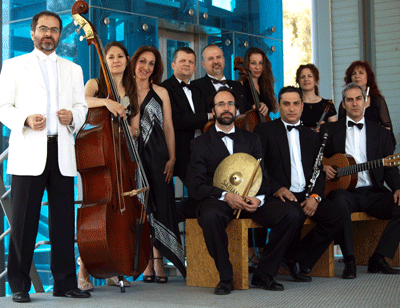
Tango Greco: The most beautiful Greek tangos from ancient Athens to our days at Badminton

 The Badminton Theater presents an evening entitled "Tango Greco", in which the most beautiful Greek tangos will be presented, on Monday 18 January 2013.

When the 1930 the "king of tango" Eduardo Bianco arrives in Athens for the first time, Athens is "tango occupied". The arrival of a leading foreign representative of Argentine tango was a great worldly event. Bianco will include Michalis Souyoul in his orchestra and they will play together in different parts of Greece…

The concert series "The Themes of Greek Music and Greek Song", conducted by the composer Michalis Koubios, presents us with the most beautiful Greek tangos. From ancient Athens to the present day. Because many old songs will always coexist with new ones, as the,what finally comes close to Art, it moves outside of time.

The tangos of composers such as: Attic, Kostas Giannidis, Michalis Suyul, Christos Hairopoulos, Manos Hadjidakis, Dionysis Savvopoulos, Eleni Karaindrou, Stamatis Kraunakis et al. they will perform four exquisite and special voices. Glyceria, Christos Thebeos, the mezzo-soprano Eleni Voudouraki and the tenor Yiannis Christopoulos, while a group of prize-winning dancers from the Academia del tango will dance them.

 Tango is a world rhythm that since its birth, loves to travel.

Tango is believed to have its roots in African rhythms. They are rhythms that traveled long distances and thus evolved, they changed. They arrived in Spain with the Arab conquerors to later migrate to the American continent. This is how the danzon and habanera were created in Cuba and the Tango in Uruguay and Argentina.

Around the 1870 tango is spreading both in and around Uruguay and Argentina 1890 settles permanently in Buenos Aires, starting with the infamous bars, mainly from those of slaughterhouses, where the gauchos (the South American cowboys) they give it their own temperament and personal nostalgia.

Initially he is banned, illegal and danced by men, but not in amorous moods, but aggressive, as they are men girded with knives dancing in a warlike atmosphere. However, tango will escape from the popular neighborhoods of Buenos Aires and will reach cosmopolitan Paris where it will be Europeanized and develop into an erotic, classy dance.

The tango from Paris is spreading quickly throughout the old Epirus and of course its waves are not long in "hitting" all of Greece. Even at the festivals of the Greek countryside, accordion viols, clarinet and lute as well as the Cretan lyre convey the melancholic thought that is being danced. Sure, what the Greek traditional orchestras played, it was but the echo of the great fashion of the Athenian salons. There, where tangos were a key ingredient in secular teas (tea) and the dance parties. Over the years, tango entered modern Greek song as well…

At Tango Greco you will hear the greatest Greek tangos, from the 1930s to the present day.

The musical performance Tango Greco is held with the support of the urban non-profit company AKOS "Cancer: Treatment of Body and Soul" in the framework of its Hellenic campaign entitled "Study in the human body - Prevention projects" for the information, the prevention and treatment of cancer. AKOS sends the message: "I love and take care of my body".

Series of concerts
"Themes of Greek Music and Greek Song"
Artistic Direction: Michalis Koubios
They sing: 
CANDY, CHRISTOS THEBIOS,
ELENI VOUDOURAKI, YIANNIS CHRISTOPOULOS
Την ATHENS CHAMBER ORCHESTRA
directed by Apollon Kouskoumvekakis
They participate:
Zoe Teganouria (accordion)
Dimitris Margiolas (bouzouki, mandolin, lute)
Award-winning dancers from the Academia del Tango group dance

Source : culturenow.gr

Irini Koumarianou has passed away

He died of old age 82 years old actress Irini Koumarianou, known to the general public from the popular TV series "To Para Pete".
Irini Koumarianou was hospitalized at Evangelismos with heart problems. "Para Pente" was one of her biggest hits. It was born 1931 in Galatsi. Student of the Hellenic Conservatory, her career began in 1951. He was one of the most important personalities of the Greek Theatre, having starred in several performances mainly of the National Theatre, while at the same time he participated in many ancient tragedies, mainly Epidaurus. He had co-starred with Aliki Vougiouklakis, Jenny Karezis, Rena Vlachopoulou and others and had to her credit 40 movies, as well as participation in the radio "Theater of Monday".

On TV, in addition to "Sto Para Pente" he appeared in series such as "Anastasia", "Betrayal", "Like Sisters",Alma libre" and "S’ love-M’ you love", as the "Saturday-born".

Source : kathimerini.gr

Mormolis, from the State Theater of Northern Greece

 The State Theater of Northern Greece presents Rainer Hachfeld's performance entitled "The Mormolis" in its Children's Stage at the Royal Theater, from Sunday 27 January 2013.

The adventures of Mormoli, of a much-loved work of young and old come to life on the stage of KTHBE, in an imaginative and tender performance with live music, dance and song that enchants children, frees their imagination and makes them sing with one voice "Mormolis, Mormolis is the element of the city"!

Case
But who is Mormolis who has upset the whole town and who tells the children what to do; Who is Mormolis who is everywhere and nowhere;
Mormolis is nothing more than... a mere box, a very simple box, who becomes the new friend and secret advisor of all the children. He is the one who tells the grown-ups what the little ones dare not tell them.
Like all children have a teddy bear, or a doll or a dog, who imagine it is alive and talk to it and listen to what it tells them, so did Ricky and Manda, while spending the holidays at their uncles house, do the same with Mormoli, upsetting not only Aunt Polyxeni and Uncle Agesilaos, but the whole city... From the neighbor Mr. Bourinia to the Minister.
And the adults, of course, they get upset after Mormolis with the help of the children, it is everywhere: transforms into a shoe, hat, or even on a stove burner!

"O Mormolis" by Rainer Hachfeld

Source : culturenow.gr