
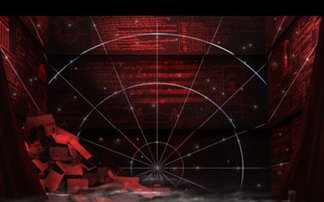
One of the most popularFrench operas, which is based on the first part of his well-known tragedyGoethite, presents the NationalLyric Stageat20 January 2012and foronly eight performances, in theAthens Concert Hall– HallAlexandra Trianti. The masterpiece of French romanticism with the famous arias, the great choral and ballet performances of Walpurgis Night, is presented under the musical direction of Myron Michaelidis and directed by Renato Tzanella.
It is one of the world's favorite grands opéras, which has been presented in Greece since the 90s. It is based on Goethe's famous tragedy, where the aged scientist Faust sells his soul to Mephistopheles, in exchange for youth and love. At the heart of the opera is not so much Faust himself as Margarita, who is transformed by love and ultimately pays dearly for her choices.
He conducts the orchestra of the National Opera for the first time after assuming his duties as the artistic director of the Greek National Opera, the chief musician Myron Michaelidis, who has conducted some of the most important symphony orchestras, as among others, the Berlin Symphony Orchestras, of Rome, of Jerusalem and Mexico, the Philharmonic of Bucharest and Bratislava, the Prague Radio Orchestra, as well as all Greek orchestras.
The director and director of the ELS Ballet, Renato Zanellawith many years of service in the direction of the ballet of the Vienna State Opera, sets the case in an old empty classroom. There, in front of blackboards full of knowledge, Faust alone, tormented by the fundamental questions of life, of death, love, of happiness. Inside his clouded mind he meets Mephistopheles, who enticed Margarita, convinces him to sign the deal with the devil.
Zanella notes: "My approach moves away from both the supernatural and the religious element and places man and his weaknesses at the heart of the matter. Faust really becomes young again, or simply Mephistopheles shows him what he wants to see; They really leave the room to travel to other places and have the most amazing adventures, or maybe they never leave the classroom; Is this hall Faust's head?, filled with so much information that it cannot tell the real from the imaginary; My work moved in this direction thanks to the help and amazing, unique capture of Alessandro Camera (scenery), Carla Ricotti(suits) and Vinicio Kelly(illuminations)».
A multitude of leading Greek and foreign performers participate in the production. The role of Faust will be performed by American tenor Eric Cutler, who has appeared in the last years in the biggest Lyric Theaters of the world, such as New York's Metropolitan Opera, the Royal Opera of London and the Paris Opera, while his appearance with Anna Netrebko the MET, in Bellini's Puritans is considered one of the high lights of his career.
Margarita is performed by Alexia Voulgaridou, the leading Greek soprano who carries out an extremely important career abroad, with appearances at leading theaters such as the Royal Opera, the Scala of Milan, and the Berlin State Opera, while he has collaborated with Riccardo Muti, among others, Ronaldo Villazon, Sir Colin Davies, Andrea Bocelli, but also Isabelle Hyper in the film "Deux" by Werner Schroeter. Voulgaridou has sung with great success the role of Margarita in Rome, Basel as well as the Ravenna festival.
Mephistopheles is performed by Paata Boursoulatze, the famous Georgian bass, extremely popular with opera audiences in Greece as well. Boursoulage has performed leading roles at the Metropolitan in New York, in Milan's Scala, in the Vienna Opera and in many other theaters around the world. Last summer the Athenian audience applauded him in Verdi's Nabucco, in the Conservatory of Herod Atticus.
The distribution is completed by leading Greek soloists such as Dimitris Platanias, who was warmly applauded at Verdi's Masquerade Dance presented at the ELLS, in December, Dimitris Kasioumis, Irini Karayanni and Ines Zikou. In the second distribution we find among others, the recently awarded with the Grand Prize of the Greek music critics Tselia Kostea, Askar Abdrajakov and many other famous singers.
Nikos Vassiliou conducts the ELLS choir. The ELS Ballet participates, choreographed by Renato Zanella.
Faust at a Glance
The composer / Charles Gounod was born in Paris in 1818 and took his first piano lessons from his mother. He studied at the Paris Conservatory and the 1839 won the famous Prize of Rome for the cantata of Ferdinand. In Italy he studied the works of Palestrina and other compositions of church music. Later, thanks to Fanny and Felix Mendelssohn he came into contact with the music of JS Bach. The 1851 composed his first opera, Sappho. The 1859 Faust made the composer known throughout the world. They were followed by the French themed Mireille (1864), which has recently come to the fore again, and the opera Romeo and Juliet (1867), based on Shakespeare. In addition to lyrical works, Gounod also composed symphonies, while during the last years of his life he was particularly involved in works of religious music, oratorios, functions, motet. He died of cerebral congestion on 1893.
The project / Opera in five acts, Faust is based on a poetic text by Jules Barbier and Michel Carré, who drew their material from Carré's play Faust and Margarita (1850), as also from Part I of Faust, by Johann Wolfgang von Goethe (1808) in its French translation by Gerard de Nerval (1828). A typical sample of French grand opera - grand opéra- and the first of its kind to be so successful worldwide, Faust remained the most popular lyric work until about World War II. It began as an opéra comique with nonsensical dialogues and was gradually transformed, during a decade, to suit the tastes of the global audience. The term opéra comique - comic opera- does not hint at comic elements, but it concerns structural and aesthetic features, one of which is prose dialogues. From Goethe Faust keeps only the narrative and skips the philosophical background: the aged scientist Faust sells his soul to Mephistopheles, in exchange for youth and love. At the heart of the opera is not so much Faust himself as Margarita, who is transformed by love and ultimately pays dearly for her choices.
Premieres / As a comic opera, with prose dialogues, Faust premiered at the Paris Lyric Theater on 19 Of March 1859. In its majestic version, with dialogues set to music and ballet, given by the Paris Opera on 3 Of March 1869. The play opened at the New York Metropolitan Opera on 22 October 1883.
From the National Opera, which started operating the 1939/40 as part of the National – then Royal- Theater, Faust first appeared on 12 November 1959 starring Nikos Hatzinikolaou (Faust), Zoe Vlachopoulos (Daisy) and Nikos Moschonas (Mephistopheles). The orchestra and choir were conducted by Antiochos Evangeliatos, while the direction was by Leo Nedomanski.
From the National Opera, which started operating the 1939/40 as part of the National – then Royal- Theater, Faust first appeared on 12 November 1959 starring Nikos Hatzinikolaou (Faust), Zoe Vlachopoulos (Daisy) and Nikos Moschonas (Mephistopheles). The orchestra and choir were conducted by Antiochos Evangeliatos, while the direction was by Leo Nedomanski.
Summary
Act I / Germany, 16the century. In his workshop, Faust, an elderly scientist, he reasons that his investigations have yielded nothing, while on the contrary, they made him bypass life and love. He tries to kill himself, he curses science and faith and asks for help from dark forces. Mephistopheles appears, who tempts him with an image of the innocent Margarita and proposes the following agreement: he will serve Faust on earth in return for Faust serving him in Hell. The poison in Faust's cup turns into an elixir of youth, the old scientist transforms into a charming young man and together with Mephistopheles sets out to conquer the world.
Act II / At the gates of the city students, soldiers and villagers rejoice. Valentine leaves for the war with his friend Wagner and entrusts his sister Margarita to his young friend Zibel. Mephistopheles treats the crowd to wine and sings a hymn to the "golden calf". He speaks badly of Margarita and when Valentine defends her honor, his sword breaks in the air. Valentine and company recognize dark supernatural forces and resist the sign of the cross. Mephistopheles, Faust and the villagers dance a waltz. Margarita appears to whom Faust expresses his admiration.
Act III / Zibel, in love, leaves a bouquet in Margarita's garden. Faust asks Mephistopheles to find him a gift as well, and he leaves a jewelry box and a mirror on the girl's doorstep. Margaret reflecting on her encounter with Faust, he sees the gifts: in a few minutes the demure girl has transformed into a flirtatious young woman, who together with Martha's neighbor welcome Faust and Mephistopheles in the garden. She leaves Faust alone to kiss her, but after he leaves, alone, at her window, wishes to return. This is indeed what happens, and with the help of Mephistopheles it is certain that the young Faust will dissuade her.
Act D / Faust abandoned Margaret pregnant. She gave birth to the child and lives as an outcast from society. He prays in the church, but she is stopped by Mephistopheles and a chorus of demons. She finishes her prayer, όμως τρομοκρατείται όταν ο Μεφιστοφελής την καταριέται. As Valentine returns from the war, Zibel asks him to forgive his sister. As Valentine enters her residence, Faust and Mephistopheles arrive, who carelessly sings an ironic serenade to Margarita. Valentine comes out, he sees the two of them, he understands what has happened and attacks Faust. Mephistopheles intervenes in the sword fight, resulting in Faust killing Valentine, who before he cools off manages to curse his sister.
Act V / Witches have surrounded Faust and Mephistopheles. In a cave Faust meets queens and courtesans of other times. Mephistopheles promises him the love of the most important and beautiful women in history. The orgy night lasts until it blows. At dawn Faust sees Margaret as a vision and calls her. Mephistopheles helps him enter the prison where the girl is being held after killing her child. Only a mortal hand can save Margaret from her fate, and Faust intends to give her his, but she has put her faith in God. In his delirium he sees Faust's hands stained with blood, she pushes him away and passes out. Mephistopheles shouts that Margarita has been judged: She is protected because of her faith and penance. It is enough for him to drag Faust with him to Hell. Margaret ascends into the heavens as angels sing that she is saved.
In the context of its social pricing policy, ELLS has reduced ticket prices for the Faust production, which are now configured as follows: €22, €40, €60, €80 / childish, student €13.
Music directionMyron Michaelidis
Direction – Choreography – KinesiologyRenato Zanella
SceneryAlessandro Camera
SuitsCarla Ricotti
LightingVinicio Kelly
Choir DirectionNikos Vassiliou
SceneryAlessandro Camera
SuitsCarla Ricotti
LightingVinicio Kelly
Choir DirectionNikos Vassiliou
Distribution
Faust Eric Cutler (20,22,24,27,29/1)
WILL. (21,25,28/1)
WILL. (21,25,28/1)
Margarita Alexia Voulgaridou (20,22,24,27,29/1)
Tselia Costea (21,25,28/1)
Tselia Costea (21,25,28/1)
Mephistopheles Paata Bourjulatze (20,22,29/1) Tasos Apostolou (21,25,28/1)
Askar Abdrajakov (24, 27/1)
Valentine Dimitris Platanias (20,22,24,27/1)
Dionysis Sourbis (21,25,28,29/1)
Valentine Dimitris Platanias (20,22,24,27/1)
Dionysis Sourbis (21,25,28,29/1)
Wagner Dimitris Kasioumis (20,22,24,27,29/1)
Dionysis Tsantinis (21,25,28/1)
Dionysis Tsantinis (21,25,28/1)
Zibel Irini Karayanni (20,24,27/1)
Georgia Iliopoulou (21,22,25,28,29/1)
Georgia Iliopoulou (21,22,25,28,29/1)
Martha Ines Zikou (20,22,24,27/1)
Angeliki Kathariou (21,25,28,29/1)
Angeliki Kathariou (21,25,28,29/1)
The Orchestra participates, the Choir and Ballet of the National Opera
|
Info
|
|
|
Location
|
Athens Concert Hall, Vasilissis Sofias and Kokkalis 1, Athena
|
|
Date
|
Premiere Friday 20 January 2011. Performance dates: 20, 21, 22, 24, 25, 27, 28, 29 January 2012. Start time 20.00
|
|
Ticket prices
|
€22, €40, €60, €80. Children's, student €13
|
|
Ticket sales
|
From the coffers of the Athens Concert Hall, Bas. Sophia & Boney
Monday-Friday 10 am-6 pm. and Saturday 10 a.m.-2 p.m during the days of the performances: Monday-Friday 10 a.m.- 8.30 p.m. / Saturday 10 a.m.-2 p.m. & 6 Creation "regarding the modern administration and the European ones- 8.30 p.m. Sunday 6 p.m.-8.30 p.m Homer 8 operating hours: Monday-Friday 10 a.m.- 4 p.m. Telephone Purchase of Tickets – 210 7282333 & from the Funds of the OLYMPIA THEATER, Academy 59-61, Athena Daily 9.00–21.00. Tel. sales 210 3662 100, 210 3612 461, 210 3643 725, Electronic pre-sale: www.megaron.gr – GROUP TICKETS Tel. 210 3711 342, SUBSCRIBER SERVICE Tel. 210 3711 381 |