The K. Giannaris takes them… Kalashnikov

Violence in the Greece of nihilism will be the subject of the 50-year-old director's next film
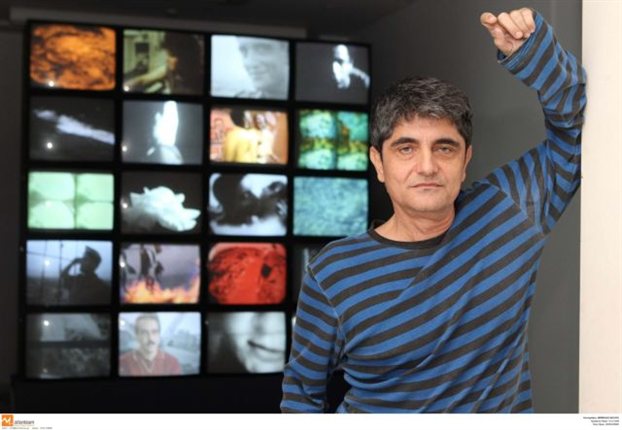
A mirror of the Greek reality, with intense socio-political reflection on issues of identity, gender and race, the work of director Constantinos Giannaris needs no introduction. The immigration, the alienation, subculture and the fringes are the director's stimuli in restless cinematographic creations such as "From the Edge of the City", the "Fifteenth of August", "Homer" and recently "Man at sea".
 
And while "Man at sea" has not yet found distribution, his tireless and perpetually restless 50-year-old director is already working on the script for his next film. "It's a scenario inspired by the surrounding violence and the general nihilism that now dominates in Greece" Giannaris told us a while ago by phone from the Peloponnese, where he comes from. Challenging as always, Giannaris "christened" his film "Kalashnikov". Not strange at all, since this particular Russian weapon is one of the most characteristic symbols of violence in Greece and constantly dominates the news, "above all in Athenian society", as the director characteristically said.
If everything goes according to’ please, the 2012 it is predicted to be an active year for K. Giannari. During the last Thessaloniki Festival, last November, where Giannaris was honored with the screening of all his films, Lawrence Cardis, senior curator of Film at the Museum of Modern Art, New York (and president of the Jury of the festival of which Giannaris was a member), excited about "Shards", the experimental filmed diaries of the Greek director. In fact, the thought of Mr. Cardis is to present "Fragments" at MoMA next season, while, as told to us by Mr. Giannaris, "Fragments" may also play in the Image Forum, a major festival held in Tokyo and Yokohama.
"Fragments" is the general title with which K. Giannaris christened the film notes he kept for years (and still does). Avid filmmaker, the K. Giannaris, where he goes, he carries a camera with him. Today a digital one, formerly a Super 8. And it pulls everything. Like notes. "As a writer in my position would make notes in a notebook or a painter would make sketches, that's how I film too. And then I put them aside".
But it seems that at some point he remembered them and decided to combine them into two "chapters" of a total duration of about three and a half hours. They have images from Giannaris' life in London, where he studied and made cinema, personal matters, erotically, even more difficult, such as the funeral of a cousin.
In everything,what about the "troubled" latest film of "Man at sea", the K. Giannaris hopes to hit theaters this winter, because it is "a film that has gone through many waves and is now looking for its contact with the audience". At the moment it has not managed to find distribution in Greece, despite her participation in last year's Berlin Festival (Panorama) and at the Thessaloniki Festival a few months ago, where it was shown with a new edit.
Giannaris still believes that the filming of "Man at sea" was the most difficult of his career, but he adds: "This plan was ambitious and had a sense of vanity in relation to the meager budget. It was a big undertaking done under unbearable pressure". According to the director anyway, the film's producer George Lykiardopoulos is busy finding a distributor.
Both in Thessaloniki and at the Film Library and also at the Sorbonne University, where he recently gave seminars on his work, the K. Giannaris once again felt the joy of enjoying his films as a simple viewer. "When you're on set or in the editing process, you lose emotional contact with the event you yourself create" he told us. "You need at least five years _ especially in feature films with the difficulties and traumas of filming _ to be able to watch them as a viewer. And when that happens, as it happened to me, the feeling is great".
Source : tovima.gr

The K. Giannaris takes them… Kalashnikov

Violence in the Greece of nihilism will be the subject of the 50-year-old director's next film
A mirror of the Greek reality, with intense socio-political reflection on issues of identity, gender and race, the work of director Constantinos Giannaris needs no introduction. The immigration, the alienation, subculture and the fringes are the director's stimuli in restless cinematographic creations such as "From the Edge of the City", the "Fifteenth of August", "Homer" and recently "Man at sea".
 
And while "Man at sea" has not yet found distribution, his tireless and perpetually restless 50-year-old director is already working on the script for his next film. "It's a scenario inspired by the surrounding violence and the general nihilism that now dominates in Greece" Giannaris told us a while ago by phone from the Peloponnese, where he comes from. Challenging as always, Giannaris "christened" his film "Kalashnikov". Not strange at all, since this particular Russian weapon is one of the most characteristic symbols of violence in Greece and constantly dominates the news, "above all in Athenian society", as the director characteristically said.
If everything goes according to’ please, the 2012 it is predicted to be an active year for K. Giannari. During the last Thessaloniki Festival, last November, where Giannaris was honored with the screening of all his films, Lawrence Cardis, senior curator of Film at the Museum of Modern Art, New York (and president of the Jury of the festival of which Giannaris was a member), excited about "Shards", the experimental filmed diaries of the Greek director. In fact, the thought of Mr. Cardis is to present "Fragments" at MoMA next season, while, as told to us by Mr. Giannaris, "Fragments" may also play in the Image Forum, a major festival held in Tokyo and Yokohama.
"Fragments" is the general title with which K. Giannaris christened the film notes he kept for years (and still does). Avid filmmaker, the K. Giannaris, where he goes, he carries a camera with him. Today a digital one, formerly a Super 8. And it pulls everything. Like notes. "As a writer in my position would make notes in a notebook or a painter would make sketches, that's how I film too. And then I put them aside".
But it seems that at some point he remembered them and decided to combine them into two "chapters" of a total duration of about three and a half hours. They have images from Giannaris' life in London, where he studied and made cinema, personal matters, erotically, even more difficult, such as the funeral of a cousin.
In everything,what about the "troubled" latest film of "Man at sea", the K. Giannaris hopes to hit theaters this winter, because it is "a film that has gone through many waves and is now looking for its contact with the audience". At the moment it has not managed to find distribution in Greece, despite her participation in last year's Berlin Festival (Panorama) and at the Thessaloniki Festival a few months ago, where it was shown with a new edit.
Giannaris still believes that the filming of "Man at sea" was the most difficult of his career, but he adds: "This plan was ambitious and had a sense of vanity in relation to the meager budget. It was a big undertaking done under unbearable pressure". According to the director anyway, the film's producer George Lykiardopoulos is busy finding a distributor.
Both in Thessaloniki and at the Film Library and also at the Sorbonne University, where he recently gave seminars on his work, the K. Giannaris once again felt the joy of enjoying his films as a simple viewer. "When you're on set or in the editing process, you lose emotional contact with the event you yourself create" he told us. "You need at least five years _ especially in feature films with the difficulties and traumas of filming _ to be able to watch them as a viewer. And when that happens, as it happened to me, the feeling is great".
Source : tovima.gr

Peugeot 208 : He comes strong like a..Lion!

Peugeot hopes to continue its long tradition in the small segment with the new one 208, who comes with a strong will to become more than just his successor 207.
Here too 20 years, Peugeot has created its own tradition in the small segment. In the beginning it was the 205, after the 206, to follow it 207 which established the French brand as a force in the segment. Today, Peugeot is ready to present the new 208, which will become the brand's new player in the minor league game. Although as a name it is the natural continuation of the current model, the 208 it wants to be more than that.
Design credentials
And what better way to emphasize this, from the fact that, the 208 will be the model with which Peugeot will launch its new design identity. So, got a new front fascia, without curves, while the front lights have a special recess for the daytime running LED elements and the rear ones form a 'C'. From the rear lights begins a characteristic side edge that extends to the height of the front mirrors. The 208, which will be presented on the European market next spring, will be available in both three-door, as well as the five-door version, with strong differentiation between them on the back column: in the most practical five-door, a special curve is formed in combination with the bodywork, while in the more dynamic three-door, the chrome fascia at the bottom of the window flows into the body.
Against the current
In an era, where most models gain boys like teenagers and pounds like married people, Peugeot follows a different tactic for the new 208. So, the French announce that, the weight in relation to 207 has been reduced by up to 173 kilos (with the car starting from 975 kilos), the moment, where its length (3,98 m.) is smaller by 70 mm. and the height of 10 mm. It is also worth noting that, the aerodynamic coefficient has been limited to Cd 0,29.
Source : autotriti.gr

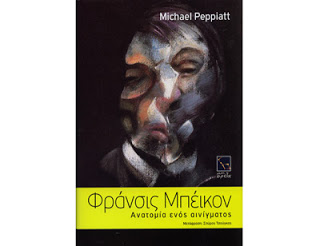
BIOGRAPHY : Francis Bacon, Anatomy of a Riddle by Michael Peppiatt

The Biography of Francis Bacon,one of the most important creators of the 20th century, released by Mikri Arktos publications, under the title Anatomy of an Enigma.
 Francis Bacon is one of the most charismatic and enigmatic authors of the 20th century. His paintings, immediately recognizable, they still defy interpretation and fuel controversy. Bacon was also a rare figure. Generous but cruel, straightforward character but also a skilled manipulator of others, cheerful and desperate, lived a life of extreme contradictions, full of achievements and triumphs, misfortunes and personal tragedies.

Little Bear is delighted to present to art lovers the revised edition of Michael Peppiatt's excellent biography of Francis Bacon,  entitled Anatomy of an Enigma translated by Spyros Tsougos, filling a bibliographic gap in the study of the work and life of the famous painter. Peppiatt uses new material entrusted to him by Bacon himself, but was not included in the first edition, and comes from their long discussions over many years, especially when the artist was working in Paris. So, we perceive in depth both the straits, personal relations of Bacon, his beliefs about art and his views on life as well as the, often, his caustic comments about his contemporaries.

"The biographer's powers of understanding and interpretation are revealed in Michael Peppiatt's account of the life and work of his friend Francis Bacon […] His account of Bacon's artistic career is confident, it is entertaining and provokes the reader's fruitful thought".
 "Bacon said that in a portrait he sought to capture all the pulse of a man. This expressive portrait of him achieves the same".
David Sylvester, Independent on Sunday
Michael Peppiatt : Michael Peppiatt is a writer, art critic and historian. He graduated from the University of Cambridge 1964, and initially worked at the magazine

The Observer as art critic. He then went to Paris as an editor at Réalités magazine. He remained in the French capital until 1969, and collaborated during this time as artistic editor at Le Monde newspaper. In his mid-teens 1970, covered cultural events across Europe for The New York Times and The Financial Times while also working as a Paris correspondent for various art magazines (Art News and Art International). The 1985, o Peppiatt becomes publisher of Art International, which is reissued in Paris.
The 1994 returns to London and writes the biography of Francis Bacon (1909-1992), with whom they had been close friends for thirty years. Bacon's Biography was selected as a "Book of the Year" by the New York Times and has been translated into many languages, while it is still regarded as the most complete and definitive record of the life and work of the great painter.

Peppiatt has curated many exhibitions, mainly retrospective, around the world: of the London School, by Francis Bacon, του Alberto Giacometti, by Christian Schad and Antoni Tapies. The 2005 he was awarded a PhD by the University of Cambridge for his publications on 20th century art.
He is a member of the Society of Writers and the Royal Society of Literature.
Info
Information
Biographies:
Translation: Spyros Tsougos
ISBN: 978-960-8104-31-0,15x21cm Bound, 512 p,L Price 31,00 euro
Editions: Little Bear. December 2011

Source : culturenow.gr

BIOGRAPHY : Francis Bacon, Anatomy of a Riddle by Michael Peppiatt

The Biography of Francis Bacon,one of the most important creators of the 20th century, released by Mikri Arktos publications, under the title Anatomy of an Enigma.
 Francis Bacon is one of the most charismatic and enigmatic authors of the 20th century. His paintings, immediately recognizable, they still defy interpretation and fuel controversy. Bacon was also a rare figure. Generous but cruel, straightforward character but also a skilled manipulator of others, cheerful and desperate, lived a life of extreme contradictions, full of achievements and triumphs, misfortunes and personal tragedies.

Little Bear is delighted to present to art lovers the revised edition of Michael Peppiatt's excellent biography of Francis Bacon,  entitled Anatomy of an Enigma translated by Spyros Tsougos, filling a bibliographic gap in the study of the work and life of the famous painter. Peppiatt uses new material entrusted to him by Bacon himself, but was not included in the first edition, and comes from their long discussions over many years, especially when the artist was working in Paris. So, we perceive in depth both the straits, personal relations of Bacon, his beliefs about art and his views on life as well as the, often, his caustic comments about his contemporaries.

"The biographer's powers of understanding and interpretation are revealed in Michael Peppiatt's account of the life and work of his friend Francis Bacon […] His account of Bacon's artistic career is confident, it is entertaining and provokes the reader's fruitful thought".
 "Bacon said that in a portrait he sought to capture all the pulse of a man. This expressive portrait of him achieves the same".
David Sylvester, Independent on Sunday
Michael Peppiatt : Michael Peppiatt is a writer, art critic and historian. He graduated from the University of Cambridge 1964, and initially worked at the magazine

The Observer as art critic. He then went to Paris as an editor at Réalités magazine. He remained in the French capital until 1969, and collaborated during this time as artistic editor at Le Monde newspaper. In his mid-teens 1970, covered cultural events across Europe for The New York Times and The Financial Times while also working as a Paris correspondent for various art magazines (Art News and Art International). The 1985, o Peppiatt becomes publisher of Art International, which is reissued in Paris.
The 1994 returns to London and writes the biography of Francis Bacon (1909-1992), with whom they had been close friends for thirty years. Bacon's Biography was selected as a "Book of the Year" by the New York Times and has been translated into many languages, while it is still regarded as the most complete and definitive record of the life and work of the great painter.

Peppiatt has curated many exhibitions, mainly retrospective, around the world: of the London School, by Francis Bacon, του Alberto Giacometti, by Christian Schad and Antoni Tapies. The 2005 he was awarded a PhD by the University of Cambridge for his publications on 20th century art.
He is a member of the Society of Writers and the Royal Society of Literature.
Info
Information
Biographies:
Translation: Spyros Tsougos
ISBN: 978-960-8104-31-0,15x21cm Bound, 512 p,L Price 31,00 euro
Editions: Little Bear. December 2011
Source : culturenow.gr

European Capital of Culture for 2012 Maribor, Slovenia

Slovenia's Maribor and partner cities will host a host of events as part of the European Capital of Culture 2012 project, which is officially put on track for implementation, with great celebration, at 14 January.
The cities of Maribor, Murska Sobota, Slovenia Grandec, Velenie, Novo Mesto and Ptui will jointly organize a program, divided into four sections, which includes 412 designs.
The 'Terminal 12' section focuses on artistic events and the 'Keys to the City' section on urban regeneration.
Projects on environmental and social issues are included in the Urban Channels section and the One Click to Life section is about online events.
During the opening event, the inauguration of the cultural embassies of more than 20 participating countries and the House of Architecture.
The European Union Commissioner will attend the event, responsible for Culture, Androula Vassiliou.
On Sunday, 15 January, the Slovenian National Theater in Maribor will present the opera for the first time “Black Masks” by Slovenian composer Marij Kogoi directed by Janez Burger.
Maribor is the first city in Slovenia to be declared European Capital of Culture by 1985, when the title of the first European Capital of Culture was given to Athens.
Except for the Slovenian city, the title of European Capital of Culture goes to Guimaraes, Portugal this year, where a grand opening event will be held on 21 January.

Source : protothema.gr

Evergreen Opel…

The 1862, ο Adam Opel, he could not even imagine that his company would become one of the largest car manufacturers in Europe. Using his father's locksmith shop, in Risselheim, Germany, he built sewing machines and the 1886 bicycles, while by the middle of his decade ?20, was the world's largest manufacturer. Later he started building motorcycles and the 1899 cars, being the second oldest car manufacturer in Germany after Daimler-Benz.
CHRONIC STATIONS
The 1902, Opel presents the patented Lutzmann with engine 10/12 hp, and they follow the Doktorwagen (1909) and Puppchen (1914). In his decade 1920 launches Laubfrosch (tree frog) and Rakete (rocket). The 1924, was the first German car manufacturer to use an automated assembly line, launching missile tests at the same time. In fact, the 1928, the rocket-powered Opel breaks the speed record (238 km / h) on the Berlin Avus circuit. The 1929, the Opel-Sander RAK1 takes off from a square in Frankfurt. She was the first, albeit short, manned flight of a rocket-propelled vehicle.
NEW ERA
The 1929 a global economic crisis breaks out and Opel collaborates with the American giant General Motors. The 1935 surpasses them 100.000 units of annual production. The new Blitz truck and the famous Olympia stand out, the first German production model with a self-supporting body made of steel. The 1936 the history of compact models begins: from the first Kadett, up to the current Astra.
In short...The War put everything on hold. It just finished, the German economic miracle was associated with several Opels: Olympia, Olympia Record, Rekord P1 and Kapitan, but also Frigidaire home refrigerators. The 1962, opens a second factory in Bochum, while his decade ?60 many sports models are manufactured: Commodore, Manta and GT. The 1972 a front-wheel-drive Kadett is produced for the first time, and 1980 displays a full range of catalysts. Many safety systems follow and we arrive at today's electric Ampera (and with a gasoline engine for autonomy 500 km).
Source : sport-fm.gr

our breath, Your review