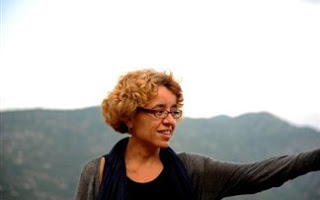
"Final titles" for Loukia Rikakis…
Loukia Rikaki was born in 1961 in Piraeus.
• Studied Art History, Cinema, Graphic Arts and Photography at Dartington College of Arts in England.
• Worked at the Council of Europe in Strasbourg and the Danish Ministry of the Environment as a training program manager.
• The 1982 returned to Greece and founded the company ORAMA FILMS one of the established production companies of theatrical performances and quality films for cinema and television and 2000 founded the company TRICKY TRICK FILMS.
• The 1996 founded them 2 theatrical scenes of the "Theater 104 – Speech and Art Center" and the Greek Comedy Club in Aiolou 48-50.
Loukia Rikakis taught actors at the "Workshop" of Vassilis Diamantopoulos and at Christies seminars in Greece.
She was in charge of educational programs of the IYF International Youth Federation. She has taught in executive education programs at the Council of Europe's European Youth Center and has been coordinator of the Council of Europe's research program on audiovisuals in education., the 1990.
She was a member of the European Youth Forum education committee and was in charge of cinema in teacher seminars of the MELINA program 2000.
See her extensive work in detail:
K i n i m a t o g r a f o s
Direction – feature films
2010 YOU ARE MY MIRROR in production
2007 YOU HURT MY HEART spinal tape, 4 directors
2000 TAINIA COMEDY SHOWS www.standupcomedy.gr
1998 SYMPHONIA XAPAKTHPÓN Worldfest Houston Bronze Award
1994 KOYAPTETO ΣE 4 KINHΣEIΣ – 2 state awards
1990 TAΞIΔI ΣTHN AYΣTPAΛIA
Documentary – Long length
2009 ACCEPTANCE… WHICH WIND BROUGHT US HERE;
2009 THE CHILDREN OF THE CHORUS
2007 I HAD TO LEAVE
2006 The COMMON What we have in common
2004 THE OTHER
2003 THE AEGEAN THROUGH THE SPEECH OF THE LATER AGOON Award- YΠΠO
2003 NYXTES COMEDY No2 – No 3 -No 4
2002 TA LOGIA THS SIOPHS – Kalamata Festival Best Descriptive Documentary Award – Scientific Film Festival Award Hungary www.wordsofsilence.gr
2003 Prize Festival of Scientific Film Hungary 2003 www.wordsofsilence.gr
1990 ΣTA IXNH TΩN APΓONAYTΩN 60′
Movies – Short Length
2007 AT YOUR SOLE DISCRETION
2006 THE STUDENTS
2002 ΠAPAΘYPO XPONOY
2000 TΩPA ΠIA TAΞIΔEYOYME – B’ Microcinema Award
1998 AΓKAΛIAZΩ TO ΔENTPO – Lille festival first Prize
1999 ANOIΞE MY OPTA
1983 THESSALONIKES
1981 THE PEPIPATOS THS SOYZY
Ntokymander – Short Length
2008 SMALL MOVES THAT WORTH IT
2000 FAKE PATCHES 30'
1989 MAPIA ΦAPANTOYPH ΛEO MΠPOOYEP 30′
1993 O ΘHΣAYPOΣ TOY ΠPIAMOY 30’
1992 THE XOPOS TON 20th CENTURY 55′
1992 ΠPEΛΛOYΔIO ΣTHN AΦPIKH
1993 APXAIO ΔPAMA SYXPONES OPTICS 55′
1986 TO TAΞIΔI TOY ΔIONYΣOY 60′
1987 TO MONOPATI ΣTHN INDIA 14'
1988 BAKXEΣ 80′
1992 KALLITEXNES AND POLITICOI APXITEKTONES THS NEAS EYPOPHS 60′
1991 HΛEKTPONIKH EIKONA – Documentary about the Ferrara 30 Festival′
1985 TO ΦEΣTIBAΛ TOY ΛOKAPNO 55′
Theater
1995 Pasolini's OPΓIA – Διασκευή-σκηνοθεσία στο Θέατρο Eλυζέ
1996 ΣOYPEAΛEPΩΣ – Πρωτότυπο έργο, συγγραφή-σκηνοθεσία, στο Θέατρο Φούρνος
1997 MOYΣIKH ΔYO – Της M.Nτύρας, μετάφραση-σκηνοθεσία, στο Θέατρο 104
1998 TO ANΘIΣMA THΣ ΘAΛAΣΣAΣ – Πρωτότυπο έργο, συγγραφή-σκηνοθεσία, Theater 104
1998 OΔYΣΣEΩΣ ΔIAΛOΓOI – Πρωτότυπο έργο, διασκευή-σκηνοθεσία, at the Concert Hall
1995-2003 NYXTEΣ KΩMΩΔIAΣ , στο Θέατρο 104 και στο Comedy Club – http://www.standupcomedy.gr/ ,
TV – Παραγωγή για την τηλεόραση των εξής σειρών πάνω στην τέχνη και σκηνοθεσία σε επιμέρους ενότητες των σειρών.
2003-2005 100% KΩMΩΔIA εκπομπή κωμωδίας Star Channel
1996 ZAΠ 13 επεισόδια X30’ ET1
1995 AΛHΘINEΣ IΣTOPIEΣ 13 επεισόδια X90’ ET2
1993 NTOKΙMANTΕP ΣOK 26 επεισόδια X 90’ ΣKAI
1993 ΣTH ΦAPMA TΩN ANΘPΩΠΩN 26 επεισοδια X 90’ ΣKAI
1992 ΨHΦIΔΩTO Τηλεπεριοδικό πολιτισμού 43 επεισοδια X 30’ ET2
1992 DANCE PLUS Σύγχρονοι Έλληνες χορευτές και χορογράφοι 45’ ET2
1991 TRAVEL ART Ταξίδια τέχνης ,η τέχνη του ταξιδιού 60 X 5’ ET2
1993 92,9 Ευρωπαϊκό τηλεπεριοδικό για νέους ET1
1992 ΣTHN TPEΛΛA THΣ ΔIAΦHMIΣHΣ με τον Γιώργο Βέλτσο 26 X 30’ ET1
1993 MAΓEIPIKH TEXNH 26 X 30’ ET1
1994 52 Τηλεπεριοδικό πολιτισμού 12 X 52’ ΣKAI
1992 Έλληνες καλλιτέχνες στη Σουηδία E.T.1 60’
1994 Πως είναι τα παιδιά 6 X 30’ ET1
1993 Τα Βασιλικά Μπαλέτα της Φλάνδρας 120’ E.T.1
1990 Σάκης Σουντουλίδης 30’ ET1
1991 Εικόνες Βίας και πολέμου στο μεσογειακό θέατρο 6 X 30’
1995 Κινηματογραφικό περιοδικό για το Γερμανικό κανάλι 30’ WDR
1995 ΣTA MONOΠATIA TΩN TPAΓOYΔIΩN για τους Aμποριτζινις 30’ RTP
1995 ENA ΦEΣTIBAΛ ΣTO ΠEPIΘΩPIO 30’ στην Aυστραλια
1985-1987 Εβδομαδιαία εκπομπή XPΩMATA E.T.1 72 επεισόδια X 60’
1995 EΛΛHNEΣ ΣTHN AYΣTPAΛIA τηλεοπτικη σειρα 4 επεισοδίων
1989 ΓIΩPΓOΣ KΩΣTAKHΣ ντοκιμαντέρ 30’ ET1
1990 ΣEPΓΚEI ΠAPATZANΩΦ Κανάλι Τέχνης Oλλανδια,30’ SVT Σουηδία
1983 HXOXPΩMA Eβδομαδιαία εκπομπη για τη μουσική ροκ 13 X30’ E.T.2
1982 EΔΩ KAI ΣHMEPA ANOIXTA XAPTIA E.T. βοηθός παραγωγής
“Το Μαγικό Βιολί”: Opera for children too
Once, in a gray state, there lived a king who hated beauty, colors and songs and forbade all citizens to sing and rejoice. He even imprisoned his daughter for singing one day when she was enchanted by a gypsy's violin, who accidentally entered the state. The king was frightened as soon as he heard the song and ordered to imprison all those who sang along with the gypsy, as well as to throw away his violin. Only one madman stayed out of prison and hid the violin.
The king now lives alone, companionship with the madman of the state. Hearing the violin awakens memories that fill him with sadness. It wasn't always like that. The death of his beloved queen filled him with pain. For the first time he reveals that he is afraid of pain. He believes that he who is not happy is not sad, therefore it does not hurt.
But the words of the madman and the music of the magic violin, the queen's gift to the gypsy, they awakened the goodness he had buried within him. The Apparition of the Queen and the Magical Tunes of the Violin, solve the magic. That's how everything changed.
Note by composer Nikos Xanthoulis
The opportunity came with the libretto competition for a musical fairy tale that we co-organized in the Educational Programs of the National Opera together with the National Book Center in November 2010. My good friend Marivita Grammatikaki made with a few sentences a draft of a fairy tale entitled The Magic Violin on which young students from all over Greece would compete in writing a libretto. The competition was held and the first prize was won by a student from Thessaloniki, Raphael Ketsetsidis. Joseph Vallet composed the work that was presented with great success at the 2nd Student Opera Festival, which was organized some months later.
Some time later, the European Organization OPERA EUROPA organized the European Opera Days in cooperation with most of the opera theaters of Europe [European Opera Days] at 7 and 8 of May 2011 titled "Young Ears" [Young Ears]. The translation of the theme was not accidental. People of any age who are open to new hearings have "young ears".. The National Opera House asked me to compose a work for all ages, a project that can be approached by an adult, but also a young viewer. I chose the Magic Violin without a second thought. I got lucky with Marivita Grammatikaki's libretto. We worked with great joy with all partners and with the people of the National Opera to be by our side in all difficulties. But the most beautiful thing... is to see the children's smiles after the show.
Composition and music direction Nikos Xanthoulis
Author – Lyricist Marivita Grammatikakis
Directed by Lena Georgiadou
Sets – Costumes Chrysanthi Psaropoulos
Lighting by Ioannis Pantelias
Choreography – Kinesiology Themistocles Pavlis
Direction of children's choir Rozi Mastrosavva
Horace (King) Alexandros Stavrakakis – George Roupas
Procas (Sneak) Pavlos Maropoulos – Zafeiris Koutelieris
Ed (Crazy) Panagiotis Athanasopoulos – Kostis Rasidakis
Rosa (Princess) Artemis Bogri – Gina Foteinopoulou
Amir (Romany) Nikos Stefanou – Thanasis Evangelou
Evita Hassapoglou dances
WRC : "Mythical Race"
Mini Rocketman close to production;
"The Magic Violin": Opera for children too
Once, in a gray state, there lived a king who hated beauty, colors and songs and forbade all citizens to sing and rejoice. He even imprisoned his daughter for singing one day when she was enchanted by a gypsy's violin, who accidentally entered the state. The king was frightened as soon as he heard the song and ordered to imprison all those who sang along with the gypsy, as well as to throw away his violin. Only one madman stayed out of prison and hid the violin.
The king now lives alone, companionship with the madman of the state. Hearing the violin awakens memories that fill him with sadness. It wasn't always like that. The death of his beloved queen filled him with pain. For the first time he reveals that he is afraid of pain. He believes that he who is not happy is not sad, therefore it does not hurt.
But the words of the madman and the music of the magic violin, the queen's gift to the gypsy, they awakened the goodness he had buried within him. The Apparition of the Queen and the Magical Tunes of the Violin, solve the magic. That's how everything changed.
Note by composer Nikos Xanthoulis
The opportunity came with the libretto competition for a musical fairy tale that we co-organized in the Educational Programs of the National Opera together with the National Book Center in November 2010. My good friend Marivita Grammatikaki made with a few sentences a draft of a fairy tale entitled The Magic Violin on which young students from all over Greece would compete in writing a libretto. The competition was held and the first prize was won by a student from Thessaloniki, Raphael Ketsetsidis. Joseph Vallet composed the work that was presented with great success at the 2nd Student Opera Festival, which was organized some months later.
Some time later, the European Organization OPERA EUROPA organized the European Opera Days in cooperation with most of the opera theaters of Europe [European Opera Days] at 7 and 8 of May 2011 titled "Young Ears" [Young Ears]. The translation of the theme was not accidental. People of any age who are open to new hearings have "young ears".. The National Opera House asked me to compose a work for all ages, a project that can be approached by an adult, but also a young viewer. I chose the Magic Violin without a second thought. I got lucky with Marivita Grammatikaki's libretto. We worked with great joy with all partners and with the people of the National Opera to be by our side in all difficulties. But the most beautiful thing... is to see the children's smiles after the show.
Composition and music direction Nikos Xanthoulis
Author – Lyricist Marivita Grammatikakis
Directed by Lena Georgiadou
Sets – Costumes Chrysanthi Psaropoulos
Lighting by Ioannis Pantelias
Choreography – Kinesiology Themistocles Pavlis
Direction of children's choir Rozi Mastrosavva
Horace (King) Alexandros Stavrakakis – George Roupas
Procas (Sneak) Pavlos Maropoulos – Zafeiris Koutelieris
Ed (Crazy) Panagiotis Athanasopoulos – Kostis Rasidakis
Rosa (Princess) Artemis Bogri – Gina Foteinopoulou
Amir (Romany) Nikos Stefanou – Thanasis Evangelou
Evita Hassapoglou dances