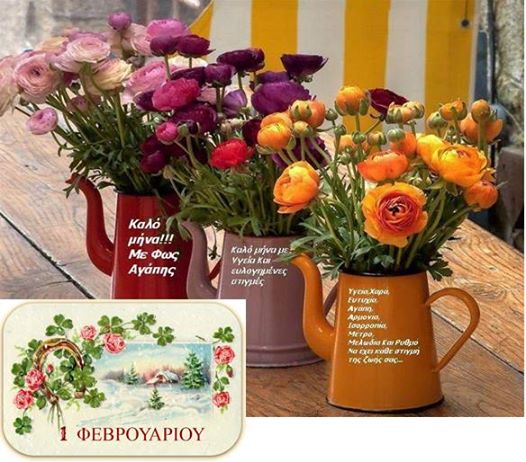
Arslanoglou Achilleas: GOOD MONTH

HAPPY, HAPPY, CREATIVE, BLESSED, HOPEFUL MONTH
February the second month of the year, with duration 28 days for common years and 29 leap days.
It was originally the twelfth and last month of the Roman calendar but when January became the first month of the calendar, around the 153 e.g., February was established as the second.
With the calendar reform of Julius Caesar, the 45 e.g., February had 29 days the common years and 30 partyou're in the middle of nowhere. Nevertheless, the 4 B.C. the emperor Octavian Augustus removed a day from February and added it to August, which was dedicated to him.
Its name comes from the Latin verb februare (sublimate, lustrate), due to the rites of purification and cleansing performed in Rome (February and Feralia), from which the later Apocreos celebrations and Carnival events originate.
According to others, the name February comes from "veins", that is, the underground water that springs up during its duration from the many rains.
In the ancient Attic calendar, February corresponded to the second fortnight of the month of Gamilion and the first fortnight of the month of Anthestirion. During this time in Athens, Theogamia was celebrated (in honor of the marriage of Zeus and Hera) and the Dispensaries (in honor of Dionysus), on the first day of which the jars with the new wine were opened.
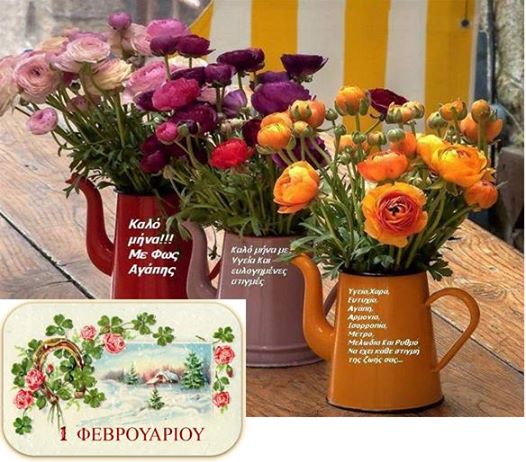

Arslanoglou Achilleas: GOOD MONTH

HAPPY, HAPPY, CREATIVE, BLESSED, HOPEFUL MONTH
February the second month of the year, with duration 28 days for common years and 29 leap days.
It was originally the twelfth and last month of the Roman calendar but when January became the first month of the calendar, around the 153 e.g., February was established as the second.
With the calendar reform of Julius Caesar, the 45 e.g., February had 29 days the common years and 30 partyou're in the middle of nowhere. Nevertheless, the 4 B.C. the emperor Octavian Augustus removed a day from February and added it to August, which was dedicated to him.
Its name comes from the Latin verb februare (sublimate, lustrate), due to the rites of purification and cleansing performed in Rome (February and Feralia), from which the later Apocreos celebrations and Carnival events originate.
According to others, the name February comes from "veins", that is, the underground water that springs up during its duration from the many rains.
In the ancient Attic calendar, February corresponded to the second fortnight of the month of Gamilion and the first fortnight of the month of Anthestirion. During this time in Athens, Theogamia was celebrated (in honor of the marriage of Zeus and Hera) and the Dispensaries (in honor of Dionysus), on the first day of which the jars with the new wine were opened.


Πνευματικό μνημόσυνο από το Δικηγορικό Σύλλογο Βέροιας‘Έπαινος σε αριστεύσαντα μαθητή.

From: http://www.verianet.gr

Σε μια σεμνή και λιτή τελετή, πραγματοποιήθηκε το καθιερωμένο πνευματικό μνημόσυνο που τελεί κάθε χρόνο ο Δικηγορικός Σύλλογος Βέροιας.
Η τελετή πραγματοποιήθηκε στην αίθουσα εκδηλώσεων του συλλόγου και παραβρέθηκαν, πλην των μελών του Δικηγορικού Συλλόγου, εκπρόσωπος του Σεβασμιωτάτου Μητροπολίτη Βεροίας και Ναούσης, του στρατηγού διοικητή της 1ης Μεραρχίας, της βουλευτού Ημαθίας, Φρόσως Καρασαρλίδου, ο δήμαρχος Βέροιας και μέλη του ΔΣ της Φιλοπτώχου Αδελφότητας.
Ο πρόεδρος του δικηγορικού συλλόγου, Φώτης Καραβασίλης ήταν ο ομιλητής, who, σύμφωνα με το τελετουργικό, διάβασε τα ονόματα αποβιωσάντων δικηγόρων, συμβολαιογράφων και υποθηκοφυλάκων.
Ακολούθησε απονομή επαίνου στον μαθητή Γεώργιο Τσιλιόπουλο, σύμφωνα με τα προβλεπόμενα του κληροδοτήματος Αικατερίνης και Αναστασίου Κάππου

Πνευματικό μνημόσυνο από το Δικηγορικό Σύλλογο Βέροιας‘Έπαινος σε αριστεύσαντα μαθητή.

From: http://www.verianet.gr

Σε μια σεμνή και λιτή τελετή, πραγματοποιήθηκε το καθιερωμένο πνευματικό μνημόσυνο που τελεί κάθε χρόνο ο Δικηγορικός Σύλλογος Βέροιας.
Η τελετή πραγματοποιήθηκε στην αίθουσα εκδηλώσεων του συλλόγου και παραβρέθηκαν, πλην των μελών του Δικηγορικού Συλλόγου, εκπρόσωπος του Σεβασμιωτάτου Μητροπολίτη Βεροίας και Ναούσης, του στρατηγού διοικητή της 1ης Μεραρχίας, της βουλευτού Ημαθίας, Φρόσως Καρασαρλίδου, ο δήμαρχος Βέροιας και μέλη του ΔΣ της Φιλοπτώχου Αδελφότητας.
Ο πρόεδρος του δικηγορικού συλλόγου, Φώτης Καραβασίλης ήταν ο ομιλητής, who, σύμφωνα με το τελετουργικό, διάβασε τα ονόματα αποβιωσάντων δικηγόρων, συμβολαιογράφων και υποθηκοφυλάκων.
Ακολούθησε απονομή επαίνου στον μαθητή Γεώργιο Τσιλιόπουλο, σύμφωνα με τα προβλεπόμενα του κληροδοτήματος Αικατερίνης και Αναστασίου Κάππου

THE TURKISH PAINTER WHO BECAME…. HAGIOGRAM AND SHARED HIS HAGIOGRAMS THROUGHOUT TURKEY!

Written by Nikos Cheiladakis

At 18 of February 2012, Alaattin Sürmeli passed away, a Turk… hagiographer, (yes indeed), who had caused a sensation throughout Turkey for his wonderful Greek Orthodox hagiographies.
Aladdin Surmeli became known for the first time in 26 September of 2000 when he had declared at the time on a TV show of the Turkish channel, NTV that he is a hagiographer and that he loves his profession which has given another dimension to his life.

Referring to how he became a hagiographer he had then confessed : "Once he had gone to visit the old Christian church of Antakya, (Antioch), a Greek Orthodox Christian priest. This priest was fascinated by a damaged icon and asked me to restore it and make it back to how it was, when the Christian iconographers of the old church had painted it. I decided to restore it and when I finished my work and showed it to the priest he was fascinated by my work. He showed the image to others and after a while other Christians came, (from where ;), and they asked me to paint Christian pictures. My work left them very satisfied, and then I started systematically dealing with hagiography and became a regular hagiographer".

Aladdin Surmeli, as reported by the Turkish media, from an early age he was inclined towards fine arts while reading history and was fascinated by the natural beauty which he had represented in his first works. He was the minion, as it typically states, of the famous Turkish actor, Nejat Uighur. Continuing his confessions he had said : "I believe that it was a divine command to deal with Christian mosaics. For years I had worked in Smyrna as an artist and painter 1967 I had returned disappointed to my homeland, Antakia and I started doing inscriptions, when then the Christian priest visited me to commission me to paint hagiographies. Από τότε έχει αλλάξει ριζικά όλη η ζωή μου και έχω επιδοθεί στην αγιογραφία με την οποία ασχολούμαι αποκλειστικά. Έχω ζωγραφίσει τον Ιησού Χριστό, την Πανάγια, Ανά Μεριέμ, (this is how Muslims call the Virgin Mary), as well as scenes from the miracles of Jesus Christ. All my works have surprised the Christians with their successful representation and the faithfulness of the icons I have painted and they constantly assign me new orders for the painting of Christian icons".

As Aladdin Surmeli pointed out, "Hagiography for me is not a simple art, but something more. Hagiography has become my whole life and I can't imagine myself doing anything else. With every image I deal with, first I concentrate on each line I will draw on it. Hagiography is an art that requires special attention and for this reason it needs special effort to perform".

The reputation of this Turkish hagiographer as the Turkish newspaper Cumhuriyet had written, at 26/9 2000, has spread throughout Turkey and beyond.

NIKOS CHILADAKIS
Journalist-Writer-Turkologist
www.nikosxeiladakis.gr

Journalist- Author- Turkologist, National Issues Greece, Turkey, Greek-Turkish …

THE TURKISH PAINTER WHO BECAME…. HAGIOGRAM AND SHARED HIS HAGIOGRAMS THROUGHOUT TURKEY!

Written by Nikos Cheiladakis

At 18 of February 2012, Alaattin Sürmeli passed away, a Turk… hagiographer, (yes indeed), who had caused a sensation throughout Turkey for his wonderful Greek Orthodox hagiographies.
Aladdin Surmeli became known for the first time in 26 September of 2000 when he had declared at the time on a TV show of the Turkish channel, NTV that he is a hagiographer and that he loves his profession which has given another dimension to his life.

Referring to how he became a hagiographer he had then confessed : "Once he had gone to visit the old Christian church of Antakya, (Antioch), a Greek Orthodox Christian priest. This priest was fascinated by a damaged icon and asked me to restore it and make it back to how it was, when the Christian iconographers of the old church had painted it. I decided to restore it and when I finished my work and showed it to the priest he was fascinated by my work. He showed the image to others and after a while other Christians came, (from where ;), and they asked me to paint Christian pictures. My work left them very satisfied, and then I started systematically dealing with hagiography and became a regular hagiographer".

Aladdin Surmeli, as reported by the Turkish media, from an early age he was inclined towards fine arts while reading history and was fascinated by the natural beauty which he had represented in his first works. He was the minion, as it typically states, of the famous Turkish actor, Nejat Uighur. Continuing his confessions he had said : "I believe that it was a divine command to deal with Christian mosaics. For years I had worked in Smyrna as an artist and painter 1967 I had returned disappointed to my homeland, Antakia and I started doing inscriptions, when then the Christian priest visited me to commission me to paint hagiographies. Από τότε έχει αλλάξει ριζικά όλη η ζωή μου και έχω επιδοθεί στην αγιογραφία με την οποία ασχολούμαι αποκλειστικά. Έχω ζωγραφίσει τον Ιησού Χριστό, την Πανάγια, Ανά Μεριέμ, (this is how Muslims call the Virgin Mary), as well as scenes from the miracles of Jesus Christ. All my works have surprised the Christians with their successful representation and the faithfulness of the icons I have painted and they constantly assign me new orders for the painting of Christian icons".

As Aladdin Surmeli pointed out, "Hagiography for me is not a simple art, but something more. Hagiography has become my whole life and I can't imagine myself doing anything else. With every image I deal with, first I concentrate on each line I will draw on it. Hagiography is an art that requires special attention and for this reason it needs special effort to perform".

The reputation of this Turkish hagiographer as the Turkish newspaper Cumhuriyet had written, at 26/9 2000, has spread throughout Turkey and beyond.

NIKOS CHILADAKIS
Journalist-Writer-Turkologist
www.nikosxeiladakis.gr

Journalist- Author- Turkologist, National Issues Greece, Turkey, Greek-Turkish …

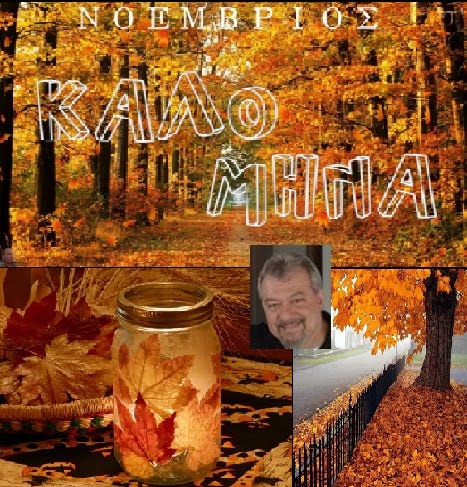
Happy November month.

GOOD MONTH MY FRIENDS

Let's enjoy the smells and colors of November

and let's hope they will fill us with beautiful feelings and moments of joy…
November is the eleventh month of the Gregorian calendar, he's got 30 days and starts every year on the same day that February and March start (with the exception of leap years). In the Roman calendar, he was ninth in line, as his name indicates (novem=nine) The Romans had dedicated it to Poseidon and celebrated the Poseidonia.
For the ancient Greeks, November was the 5th month of the Attic year and had the name "Maimakterion". This name comes from one of the names of God Zeus who was also called "Maimaktis", i.e. stormy. He was the god of the weather, and mortals held a feast in his honor to secure his favor with prayers, so that the weather is not threatening and dangerous for humans and the winds are not particularly fierce.
This month's featured flower is the chrysanthemum and the lucky stone is the topaz.
The most important farm job of the month, not only for the Greeks but for all the peoples of Meof soy, it's the thawing, i.e. the picking of olives for the production of oil. It starts in November and lasts up to three months in some places.
The feasts of the month include the feast of Archangels Michael and Gabriel, of Saint Philip, of Saint Catherine and Saint Andrew. The biggest, Nevertheless, feast of the month is the Entrance of the Virgin on 21 November.
Archangel Michael is considered as "the cat’ angel par excellence" and for this reason in certain areas, on the eve of his feast day, they brought their shoes inside the house so that the Archangel would not see them and come to take them before their time.
Since ancient times, various highly visible celestial objects have warned people as signs of weather changes. The best known example is the open Pleiades star cluster, better known as Puglia. From the time of Hesiod the setting of the Pleiades immediately after the setting of the Sun, which happens in mid-November, marked and marked the period of the coming of cold and warned the farmers to finish sowing.
The rain of lions, spectacular celestial phenomenon, happens every year around 17 November. Our land, during its orbit around the sun, encounters the particle cloud of Comet Temple-Tuttle. Tiny gram-weight particles hit the earth's atmosphere, they ignite and form a ball of light 2 to 3 meters moving at speed 30 to 60 kilometers (also known as a shooting star).


— 

our breath, Your review