Tag Archives: Celebration

Who is "haunted" by Kapodistrias...

Who “it haunts” Kapodistrias...
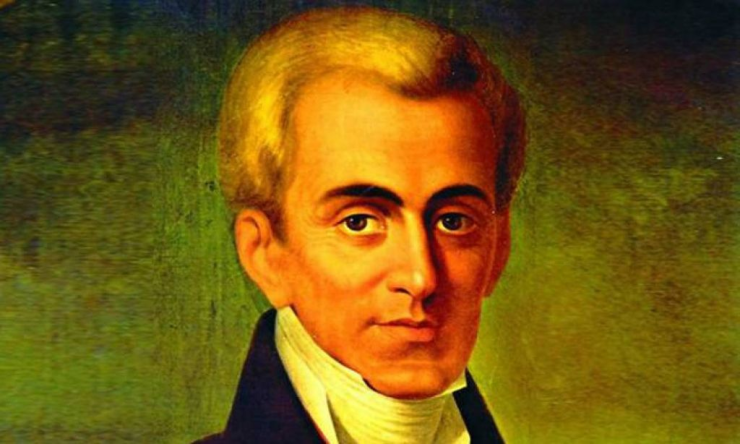
Member of the Committee for the celebration of 200 years since the Revolution 1821, undertook to… “deconstruct” the first governor of the country, Ioannis Kapodistrias...And responding to the intense reactions this caused, the President of the Commission, Mrs. Gianna Angelopoulou, stated that her Committee would present all views on the protagonists of the Palingenesis…
Mrs. didn't understand something. Angelopoulou. The celebration for the 200 years of the Revolution, It is NOT a History Conference! It is NOT a banquet “specialists” about everything and other things...
It is an anniversary event for the great symbolism of the Founding event of our modern history. It concerns all Greeks and the meaning they give to their common identity. In everything,what unites them and what,what makes them proud. That is, in how they make sense, themselves, not the “yesterday” of the Revolution, but the “today” theirs and the “tomorrow” of their children...
This is exactly how similar events in other Western countries were defined and how they functioned: for the 200 years of American Independence (1976 – under the Presidency of Gerald Ford) and for the 200 years of the French Revolution (1989 – during the Presidency of François Mitterrand).
The academic disputes between “researchers” or others “intellectuals” they have no place in such events.
Dealing with everyone who saw the light and came in to say “the long and the short of it”, is “childhood illness”.
We celebrate it 1821, what happened then and what it signifies for all of us now. We are not referring to “something else”. We don't imagine each other “revolution” more... colorful, cooler, more “modern and multicultural”, with a little “essence” from open arms to “illegal immigrants” and activists of “transgender” relations and of...32 “of different sexes”.
Maybe with a little... Me Too! To play it and “politically correct”…
This is all irrelevant! There was nothing there “politically correct” in Paligenesia. Fortunately…
(Like there is nothing “politically correct” in no real Revolution, in no popular uprising, in no real Freedom and Liberation Struggle)
Sometimes we have to overcome such immaturity and face the serious things as “adults”!
Not as rambunctious teenagers, not neophyte pedantic lecturers, not as employees “activists”, not as public relations nouveau riche.
We don't celebrate them 200 years, neither to deconstruct the protagonists of the Revolution nor to “let's write again” its history.
But to find the meaning of our national existence in the 21st Century...
If we can. And if we have...
What happened then is pretty much known. Files have been opened, events have been fully recorded by’ all sides, dozens of major historians have written, hundreds of researchers have searched, very few things truly new can come to light…
For Ioannis Kapodistrias, all the versions have been heard and with all the details.
Υπάρχουν πολλοί που επαινούν τον πρώτο Κυβερνήτη. There are also some who are more critical. In general, positive opinion has prevailed: He was the first great reformer of the country. Something that even his opponents at the time accept in retrospect.
To judge him today on his… state beliefs is ridiculous. To consider him… “dictator” so ridiculous.


* We are talking about the man who made the democratic Constitution of Switzerland! Which still exists.
In exemplary democratic Switzerland, they consider them “father of the nation” them and architect of their liberal state structure. And here we say...(come on don't say, better)
* Kapodistrias began his political career by proposing a Liberal Constitution in “Ionian State” of the Ionian Islands 1806 (then under Russian rule). For’ this even came into conflict with the Tsar's then overseer, who rejected his proposal.
* It is true that he refused the leadership of the Friendly Society when it was offered to him, the 1818. He did not believe that the planned Revolution could achieve its goals. But from the moment it started, he did not stop working on it for its success and for the Freedom of the Greeks.
Yes, for’ this came into conflict with the formidable Metternich, the father of European Conservatism at the time and its leader “Holy Alliance”, but also with Tsar Alexander I himself.


* And for’ this the revolted Greeks, in March 1827, when their Revolution was bleeding – even before “redemptive” Naval battle of Navarino, in October of the same year – by resolution of the 3rd National Assembly of Troizena, they again proposed Ioannis Kapodistrias as their first governor. Despite his earlier refusal to assume leadership of the Race.
* And in fact it was Theodoros Kolokotronis – an Anglophile at the time – who insisted. With the concurrence of Stratford Canning, British ambassador to the Ottoman Court and cousin of the then British Philhellenic Prime Minister George Canning (Unfortunately George Canning died a few months later)
* After all, a proposal for Kapodistrias to take over the leadership of the Struggle was previously made by Alexandros Mavrokordatos – also an Anglophile, since October 1821.
* But Dimitrios Ypsilantis had also invited Kapodistrias to lead it 1822.
* But also Petrobeis Mavromichalis himself (uncle and brother of his later murderers!) had invited Kapodistrias to assume the leadership of 1824.
What are they telling us now?;
The then revolutionary Greeks did not know who Kapodistrias was, who made successive proposals for him to lead,
the foreign Philhellenes of the time did not know that they trusted him,
the then enemies of Greek Independence did not know, like Metternich, who did not want to see him even painted,
but everyone comes today... “fufutos”, to “deconstruct” Ioannis Kapodistrias.
We are not well...
* Let's underline one more thing, which explains, perhaps, who and why set out to deconstruct Kapodistrias. And they continue to do so 200 years later. But they don't make it…
- Kapodistrias was not “man of the Russians”, as it is called.
Served at the court of Tsar Alexander the Great, but at the time when all the great powers were united against the Great Napoleon. Whose armies swept all over Europe, from Iberia to Moscow.
Kapodistrias put his stamp on the restoration of France after the Napoleonic Wars. So that they don't treat her “vengefully” its winners. For’ this and from time to time he was appreciated by all the rulers of the time: and the French and the British and the Russians. The Austrians and the Prussians had even decorated him (who did not like him very much).
also, όταν ήταν στην υπηρεσία του Τσάρου ήλθε σε προστριβές μαζί του, λόγω της στήριξης που επιζητούσε για την Ελληνική Επανάσταση. While along the way he occasionally came into conflict with both the British and the French. For the same reason.
-He was Greek over’ all! And some people still don't forgive him for that...
-He was Greek over’ all! Κι αυτό οι ξένοι διπλωμάτες και πολιτικοί της εποχής του το ήξεραν. Μόνο κάτι… καραγκιόζηδες σημερινοί στην Ελλάδα, δεν το έχουν καταλάβει ακόμα.
* Τέλος ο Καποδίστριας όταν ήλθε στην Ελλάδα, in January 1828, he found a country that still... didn't exist! And where,what was there was completely destroyed.
Beyond his remedial work at home, ο Καποδίστριας αμφισβήτησε και ανέτρεψε τις ως τότε αποφάσεις των Μεγάλων Δυνάμεων για τη χώρα.
–Πριν ακόμα αναλάβει επισήμως ως Κυβερνήτης, διαφωνούσε με την Συμφωνία της 6ης Ιουλίου 1827 μεταξύ των Μεγάλων Δυνάμεων με την οποία δινόταν στην Ελλάδααυτονομίαυπό την επικυριαρχία του Σουλτάνου – όχι Ανεξαρτησία! Και με σύνορα ως τη γραμμή Αχελώου-Μαλιακού!
Τότε οι Βρετανοί που είχαν δεσμευτεί να τον μεταφέρουν στην Ελλάδα, τον κρατούσαν και τον περιέφεραν επί μήνες (από Αγκόνα σε Μάλτα) για να δεχθεί τη Συμφωνία. Αλλά εκείνος δεν τη δεχόταν
–Στη συνέχεια, αυτό το καθεστώςβελτιώθηκεκάπως με τη Συμφωνία των Μεγάλων Δυνάμεων της 18ης Νοεμβρίου του 1828, η οποία όμως, έδινε πλέον την Πελοπόννησο (Μωριά) και τις Κυκλάδες υπό την εγγύηση των Μεγάλων Δυνάμεων. Αλλά ούτε αυτό ικανοποιούσε τον Καποδίστρια.
Ως Κυβερνήτης λοιπόν, το κύριο μέλημα του ήταν να επιτύχει πλήρη ανεξαρτησία από την Οθωμανική Αυτοκρατορία και να διευρύνει τα σύνορα της χώρας, Μάλιστα ανασυντάσσει τον ελληνικό στρατό, who achieves a series of impressive victories, overturning the data.
Finally with it “London Protocol” (January of 1830) εξασφαλίζει την Ανεξαρτησία της χώρας από την Τουρκία και σύνορα στη γραμμή Αχελώου-Σπερχειού.
Στο Λονδίνο θέτει και άμεση διεκδίκηση για τα νησιά του Ιονίου και την μέρος της Ηπείρου και την Κρήτη (όπου είχε ήδη στείλειαρμοστήαπό τον Ιούνιο του 1828). It is said that they initially accepted his request. And he constantly promoted the positions of the Greek army.
His murder (27/9-9/10 1831) put an end to this effort as well...
And the borders were finally stabilized (with subsequent London Protocol) the 1832, on the line Amvrakikos-Pagasitikos...
At the time when Kapodistrias came, he found a broken country, with damaged infrastructure, broken economy, deeply riven by local strife and borderless. He just arrived in Greece, and a deadly epidemic of plague broke out! (You know what he will say “plague”; Corona virus by a thousand!)
Until his middle 1829 Athens and Evia were still under the control of the Turks…
Apparently Kapodistrias worked “aggregated” then. Here and today, societies in crisis – war or otherwise – impose “emergency measures”…
Even now, two centuries later, in wartime, modern democracies, λειτουργούν υπό αυστηρά ελεγχόμενο καθεστώς. Προσωρινά έστω.
Και συζητάμε εμείς, αν ο Καποδίστριας που ήλθε τότε να διοικήσει μέσα στο…λάκκο των Λεόντων”, έδειξε…ευαισθησία στους δημοκρατικούς θεσμούς”! (που ουσιαστικά δεν υπήρχαν).
Για να καταλάβετε, τι εστί Καποδίστριας, αρκεί να αναφέρω ένα μόνο επιπρόσθετο στοιχείο:
The 1840, ο Πετρόμπεης Μαυτομιχάλης, ο αρχηγός της φαμίλιας που δολοφόνησε τον Ιωάννη Καποδίστρια, ακούγοντας κάποιον να κατηγορεί τον Καποδίστρια, εννιά χρόνια μετά τη δολοφονία του, είπε τούτα τα λόγια:
«Δεν μετράς καλά …. Ανάθεμα στους Αγγλογάλλους που ήσαν η αιτία κι εγώ έχασα τους δικούς μου, και το Έθνος έναν άνθρωπο που δε θα τονε ματαβρεί, και το αίμα του με παιδεύει ως τώρα …».
(Source: Γιάννη Βλαχογιάννη,”Ιστορική Ανθολογία”,σελ.59)
Ενώ ο Ελβετός Φιλέλληνας Γ. Εύνάρδος έγραψε σχετικώς: “Όστις δολοφόνησε τον Καποδίστρια, δολοφόνησε την πατρίδα του. Ο θάνατός του είναι συμφορά για την Ελλάδα και δυστύχημα ευρωπαϊκόν».
Καταλάβατε τώρα;
Στην Ελλάδα ακόμα και οι εχθροί του, την εποχή εκείνη, τον τιμούσαν!.
Ακόμα και από την οικογένεια των δολοφόνων του εκφράζουν τύψεις και θαυμασμό για το πρόσωπό του.
Οι ξένοι φιλέλληνες της εποχής του θεωρούν τη δολοφονία του, “δυστύχημα ευρωπαίκό”…
Και κάποιοι εδώ τον…αποδομούν” today!
Έτσι θαγιορτάσουμε” the 200 years of the Revolution;
Πάτε καλά, ρε;
Θανάσης Κ.
ΥΓ- Ελπίζω να μη βρεθεί καμία απόγονος της Δουκίσσης της Πλακεντίας (where “κάτι έπαιξεμε τον Καποδίστρια, αλλά μετά τονπούλησε”), να βγει και να φωνάζει… Me Too!
Τους έχω ικανούς μερικούς-μερικούς.
(Παρεμπιπτόντως, πραγματικά μεγάλη αγάπη του ήταν η αρχόντισσα Ρωξάντρα Στρούντζα)

Who is "haunted" by Kapodistrias...

Who “it haunts” Kapodistrias...
Member of the Committee for the celebration of 200 years since the Revolution 1821, undertook to… “deconstruct” the first governor of the country, Ioannis Kapodistrias...And responding to the intense reactions this caused, the President of the Commission, Mrs. Gianna Angelopoulou, stated that her Committee would present all views on the protagonists of the Palingenesis…
Mrs. didn't understand something. Angelopoulou. The celebration for the 200 years of the Revolution, It is NOT a History Conference! It is NOT a banquet “specialists” about everything and other things...
It is an anniversary event for the great symbolism of the Founding event of our modern history. It concerns all Greeks and the meaning they give to their common identity. In everything,what unites them and what,what makes them proud. That is, in how they make sense, themselves, not the “yesterday” of the Revolution, but the “today” theirs and the “tomorrow” of their children...
This is exactly how similar events in other Western countries were defined and how they functioned: for the 200 years of American Independence (1976 – under the Presidency of Gerald Ford) and for the 200 years of the French Revolution (1989 – during the Presidency of François Mitterrand).
The academic disputes between “researchers” or others “intellectuals” they have no place in such events.
Dealing with everyone who saw the light and came in to say “the long and the short of it”, is “childhood illness”.
We celebrate it 1821, what happened then and what it signifies for all of us now. We are not referring to “something else”. We don't imagine each other “revolution” more... colorful, cooler, more “modern and multicultural”, with a little “essence” from open arms to “illegal immigrants” and activists of “transgender” relations and of...32 “of different sexes”.
Maybe with a little... Me Too! To play it and “politically correct”…
This is all irrelevant! There was nothing there “politically correct” in Paligenesia. Fortunately…
(Like there is nothing “politically correct” in no real Revolution, in no popular uprising, in no real Freedom and Liberation Struggle)
Sometimes we have to overcome such immaturity and face the serious things as “adults”!
Not as rambunctious teenagers, not neophyte pedantic lecturers, not as employees “activists”, not as public relations nouveau riche.
We don't celebrate them 200 years, neither to deconstruct the protagonists of the Revolution nor to “let's write again” its history.
But to find the meaning of our national existence in the 21st Century...
If we can. And if we have...
What happened then is pretty much known. Files have been opened, events have been fully recorded by’ all sides, dozens of major historians have written, hundreds of researchers have searched, very few things truly new can come to light…
For Ioannis Kapodistrias, all the versions have been heard and with all the details.
Υπάρχουν πολλοί που επαινούν τον πρώτο Κυβερνήτη. There are also some who are more critical. In general, positive opinion has prevailed: He was the first great reformer of the country. Something that even his opponents at the time accept in retrospect.
To judge him today on his… state beliefs is ridiculous. To consider him… “dictator” so ridiculous.


* We are talking about the man who made the democratic Constitution of Switzerland! Which still exists.
In exemplary democratic Switzerland, they consider them “father of the nation” them and architect of their liberal state structure. And here we say...(come on don't say, better)
* Kapodistrias began his political career by proposing a Liberal Constitution in “Ionian State” of the Ionian Islands 1806 (then under Russian rule). For’ this even came into conflict with the Tsar's then overseer, who rejected his proposal.
* It is true that he refused the leadership of the Friendly Society when it was offered to him, the 1818. He did not believe that the planned Revolution could achieve its goals. But from the moment it started, he did not stop working on it for its success and for the Freedom of the Greeks.
Yes, for’ this came into conflict with the formidable Metternich, the father of European Conservatism at the time and its leader “Holy Alliance”, but also with Tsar Alexander I himself.


* And for’ this the revolted Greeks, in March 1827, when their Revolution was bleeding – even before “redemptive” Naval battle of Navarino, in October of the same year – by resolution of the 3rd National Assembly of Troizena, they again proposed Ioannis Kapodistrias as their first governor. Despite his earlier refusal to assume leadership of the Race.
* And in fact it was Theodoros Kolokotronis – an Anglophile at the time – who insisted. With the concurrence of Stratford Canning, British ambassador to the Ottoman Court and cousin of the then British Philhellenic Prime Minister George Canning (Unfortunately George Canning died a few months later)
* After all, a proposal for Kapodistrias to take over the leadership of the Struggle was previously made by Alexandros Mavrokordatos – also an Anglophile, since October 1821.
* But Dimitrios Ypsilantis had also invited Kapodistrias to lead it 1822.
* But also Petrobeis Mavromichalis himself (uncle and brother of his later murderers!) had invited Kapodistrias to assume the leadership of 1824.
What are they telling us now?;
The then revolutionary Greeks did not know who Kapodistrias was, who made successive proposals for him to lead,
the foreign Philhellenes of the time did not know that they trusted him,
the then enemies of Greek Independence did not know, like Metternich, who did not want to see him even painted,
but everyone comes today... “fufutos”, to “deconstruct” Ioannis Kapodistrias.
We are not well...
* Let's underline one more thing, which explains, perhaps, who and why set out to deconstruct Kapodistrias. And they continue to do so 200 years later. But they don't make it…
- Kapodistrias was not “man of the Russians”, as it is called.
Served at the court of Tsar Alexander the Great, but at the time when all the great powers were united against the Great Napoleon. Whose armies swept all over Europe, from Iberia to Moscow.
Kapodistrias put his stamp on the restoration of France after the Napoleonic Wars. So that they don't treat her “vengefully” its winners. For’ this and from time to time he was appreciated by all the rulers of the time: and the French and the British and the Russians. The Austrians and the Prussians had even decorated him (who did not like him very much).
also, όταν ήταν στην υπηρεσία του Τσάρου ήλθε σε προστριβές μαζί του, λόγω της στήριξης που επιζητούσε για την Ελληνική Επανάσταση. While along the way he occasionally came into conflict with both the British and the French. For the same reason.
-He was Greek over’ all! And some people still don't forgive him for that...
-He was Greek over’ all! Κι αυτό οι ξένοι διπλωμάτες και πολιτικοί της εποχής του το ήξεραν. Μόνο κάτι… καραγκιόζηδες σημερινοί στην Ελλάδα, δεν το έχουν καταλάβει ακόμα.
* Τέλος ο Καποδίστριας όταν ήλθε στην Ελλάδα, in January 1828, he found a country that still... didn't exist! And where,what was there was completely destroyed.
Beyond his remedial work at home, ο Καποδίστριας αμφισβήτησε και ανέτρεψε τις ως τότε αποφάσεις των Μεγάλων Δυνάμεων για τη χώρα.
–Πριν ακόμα αναλάβει επισήμως ως Κυβερνήτης, διαφωνούσε με την Συμφωνία της 6ης Ιουλίου 1827 μεταξύ των Μεγάλων Δυνάμεων με την οποία δινόταν στην Ελλάδααυτονομίαυπό την επικυριαρχία του Σουλτάνου – όχι Ανεξαρτησία! Και με σύνορα ως τη γραμμή Αχελώου-Μαλιακού!
Τότε οι Βρετανοί που είχαν δεσμευτεί να τον μεταφέρουν στην Ελλάδα, τον κρατούσαν και τον περιέφεραν επί μήνες (από Αγκόνα σε Μάλτα) για να δεχθεί τη Συμφωνία. Αλλά εκείνος δεν τη δεχόταν
–Στη συνέχεια, αυτό το καθεστώςβελτιώθηκεκάπως με τη Συμφωνία των Μεγάλων Δυνάμεων της 18ης Νοεμβρίου του 1828, η οποία όμως, έδινε πλέον την Πελοπόννησο (Μωριά) και τις Κυκλάδες υπό την εγγύηση των Μεγάλων Δυνάμεων. Αλλά ούτε αυτό ικανοποιούσε τον Καποδίστρια.
Ως Κυβερνήτης λοιπόν, το κύριο μέλημα του ήταν να επιτύχει πλήρη ανεξαρτησία από την Οθωμανική Αυτοκρατορία και να διευρύνει τα σύνορα της χώρας, Μάλιστα ανασυντάσσει τον ελληνικό στρατό, who achieves a series of impressive victories, overturning the data.
Finally with it “London Protocol” (January of 1830) εξασφαλίζει την Ανεξαρτησία της χώρας από την Τουρκία και σύνορα στη γραμμή Αχελώου-Σπερχειού.
Στο Λονδίνο θέτει και άμεση διεκδίκηση για τα νησιά του Ιονίου και την μέρος της Ηπείρου και την Κρήτη (όπου είχε ήδη στείλειαρμοστήαπό τον Ιούνιο του 1828). It is said that they initially accepted his request. And he constantly promoted the positions of the Greek army.
His murder (27/9-9/10 1831) put an end to this effort as well...
And the borders were finally stabilized (with subsequent London Protocol) the 1832, on the line Amvrakikos-Pagasitikos...
At the time when Kapodistrias came, he found a broken country, with damaged infrastructure, broken economy, deeply riven by local strife and borderless. He just arrived in Greece, and a deadly epidemic of plague broke out! (You know what he will say “plague”; Corona virus by a thousand!)
Until his middle 1829 Athens and Evia were still under the control of the Turks…
Apparently Kapodistrias worked “aggregated” then. Here and today, societies in crisis – war or otherwise – impose “emergency measures”…
Even now, two centuries later, in wartime, modern democracies, λειτουργούν υπό αυστηρά ελεγχόμενο καθεστώς. Προσωρινά έστω.
Και συζητάμε εμείς, αν ο Καποδίστριας που ήλθε τότε να διοικήσει μέσα στο…λάκκο των Λεόντων”, έδειξε…ευαισθησία στους δημοκρατικούς θεσμούς”! (που ουσιαστικά δεν υπήρχαν).
Για να καταλάβετε, τι εστί Καποδίστριας, αρκεί να αναφέρω ένα μόνο επιπρόσθετο στοιχείο:
The 1840, ο Πετρόμπεης Μαυτομιχάλης, ο αρχηγός της φαμίλιας που δολοφόνησε τον Ιωάννη Καποδίστρια, ακούγοντας κάποιον να κατηγορεί τον Καποδίστρια, εννιά χρόνια μετά τη δολοφονία του, είπε τούτα τα λόγια:
«Δεν μετράς καλά …. Ανάθεμα στους Αγγλογάλλους που ήσαν η αιτία κι εγώ έχασα τους δικούς μου, και το Έθνος έναν άνθρωπο που δε θα τονε ματαβρεί, και το αίμα του με παιδεύει ως τώρα …».
(Source: Γιάννη Βλαχογιάννη,”Ιστορική Ανθολογία”,σελ.59)
Ενώ ο Ελβετός Φιλέλληνας Γ. Εύνάρδος έγραψε σχετικώς: “Όστις δολοφόνησε τον Καποδίστρια, δολοφόνησε την πατρίδα του. Ο θάνατός του είναι συμφορά για την Ελλάδα και δυστύχημα ευρωπαϊκόν».
Καταλάβατε τώρα;
Στην Ελλάδα ακόμα και οι εχθροί του, την εποχή εκείνη, τον τιμούσαν!.
Ακόμα και από την οικογένεια των δολοφόνων του εκφράζουν τύψεις και θαυμασμό για το πρόσωπό του.
Οι ξένοι φιλέλληνες της εποχής του θεωρούν τη δολοφονία του, “δυστύχημα ευρωπαίκό”…
Και κάποιοι εδώ τον…αποδομούν” today!
Έτσι θαγιορτάσουμε” the 200 years of the Revolution;
Πάτε καλά, ρε;
Θανάσης Κ.
ΥΓ- Ελπίζω να μη βρεθεί καμία απόγονος της Δουκίσσης της Πλακεντίας (where “κάτι έπαιξεμε τον Καποδίστρια, αλλά μετά τονπούλησε”), να βγει και να φωνάζει… Me Too!
Τους έχω ικανούς μερικούς-μερικούς.
(Παρεμπιπτόντως, πραγματικά μεγάλη αγάπη του ήταν η αρχόντισσα Ρωξάντρα Στρούντζα)