

From: http://www.o-klooun.com/anadimosiefseis/den-einai-orxistra-einai-epanastasi#.U4uOoHaVBRx
“… is not orchestra, it's a revolution …”
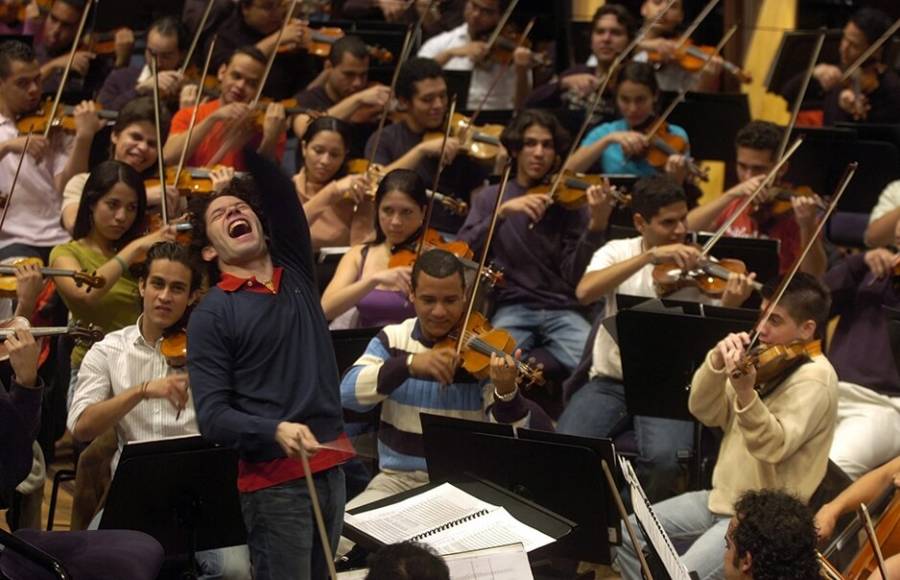
You see it and you want to
crying. Out of emotion ; Out of admiration; Out of grief for ours; Not
know. Many years ago a man in Venezuela
set out to make a dream come true. It was Jose Abreu who collected
children from every poor corner of his country and began to learn them
music to draw them away from crime, the drugs, the
misery and the dangers it carries with it!!!
crying. Out of emotion ; Out of admiration; Out of grief for ours; Not
know. Many years ago a man in Venezuela
set out to make a dream come true. It was Jose Abreu who collected
children from every poor corner of his country and began to learn them
music to draw them away from crime, the drugs, the
misery and the dangers it carries with it!!!
His plan was called el Systema.
A few years later, 250.000 (!)
children learned music, and school orchestras began to be formed.
Orchestras across the country surpassed the 100 and of these the 90 is
symphonic !
children learned music, and school orchestras began to be formed.
Orchestras across the country surpassed the 100 and of these the 90 is
symphonic !
The best of these youngsters
musicians gather in central orchestras, topped by the Orchestra
Simon Bolivar, who at this time runs another el product
System, the 28-year-old conductor Gustavo Dudamel, which is also here
and a few months the new conductor of the Los Angeles Philharmonic.
musicians gather in central orchestras, topped by the Orchestra
Simon Bolivar, who at this time runs another el product
System, the 28-year-old conductor Gustavo Dudamel, which is also here
and a few months the new conductor of the Los Angeles Philharmonic.
Edgar grew up in one of the most
tough neighborhoods of Caracas. He was afraid to leave his house and
he was afraid to turn around. Only music could distract him from her
bad situation he was experiencing. She went to her El Sistema branch
his neighborhood and asked for a trumpet. They couldn't find him. Of
but they gave a bassoon. Now, Edgar believes that this bassoon of his
save life. El Sistema could be the name of a revolutionary
organization since the 1930s. Perhaps this comes to mind
because El Sistema was born and developed in Venezuela, a country that fought for many years for its independence but also for the abolition of totalitarian regimes.
tough neighborhoods of Caracas. He was afraid to leave his house and
he was afraid to turn around. Only music could distract him from her
bad situation he was experiencing. She went to her El Sistema branch
his neighborhood and asked for a trumpet. They couldn't find him. Of
but they gave a bassoon. Now, Edgar believes that this bassoon of his
save life. El Sistema could be the name of a revolutionary
organization since the 1930s. Perhaps this comes to mind
because El Sistema was born and developed in Venezuela, a country that fought for many years for its independence but also for the abolition of totalitarian regimes.
El Sistema is a thought that
born in the mind of Jose Antonio Abreu, of an economist who
more than anything he loved people and music. O
Abreu believed that, however poor a man may be, if he can
access music, his life will change. And it turned out
that he was absolutely right.
born in the mind of Jose Antonio Abreu, of an economist who
more than anything he loved people and music. O
Abreu believed that, however poor a man may be, if he can
access music, his life will change. And it turned out
that he was absolutely right.

The beginning – the development
In 1975 Jose Antonio Abreu tried to create one orchestra where the musicians, instead of each studying alone, they would all study together.
There was already a similar experience in Venezuela,
where the students of the schools went after school to large
halls and they were all preparing their work together for the next day.
where the students of the schools went after school to large
halls and they were all preparing their work together for the next day.
This was not some kind of innovation
in the way of studying. Simply, most parents worked late
and, if the children returned to their neighborhoods, they would avoid to
study, with the result that the country maintains its low educational level
level.
in the way of studying. Simply, most parents worked late
and, if the children returned to their neighborhoods, they would avoid to
study, with the result that the country maintains its low educational level
level.
Additional, crime and use
drugs were very common. So, children were at risk in each
step them. Abreu was able to find kids who had some talent in the
music but also teachers from all over Venezuela.
drugs were very common. So, children were at risk in each
step them. Abreu was able to find kids who had some talent in the
music but also teachers from all over Venezuela.
His first orchestra, its National Youth Symphony Orchestra Venezuelas, was created on 12 of February 1975 and gave her first concert on 30 April of the same year.
Very quickly he connected with other orchestras and also recorded with many well-known conductors. THE orchestra
it soon became a magnet for many young people. Very soon though
more wanted to study Tchaikovsky, Mozart or Berlioz and
almost everyone wanted to attend her concerts orchestras.
it soon became a magnet for many young people. Very soon though
more wanted to study Tchaikovsky, Mozart or Berlioz and
almost everyone wanted to attend her concerts orchestras.

Any outside observer would think that all this effort would have no chance of success.
Abreu and his colleagues argued that they would succeed.
Their central message to the youth of the whole country was "Play and fight".
But the first ones who had to compete
for the success of the program were the same. They put in all the energy
and all their faith p’ this purpose.
for the success of the program were the same. They put in all the energy
and all their faith p’ this purpose.
Four years after her timid beginning orchestras,
at 20 of February 1979, Abreu gets the green light to
extend the program. Now every city or even every neighborhood can
create her own orchestra where
will consist of children and young people. Each child will choose an instrument,
he will get it for free and meet up with the rest of the kids in big
halls to study under the instruction of her best teachers
country. Naturally, the program went through enormous difficulties.
at 20 of February 1979, Abreu gets the green light to
extend the program. Now every city or even every neighborhood can
create her own orchestra where
will consist of children and young people. Each child will choose an instrument,
he will get it for free and meet up with the rest of the kids in big
halls to study under the instruction of her best teachers
country. Naturally, the program went through enormous difficulties.
Its funding was reduced in times of crisis – it spent several n Venezuela– causing Abreu and his team to fight hard to keep it alive.
But today, El Sistema, where it is
now developed into nucleos (cores), is under his supervision 150
youth orchestras and 70 children's orchestras, which are found in almost all of them
its cities Venezuelas. The country's best musicians are channeled into orchestra young Simon Bolivar, which is also the central one orchestra
of the program. The preschool children program
they start working on the expressiveness of the body and the
pace.
now developed into nucleos (cores), is under his supervision 150
youth orchestras and 70 children's orchestras, which are found in almost all of them
its cities Venezuelas. The country's best musicians are channeled into orchestra young Simon Bolivar, which is also the central one orchestra
of the program. The preschool children program
they start working on the expressiveness of the body and the
pace.
Encouraging children to keep it
their bodies active while playing, is one of its keys
program development. At the age of five, the children
they get their first instruments, usually wooden flutes and percussion.
At the same time they also join a choir, so that they start to get used to it
in group work. At the age of seven, children can
pick up their first string or wind instrument. They can change
instruments, but they are not encouraged to do so often. Their original
training includes singing and studying the instrument.
their bodies active while playing, is one of its keys
program development. At the age of five, the children
they get their first instruments, usually wooden flutes and percussion.
At the same time they also join a choir, so that they start to get used to it
in group work. At the age of seven, children can
pick up their first string or wind instrument. They can change
instruments, but they are not encouraged to do so often. Their original
training includes singing and studying the instrument.
They often concentrate on playing one
and just a note so that they get a sense of its quality
sound for their instrument. There are three levels of daily study: At
first, children work with the whole orchestra,
in the second they play in smaller ensembles and in the third they study individually.
At all these levels, each child's teacher is the same. This
it results in the learning process going faster,
as the teacher knows early on the strengths and weaknesses of each
student.
and just a note so that they get a sense of its quality
sound for their instrument. There are three levels of daily study: At
first, children work with the whole orchestra,
in the second they play in smaller ensembles and in the third they study individually.
At all these levels, each child's teacher is the same. This
it results in the learning process going faster,
as the teacher knows early on the strengths and weaknesses of each
student.
Students perform in front of an audience as long as
as much as possible, which reduces exposure anxiety as the
concert becomes a natural part of the artistic process. also, the
young musicians are encouraged to attend other youth orchestras as well
so that they get inspiration from them. Children play from a very early age
and with other orchestras besides their own. In fact, they are still participating
and in orchestra Simon Bolivar, in which the best musicians of the country become regular members.
as much as possible, which reduces exposure anxiety as the
concert becomes a natural part of the artistic process. also, the
young musicians are encouraged to attend other youth orchestras as well
so that they get inspiration from them. Children play from a very early age
and with other orchestras besides their own. In fact, they are still participating
and in orchestra Simon Bolivar, in which the best musicians of the country become regular members.
The main purpose of El Sistema is to
create a sense of security and joy in young people
musicians, while building their self-confidence through it
sense of value of the individual within the group. Discipline is not the
most basic part of the process but, when it is not a result
pressure, considered a useful tool. Attending the lessons does not
is mandatory. Children participate for themselves, the friends
and their teachers.
create a sense of security and joy in young people
musicians, while building their self-confidence through it
sense of value of the individual within the group. Discipline is not the
most basic part of the process but, when it is not a result
pressure, considered a useful tool. Attending the lessons does not
is mandatory. Children participate for themselves, the friends
and their teachers.
No hard work on their part
students, the program would be headed for certain failure. Nevertheless, or
fun and the game is never forgotten.
students, the program would be headed for certain failure. Nevertheless, or
fun and the game is never forgotten.
The vast majority of teachers and
of the stems of each core, comes from his former students
program. They are the ones who best understand the goals and
process needs, they are the ones who understand how
young musicians feel. Teachers engage with each child
separately.
of the stems of each core, comes from his former students
program. They are the ones who best understand the goals and
process needs, they are the ones who understand how
young musicians feel. Teachers engage with each child
separately.
If a child misses two in a row
times from the lesson, they go to his house to see what's going on. THE
their goal is not to observe the child, but yes
discuss with him the reasons why he did not come to
lessons,so that they make it feel better.
times from the lesson, they go to his house to see what's going on. THE
their goal is not to observe the child, but yes
discuss with him the reasons why he did not come to
lessons,so that they make it feel better.
Often, cores adjust by one
rate their operation to the needs of the children. El Sistema has
now a series of specific rules, which over the years
of its operation, have proven effective. For example, The day for the draw of the two lucky ones
musical level, the program managers have found that it is
better to choose the simplest possible orchestration, so that
all the children play together and make a very loud sound.
rate their operation to the needs of the children. El Sistema has
now a series of specific rules, which over the years
of its operation, have proven effective. For example, The day for the draw of the two lucky ones
musical level, the program managers have found that it is
better to choose the simplest possible orchestration, so that
all the children play together and make a very loud sound.
Of course, the orchestration changes as the
guys level up. But the loud sound produced by many
instruments playing together remains. As her manager says orchestras
young Simon Bolivar, Gustavo Dudamel, "when we play for example the
Thursday of Beethoven, Thursday becomes the biggest and most important
issue of the world". The orchestras deal with the works of the well-known and
of great classical composers but also with many works from their repertoire
Latin American composers, which is also much closer
to the sounds that children have in their ear from the moment they
were born. The program works very closely with their parents
children.
guys level up. But the loud sound produced by many
instruments playing together remains. As her manager says orchestras
young Simon Bolivar, Gustavo Dudamel, "when we play for example the
Thursday of Beethoven, Thursday becomes the biggest and most important
issue of the world". The orchestras deal with the works of the well-known and
of great classical composers but also with many works from their repertoire
Latin American composers, which is also much closer
to the sounds that children have in their ear from the moment they
were born. The program works very closely with their parents
children.
When a child turns two or three years old,
the people in charge of the program meet his parents and explain to them
all the details and difficulties they may encounter. Emotions are the language that the body uses to communicate its needs
children get their first instruments, teachers talk to
parents about how they should treat children
and to encourage them in their study. Since a child
decides to enter one orchestra,
he gets a scholarship. This is an honor for his family but he has
and practical value: the child will no longer need to leave the
program because it has to work.
the people in charge of the program meet his parents and explain to them
all the details and difficulties they may encounter. Emotions are the language that the body uses to communicate its needs
children get their first instruments, teachers talk to
parents about how they should treat children
and to encourage them in their study. Since a child
decides to enter one orchestra,
he gets a scholarship. This is an honor for his family but he has
and practical value: the child will no longer need to leave the
program because it has to work.
El Sistema started more than
love of children and less than love of music. The emphasis is on
in community development and solidarity. The teachers, the
students and parents are in an atmosphere of mutual respect and
love that makes them feel safe and happy. Inside a
country that went through very difficult times, the feeling of being held
his life in his hands is a very positive thing. And the children of El
Sistema not only feel that they can live as beautifully as they want, but
and that they can change the world.
love of children and less than love of music. The emphasis is on
in community development and solidarity. The teachers, the
students and parents are in an atmosphere of mutual respect and
love that makes them feel safe and happy. Inside a
country that went through very difficult times, the feeling of being held
his life in his hands is a very positive thing. And the children of El
Sistema not only feel that they can live as beautifully as they want, but
and that they can change the world.
The recognition The most global
organizations have recognized El Sistema as a great social
experiment to the extent that it succeeded in reducing poverty and raising it
educational level of its people Venezuelas.
But at the same time, it is also a great music learning program.
Countries like Argentina, Australia, Bolivia, Brazil, Canada, or
Costa Rica, Cuba, Ecuador, Peru, Scotland and very recently
most North American states, they wanted to
try. Perhaps no one expected a few years ago that a country
which has gone through dozens of major problems, like the Venezuela, could be a model for so many countries.
organizations have recognized El Sistema as a great social
experiment to the extent that it succeeded in reducing poverty and raising it
educational level of its people Venezuelas.
But at the same time, it is also a great music learning program.
Countries like Argentina, Australia, Bolivia, Brazil, Canada, or
Costa Rica, Cuba, Ecuador, Peru, Scotland and very recently
most North American states, they wanted to
try. Perhaps no one expected a few years ago that a country
which has gone through dozens of major problems, like the Venezuela, could be a model for so many countries.
On a purely musical level, young people who
started through El Sistema found themselves over the years in some of
the best orchestras in the whole world. But also the central one orchestra of the program, or orchestra
young Simon Bolivar, is considered today as one of the most important.
Gustavo Dudamel has also played a major role in this development, The
its director orchestras, which started
and he as a student of the program. Dudamel was born on
1981 in a family of musicians. His father was a trombonist and
his mother is a music teacher. His main instrument was the violin but very
quickly, at just fourteen years old, began to study conducting
orchestrawith Jose Antonio Abreu himself as a teacher.
started through El Sistema found themselves over the years in some of
the best orchestras in the whole world. But also the central one orchestra of the program, or orchestra
young Simon Bolivar, is considered today as one of the most important.
Gustavo Dudamel has also played a major role in this development, The
its director orchestras, which started
and he as a student of the program. Dudamel was born on
1981 in a family of musicians. His father was a trombonist and
his mother is a music teacher. His main instrument was the violin but very
quickly, at just fourteen years old, began to study conducting
orchestrawith Jose Antonio Abreu himself as a teacher.
Dudamel started winning the one
competition after another and very quickly his value was recognized by
conductors such as Claudio Abbado and Sir Simon Rattle. It has been recorded
four discs with her orchestra new Simon Bolivar and several more with other orchestras.
competition after another and very quickly his value was recognized by
conductors such as Claudio Abbado and Sir Simon Rattle. It has been recorded
four discs with her orchestra new Simon Bolivar and several more with other orchestras.
It's been since last September
director of the Los Angeles Philharmonic, with which he performed in
opening night Gustav Mahler's First Symphony, work that
it was recorded and released on DVD as well as via i-tunes. Naturally, The
Dudamel did not abandon her orchestra young Simon Bolivar, with which it will continue to appear throughout the world. THE orchestra
has sparked the interest of the biggest festivals and has
appeared in most European and American cities, no
only because it is the product of such an important social
experiment, but also because it is one of the most dynamic musical ensembles.
In a social reality that makes people to
are increasingly isolated, in a world where suspicion has
replace the willingness to communicate, or orchestra
young Simon Bolivar proves that there can be a different
perspective. To feel how much joy love can hide
the music and above’ all how much hope sharing can have
this love, he just has to listen to them perform Danzon No
2 by Arturo Marquez.
director of the Los Angeles Philharmonic, with which he performed in
opening night Gustav Mahler's First Symphony, work that
it was recorded and released on DVD as well as via i-tunes. Naturally, The
Dudamel did not abandon her orchestra young Simon Bolivar, with which it will continue to appear throughout the world. THE orchestra
has sparked the interest of the biggest festivals and has
appeared in most European and American cities, no
only because it is the product of such an important social
experiment, but also because it is one of the most dynamic musical ensembles.
In a social reality that makes people to
are increasingly isolated, in a world where suspicion has
replace the willingness to communicate, or orchestra
young Simon Bolivar proves that there can be a different
perspective. To feel how much joy love can hide
the music and above’ all how much hope sharing can have
this love, he just has to listen to them perform Danzon No
2 by Arturo Marquez.
Or even more, to see them, while hunched over their sheet music, to stand up at the explosive finale.