Tag Archives: Uncategorized

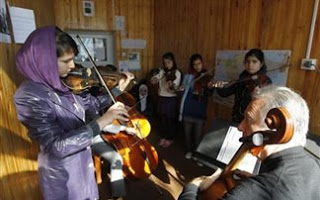
Το Αφγανιστάν του πολέμου και της μουσικής!

Μέλη της Σχολής φτωχά και άστεγα παιδιά

Ο πολιτισμός είναι βάλσαμο σε δύσκολες εποχές στους ανθρώπους που πέρασαν κακουχίες, they say. Αυτό φαίνεται να πιστεύουν και οι ιθύνοντες της μουσικής Ακαδημίας στο Αφγανιστάν που προσπαθούν μέσω της μουσικής να απαλύνουν ή τουλάχιστον να ελαφρώσουν τον πόνο των νέων παιδιών, που έγιναν μάρτυρες ενός σκληρού πολέμου.
Οι νότες διαδέχονται η μία την άλλη, στο διώροφο κτίριο στο κέντρο της Καμπούλ και το κλασσικό πιάνο δένει απόλυτα με τα βιολιά και το φλάουτο. Οι νεαροί μαθητές διδάσκονται μουσική, με την ελπίδα όπως λένε οι δάσκαλοι, να ξεχάσουν τις φρικιαστικές λεπτομέρειες του πολέμου που έζησαν και της φτώχειας που υφίστανται.
Ο επικεφαλής του Εθνικού Ινστιτούτου Μουσικής του Αφγανιστάν, Ahmad Sarmast, σε συνέντευξή του στο πρακτορείο Reuters είπε μεταξύ άλλων πως «έχουμε δεσμευτεί να οικοδομήσουμε τις ζωές των ταλαιπωρημένων αυτών παδιών μέσα από τη μουσική, δεδομένης της θεραπευτικής δύναμής της».
Η σχολή μετρά 140 μαθητές, με τα περισσότερα μέλη να είναι ορφανά και άστεγα παιδιά, τα οποία σύμφωνα με τον Ahmad, είναι παθιασμένα για την μουσική.
«Αυτή η χώρα είναι διψασμένη για την μουσική και την τέχνη γενικότερα, όσο είναι για την αλλαγή», κατέληξε ο δάσκαλος. Ενώ στη συνέχεια υπογράμμισε πως η χολή δίνει και υποτροφίες σε σχολές στο Εξωτερικό, όπως Βρετανία και Δανία, οι οποίες κιόλας χρηματοδοτούν τη σχολή.
Source : protothema.gr

The Almodovar Archive

Το κινηματογραφικό στυλ του Αλμοδοβάρ, τα σενάριά του, οι χαρακτήρες του έχουν εξελιχθεί ταυτόχρονα με την εικονογραφία του. Τα έντονα χρώματα είναι πάντα εκεί μαζί με τα έντονα πάθη, αλλά η γλώσσα της κινηματογραφίας του δεν είναι πια το επιτηδευμένο κιτς των πρώτων του ταινιών. Το Volver ας πούμε και το Δέρμα που κατοικώ είναι δύο καλά παραδείγματα για αυτό. Το πρώτο έχει εικόνες από την εργατική τάξη, από την πόλη και το δρόμο το δεύτερο από την ανώτερη αστική, από το σαλόνι και τα design έπιπλα. Και τα δύο όμως είναι κομψά, η φωτογραφία του και η καλλιτεχνική διεύθυνση είναι πια πολύ μακριά από το κιτς.
Τέτοιες φωτογραφίες έχει μαζεμένες το βιβλίο της Taschen The Pedro Almodóvar Archives και είναι πάνω από 600, από το προσωπικό αρχείο του Ισπανού σκηνοθέτη. Ξεκινάνε από το 87, από την εποχή του Γυναίκες στα πρόθυρα νευρικής κρίσης μέχρι τώρα το 2011. Οι λεζάντες είναι επίσης δικές του.
Source : tovima.gr

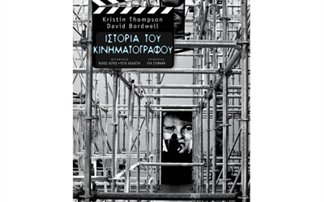
BOOK : History of cinema: Kristin Thompson and David Bordwell

Pataki Publications“History of cinema” of Kristin Thompsonand hisDavid Bordwell.


 In this book the authors tell the history of cinema as they conceived it, it was written and taught by the most important theorists and historians of the seventh art. With the help of hundreds of examples and photos, the reader can gain a thorough and comprehensive picture of the evolution of cinema, from the first attempts to project moving images with the kinetoscope to the blockbusters of the 21st century.
Film historians often say that there is not one "Film History" but many. For some, this means that it is not possible to include all genres in a single narrative, the schools, trends and events. But for others, a "Cinema History" is called upon to make use of a variety of perspectives and to combine various methodological tools, interests and goals. The present volume adopts the second approach and invites the reader to know the art of cinema through contemporary aesthetic and ideological perceptions.
The book does not require special knowledge of film aesthetics or theory, and is mentioned in both fiction and documentary films, in experimental or avant-garde cinema and animated films. It is an essential textbook for those attending film studies programs, but also a rich source of information for all movie lovers.
THECHRISTIAN THOMPSONis an honorary doctorate in the Department of Arts and Communication at the University of Wisconsin–Madison. He holds an MA in film from the University of Iowa and a PhD from the University of Wisconsin–Madison.
THE DAVID BORDWELLis Professor of Cinema Studies at the Jacques Ledoux Chair in the Department of Arts and Communication, as well as a Hilldale Chair in the Humanities Department at the University of Wisconsin–Madison.
 Source : culturenow.gr

Διεθνής σπείρα έχει ρημάξει τους πίνακες του Πικάσο

Ανάμεσα στα ερωτηματικά που εγείρει η χτεσινή κλοπή του έργου του Πικάσο στην Εθνική Πινακοθήκη, εύλογα είναι κι αυτά της ενδεχόμενης εμπλοκής των ληστών με διεθνή σπείρα που «ειδικεύεται» σε συγκεκριμένες κλοπές.

Δεδομένου ότι οι κλοπές σημαντικών έργων τέχνης έχουν αυξηθεί παγκοσμίως-όπως και η ζήτηση για συγκεκριμένους πίνακες και υπογραφές-είναι φυσικό οι υποψίες να στρέφονται στο διεθνές περιβάλλον. Αρκεί να αναφέρουμε ότι μόλις το περσινό καλοκαίρι συνελήφθη ο κλέφτης του περίφημου έργου «Κεφάλι Γυναίκας»-κατά τραγική σύμπτωση ο πίνακας που εκλάπη από την Πινακοθήκη φέρει τον τίτλο «Γυναικείο Κεφάλι»-που είχε κλαπεί από γκαλερί του Σαν Φρανσίσκο.

Σημειωτέον ότι ο δράστης ο οποίος αφέθηκε ελεύθερος μετά τη σύλληψη του-κατέλαβε εγγύηση 5 εκατομμύρια δολάρια χωρίς κανείς ποτέ να αναρωτηθεί για την προέλευσή τους! Ανάλογα παράδοξη ήταν κι η προσπάθεια που έγινε να αποσυνδεθεί το όνομα του εν λόγω ληστή από διεθνή σπείρα λαθρεμπόρων έργων τέχνης.

Δυο χρόνια πριν από τη ληστεία του Σαν Φρανσίσκο είχε επίσης προηγηθεί η μεγάλη ληστεία στο Μουσείο Πικάσο, μέρα μεσημέρι, από δυο ένοπλους ληστές. Οι ληστές είχαν τότε διαφύγει με δυο σπουδαία, πανάκριβα και πολύτιμα έργα του Πικάσο υπό μάλης, the: “Ο ζωγράφος και το μοντέλο” (1963) and “Μινώταυρος, πότης και γυναίκες” (1933) καθώς κι ένα μπλοκ με σχέδια του ισπανού ζωγράφου. Αρκεί να σημειωθεί ότι το Μουσείο Πικάσο βρίσκεται στην πολυσύχναστη περιοχή του Μαραί του Παρισιού, σε στενά και δύσβατα σοκάκια-που δεν ενδείκνυνται για τέτοιου είδους αποδράσεις.

Ωστόσο η μεγαλύτερη ληστεία έργων του Πικάσο, είχε σημειωθεί το 1993 από το Μουσείο Μοντέρνας Τέχνης της Στοκχόλμηςόπου είχαν, μεταξύ άλλων κλαπεί οκτώ (;) έργα του Πικάσο και ένα του Γάλλου κυβιστή Ζορζ Μπρακ, value 40 εκατομμυρίων δολαρίων. Κάποιοι από αυτούς βρέθηκαν, κάποιοι άλλοι παραμένουν στα αζήτητα, όπως κι άλλοι τόσοι που φέρουν την υπογραφή του διάσημου ισπανού καλλιτέχνη. Όπως και να έχει, σε καιρούς κρίσης, το όνομα του Πικάσο παραμένει ψηλά στο διεθνές χρηματιστήριο της τέχνης, και είναι φυσικό να βρίσκεται στο επίκεντρο έμπειρων-κι όχι μόνο-ληστών έργων τέχνης.

Τα σενάρια που εξετάζει η Αστυνομία

Από την πλευρά τους, σε δύο πιθανά σενάρια έχουν καταλήξει οι αστυνομικοί της Ασφάλειας για το τι πραγματικά συνέβη χθες τα ξημερώματα στην Εθνική Πινακοθήκη. Με δεδομένο πως οι δράστες «χτύπησαν» σε μόλις επτά λεπτά, γνώριζαν λεπτομέρειες και ενδεχομένως να είχαν και πληροφόρηση εκ των έσω για τη μεγάλη δουλειά, οδηγούν αυτά στο συμπέρασμα ότι είναι επαγγελματίες διαρρήκτες που σχεδίαζαν καιρό το κόλπο.

Απόλυτα έγκυρες πληροφορίες αναφέρουν ότι το πρώτο σενάριο θέλει:

–    Οι δράστες να είναι μέλη διεθνούς κυκλώματος, «κακοποιών έργων τέχνης», οι οποίοι αφού κλέψουν τους πίνακες, τους ρίχνουν στη μαύρη αγορά. Άλλωστε σε όλο τον κόσμο και ειδικά σε Ρωσία, Κίνα και Αμερική υπάρχουν μανιώδεις συλλέκτες που θα έδιναν πολύ χρήμα για να αποκτήσουν έναν Πικάσο, ακόμα και μέσω υπόγειων διασυνδέσεων της μαύρης αγοράς.

«Ήδη έχουμε ενημερώσει τις διεθνείς αρχές ασφαλείας για το συγκεκριμένο και τα υπόλοιπα δύο που έκαναν φτερά», τονίζει στο protothema.gr αστυνομικός που ασχολείται με την υπόθεση και προσθέτει: «Μάλιστα, προσπαθούμε μέσω από πληροφοριοδότες να διαπιστώσουμε αν στις μαύρες αγορές της τέχνης υπάρχουν συγκεκριμένες πληροφορίες για τους συγκεκριμένους πίνακες».

–    Η κλοπή να έγινε κατά παραγγελία. Δηλαδή ένας συλλέκτης να έκλεισε συμφωνία με ποντικούς έναντι ενός μεγάλου ποσού για να μπουν μέσα στην Εθνική Πινακοθήκη και να εξαφανίσουν τα έργα. Σε αυτή την περίπτωση, η δουλειά της Αστυνομίας είναι πιο δύσκολη, καθώς οι τρεις κλεμμένοι πίνακες και ειδικά ο μοναδικός Πικάσο που υπήρχε στην Ελλάδα δεν θα βγει στο σφυρί.

Όποιο και από τα δύο σενάρια τελικά επαληθευτεί, η δουλειά της Αστυνομίας είναι ιδιαίτερα δύσκολη, καθώς οι δράστες άφησαν ελάχιστα ίχνη πίσω τους…

Source : protothema.gr

Harlem Swing – Aint’ Misbehavin: Musical at the Badminton Theatre

TheBadminton Theatretransforms intoCotton Club and everyone swing dances to his heartHarlem! TheAin’t Misbehavin’is aMusical in a scriptMurray Horwitzand Richard Maltby Jr. andmusic by Thomas Wright "Fats" Waller. From the famous song he wrote himself 1929, after all, got the work and its name. It is a tribute to the African-American musicians of the 20s and 30s who were part of the so-called Harlem Renaissance (Harlem Renaissance), a time of growing creativity, cultural awareness and national pride.
It was a time when Manhattan's legendary nightclubs, such as the Cotton Club and Savoy Ballroom,  and Lenox Avenue set the tone for high society entertainment, filled with pianists who were rocking the town with a 'new' beat, she was teaching the city her first steps in swing. Five performers present a noisy, "lewd" night, with humorous songs, a night that makes the audience feel like they've booked a table at the Cotton Club and just handed the wardrobe their hat and gloves.
TheAin’t Misbehavin’ premiered on February 1st 1978 in a small New York cabaret and until 5 June of the same year had won several awards in the musical category (Tony, New York Drama Critics, Outer Critics Circle, Drama Desk Award, Obie), while Richard Maltby Jr. (Is, Song and Dance, Baby, Miss Saigon) wins a Tony Award for Best Director and Nell Carter a Tony Award for her performance and the show's original music album received a Grammy Award. A year later, five troupes were already formed that toured the United States, while London and Paris soon surrendered to his magic. So did the rest of the world on all six world tours that have taken place to date, while now it seems completely normal that there isn't a day that Ain't Misbehavin' isn't being played somewhere in the world.
When it was first presented at the Manhattan Theater Club cabaret, one could discover the young singer Irene Cara in its cast (years later he would "shine" through the soundtrack of the hit Fame. Soon the Broadway production under the direction of Maltby, directed and choreographed by Arthur Faria, uploaded on 9 of May 1978 at the Longacre Theatre, while later he was in Plymouth and Belasco filling in at 21 of February 1982 1604 representations. The original cast included Nell Carter, Andre DeShields, Armelia McQueen, Ken Page to Charlayne Woodard.
Luther Henderson adapted Waller's score and was also the pianist for the production. Some of the replacements in the later shows were Debbie Allen, Yvette Freeman, Adriane Lenox and Alan Weeks. The West End production of the play in London premiered on 22 March of 1979 at Her Majesty's Theatre, while his revival the 1995. A Broadway revival with the same director, the same choreographer and the same cast as the first production ten years ago, premiered on 15 August 1988, at the Ambassador Theater in New York where it remained for 176 representations. The 2009 Aint Misbehavin turned thirty (30) χρόνια και στην επετειακή παράσταση συμμετείχαν ο νικητής του American Idol Ruben Studdard και οι διαγωνιζόμενοι Frenchie Davis και Trenyce Cobbins.
Στη συγκεκριμένη παράσταση που θα φιλοξενηθεί στο Θέατρο Badmiton πρωταγωνιστούν αστέρια της Αμερικής, όπως η Yvette Monique Clark που είχε διαπρέψει στα Hairspray, Crowns, Chicago κ.ά., η υποψήφια για βραβείο Grammy Patricia Covington, o Milton Nealy (Dreamgirls, The Full Monty, Jesus Christ Superstar, La Cage Aux Folles), η Rebecca Covington (Mamma Mia, Thoroughly Modern Millie) και το τηλεοπτικό αστέρι Wayne Pretlow (The Good Wife, Law & Order),  πλαισιωμένοι από ένα ταλαντούχο καστ τραγουδιστών και χορευτών.
Τη μουσική διεύθυνση υπογράφει οWilliam Foster McDaniel, ενώ τη σκηνοθεσία ο Richard E. Maltby, Jr. και τη χορογραφία οArthur Faria.
• Tο πρώτο μιούζικαλ του Broadway που ανέβηκε με θέμα το έργο και τη ζωή γύρω από έναν τραγουδοποιό /καλλιτέχνη, τον Thomas Wright «Fats» Waller.
• Tο πρώτο μιούζικαλ στο είδος του που κέρδισε βραβείο Tony.
• To πρώτο μιούζικαλ στο είδος του που έγινε παγκόσμια επιτυχία.
• Το πρώτο μιούζικαλ στο είδος του που κέρδισε κάθε είδους θεατρικό βραβείο της Νέας Υόρκης.
• Το πρώτο μιούζικαλ «βιογραφίας» με το οποίο συγκρίνονται όλα τα υπόλοιπα.
 Source: culturenow.gr

Charles Gounod – Faust from the Lyric Stage at the Athens Concert Hall

One of the most popularFrench operas, which is based on the first part of his well-known tragedyGoethite, presents the NationalLyric Stageat20 January 2012and foronly eight performances, in theAthens Concert Hall– HallAlexandra Trianti. The masterpiece of French romanticism with the famous arias, the great choral and ballet performances of Walpurgis Night, is presented under the musical direction of Myron Michaelidis and directed by Renato Tzanella.
It is one of the world's favorite grands opéras, which has been presented in Greece since the 90s. It is based on Goethe's famous tragedy, where the aged scientist Faust sells his soul to Mephistopheles, in exchange for youth and love. At the heart of the opera is not so much Faust himself as Margarita, who is transformed by love and ultimately pays dearly for her choices.
He conducts the orchestra of the National Opera for the first time after assuming his duties as the artistic director of the Greek National Opera, the chief musician Myron Michaelidis, who has conducted some of the most important symphony orchestras, as among others, the Berlin Symphony Orchestras, of Rome, of Jerusalem and Mexico, the Philharmonic of Bucharest and Bratislava, the Prague Radio Orchestra, as well as all Greek orchestras.
The director and director of the ELS Ballet, Renato Zanellawith many years of service in the direction of the ballet of the Vienna State Opera, sets the case in an old empty classroom. There, in front of blackboards full of knowledge, Faust alone, tormented by the fundamental questions of life, of death, love, of happiness. Inside his clouded mind he meets Mephistopheles, who enticed Margarita, convinces him to sign the deal with the devil.
Zanella notes: "My approach moves away from both the supernatural and the religious element and places man and his weaknesses at the heart of the matter. Faust really becomes young again, or simply Mephistopheles shows him what he wants to see; They really leave the room to travel to other places and have the most amazing adventures, or maybe they never leave the classroom; Is this hall Faust's head?, filled with so much information that it cannot tell the real from the imaginary; My work moved in this direction thanks to the help and amazing, unique capture of Alessandro Camera (scenery), Carla Ricotti(suits) and Vinicio Kelly(illuminations)».
A multitude of leading Greek and foreign performers participate in the production. The role of Faust will be performed by American tenor Eric Cutler, who has appeared in the last years in the biggest Lyric Theaters of the world, such as New York's Metropolitan Opera, the Royal Opera of London and the Paris Opera, while his appearance with Anna Netrebko the MET, in Bellini's Puritans is considered one of the high lights of his career.
Margarita is performed by Alexia Voulgaridou, the leading Greek soprano who carries out an extremely important career abroad, with appearances at leading theaters such as the Royal Opera, the Scala of Milan, and the Berlin State Opera, while he has collaborated with Riccardo Muti, among others, Ronaldo Villazon, Sir Colin Davies, Andrea Bocelli, but also Isabelle Hyper in the film "Deux" by Werner Schroeter. Voulgaridou has sung with great success the role of Margarita in Rome, Basel as well as the Ravenna festival.
Mephistopheles is performed by Paata Boursoulatze, the famous Georgian bass, extremely popular with opera audiences in Greece as well. Boursoulage has performed leading roles at the Metropolitan in New York, in Milan's Scala, in the Vienna Opera and in many other theaters around the world. Last summer the Athenian audience applauded him in Verdi's Nabucco, in the Conservatory of Herod Atticus.
The distribution is completed by leading Greek soloists such as Dimitris Platanias, who was warmly applauded at Verdi's Masquerade Dance presented at the ELLS, in December, Dimitris Kasioumis, Irini Karayanni and Ines Zikou. In the second distribution we find among others, the recently awarded with the Grand Prize of the Greek music critics Tselia Kostea, Askar Abdrajakov and many other famous singers.
Nikos Vassiliou conducts the ELLS choir. The ELS Ballet participates, choreographed by Renato Zanella.
Faust at a Glance
The composer / Charles Gounod was born in Paris in 1818 and took his first piano lessons from his mother. He studied at the Paris Conservatory and the 1839 won the famous Prize of Rome for the cantata of Ferdinand. In Italy he studied the works of Palestrina and other compositions of church music. Later, thanks to Fanny and Felix Mendelssohn he came into contact with the music of JS Bach. The 1851 composed his first opera, Sappho. The 1859 Faust made the composer known throughout the world. They were followed by the French themed Mireille (1864), which has recently come to the fore again, and the opera Romeo and Juliet (1867), based on Shakespeare. In addition to lyrical works, Gounod also composed symphonies, while during the last years of his life he was particularly involved in works of religious music, oratorios, functions, motet. He died of cerebral congestion on 1893.
The project / Opera in five acts, Faust is based on a poetic text by Jules Barbier and Michel Carré, who drew their material from Carré's play Faust and Margarita (1850), as also from Part I of Faust, by Johann Wolfgang von Goethe (1808) in its French translation by Gerard de Nerval (1828). A typical sample of French grand opera - grand opéra- and the first of its kind to be so successful worldwide, Faust remained the most popular lyric work until about World War II. It began as an opéra comique with nonsensical dialogues and was gradually transformed, during a decade, to suit the tastes of the global audience. The term opéra comique - comic opera- does not hint at comic elements, but it concerns structural and aesthetic features, one of which is prose dialogues. From Goethe Faust keeps only the narrative and skips the philosophical background: the aged scientist Faust sells his soul to Mephistopheles, in exchange for youth and love. At the heart of the opera is not so much Faust himself as Margarita, who is transformed by love and ultimately pays dearly for her choices.
Premieres / As a comic opera, with prose dialogues, Faust premiered at the Paris Lyric Theater on 19 Of March 1859. In its majestic version, with dialogues set to music and ballet, given by the Paris Opera on 3 Of March 1869. The play opened at the New York Metropolitan Opera on 22 October 1883.
From the National Opera, which started operating the 1939/40 as part of the National – then Royal- Theater, Faust first appeared on 12 November 1959 starring Nikos Hatzinikolaou (Faust), Zoe Vlachopoulos (Daisy) and Nikos Moschonas (Mephistopheles). The orchestra and choir were conducted by Antiochos Evangeliatos, while the direction was by Leo Nedomanski.
Summary
Act I / Germany, 16the century. In his workshop, Faust, an elderly scientist, he reasons that his investigations have yielded nothing, while on the contrary, they made him bypass life and love. He tries to kill himself, he curses science and faith and asks for help from dark forces. Mephistopheles appears, who tempts him with an image of the innocent Margarita and proposes the following agreement: he will serve Faust on earth in return for Faust serving him in Hell. The poison in Faust's cup turns into an elixir of youth, the old scientist transforms into a charming young man and together with Mephistopheles sets out to conquer the world.
Act II / At the gates of the city students, soldiers and villagers rejoice. Valentine leaves for the war with his friend Wagner and entrusts his sister Margarita to his young friend Zibel. Mephistopheles treats the crowd to wine and sings a hymn to the "golden calf". He speaks badly of Margarita and when Valentine defends her honor, his sword breaks in the air. Valentine and company recognize dark supernatural forces and resist the sign of the cross. Mephistopheles, Faust and the villagers dance a waltz. Εμφανίζεται η Μαργαρίτα στην οποία ο Φάουστ εκφράζει τον θαυμασμό του.
Γ’ Πράξη / Ο ερωτευμένος Ζήμπελ αφήνει ένα μπουκέτο στον κήπο της Μαργαρίτας. Faust asks Mephistopheles to find him a gift as well, and he leaves a jewelry box and a mirror on the girl's doorstep. Margaret reflecting on her encounter with Faust, he sees the gifts: in a few minutes the demure girl has transformed into a flirtatious young woman, που μαζί με τη γειτόνισσά της Μάρθα υποδέχονται τον Φάουστ και τον Μεφιστοφελή στον κήπο. Αφήνει τον Φάουστ μονάχα να τη φιλήσει, όμως αφού εκείνος φύγει, μόνη, στο παραθύρι της, εύχεται να επιστρέψει. Έτσι συμβαίνει πράγματι, και με τη βοήθεια του Μεφιστοφελή είναι βέβαιο ότι ο νεαρός Φάουστ θα την ξελογιάσει.
Δ’ Πράξη / Ο Φάουστ εγκατέλειψε την Μαργαρίτα έγκυο. Εκείνη γέννησε το παιδί και ζει ως απόκληρη της κοινωνίας. Προσεύχεται στην εκκλησία, όμως τη σταματούν ο Μεφιστοφελής και μία χορωδία δαιμόνων. Ολοκληρώνει την προσευχή της, όμως τρομοκρατείται όταν ο Μεφιστοφελής την καταριέται. Καθώς ο Βαλεντίνος επιστρέφει από τον πόλεμο ο Ζήμπελ τού ζητά να συγχωρήσει την αδελφή του. Καθώς ο Βαλεντίνος εισέρχεται στην κατοικία της, φτάνουν ο Φάουστ με τον Μεφιστοφελή, που αμέριμνος τραγουδά στην Μαργαρίτα μία ειρωνική σερενάτα. Ο Βαλεντίνος βγαίνει, βλέπει τους δύο, καταλαβαίνει όσα έχουν συμβεί και επιτίθεται στον Φάουστ. Ο Μεφιστοφελής παρεμβαίνει στην ξιφομαχία με αποτέλεσμα ο Φάουστ να σκοτώσει τον Βαλεντίνο, που πριν ξεψυχήσει προλαβαίνει να καταραστεί την αδελφή του.
Ε’ Πράξη / Μάγισσες έχουν περικυκλώσει τον Φάουστ και τον Μεφιστοφελή. Σε μία σπηλιά ο Φάουστ συναντά βασίλισσες και εταίρες άλλων εποχών. Ο Μεφιστοφελής του υπόσχεται τον έρωτα των σημαντικότερων και ωραιότερων γυναικών στην Ιστορία. Η οργιαστική βραδιά διαρκεί ώσπου να φέξει. Καθώς ξημερώνει ο Φάουστ βλέπει σαν όραμα τη Μαργαρίτα και την καλεί. Ο Μεφιστοφελής τον βοηθά να μπει στη φυλακή όπου κρατείται η κοπέλα αφού σκότωσε το παιδί της. Μόνο το χέρι ενός θνητού μπορεί να σώσει τη Μαργαρίτα από το πεπρωμένο της και ο Φάουστ προτίθεται να της δώσει το δικό του, όμως εκείνη έχει θέσει την πίστη της στον Θεό. Σε παραλήρημα βλέπει τα χέρια του Φάουστ βαμμένα με αίμα, τον απωθεί και λιποθυμά. Ο Μεφιστοφελής φωνάζει ότι η Μαργαρίτα κρίθηκε: Προστατεύεται λόγω της πίστης και της μεταμέλειάς της. Του αρκεί να σύρει τον Φάουστ μαζί του στην Κόλαση. Η Μαργαρίτα ανεβαίνει στους ουρανούς καθώς άγγελοι τραγουδούν ότι έχει σωθεί.
Στο πλαίσιο της κοινωνικής τιμολογιακής πολιτικής της, η ΕΛΣ έχει μειώσει τις τιμές των εισιτηρίων για την παραγωγή Φάουστ, οι οποίες πλέον διαμορφώνονται ως εξής: €22, €40, €60, €80 / παιδικό, φοιτητικό €13.
Music directionMyron Michaelidis
Direction – Χορογραφία – ΚινησιολογίαRenato Zanella
SceneryΑλεσσάντρο Κάμερα
SuitsCarla Ricotti
LightingΒινίτσιο Κέλι
Διεύθυνση ΧορωδίαςΝίκος Βασιλείου
Distribution
Φάουστ Έρικ Κάτλερ (20,22,24,27,29/1)
Θ.Α. (21,25,28/1)
Μαργαρίτα Αλεξία Βουλγαρίδου (20,22,24,27,29/1)
Τσέλια Κοστέα (21,25,28/1)
Μεφιστοφελής Παάτα Μπουρτζουλάτζε (20,22,29/1) Τάσος Αποστόλου (21,25,28/1)
Ασκάρ Αμπντρατζάκοφ (24, 27/1)
Βαλεντίνος Δημητρής Πλατανιάς (20,22,24,27/1)
Διονύσης Σούρμπης (21,25,28,29/1)
Βάγκνερ Δημήτρης Κασιούμης (20,22,24,27,29/1)
Διονύσης Τσαντίνης (21,25,28/1)
Ζήμπελ Ειρήνη Καράγιαννη (20,24,27/1)
 Γεωργία Ηλιοπούλου (21,22,25,28,29/1)
Μάρθα Ινές Ζήκου (20,22,24,27/1)
Αγγελική Καθαρίου (21,25,28,29/1)
Συμμετέχει η Ορχήστρα, η Χορωδία και το Μπαλέτο της Εθνικής Λυρικής Σκηνής
Info
Location
Athens Concert Hall, Βασιλίσσης Σοφίας και Κόκκαλη 1, Athena
Date
Πρεμιέρα Παρασκευή 20 January 2011. Ημερομηνίες παραστάσεων: 20, 21, 22, 24, 25, 27, 28, 29 January 2012. Start time 20.00
Ticket prices
€22, €40, €60, €80. Παιδικό, φοιτητικό €13
Ticket sales
Από τα ταμεία του Μεγάρου Μουσικής Αθηνών, Bas. Σοφίας & Κόκκαλη
Δευτέρα-Παρασκευή 10 π.μ.-6 μ.μ. and Saturday 10 π.μ.-2 μ.μ
κατά τις ημέρες των παραστάσεων: Δευτέρα-Παρασκευή 10 a.m.- 8.30 p.m. /
Saturday 10 π.μ.-2 μ.μ. & 6 Creation "regarding the modern administration and the European ones- 8.30 p.m. Sunday 6 μ.μ.-8.30μ.μ
Ομήρου 8 operating hours: Δευτέρα-Παρασκευή 10 a.m.- 4 p.m.
Τηλεφωνική Αγορά Εισιτηρίων – 210 7282333
& από τα Ταμεία τoυ ΘΕΑΤΡΟΥ ΟΛΥΜΠΙΑ, Academy 59-61, Athena
Καθημερινά 9.00–21.00. Tel. sales 210 3662 100, 210 3612 461, 210 3643 725, Ηλεκτρονική προπώλησηwww.megaron.gr – ΟΜΑΔΙΚΑ ΕΙΣΙΤΗΡΙΑ Τηλ. 210 3711 342, ΥΠΗΡΕΣΙΑ ΣΥΝΔΡΟΜΗΤΩΝ Τηλ. 210 3711 381
 Source : culturenow.gr

Jonathan Meese: Έκθεση στη Bernier-Eliades

H γκαλερί Bernier-Eliades παρουσιάζει την πρώτη ατομική έκθεση στην Ελλάδα του Γερμανού καλλιτέχνη Jonathan Meese. Ο καλλιτέχνης θα παραβρίσκεται στα εγκαίνια, on Thursday 12 January, 2012, 20:00-22:00

 Ο Jonathan Meese (Gen. 1970, Τόκιο) εμφανίστηκε στη διεθνή καλλιτεχνική σκηνή το 1998 και σήμερα θεωρείται ένας από τους πιο επιτυχημένους υποστηρικτές της σύγχρονης τέχνης. Είναι γνωστός για το πολύπλευρο έργο του, που περιλαμβάνει πληθωρικούς πίνακες (που μπερδεύουν προσωπικά ιερογλυφικά και κολάζ), facilities, εκστατικές περφόρμανς, sculptures, σχέδια και σκηνικά για θεατρικές παραστάσεις.
Στην έκθεση αυτή ο καλλιτέχνης θα παρουσιάσει μια σειρά από καινούργια γλυπτά και ζωγραφικά έργα.
O πυρήνας της δουλειάς του Meese παραμένει μια αδυσώπητη αίσθηση της ιστορίας,από την οποία ξεπροβάλλουν φιγούρες, σύμβολα και αντικείμενα που γίνονται αργότερα ένα μυθολογικό σύμπαν που συμπληρώνει το έργο του και τραβά μέσα του τον θεατή δια της βίας.
Ο Meese ξεδιπλώνει τα υλικά του σε μεγάλες επιφάνειες και πάνω σ’αυτές παραθέτει μυθολογικές φιγούρες, κολάζ, χρώματα και αποσπάσματα με έναν ισχυρό κι εκφραστικό τρόπο. Στη δουλειά του διακρίνει κανείς μία ιδιαίτερη ματιά προς τις πιο επιθετικές ή τραγικές φιγούρες της ιστορίας. Προσωπικότητες όπως ο Νέρωνας, ο Ιμχοτέπ, ο Καλιγούλας, ο Στάλιν, ο Μουσολίνι, ο Χίτλερ, έχουν εμφανιστεί στα έργα του και μπορεί να συνυπάρχουν μαζί με αυτοπροσωπογραφίες του ίδιου του Meese, αλλά και παραπομπές από λογοτεχνικά αποσπάσματα της ιστορίας ή ιδεολογικές και πολιτικές δηλώσεις.
Τα καινούργια του ζωγραφικά έργα, είναι καρπός μιας νέας φάσης εξερεύνησης του μέσου. Οι πίνακες ξεχειλίζουν απο κολλάζ, σλόγκαν και γκραφίτι, ισορροπώντας κάπου ανάμεσα στο χιούμορ και τη βία. Ο καλλιτέχνης ενορχηστρώνει μία σύγκρουση ανάμεσα σε βερνίκια και impastos, δυναμικές πινελιές και φίνες γραμμές.
Τα γλυπτά του προκύπτουν από ένα προσωπικό μυθολογικό σύμπαν που συνδυάζει τις δυνάμεις του καλού και του κακού με αναφορές στην αρχαιότητα, την ιστορία και τη σύγχρονη λαϊκή κουλτούρα.
 Έργα του Jonathan Meese βρίσκονται σε πολλές δημόσιες και ιδιωτικές συλλογές, such as: ΜΟΜA-Νέα Υόρκη, Centre Pompidou-Παρίσι, Louisiana Museum of Modern Art-Νέα Ζηλανδία, Συλλογή Saatchi. Έχει πάρει μέρος σε σημαντικές εκθέσεις όπως: Μπιενάλε του Βερολίνου, 1998, “Generation Z“, PS1-Νέα Υόρκη, 1999, “New Blood“, Saatchi Collection-Λονδίνο, 2004, “Dionysiac“, Centre Pompidou-Παρίσι, 2005. Toν Δεκέμβριo του 2010 το μουσείο MOCA-North Miami, φιλοξένησε μεγάλη ατομική έκθεση του καλλιτέχνη.
Έχει κάνει σημαντικές περφόρμανς, μεταξύ των οποίων: ο αυτοσχεδιασμός για τον Parsifal του Βάγκνερ στο Staatsoper, Berlin, 2005, και το Noël Coward is Back, στην Tate Modern, 2006.
The 2010 σχεδίασε τα σκηνικά για την παγκόσμια πρεμιέρα της όπερας “Dionysus”, μια νέα όπερα του Wolfgang Rihm πάνω στον τελευταίο κύκλο ποιημάτων του Nίτσε “Dionysus-Dithyrambs”.
O Jonathan Meese ζει και εργάζεται στο Βερολίνο.
Info
Τοποθεσία Bernier-Eliades, Επταχάλκου 11, Θησείο, Athena
Ημερομηνία Εγκαίνια Πέμπτη 12 January, 20:00-22:00. Duration: 12 January – 1 Of March 2012. Hours of operation: Τρ- Fri. 10:30-18:30, Sat 12:00-16:00
Πληροφορίες Τηλ.: 210 3413 937
Source : culturenow.gr