
Reactions to the practice of the Thyssen-Bornemisza museum to auction a project to finance its needs
You would sell a museum's work to deal with its financial problems; The question for a country like Greece, whose multitude of museums are devoted to the preservation and promotion of antiquities, it could only be hypothetical. How would it be possible to hammer her cultural heritage… Some things anyway, even in times of complete collapse of values, remain high.
The director of the great Spanish museum Thyssen-Bornemisza did, however. His excuse is serious, since the museum is facing a problem of survival, which intensified with the financial crisis. But his act is also daring, after handing over one of the paintings in his collection to be auctioned by Christie's. Similar action in Greece would be hard to imagine. Not only with regard to the sale of antiquities and more generally of works and objects that have been classified as monuments, because this is expressly prohibited by the Constitution and the Archaeological Law, but also contemporary works, which can be freely traded.
On the other, American museums have been selling their works for years for various reasons. The essential difference with Spain is that for the first time, at least admittedly, this move is due to financial difficulties. Regardless of whether the work of the romantic landscape painter John Constable reaches the asking sum of 21 million. sterling, the director of Thyssen-Bornemisza opens a window sealed well to this day, regarding the management of museums internationally.
Intangible heritage
“Even if it was allowed by law, even if I had permission to do so, I would never sell a work of the museum" answers the question professor Mr. Nikos Stampolidis, director of the Museum of Cycladic Art, one of the few private archaeological museums in the country. “Only over my dead body!» is the reaction of Dr. Angeliki Kottaridis, which as head of IZ’ The Ephorate of Antiquities is responsible for the Museum of the Royal Tombs of Vergina, the archaeological museums of Pella and Veria, as well as the Byzantine Veria.
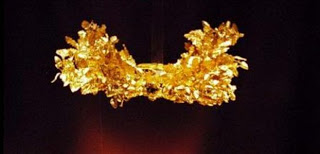
After all, the difference between an ancient object and a modern work of art is telling, since a work of painting or sculpture was produced to be sold, unlike antiquities, which are excavation findings and were once people's properties. "They are material works, but their status is immaterial," emphasizes Mrs. Kottaridis. "I mean, what could I sell?; A golden ivory piece from Philip's bed;».
According to the existing institutional framework however, the sale of works for the National Gallery (and for modern art museums) it is not prohibitive. However, its director Mrs. Marina Lambraki-Plaka is negative about any possibility of a sale. "Personally, I wouldn't dare. I could never make such a decision, even in a last resort" he declares.
The suggestions
Therefore, the question of financial support for museums remains. Thus, the search for new ways of financing them is imperative. “As a last resort I would ask prospective buyers to “adopt” a project, but leaving it in place, to the museum" suggests Mr. Stampolidis, while flexibility and ingenuity are required for Mrs. Kottaridis: "When the Americans sell the right to participate in an excavation instead 3.000 dollars and when the people of Skopje and the Bulgarians do the same to 1.500 dollars for two weeks, it is clear that what we also need is a new cultural strategy" he says.
She would also "sell" participation in workshops that would manufacture products with the ancient know-how – woven, ceramics, metal works, pictures -, which will then be marketed. Also DVD, games and online applications. But also the networking of archaeological sites to provide more services to visitors. Why don't all these things happen?;
"We are ready for the change of the institutional framework regarding the management of museums" says the general secretary of the Ministry of Culture Mrs. Lina Mendoni. "Because with the current laws, a donation may never reach the body for which it is intended, and this because of its registration in the regular budget, and the Archaeological Resources Fund, which has the responsibility of producing copies and other products for the sales, it is outdated a long time ago" she admits.
"A necessary condition is to break the taboos and institutions of the TAP and to take into account’ considering the logic of the market" concludes Mrs. Mendoni. And it seems that today this is not only necessary. It is mandatory.
Stacked in warehouses
Small clay lamps, evenly between them, by the hundreds. Fragments of vessels by the thousands. Forcedly piled up in the warehouses of museums or the Ephoria of Antiquities, many finds of the excavations that do not present a special archaeological interest remain in disuse. Their concession is prohibited, despite the proposals that have been made to sell or donate them to museums, educational institutions and in general to foreign bodies that promote ancient Greek culture.
"There is no reason for them to be sold because their economic value is not such as to solve a problem. On the contrary, and the smallest of them has its special importance for scientists" says archaeologist Mrs. Angeliki Kottaridis. For Professor Mr. Nikos Stampolidis, however, are an opportunity to promote the country: “They can be sold or donated, provided, however, that they bring her details “identity” them and that they will be exposed in public areas. Because in this way they could be a part of our cultural heritage in another place".
Source : tovima.gr