4the Ibero-American Book Festival – LEA 2012 at the Cervantes Institute

For the fourth consecutive year, the LEA Festival, which has now become an institution will open its doors welcoming us to the welcoming
and impressive space of the Cervantes Institute and inviting us to get to know the magical diversity of the Spanish, of Portuguese as well as Latin American culture for two consecutive exciting weeks!

As in the previous events, this festival of unity and brotherhood among the peoples of the Iberian Peninsula, of Latin America and Greece, it gives Athens access to distant voices and the ability to approach cultures, to whom the music, the image and above all the reason, they play a unifying and solidarity role.

The 4th Ibero-American Festival "Literature in Athens" organized by the Cervantes Institute, the cultural magazine Sol Latino and the Maria Tsakos Foundation, this year it will last two weeks from 11 until 24 June.

Specifically, the first week is devoted to cinema based on literature, while at the same time there will be an exhibition and cartooning workshops organized by www.educartoon.gr with the theme "Gender solidarity and equality", in the Exhibition Hall of the Cervantes Institute.

The second week, will be dedicated to the literary circle that includes meetings with writers and a poetry evening. Our guests are distinguished writers who have made a mark on Spanish and Portuguese literature, while parallel to the literary circle, in the Exhibition Hall of the Cervantes Institute, an Exhibition of books and objects of folk art will be held.

World Spanish Day

Alongside, The Cervantes Institute of Athens, key contributor to this Festival and the main body promoting the Spanish language and Spanish-speaking culture in general in our country, will be the organizer of the World Spanish Day. A fiesta filled with intense Spanish color with theater workshops and films for children, with prize-winning literature and flamenco! The World Spanish Day will open the curtain on 23 June 2012, within the framework of the Festival. (see. attached file)

Day of Greece

As part of the LEA Festival, on Sunday 24 June 2012 the Day of Greece will take place, with book presentation, historical photographs and a Tribute to Nikiforos Vrettakos at the Foundation “Maria Tsakos”.

The detailed program can be found on the page www.lea-festival.com& www.solatino.gr

In collaboration with the embassies: Argentinian, Brazil, Spain, Bucket, Spain, of Mexico, Uruguay Peru, Portugal and Chile, the Consulate of Ecuador, the Directorate of Culture and Letters of the Republic of Uruguay, the Union of Greek Hispanists and the Department of Spanish Language and Literature of the University of Athens, the Association of Spanish Language Teachers (ASP) and the Directorate of Letters of the Hellenic Ministry of Culture and Tourism.

Exclusive transport sponsor: IBERIA

Info

Location Cervantes Institute of Athens, Metropolis 23, Constitution (tel.: 210.3634117) KAI "Maria Tsakos" Foundation, "Macedonia" Mansion, L. Composer 367, Old Faliro (tel.: 210.9480700-9)
Date 11 to 24 June 2012
http information://www.solatino.gr
http://www.lea-festival.com
Ticket prices Free entry


Source : culturenow.gr
False rumor : When he drops the curtain;

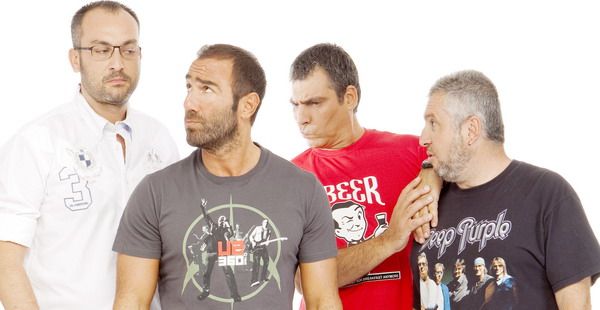
Speaking to Star's camera, Christos Kiousis and Giannis Servetas revealed that next week is their last season for "Radio Arvyla".

"Our last shows are next week. That is Wednesday 30 The TV season will end in May ", said Christos Kiousis. As for the discussions with ANT1 about their return to television next season: "Usually we do this in July-August. Then we sit down and make a decision, "said Giannis Servetas, while Christos Kiousis commented: "We can not commit to anything that is not in our hands. Let the country stand on its own two feet, to be all well and then the commitments will begin ".


Source : yupi.gr

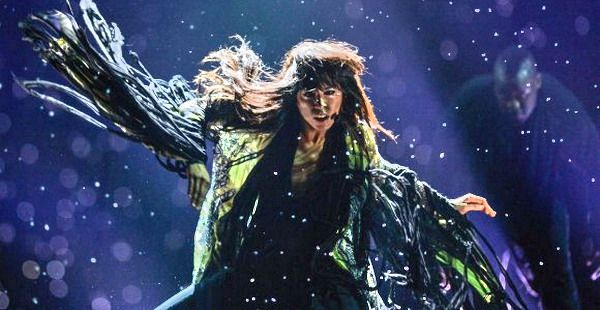
Eurovision 2012 : The results of the grand final!

About 20.000 spectators in the crowded Baku Crystal Hall and millions of viewers around the world watched the final of the 57th Eurovision Song Contest.

From the first minutes of the announcement of the scores, Loreen from Sweden with the song "Euphoria" stood out and finally won first place with 372 points and a very large difference (113 degrees) from Russia, who with her famous grandmothers managed to find herself in second place. Serbia took third place with Zeljko Jojimovic.

The Greek mission with Eleftheria Eleftheriou was finally found in 17the position, while Cyprus and Ήβη Αδάμου one place above, in 16or.


Source : yupi.gr

Alonso, the best fighter

They are satisfied in Ferrari, after the sixth round of the season on the streets of Monte Carlo. And how could it not be, since Fernando Alonso is at the top of the championship, three points clear of her pilots Red Bull, Sebastian Vettel and Mark Webber.

In fact, after the end of the grand prix in the Principality, Scuderia wrote on twitter that the best fighter is the one who wins the war and not a battle.

"The best fighter wins the war, not the battles…”, Ferrari wrote. The two-time World Champion has seen the checkered flag at the Malaysian Grand Prix, he has finished in the top ten at all six grands prix, while in the last two (Spain, Monaco) he's up on the podium.

Fernando Alonso's results in detail:

1. Australia, 5o
2. Malaysia, 1o
3. China, 9o
4. Bahrain, 7o
5. Spain, 2o
6. Monaco, 3o

Pilot rating:

1. Alonso, 76
2. Vettel, 73
3. Weber, 73
4. Hamilton, 63
5. Rosberg, 59
6. Raikkonen, 51
7. Baton, 45

Source : sport-fm.gr

Archaeologists with revolvers

One hundred years of archaeological research in Thassos, in a scrapbook full of archival material, compiled by many generations of scientists and artists


Four hats and a revolver. The young French archaeologist coming of age 1920 in Thassos, bringing the customs of the time to the island that was liberated only a few years ago, except for his hats (the cork, the straw, the canvas and the trajaska) he had thought fit to have a gun with him. In his notebook the member of the French Archaeological School does not explain the reasons for this need, but the conditions that prevailed on the poor island might even have frightened him.
A few years ago, April of 1911, excavations had begun in Thassos thanks to the Turkish firman secured by the French Archaeological School at a time when masterful "diplomatic" actions were required. Because it had to be negotiated simultaneously with the Egyptian Khedive for the Egyptian properties, to request permission from the monasteries of Athos that had estates on the island and to make contracts with the owners, something the excavators seem to have initially ignored.
Today, a century after those difficult but fruitful days, the revelation of the great ancient city of the North is complete. The route, however, is a valuable archaeological site, cultural and historical record, which is now included in the album "100 years of French excavations in Thassos, 1911-2011», a joint publication of the French School of Athens and Olkos publications.
A puzzle whose pieces – letters, designs, rare and often anecdotal photographs of the excavations and the amazing finds, 230 in total – composed by authors Arthur and Dominic Miller through this anniversary album, which coincides with the 100 years since the integration of Thassos into the Greek territory. In the same spirit was the exhibition that preceded it at the Archaeological Museum of Thessaloniki 2011 with the same title.

The findings
In fact the investigations of the French Archaeological School had begun the 1856 – ten years after its establishment -, but not systematically. At that time only by chance were the finds of sculptures and inscriptions that enriched the collections of the Egyptian governor Toussoun Bey or M. Bulgaridis, consul of France in Kavala, or even adorned the salons of the port governor, when they weren't being cut up to be used in construction or when they weren't feeding the lime kilns.
A’ World War had tragic consequences for archeology as well, after the excavations in Thassos were abruptly stopped, while three of the four first excavators of the island (Adolphe Joseph Reinach, Gustave Blum and Charles Avezou) they died. Once it 1916 a new mission was attempted, the archaeologists, however, "had to leave, after a short excavation period, due to practical difficulties, of the dangers of aerial bombardment and of General Sarrail's official warning".

The colossus
But the most important event immediately after the war was, the 1920, the de-walling of an archaic colossal statue that had been found in fragments in the city's fortifications. They were painstakingly brought down from the slopes of the Acropolis in oxcarts and the whole was finally restored in 1923. With his decade 1920 after all, a new era for the excavations in Thassos is beginning. And par’ that conditions continued to be difficult – or even strange ones, if one calculates that in the diet of the archaeologists, tuna alternated as the only food, the pate(!), the sardines, mackerel and herrings -, excavations and discoveries continued.
Today archaeologists know that Thassos, a Parian colony of 670 e.g., it had one of the most important mints in the Greek world, rich trade, mainly wine, and enjoyed the goods of her prosperity for centuries. For’ this and the book is not an art publication, but of presenting archival material collected by generations of archaeologists, photographers, architects and designers.

A city full of sanctuaries
There are few aspects of the life of the ancient city of Thassos that have not been studied in 100 years of research by the French Archaeological School, whether it is about its urban context and periphery or about its political and religious institutions or its economic and artistic life. Excavations have revealed the theater and market, with a set of sanctuaries in its central square. At the top of the Acropolis dominate the sanctuaries of Pythian Apollo and Athena, while the sanctuary of Dionysus is still located in the city, the sanctuary of Hercules, Institutionalization, but also the sanctuary of Artemis, the excavation of which brought to light numerous votive offerings, like figurines, ceramics, objects of gold, ivory, copper or orea crystal.
Built entirely of marble in the early 5th century BC. was the wall of this city, with a network of towers that ensured surveillance of the territory. It is no wonder then that Thassos became a city so powerful that it clashed with the interests of even Athens in the region.

When & where
The edition "100 years of French excavations in Thassos, 1911-2011» is released within the week by Olkos publications and the French School of Athens.

Source : tovima.gr

Archaeologists with revolvers

One hundred years of archaeological research in Thassos, in a scrapbook full of archival material, compiled by many generations of scientists and artists


Four hats and a revolver. The young French archaeologist coming of age 1920 in Thassos, bringing the customs of the time to the island that was liberated only a few years ago, except for his hats (the cork, the straw, the canvas and the trajaska) he had thought fit to have a gun with him. In his notebook the member of the French Archaeological School does not explain the reasons for this need, but the conditions that prevailed on the poor island might even have frightened him.
A few years ago, April of 1911, excavations had begun in Thassos thanks to the Turkish firman secured by the French Archaeological School at a time when masterful "diplomatic" actions were required. Because it had to be negotiated simultaneously with the Egyptian Khedive for the Egyptian properties, to request permission from the monasteries of Athos that had estates on the island and to make contracts with the owners, something the excavators seem to have initially ignored.
Today, a century after those difficult but fruitful days, the revelation of the great ancient city of the North is complete. The route, however, is a valuable archaeological site, cultural and historical record, which is now included in the album "100 years of French excavations in Thassos, 1911-2011», a joint publication of the French School of Athens and Olkos publications.
A puzzle whose pieces – letters, designs, rare and often anecdotal photographs of the excavations and the amazing finds, 230 in total – composed by authors Arthur and Dominic Miller through this anniversary album, which coincides with the 100 years since the integration of Thassos into the Greek territory. In the same spirit was the exhibition that preceded it at the Archaeological Museum of Thessaloniki 2011 with the same title.

The findings
In fact the investigations of the French Archaeological School had begun the 1856 – ten years after its establishment -, but not systematically. At that time only by chance were the finds of sculptures and inscriptions that enriched the collections of the Egyptian governor Toussoun Bey or M. Bulgaridis, consul of France in Kavala, or even adorned the salons of the port governor, when they weren't being cut up to be used in construction or when they weren't feeding the lime kilns.
A’ World War had tragic consequences for archeology as well, after the excavations in Thassos were abruptly stopped, while three of the four first excavators of the island (Adolphe Joseph Reinach, Gustave Blum and Charles Avezou) they died. Once it 1916 a new mission was attempted, the archaeologists, however, "had to leave, after a short excavation period, due to practical difficulties, of the dangers of aerial bombardment and of General Sarrail's official warning".

The colossus
But the most important event immediately after the war was, the 1920, the de-walling of an archaic colossal statue that had been found in fragments in the city's fortifications. They were painstakingly brought down from the slopes of the Acropolis in oxcarts and the whole was finally restored in 1923. With his decade 1920 after all, a new era for the excavations in Thassos is beginning. And par’ that conditions continued to be difficult – or even strange ones, if one calculates that in the diet of the archaeologists, tuna alternated as the only food, the pate(!), the sardines, mackerel and herrings -, excavations and discoveries continued.
Today archaeologists know that Thassos, a Parian colony of 670 e.g., it had one of the most important mints in the Greek world, rich trade, mainly wine, and enjoyed the goods of her prosperity for centuries. For’ this and the book is not an art publication, but of presenting archival material collected by generations of archaeologists, photographers, architects and designers.

A city full of sanctuaries
There are few aspects of the life of the ancient city of Thassos that have not been studied in 100 years of research by the French Archaeological School, whether it is about its urban context and periphery or about its political and religious institutions or its economic and artistic life. Excavations have revealed the theater and market, with a set of sanctuaries in its central square. At the top of the Acropolis dominate the sanctuaries of Pythian Apollo and Athena, while the sanctuary of Dionysus is still located in the city, the sanctuary of Hercules, Institutionalization, but also the sanctuary of Artemis, the excavation of which brought to light numerous votive offerings, like figurines, ceramics, objects of gold, ivory, copper or orea crystal.
Built entirely of marble in the early 5th century BC. was the wall of this city, with a network of towers that ensured surveillance of the territory. It is no wonder then that Thassos became a city so powerful that it clashed with the interests of even Athens in the region.

When & where
The edition "100 years of French excavations in Thassos, 1911-2011» is released within the week by Olkos publications and the French School of Athens.

Source : tovima.gr

Megaron Plus honors the memory of Th. Angelopoulos

The event will take place on 31 May

The Athens Concert Hall honors the memory of Thodoros Angelopoulos as part of the Megaron Plus events. The dedication, will take place on 31 May, at 19.00 and entry is free with priority tickets.
The event will start symbolically with a love letter from the director himself to his city, "an old city of four thousand years", as he said himself, the TV movie "Athens, return to the Acropolis", which created the 1983 with Greek public television as producer. The script was signed by Angelopoulos himself, texts by Kostas Tachtsis are heard in the film, poems by Giorgos Seferis and Tasos Livaditis and musical themes by Manos Hadjidakis, Miki Theodorakis, Loukianou Kilaidoni and Dionysis Savvopoulos.
They will talk about the films and the great journey of Theodoros Angelopoulos in Greek history, including, the historian and professor of the University of Athens Antonis Liakos, Doctor of Philology at the University of Athens and author Emilia Karalis and Associate Professor at the University of the Aegean Irini Stathis, who with her doctoral thesis researched "Space and time in the cinema of Th. Angelopoulou". The speakers will be moderated by film critic Yiannis Bakoyannopoulos.

Source : tovima.gr

our breath, Your review