Tag Archives: Uncategorized

Theatrical "Mauthausen" signed by Campanelli – Theodorakis

The shocking chronicle of a personal experience on the Badminton scene

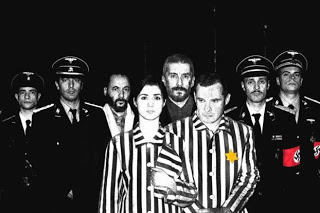
Mauthausen: The chronicle of a personal experience that captured one of the most shocking events in world history is brought to the stage. The most personal book of Iakovos Campanellis, there is also a performance from Thursday (6/12) comes to life at the Badminton Theatre.
"This is a chronicle, for a true story", points out Stelios Mainas who together with Katia Sperelakis and the director of the show Themis Moumoulidis, they sign the script. "It is not a theatrical text and Campanellis himself never wanted to change its form. He wanted to leave it as a testimony, as a document because that's the only way you can deal with it. We took the text with absolute respect and without changing it. This terrible river of events is not conveyed". That's why they kept it as a basic pattern, love as an event-cause. "And in particular the love of the hero, who is none other than Campanellis, for a Lithuanian woman. Imprisoned and condemned as they were, but they also found a place for feelings, for love, for life... And these “days and nights of love” as the creator himself notes, is what kept their humanity alive".  
The book, reminds Stelios Mainas, "starts from May 5th, day of liberation and returns with a flashback to all the events that preceded it. The prisoners are now freed and against their will to return to life, they realized how close they were to each other, where returning home seemed like an elusive dream" he continues. And it is completed by the actor who plays the role of the narrator-Cambanelli, who visits Mauthausen after years: "We attempt to present the emotional inner revival of a whole world which was then attempted to be crushed. But they didn't make it. The IS failed to bend human dignity".  
WHEN WHERE Badminton Ticket Prices : 10 – 16 – 22 – 28 – 38 Euro Performances: Thursday 6/12 as Sunday 9/12 at 20.30, Monday & Tuesday 10-11/12, at 19.00, Wednesday 12/12 at 20.00. Plus Saturday and Sunday, 8 & 9/12 at 17.00
The idea of ​​the show belongs to Themis Moumoulidis and the promise he made to his daughter Campanellis, Katerina. Mikis Theodorakis did not take long to say "yes" to his own music, and so things went their way. "Campanelli's speech is so theatrical, it is so penetrating that our work was complementary", emphasizes Stelios Mainas. "All the work has been done by the creator himself. We are just the managers" he adds.
As soon as the first six shows were announced the public responded to such an extent that the organizers added first one more show and then two more. In total, there will be nine performances at Badminton with two and a half thousand seats – from Thursday 6/12 as well as Wednesday 12/12.
The prescribed success seems to have an answer in the names of the two creators: of the author and the composer. «Brand names», characterizes, as a matter of course, Campanellis and Theodorakis Stelios Mainas. And he's right....
THE IDENTITY OF THE SHOW
"Mauthausen" by Iakovos Campanellis. Music by Gustav Malher – Mikis Theodorakis. Orchestra conducted by Miltos Logiadis, lyrics by Iakovos Kampanellis, screenplay by Stelios Mainas – Themis Moumoulidis – Katia Sperelaki, scenography by Panagiotas Kokorou, kinesiology Apostolia Papadamakis. They play: Stelios Mainas, George Pyrpasopoulos, Aris Lebesopoulos, Marianna Polychronidis, Vassilis Bispikis, Konstantinos Giannakopoulos, Kostas Velentzas, Anna Elena et al.
The songs of Mouthazuzen with music by Mikis Theodorakis and lyrics by Iakovos Campanellis, performed by Rita Antonopoulou. The orchestra is conducted by Miltos Logiadis.
Source : tovima.gr

CINEMA: Hotel for monsters

Sony Pictures Animation and Feelgood present in 3D the "Monster Hotel" which will premiere in cinemas on Thursday 6 December 2012.

Hotel for Monsters
Where monsters go to relax
or
If you are a Monster, go through!

Sony Pictures Animation opens the doors to the best hidden hotel of all time, where the terms of hospitality and tourism have been reversed and a common mortal is anything but welcome. "Hotel for Monsters" is run by Dracula, a true monster of politeness, who is trying tooth and nail (after all, he is gifted in both categories) to provide for Frankenstein, the Mummy, the Invisible Man, the Werewolf and other mythical monsters of the cinema precious moments of calm, away from the intolerable and dangerous human species.

This funny and original story is directed by one of the pioneering and promising minds in the field of animation, o Genndy Tartakovksy, who, just like the protagonist of his story, he proves to be an unforgettable host.  The imaginative direction, the exploitation of the characters through the impressive 3D, the well-crafted comedic details and the care not to lose a moment of the rhythm of the spartan dialogues offer besides an exciting 3D comedy for the whole family, a unique experience that will change our opinion of Dracula, their friends, but also for the possibilities of animation.

Summary
Welcome to “Monster Hotel”, Dracula's luxury resort, where monsters and their families can run free, away from unwanted human presence.  Dracula has invited some of the world's most famous monsters for a weekend, Frankenstein and his Bride, the Mummy, the Invisible Man, a family of werewolves and many others to celebrate Mavis' daughter's 118th birthday together. For Dracula, hosting all these legendary monsters is anything but a problem. Nevertheless, this ideal setting is in danger of collapsing due to the presence of a common mortal, who discovers the resort completely by accident and falls for Mavis.

Source : culturenow.gr

Culture starts at school- Program of the Ministry of Culture for young people

Applying the principle, that civilization begins from childhood and from the education that each person will receive is the program, drawn up by the Ministry of Culture.

Its aim is to strengthen and enrich the educational process as well as the training and aesthetic education of young people with material from the vast national, cultural reserve. Why, as she typically mentioned in her presentation at the ICOM Greek Working Group Conference – CZECH (ICOM International Council of Museums – Greek Department and Committee for Education and Cultural Action) the general secretary of Culture Mrs. Lina Mendoni "Can education and culture be interrelated concepts and that everyone considers, that they are governed by a relationship of mutual dependence, unfortunately, however, the theoretically self-evident is not necessarily identical with the practically given". After all, the country's shortcomings in this field are huge, so the actions really target the essence of the problem.

Here are the programs designed by the Museums Directorate, Exhibitions and Educational Programs of the General Secretariat of Culture, which are included in the Operational Program "Education and Lifelong Learning" of the National Strategic Reference Framework, 2007-2013. As mentioned by Mrs. Mendoni, the basic elements of the identity of the acts performed are summarized as follows:

 – "Updating and digitizing cultural educational material to enhance the educational process", which means the renewal of existing educational programs of the Regional and Special Regional Services of the General Directorate of Antiquities and Cultural Heritage, the design of new teaching tools based on modern concepts and specifications, the selection of encyclopedic and supervisory material, etc. a. In fact, all the material will be made available in digital format through a special online hub as well as optical discs, which will be sent to all schools in the territory.

 – "In the footsteps of the Bible: the history of writing and language in the Greek area", a program that aims to study and understand the genesis and evolution of language and writing over time.

 – "Design and production of pedagogical tools to highlight the importance of theater in ancient times and today" with the aim of consolidating knowledge and strengthening students' relationship with theater, this very special and unique creation of Greek culture.

 – "The theater as an institution of education and state education in antiquity and today". This action is linked to the previous one and aims at the design and implementation of an archaeological educational exhibition, as well as experiential workshops on ancient theater, its evolution and effect over time. The installation will include replicas of ancient artefacts related to theater and performances, such as musical instruments and mask molds, which will be combined and supplemented with special explanatory constructions and multimedia interactive applications and presentations.

 – "Design and production of educational tools for the modern urban environment and architectural heritage". The purpose is to offer cognitive tools and effective teaching methods, that will help students understand the built environment of the city they live in and examine their own possibilities of intervention to improve and enhance it

 – "City and cultural identity: Design and production of educational tools to highlight the cultural heritage of the eight Convergence Regions", which concerns the design and implementation of educational tools to strengthen the teaching of Primary and Secondary Education students in the Convergence Regions included in the Priority Axis 1 (Eastern Macedonia

– Thrace, Thessaly, Continent, Ionian Islands, Western Greece, Peloponnese, North Aegean, Crete).

Source : tovima.gr

Jacques Audiard: In the crisis, instinct prevails

The French director of the film "Body to Body", of a love story in a time of crisis, it talks about its contradictions and the golden ratio between quality and commercialism

"Don't call me an artist!» shouts Jacques Audiard. "It's a very difficult word and I can't define it. For’ that's why I prefer the term “creative”, word more tangible and specific. The creator constructs something, what exactly does the artist do?;». Writer Craig Ferguson and I sit in a room at the Carlton Hotel in Cannes a few days after the world premiere of Audiard's latest film Body to Body last May. There the wonderful Marion Cotillard plays a whale trainer who loses her legs after an accident but finds the will to live again after meeting a lonely sidewalk boxer (Matias Senerts), who circulates on the French Riviera with his minor son.
Although the term "artist" does not like Odyar, "Body to Body" is an artistic film. I point out to him that at the press conference the day before he had referred to cinema using the phrase "art form". "You're right," he replies immediately. "What should I do?, I am full of contradictions! But when I hear them call me a poet… what can i say; I'm not a poet. Rimbaud and Verlaine were poets, me not".
For "Body to Body" Odyar and Ferguson used many scattered ideas from the latter's collection of short stories. "I was interested in telling a love story in a crisis situation," says Jacques Audiard, whose previous film, "The Prophet", liked it a lot in Greece. "Crisis at all levels, not only the economic one. People who eat from the garbage, people who have lost their legs, children growing up without a family. In the novel “They kill the horses when they get old” of Horace McCoy, which refers to the period of the great crisis of '29, people had to dance themselves to the death in order to survive. Today they will have to fight until the end on the road. But they still kill the horses when they get old, it is not so; In a crisis man's only weapon is his physical strength. In a crisis instinct again prevails".
For Jacques Audiard cinema is a very democratic art but it still remains an industry. A film critic he holds in high esteem once told him that there are two doors you can walk through to enter the world of cinema: one big and pop and one small, better quality. "The ideal is to enter a little bit of both. You have to think about the audience when you write, not just yourself.  For me, fer’ they said, when you decide to end a tragic movie with a tragedy, you suffer from a lack of imagination".

When & where:
The movie "Body to Body" is shown in theaters from 29 November distributed by Seven Films.

Source : tovima.gr

Our big circus, at the Royal Theatre

The Royal Theater is preparing to host the show "Our Big Circus" presented by the State Theater of Northern Greece from Friday 14 December 2012.

 "Our Big Circus", presented by the State Theater of Northern Greece, in co-production with the Acropolis Theatre, continues its triumphant march. The emblematic work of Iakovos Campanellis returns in December to Thessaloniki where it was presented for only two performances, at the request of many viewers.

The show that was described as the "social phenomenon" of the summer, after 40 stops on a tour where they watched it 100.000 spectators, but also a series of highly successful performances in Athens at the Acropolis Theatre, plays at the Royal Theater from Friday 14 December 2012.

END OF SHOWS AKROPOL THEATER: 9/12/2012

"OUR BIG CIRCUS", of Iakovos Campanellis, in music and orchestra conducting on stage by Stavros Xarhakos. Direction: Sotiris Hatzakis. They star: Tasos Nousias, Marina Aslanoglou. Singer: Zacharias Karounis.

15the Olympia Festival: All for the child

Twelve fictional films for children and adults

The text that follows attempts to take a brief look at the twelve feature fiction films that will be screened in competition during the 15th Olympia film festival for children and youth.

This year's festival takes place in Pyrgos and other areas of Ilia from Saturday 1 December until Saturday 8 of the same month (see related topic "Olympia film boom"). Naturally, it is not only these films that will be screened at the festival in whose program they are at least counted 50. But since it is long and fiction, it is natural to attract more curiosity (in the future we will come back with the presentation of the animated films).

Faithfully dedicated to films that relate exclusively to children but which at the same time are also aimed at adults, the festival appears clearly renewed this year, with a variety of events but also with as it seems beautiful films. As we see from the short summaries, fiction feature films deal with themes such as the irreconcilability of the child character, the surprise of the first discovery, the struggle of first love, the love for animals but also the childhood imagination that many times (if not most) she is inexhaustible.

It should also be noted that the film that will be distinguished at the Olympia Festival with the award for Best Film, is automatically nominated for the Best Film Award of the European Festivals awarded by the European Union of Cinema for Children and Youth (ECFA). This prize will be awarded in February in Berlin, on the days of the city's film festival. The award was established last year and was awarded to the Belgian film "In the Footsteps". The film was screened at the 14th Olympia Festival.

"Electric Children" (Electrick Children)
USA, colored, 96΄, 2012, directed by Rebecca Thomas
On her 15th birthday, a Mormon, discovers a banned tape of rock music and three months later claims to have conceived innocently while listening …music!

"Elliot and Me" (Eliot & Me)
Ireland, colored, 60΄, 2012, directed by Findan Connolly
In his Dublin 2012 a ten-year-old trying to come to terms with her parents' divorce, finds support in the dog he adopts.

"Goodbye" (Farewell)
Korea, colored, 93΄, 2011, directed by Kim Baek Joon
Two teenage siblings of Korean and Chinese descent who wait in vain for their parents to return, they meet a cruel young man who will change their lives…


"Flying Kites" / (Flight of the kites)
Iran, colored, 80΄, 2012 directed by Ali Gavitan
Teacher in remote villages of Iran, discovers that one of his students has a talent for memorizing religious hymns and helps him cultivate it.

"The Ice Dragon" / The Ice Dragon
Sweden, colored , 77΄ ,2012 directed by Martin Hogdal
The adventures of an eleven-year-old Swede, fan of whales, of hard rock and painting.


"Igor and the Crane's Journey" / Igor & the crane’s journey
Israel-Poland-Germany / colored,  90΄, 2012 directed by Evgeny Ruman
When his mother decides to immigrate from Russia to Israel, little Igor will have to learn to face new challenges, like the little crane he saw coming out of the egg…

« Cowboy: The boy with the clown" / Cowboy
Netherlands, colored, 90′, 2012 directed by Budevjin Kule
Through his friendship with a tomboy, a ten-year-old Dutch boy finds a way to break down the wall surrounding his father's heart.

"The adventures of B. Shroom" / My adventures by V. Swkwrm
Netherlands,  78΄, 2012 directed by Frukie Tan
A nine-year-old boy who wants to be a writer adopts the literary pseudonym B. Shroom and decides that his books will end wars and heal the sick.

"Death of a Superhero"/ Death of a Superhero
Germany-Ireland, colored, 97΄, 2011 directed by Ian FitzGibbon
Mix of live action and animation in the curious chronicle of a "superhero" who is different from the others since in his normal life he is sick, he feels helpless but has the talent to bring dark worlds to life with his pen…

"Stepson" / The Foster Boy
Switzerland-Germany, colored, 108΄, 2011 directed by Marcus Iboden
Ενας ορφανός που ονειρεύεται να αποκτήσει «αληθινή οικογένεια», he mistakenly believes in the family where he goes to work but there a teacher recognizes his musical talent and gives him the opportunity to play at the local festival.

«Το μεγάλο κυνήγι» / The Great Bird Race
Δανία έγχρωμη, 90΄, 2012, σε σκηνοθεσία Κρίστιαν Ντιεκγιαέρ
Ενας 12χρονος πηγαίνει με τον πατέρα του στον Ετήσιο Ορνιθολογικό Διαγωνισμό, όπου αποφασίζει για να κάνει περύφανο τον πατέρα του να εντοπίσει το πιο σπάνιο πουλί και να κερδίσει το πρώτο βραβείο.


«Τομ και Χάκε» / Tom and Hacke
Germany, colored, 98΄, 2012 του Νόρμπερτ Λέχνερ
Μετά το θάνατο των γονιών του στον πόλέμο, ένας πιτσιρίκος που μένει με τη ράφτρα θεία του χαλάει τη ραπτομηχανή με την οποία κερδίζουν το ψωμί τους. Η αντικατάσταση του μηχανήματος θα σταθεί αφορμή για μια ασυνήθιστη Οδύσσεια ,ένα αλλόκοτο κυνήγι «θησαυρού», από το οποίο δεν θα λείψει το λαθρεμπόριο αλλά και ο έρωτας.

Source : tovima.gr

The finances of...Alexander the Great

The finances of Alexander the Great, the payrolls, or
tax reform and fiscal scandals.
He may have become world famous in his capacity
able recruit, but Alexander the Great was an equally keen economist,
with …masters in war economics, which were not offered for
weak "solvers".
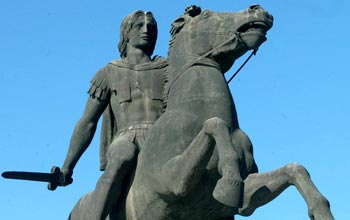
Aristotle's student demonstrated excellent management
ability, although the financial budgets of the battles included in
general lines, what those of the states also contain (and were connected directly
with them): payrolls, health and welfare, construction programs, supplies,
transfers, tax system reforms, indirect taxes and donations,
even fiscal scandals.
How his soldiers and equipment were paid for
of Alexander the Great; How many short-term loans he took out for his needs
war and why he forbade the women of Ephesus to wear jewelry; What
gift he offered to the guests at his wedding and what was her fortune
Gaza's huge perfume warehouse;
Answers to these and many more questions will be given by
Administrative Justice Appellate Dimitrios Kostopoulos, in the lecture context,
entitled "The Finances of Alexander the Great", who is organizing tonight the
Vafopouleio Spiritual Center (Αντιδημαρχία Πολιτισμού και Τουρισμού
Thessaloniki). Ο κ.Κωστόπουλος έδωσε στο ΑΜΠΕ «πρόγευση» των κυριότερων
σημείων της ομιλίας.

Στρατιωτικό μισθολόγιο πολλών ταχυτήτων
Until the 331 e.g., οι κυριότερες δαπάνες του Αλέξανδρου
αφορούσαν -μεταξύ άλλων- τα εξής: μισθοδοσία στρατού, maintenance
εξοπλισμού-πολιορκητικών μηχανών, δημιουργία στόλου, επισιτισμό, transfers
και υγειονομική περίθαλψη. Η σημαντικότερη άμεση πολεμική δαπάνη ήταν η
μισθοδοσία, το ύψος της οποίας οριζόταν με στρατιωτικό μισθολόγιο: ο στρατός
αποτελείτο καταρχήν από Μακεδόνες, who served their country, from
allies of the Greek cities (partners) and professional mercenaries.
Although the information of historical sources does not agree
to the amount of the salary, approximate calculations lead to the conclusion
that, at the beginning of the campaign, the amount of salary of the common soldier
was rising (average) The day for the draw of the two lucky ones 1-2 drachmas per day.
"The corporals or corporals received a monthly salary 40
drachmas. The salary of the platoon was double that of the horsemen
twice as many pedestrians. According to Diodorus the horsemen received 300 drachmas monthly
and the Macedonian phalangites 100 drachmas, while for professionals
mercenaries there were additional financial incentives", notes the
Mr. Kostopoulos.

Annual payroll expense 4.000-7.000 talents
The overall figures were unfathomable: enough n’ consider
someone that the 334 B.C. crossed the Hellespont a military force of more than
35.000 of men, to which they must be added 10.000 men of Parmenion
(που προηγήθηκαν το 336 B.C) κι ο στρατός που διατήρησε ο Αλέξανδρος στη
Μακεδονία (12.000). Η ετήσια μισθολογική δαπάνη υπολογίζεται ότι ανήλθε σε
4.000-5.000 τάλαντα στο πρώτο έτος της εκστρατείας.
Τα επόμενα έτη δε, αυξήθηκε περαιτέρω, σε περίπου 7000
τάλαντα -χωρίς να συνυπολογίζεται ο στόλος- επειδή ο Αλέξανδρος ενίσχυσε τον
στρατό του με μισθοφόρους από τις ελληνικές πόλεις της Μικράς Ασίας, while
he had to establish garrisons in territories he occupied.
After the capture of Susa and Persepolis and the acquisition
of the Treasury of Darius, spending on military payroll soared:
for the Indian campaign Alexander organized an army 140.000 of men,
while he built a fleet at least 150 ships, which they brought 3.000-5.000 men.

Engineers, γεφυροποιοί και κατασκευαστές κλινών
Πέραν της μισθοδοσίας, μεγάλες ήταν οι δαπάνες συντήρησης
και ανανέωσης πολεμικού υλικού. Ο στρατός του Αλέξανδρου ήταν για την εποχή
of a technologically advanced war machine. The army was followed by engineers,
who manufactured and maintained various war machines and the
προσωπικό του πολιορκητικού όρχου, που χειρίζονταν τους «πετροβόλους», their
«ξυλοσυνθέτους πύργους» ή «προβόλους»,τις γνωστές «ελεπόλεις», τους κριούς,
τις χελώνες και τα κάτοπτρα. also, δίπλα στον στρατό πορεύονταν άλλοι
technicians, όπως γεφυροποιοί και κατασκευαστές σκηνών και κλινών.
Μεγάλες δαπάνες απαιτούσε και ο εφοδιασμός, επισιτισμός
και μεταφορά, not only of the army but also of their women and children
families of soldiers, for the service of which it operated
organized transport and supply corps.

A hundred talents just for medicine, but also provision for the
children of the fallen
Systematically organized - and therefore costly- was also
sanitary service of Alexander, που περιλάμβανε γιατρούς, βοτανολόγους,
φαρμακοποιούς και νοσοκόμους, οι οποίοι ακολουθούσαν την εκστρατεία. THE
Διόδωρος αναφέρει ότι για την εκστρατεία στην Ινδική ο Αλέξανδρος διέθεσε για
medicines 100 talent.
also, Alexander was spending considerable sums on
compensations to the parents and families of the fallen, in which
granted royal estates and tax exemptions, ενώ ο Ιουστίνος
αναφέρει ότι στα ορφανά των πεσόντων συνέχιζε να χορηγεί το μισθό του
πατέρα..

«Κατευναστές» ή «στρωματοφύλακες»
Ο πόλεμος δεν απαιτούσε, Nevertheless, μόνο μισθούς, εξοπλισμό και
ανεφοδιασμό, ούτε μόνο αποζημιώσεις. Απαιτούσε, κατά τον Αλέξανδρο, γιορτές
και πανηγύρεις για την τόνωση του ηθικού του στρατού -και για αυτές, the
δαπάνες ήταν μεγάλες.
also, οι πολεμικοί προϋπολογισμοί κάλυπταν δαπάνες για
μάγειρες, τραπεζοκόμους και σιτοποιούς, ακόμη και για άγνωστες σήμερα
ιδιότητες, όπως οι …στρωματοφύλακες ή κατευναστές, who guarded him
Alexander and the generals while sleeping.

Six hundred talents yearly for royal meals and
sponsorships for returnees
Royal meals were very expensive, for which the
Plutarch reports that Alexander was spending 600 talents annually. also,
Alexander was particularly generous in the remuneration of those who were particularly distinguished
in battles and sieges: according to Diodorus, after the victories of Issus and
of Gaugamelos were donated 3.000 talents, while for the conquest of the Ecvatans,
besides the jewels were distributed 13.000 talent.
Μεγάλες ήταν ακόμη οι χορηγίες προς τους παλιννοστούντες.
Κατά τον Αρριανό στους Έλληνες συμμάχους, που θέλησαν να παλιννοστήσουν,
επιχορηγήθηκαν με 2000 τάλαντα για μισθούς/έξοδα επιστροφής, while those
strove to remain they received three talents each.
Alexander was equally generous to the veterans.
According to Arrian, to the Macedonians who, due to old age or illness, became
ανίκανοι για πόλεμο, χορηγείτο εκτός από τους μισθούς και ένα τάλαντο, as
και τα έξοδα της παλιννόστησης.

Βραχυπρόθεσμα δάνεια για την κάλυψη των αναγκών του
πολέμου
But where did the revenue come from to cover it all?
of these needs; At the start of the campaign, mainly from the basil
treasure of Philip, ενώ σημαντική πηγή εσόδων ήταν τα μεταλλεία της
Μακεδονίας, που παρείχαν χρυσό και άργυρο για την κοπή νομισμάτων.
in addition to, τα τελωνεία παρείχαν έσοδα από τους δασμούς, στους οποίους
προσθέτονταν οι φόροι από τις βασιλικές γαίες.
Σημαντικότερη, Nevertheless, πηγή εσόδων ήταν ο δανεισμός. According to
τον Πλούταρχο, στα πρώτα έτη της εκστρατείας ο Αλέξανδρος δανείσθηκε βραχυπρόθεσμα
1.460 talent.
Η δαπάνη των επαγγελματιών μισθοφόρων βάρυνε αποκλειστικά
τον βασιλικό θησαυρό, ενώ η δαπάνη του στρατού των Μακεδόνων καλύπτονταν εν
μέρει από χορηγίες των ευγενών, the so-called functions, and partly from
the royal treasure.
In everything,what about fleet spending, Alexander the
faced with the institution of the triarchy, during which certain cities
they undertook to contribute a number of triremes towards the expense of the crew.

Why the cities of Asia Minor were declared "unlawful"
Regarding taxation, Alexander did not impose
φόρους σε βάρος των ελληνικών πόλεων της Μικράς Ασίας, τις οποίες κήρυξε
«ασυδότους», επειδή η εκστρατεία του είχε ως σκοπό να τις απαλλάξει από τον
φόρο υποτέλειας στον Δαρείο.
Με τις πόλεις που δεν αντιστάθηκαν στην εκστρατεία ο
Αλέξανδρος προέβη σε συμφωνία για την καταβολή απαυτές της λεγόμενης
σύνταξης, as a federal contribution of money to meet the expenses
of the common purpose of punishing Darius.

The so-called "chore" and why the women of Ephesus
they wore no jewelry
In the cities that showed a hostile attitude to Alexander and
friendly to Darius, Alexander unilaterally imposed an extraordinary levy, the
so-called damage, that is, a kind of fine, which was either monetary or
in kind, the so-called chore.
A special case is the tax on the Ephesians,
οι οποίοι αντιστάθηκαν σθεναρά στον Αλέξανδρο. Για την πληρωμή του φόρου
απαγορεύθηκε στις γυναίκες της Εφέσου να φορούν κοσμήματα. Το προϊόν, Nevertheless,
αυτού του φόρου δεν το καρπώθηκε ο Αλέξανδρος, but it was made available for her
construction of a temple of Artemis in Ephesus.
The income of Alexandros showed an increase from
so-called taxes on the district, while news revenue increased
μεταλλεία και τελωνεία των χωρών που κυριεύθηκαν.
Πώς η τεράστια αποθήκη αρωμάτων της Γάζας ευαρέστησε
στους Μακεδόνες ευγενείς
Έσοδα προέκυπταν και από την αργυρολογία και την
λαφυραγωγωγία, που επιτρέπονταν από το ισχύον δίκαιο του πολέμου, δηλαδή την
κάρπωση παντός είδους τιμαλφών, σκευών, ειδών πολυτελείας κτλ.
Χαρακτηριστική ήταν η περίπτωση της πόλης της Γάζας, where
ήταν γνωστή ως τεράστια αποθήκη αρωμάτων, τα οποία αργυρολογήθηκαν μετά την
άλωσή της. Τα έσοδα αυτά ο Αλέξανδρος τα διένειμε στους Μακεδόνες ευγενείς,
όπως δε αναφέρει ο Πλούταρχος, when Perdiccas pointed out to him that it did not last
nothing for himself, Alexander replied "I keep hope".
The untold treasures of the metropolitan vaults
of Darius
According to Mr. Kostopoulos and despite the above, until the
333 B.C. Alexander was facing financial straits. Later, but also
especially after the battle of Gaugamelos, the situation changed drastically: were delivered to
Αλέξανδρο οι αμύθητοι θησαυροί των μητροπολιτικών θησαυροφυλακίων του Δαρείου
σε Σούσα και Περσέπολη.
Μετά την κατάλυση του περσικού κράτους, τα γενικά
features of taxation also changed: the number of increased
taxpayers since the Persians were taxed, which previously
were exempted as sovereigns, while the same happened in the new cities which
were built by Alexander. The Greek cities of M.Asia preserved anyway
indecency.
Taxation also increased, especially the indirect one, because
economic activity and trade developed with its increase
currency and the distribution of Persian treasures, while the new works and the new ones
cities attracted new populations.

Συγχώνευση» φορολογικών και δημοσιονομικών
υπηρεσιών
Ο Αλέξανδρος προέβη σε εκτεταμένη διοικητική μεταρρύθμιση
για την οργάνωση της αχανούς αυτοκρατορίας, η οποία περιλάμβανε και
μεταρρύθμιση των φορολογικών και δημοσιονομικών υπηρεσιών: Δημιούργησε
τέσσερις δημοσιονομικές περιφέρειες, η πρώτη της Αιγύπτου, Λιβύης και
Αραβίας, η δεύτερη της εντεύθεν του Ταύρου Μικρασίας, η τρίτη της Φοινίκης,
Συρίας και Κιλικίας και η τέταρτη της Βαβυλώνας, Σούσων, Περσίας και Μηδίας.
These new services were staffed with a large number of employees.
The "on the money" and fiscal scandals…
Alongside, Alexander appointed Chief of the Commissioners, as
quasi-Minister of Finance with responsibility for the entire state, carrying him
…eloquent title "the one on the money".
Anyway, even then there was no shortage of financial scandals, such as
that of Arpalos, στον οποίο είχε απονεμηθεί ο τίτλος του «επί των χρημάτων».
Αυτός, επωφελούμενος της απουσίας του Αλεξάνδρου στην εκστρατεία της Ινδικής,
καταχράστηκε μεγάλα ποσά και για να αποφύγει την τιμωρία κατέφυγε στην Αθήνα.
Ποιοι φόροι επιβάλλονταν
Οι φόροι που επιβάλλονταν ήταν, καταρχήν, οι άμεσοι επί
των ατόμων (πχ, capital tax and business tax on professionals,
which were distinguished into capital and manual). also, they were the indirect ones
taxes on consumption, which differed by satrapy, as
and customs duties, which increased significantly.
Further, the revenues from the
ποικιλόμορφη ιδιωτική περιουσία του κράτους, οι έγγειοι πρόσοδοι επί των
γαιών, η λεγόμενη δεκάτη, δηλαδή το 10% επί της γεωργικής παραγωγής και ο
φόρος των ζώων.
Πέραν των θησαυρών του Δαρείου, it is considered that of the 18
satrapies flowed into the royal treasury 9.000-30.000 talents annually, while in
to these must be added revenue in kind and revenue from mining.
Μετά την κατάκτηση της Ινδικής προστέθηκαν και οι φόροι αυτής.

Δαπάνες ανοικοδόμησης πόλεων, συγκοινωνιακά και
αρδευτικά έργα
Την περίοδο αυτή άλλαξε και η μορφή των δαπανών, with the
center of gravity should now be placed on those related to public works
and rebuilding new cities. Alexander built many and
large temples, for both Greek and Asian deities, while
built many productive works, such as transportation in Klazomenes and
Red, irrigation on the Euphrates, desiccants in Kopaida.
Υπολογίζεται ότι οι πόλεις που ίδρυσε ανέρχονταν σε 70,
τις οποίες, εκτός από την περιτοίχιση και την πολεοδομία, κόσμησε με δημόσια
κτίρια, διαδίδοντας την ελληνική αρχιτεκτονική και τις ελληνικές τέχνες στην
ανατολή.

Τι δώρο έλαβαν οι προσκεκλημένοι στον γάμο του
Μεγαλέξανδρου;
Σημαντική θέση κατείχαν και οι δαπάνες της βασιλικής αυλής,
οι οποίες πλέον των βασιλικών ακολούθων και του προσωπικού, περιελάμβαναν και
the expenses for banquets and feasts which were very high, since the
Alexander followed the opulence of the Persians.
During the great ceremony of 9000 of Perso-Macedonian marriages the
323 e.g., στην οποία ο ίδιος παντρεύτηκε την κόρη του Δαρείου, Στάτειρα, each
προσκεκλημένος έλαβε δώρο μια χρυσή φιάλη και είδε πληρωμένα τα χρέη του από
τον Αλέξανδρο!

Source: kathimerini.gr