Great exhibition in Berlin on the religious, political and social person of the city

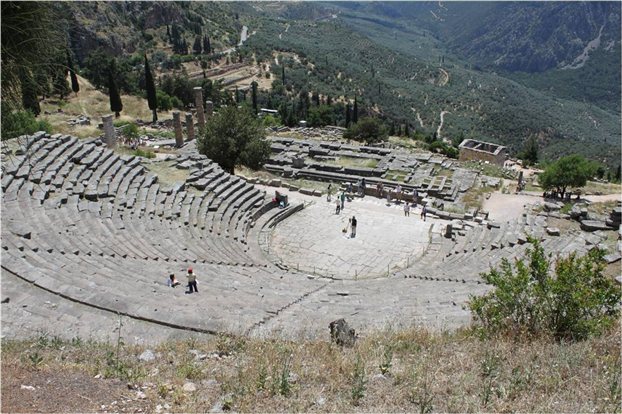
A bridge of culture, of trust and cooperation between Greece and Germany is being built these days in Berlin, a few steps away from the old cold war wall: The Martin-Gropius-Bau Museum in Niederkirchnerstrasse - opposite the German Ministry of Economy- is preparing to welcome the exhibition "Olympia: Myth, worship, matches", which will give German visitors the opportunity to get to know the place, the people, the everyday life and history of the holy city-symbol of the Olympic Games and to witness the birth of the sports ideal.
On the occasion of the Olympic Games starting in London in a few days, the exhibition will present to 3.500 sq.m. through 1.000 exhibits the sacred site of ancient Olympia and many aspects of ancient Greek worship and daily life "known to you Greeks, but unknown to the general public of Europe, which we must demonstrate and explain", pointed out Gereon Zyvernich, director of the Martin-Gropius-Bau Museum, during a press conference in Athens, at noon on Tuesday 24 July, which was also attended by the Deputy Minister of Education, of religion, Culture and Sports (Ministry of Health) Kostas Tzavaras, the director of the Hellenic Cultural Foundation Eleftherios Economou, the general secretary of Culture of the Ministry of Culture Lina Mendoni and the general director of Antiquities and Cultural Heritage Maria Andreadaki-Vlazaki.
"Through the exhibition it becomes clear what Greece has offered to Europe", the German director commented and the Greek deputy minister remarked that in our troubled times, and on the day of the celebration of 38 years since the restoration of democracy in Greece, "Olympia marks the course of human civilization, opposes the eternal to the perishable and sends a powerful message that reminds us that “Greek way” continues to inspire and move the peoples of the world".
The report is structured in three main thematic sections. The first presents the history of the ancient sanctuary of Olympia from the beginning of the 1st BC. millennium to the end of the Roman times, the political dimension of Olympia and its contribution to the formation of Hellenism are demonstrated and presented, through vows, representations on vases and other findings, the religious function of the sanctuary, the deities and heroes that were worshiped and the cult ceremonies that took place there.
The second section traces the history of excavations and research in ancient Olympia, by French archaeologists’ first it 1829 and by German archaeologists the 1875, following the thread of archaeological excavations in the area up to the present day.
The third section focuses on sport in Olympia and its social significance. In the rooms that will host this module, visitors to the exhibition will see records, dumbbells and other sports instruments and through angiography and digital representations will be informed about the types of ancient sports. They will also have the opportunity to admire portraits of distinguished spectators of the Games as well as coins and medals that confirm the pan-Hellenic importance of the Games.
1.000 exhibits – 150 are exhibited in a world premiere
Most of the exhibits in the exhibition come from Greek museums, mainly from the Archaeological Museum of Olympia, the National Archaeological Museum and the Numismatic Museum. Overall 564 ancient works will depart for Berlin, together with three modern copies, two models and eight modern commemorative medals. In the exhibition they lend exhibits in total 21 major European museums and institutions, including the Louvre Museum, the Vatican Museum, the Archaeological Museum and Sculpture Gallery of Munich and the National Museum of Rome.
150 Greek findings from excavations of the last decade in Mycenae and elsewhere will be presented for the first time to the general and scientific public and will be published in the catalog accompanying the exhibition.
Exactly 40 years after the last exhibition on the subject of the Olympic Games in Germany, the 1972, at the Munich Olympiad, for the first time such a large number of Greek exhibits cross the borders and are loaned outside of Greece, "an event that expresses trust and is a manifestation of the close bond between the two countries", underlined the director of the Martin-Gropius-Bau Museum.
The exhibition, which is prepared by 2010, organized by the initiative of the Hellenic Cultural Foundation in Berlin and co-organizers the Martin-Gropius-Bau Museum, the Ministry of Education, of religion, Culture and Sports, the German Archaeological Institute and the Berlin State Museums Antiquities Collection and is under the auspices of the President of the Hellenic Republic and. Karolos Papoulias and the President of the Federal Republic of Germany Mr. Joachim Gauck.
Catalogs in German, in English and Greek accompany the exhibition, with essays and descriptions of the exhibits, fruit of cooperation 60 distinguished Greek and foreign scientists.
However, the ambitious exhibition seems like an expensive luxury for the poor economy of the Greek state, the director of the Hellenic Cultural Foundation Eleftherios Economou, answering a question, clarified that "the Greek government was not burdened at all with the costs of the organization". German and Greek private individuals support the exhibition with sponsorships, including the German Savings Banks and the Greek institutions Latsis and Leventis, while Qatar will finance the publication of the English and Greek catalogs.
The exhibition will be hosted by 30 August 2012 until 7 January 2013 at the Martin-Gropius-Bau Museum in Berlin and will then be transferred to Doha, Qatar, where it will be presented at the Sports and Olympic Museum from 28 Of March 2013 until the end of October 2013, supplemented by an appendix on the history of the modern Olympic Games, where evidence from the Athens Games will be presented 1896 and 2004. The final destination of the exhibition will be the National Archaeological Museum of Athens, where we will see her in the winter 2014.
Source : tovima.gr






 joint program of the public televisions of the three German-speaking countries, Austria, Germany, Switzerland, the 3SAT, while in 10 July will be presented to the European Parliament, where its president will give a foreword, Martin Schulz and a discussion will follow. On the occasion of tomorrow's premiere, the ambassador of Greece in Austria, Themistocles Dimidis, quoted last night, in the historical building of the Greek embassy in the center of Vienna, reception in honor of the film's contributors- documentaries and the supporters of the relevant initiative, in the presence of the Greek Orthodox Metropolitan of Austria- exarch of Hungary and Central Europe, Arsenio and representatives of public life. The Greek ambassador, expressing the thanks of the Greek side, emphasized that the film presents, through the authentic views of ordinary people, the real Greece, in which the partners should show solidarity and she should change many bad texts, while a possible exit from the Eurozone would be, as noted, destructive, not only for the country but for the whole of Europe. The duration 50 minute film- documentary, is part of Fabian Eder's general initiative, with the aim of highlighting, with the help of multimedia, of the beauty of the Greek landscape and a current image of Greece, contrary to - as he says himself- “furiously miserable daily reports, which fixate people and generate fear, from whom hatred is very little." The initiative is under the patronage of the famous Austrian artist, author, poet and actor Andre Heller and is supported by leading Austrian personalities from the field of politics and culture, like the former chancellor of Austria and great friend of Greece, Franz Vranitsky, or the former vice-chancellor and science minister Erhard Buzek. They are also supported by the president of the European Socialist Party, You lose Svoboda, the vice-president of the European Parliament, Otmar Karas, the Greek-born deputy mayor and deputy governor of the federal state of Vienna, Maria Vasilakou, or the head of MEPs of the ruling Social Democratic Party, Jörg Leichtfried. From the field of culture, the initiative, in the context of which a blog is operating in which the entire course of the filming of the film is also recorded, is supported, including, by the distinguished theater and film actors Harald Krasnitzer, Katarina Steberger, Alexander Goebel, or the featured program coordinator of the Austrian public television Barbara Steckl. During the course of a month, last April, the film's actors, on a sailing trip from Crete to Western Greece, met and recorded, through interviews, the views of dozens of ordinary people, everyday, people, which had a common feature, the young age and the decision not to leave their place, running away from the crisis, but to stay and work so that Greece will flourish again. On this route by sailboat - a "spring Odyssey, as Fabian Eder calls her- which made stations in Chania, Heraklion, Matala, Agios Nikolaos, Spinalonga, Io, Monemvasia, Tower, Zakynthos, Ithaca, Medium length, the director was accompanied by two distinguished countrymen, cameraman Richie Wagner and photographer Andreas Huddle. As Mr.. Ender, at a press conference, which preceded last night's reception at the Greek embassy, he himself focused his attention on the new generation of Greeks, who really want to change Greece, that tell about their lives, their friends, their concerns, their hopes and desires, away from high politics, to their own pulse, on the pulse of the people. During the trip their records were posted- on a daily basis in three languages German, English and Greek, provoking a series of positions and discussions- on the special blog he had created and which he accepted (and accepts) the previous weeks, tens of thousands of "visits". In addition, in the framework of the original initiative "Greece blooms", short versions of the film were created- documentary, while they were in the print media, both in Austria and in Greece, but also in other countries, many publications (photojournalism, travel reports, leaflets, articles).