Tag Archives: Uncategorized

Women also fought in ancient times

This shows the bronze statuette of a female figure in the Museum fur Kunst und Gewerbein

Not only men fought in Roman antiquity, but also the women and even with the same weapons! At least this is what the bronze statuette of a female figure shows, located at Museum of Art and Industry, in Hamburg and now under new study is now considered, that she was a female gladiator.

With long groomed hair and wearing only a loincloth, that is, bare-breasted, this woman is represented with one hand raised holding the gladiators' small curved sword _sicca_ and seems to be celebrating a victory. Her head turns to the ground _looking perhaps at the defeated opponent; _ while her knee is bandaged again, as gladiators used to do. So until today the small statue was considered to depict an athlete. In particular, the sword was interpreted as a string (the instrument of athletes for scraping from their bodies, of the powder and oil with which they anointed the skin). The different view comes from researcher Alfonso Manas of the University of Granada, which lists the data:

First of all, this is only the second depiction of a female gladiator, which is known to us. The other one, which is in the British Museum comes from a relief of Halicarnassus. And this rarity, as Manas says perhaps also indicates the rarity of the phenomenon. As far as the written sources are concerned, only twelve records exist, referring to female gladiators. All of them were of low social class, i.e. slaves, therefore their breasts remained uncovered, contrary to, what was going on with the gymnasts. One more thing is, that about 200 μ. X. under Septimius Severus, their presence in the arenas was banned.

There is, however, a problem _as far as this particular statuette is concerned_ with the fact, that female gladiators must also have worn various protective gear on their bodies, depending on the men. That is, helmets, chest or shoulder fittings etc. But the gladiator of Hamburg, it doesn't bring anything, not even her helmet and this causes the researchers to be surprised. Another parameter besides, which they themselves raise regarding her nudity is the attempt to arouse eroticism in the militarily raised Romans, who would thus have the opportunity to see women in traditionally male roles. However, the sources do not mention anything of the sort, rather than just the expression of admiration for the "fair competition" of women as well.

Source : tovima.gr

"The neighborhood is crying tonight" in the last goodbye

Relatives and friends will say goodbye to him on 2 at noon in A’ Cemetery

"Songs are the creation of composers and lyricists. The power rightfully belongs to them"
All of Greece "m’ a complaint' and 'm’ a bitter smile" says goodbye to Dimitris Mitropanos today, the irreplaceable pillar of popular song, the real man, the real man.
From the 10 in the morning his body is in the chapel of A’ Cemetery for those who wish to say goodbye, to thank him for what he offered, to leave him a flower, to show him that they considered him their man.

Unfortunately p’ this gathering, Mitropanos will be the protagonist, but he won't sing… How strange this all sounds; Because in the consciousness of every Greek, Bishop and song always go together. And so it will continue to be, even if its physical presence is lacking…
The funeral service will be sung at 2 at noon. The singer's family there, the relatives, friends will bid him farewell. A "goodbye" for a man who honored his name, his art but also his homeland, since through his Doric voice Greece traveled p’ the whole world. Η οικογένειά του παρακαλεί αντί στεφάνων τα χρήματα να δοθούν για την ενίσχυση του Κέντρου Υποδοχής Αλληλεγγύης Ιδρύματος Αστέγων στην Εθνική Τράπεζα, στον λογαριασμό 064/48000015.


ΤΙ ΕΛΕΓΕ ΓΙΑ ΤΗ ΜΟΥΣΙΚΗ
«Εγώ όταν ξεκίνησα, τα τραγούδια υπήρχαν στον δρόμο»

Στον Δημήτρη Μητροπάνο δεν άρεσαν ιδιαίτερα οι συνεντεύξεις. Ειδικά εκείνες που γίνονται αναγκαστικά στο πλαίσιο της προώθησης μιας δουλειάς. For’ αυτό και στις σπάνιες τηλεοπτικές εμφανίσεις του ήταν λιγομίλητος, φειδωλός στα λόγια. Αντιθέτως απολάμβανε ιδιαίτερα τις συζητήσεις με ανθρώπους που ένιωθε ότι μπορούσε να επικοινωνήσει. There, ανοιγόταν και μιλούσε από καρδιάς, διατυπώνοντας με πάθος τις απόψεις του χωρίς υπεκφυγές. Και φυσικά ο Δημήτρης Μητροπάνος ήταν πάντα ο κατάλληλος άνθρωπος για να μιλήσει για το ελληνικό τραγούδι, the past, το παρόν και το μέλλον του. Παραθέτουμε λοιπόν κάποιες δηλώσεις που είχε κάνει σε συνεντεύξεις του.

«Εδώ και 15 χρόνια δεν υπάρχουν τραγούδια γιατί οι δημιουργοί είναι αυτοί που σίγησαν. Τραγουδιστές έχουμε και πολύ καλούς. Αλλά δεν έχουμε δημιουργούς. Τα σημερινά παιδιά είναι δυστυχή, γιατί ψάχνουν με το τσιγκέλι να βρουν καλά τραγούδια. Εγώ όταν ξεκίνησα, τα τραγούδια υπήρχαν στον δρόμο…».

"Songs are the creation of composers and lyricists. Δικαιωματικά τους ανήκει η εξουσία. Οταν είχαν τον πρώτο λόγο οι συνθέτες, σαφώς τα πράγματα ήταν καλύτερα για το ελληνικό τραγούδι. Από ένα σημείο και μετά οι εταιρείες βρήκαν βολικό να κάνουν απόλυτους πρωταγωνιστές εμάς τους τραγουδιστές, οι τραγουδιστές τσιμπήσαμε το δόλωμα, δίχως να σκεφτούμε ότι χωρίς ρεπερτόριο είμαστε τίποτα…».

«Το τραγούδι είναι μια σύνθετη υπόθεση, θέλει παρέα. Αυτή η απομόνωση τώρα, που όλα τα παιδιά έχουν στο σπίτι τους κομπιούτερ και ηχοσύστημα δεν θα φτιάξει ποτέ λαϊκό τραγούδι. Το λαϊκό τραγούδι δεν είναι κλασική μουσική, θέλει ψυχή, πόνο και μοίρασμα. Αμα διαβάσεις ιστορίες το πώς γράφανε οι παλιοί, θα καταλάβεις. Μαζευόντουσαν π.χ. πέντε-έξι, ο Παπαϊωάννου, ο Μπιθικώτσης και λέγανεσήμερα θα πάμε στου Τσιτσάνη”. Και πηγαίνανε, κάθονταν, τρώγανε, πίνανε, πιάναν τα μπουζούκια τους και σκαρώνανε μελωδίες και στιχάκια. Τώρα ο καθένας ζει μόνος του. Πώς να γίνει το τραγούδι;».

«Και στις μέρες μας γράφονται καλά τραγούδια κι από αυτά ορισμένα θα αντέξουν στον χρόνο. Μπορεί λιγότερα απ’ The,τι στις περασμένες δεκαετίες, αλλά κάποια θα μείνουν. Πριν από δύο δεκαετίες είχαμε την εμφάνιση των τραγουδοποιών που έδωσαν νέο αίμα και φλόγα στο τραγούδι μας και τους χρωστάμε πολλά. Οι αφοί Κατσιμίχα, ο Λαυρέντης Μαχαιρίτσας, ο Διονύσης Τσακνής, ο Νίκος Πορτοκάλογλου και άλλα παιδιά προσέφεραν αρκετά. Οταν είσαι νέος, ακούς πολλά και διαφορετικά πράγματα. Κάπου εκεί γύρω στα είκοσι σου χρόνια αρχίζεις και κατασταλάζεις. Εκεί σε αυτή τη φάση γυρνάς πίσω, ψάχνεσαι και ανακαλύπτεις. Αυτό μας έχει δείξει η ζωή. Είτε στην ξένη είτε στην ελληνική μουσική, οι περισσότεροι νέοι στην αρχή ακούνε υποπροϊόντα. Την καλή μουσική συνήθως την ανακαλύπτουν αργότερα…».

«Τα ριάλιτι και οι τηλεοπτικοί διαγωνισμοί ταλέντων γίνονται για να τα βλέπει ο κόσμος και να γελάει. Πάνε κάτι άσχετοι και κρίνουνε το φόρεμα της τραγουδίστριας και πως δεν πρέπει να είναι ο τραγουδιστής κοντός ή χοντρός ή φαλακρός γιατί είναι, says, αντιαισθητικό. Οπα! Εν αρχή η φωνή και μετά πάμε για τα υπόλοιπα. Δεν κατάλαβα δηλαδή πρέπει να είμαστε όλοι Ρουβάδες; Εντάξει ο Ρουβάς έτυχε να είναι αυτό που είναι, και μπράβο του. Πέρα από κει, τι γίνεται…;».

Source : ethnos.gr

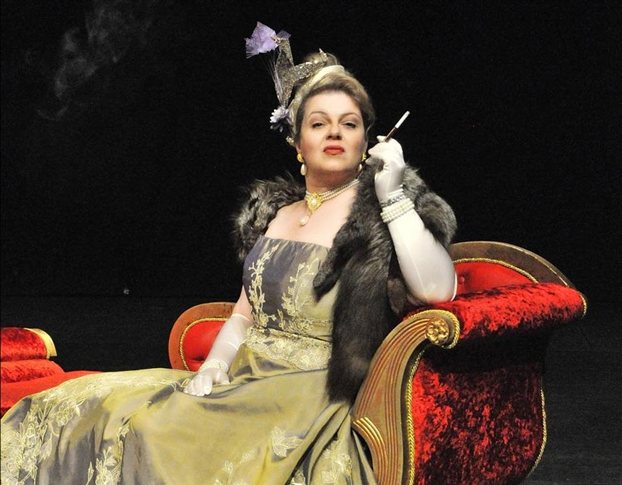
The Return of Madame Soussou

In Athens, the performance by 16 April at the Greek World Theater

Seventy years old this year Madame Soussou and celebrates it with the performance that started from the State Theater of Northern Greece and from Thursday, 26 April will be performed in Athens at the Hellenic World Theater. At the same time, a large retrospective exhibition of the career of Dimitris Psathas is being inaugurated (1907-1979) in life and in the theater: personal and professional, with his family but also at the press offices of Eleftheros Vima and Neos, photos as well as rich – anecdote – material from his performances, starting from the rehearsals and reaching the premieres, will adorn the foyer on Piraeus Street, from the archive of the Psathas family, under the supervision of Lena Nitsou's granddaughter- Mat.

But who is Madame Soussou and how did she manage to stay so alive: Bigoted and unacceptable, Madame Soussou began as a cartoon in the pre-war weekly "Family Treasure" (1939), became a book (1941), number of occupancy inspections, play (1942), motion picture (1948), radio broadcast (1950), tv series (1972 and 1986). At the same time, it was translated into many languages ​​and was performed at home and abroad.

The creator himself writes: "Soloupi spartan. Style imposing. Nose slightly turned up. Pose. Cap on the top of the head m’ a red wing that soars as a challenge to the universe. Tall, xeracian. Woman or Phenomenon; Head back. Her chin up, her nose higher, her eye on chaos. Whoever stands in front of her feels like a merman. Her gaze barely admits to touching the visible things of our humble world, and when it does it takes on tones of condescension… Poverty; You have to look closely to see it. Her style, which comes from a dynamic soul, spreads and dispels the impression of poverty – a body armored constantly fighting against poverty itself, as if he is struggling every moment to defeat her and succeeds triumphantly. He is holding a pair of rusted facades, raises hand slowly, raises eyebrows with later, moves his head back and looks ap’ the unfathomable yonder heights of an unshakable self-confidence the poor creatures of God who happen to circulate around her…”. Nicknamed the "tower mistress of Vouthoula", or better "Bythula" – at Plato's Academy, as she called the neighborhood from which she started to reach …Kolonaki.

Inspired by a real person, a neighbor of Psathas himself to whom he dedicated it, "Madame Soussou" was first uploaded on 1942 with Mrs. Katerina and Emilios Veakis, in the Katerina theater, of Victoria Square. Mary Aroni and Anna Panagiotopoulou followed. Marika Nezer was in the cinema, on TV Georgia Vasiliadou while on TV Anna Paitazi and then Anna Panagiotopoulou.


THE IDENTITY OF THE SHOW
"Madame Sousou" by Dimitris Psathas – NTNG. Directed by Giorgos Armenis, sets-costumes Yiannis Metzikof, music by Giorgos Christianakis, choreography by Alexandra Tsotanidou, lighting Tasos Dailidis.

They play: Fotini Baxevani, Kostas Santas, Vassilis Evtaxopoulos, Thalia Skarlatou, Dimitris Siakaras, Thalia Skarlatou et al.

WHEN & POU "THEATER" of the "Hellenic World" Cultural Center / Antigone Hall, Piraeus 254, Taurus, tel. 212 254 0300 Premiere, Thursday 26 April 2012, at 21.00 Tickets 24 – 21 – 18 – 15 – 12 euro


Source: tovima.gr

"Έφυγε" Dimitris Mitropanos

Dimitris Mitropanos, of the most characteristic folk voices of Greek song, he fell silent on Tuesday morning after suffering a heart attack. Recently, the performer had fought hard to overcome the serious health problems he was facing.

He was lucky during his career to interpret not only great composers and poets and lyricists but above all to make their songs his own. Simple, Doric, substantive, without tricks and tricks he donated his voice to songs and especially to the history of folk songs.

In the mid-60s and at the urging of Grigoris Bithikotsis, whom he met at a gathering of his uncle's company, in which he sang, visited Columbia. There Takis Lampropoulos met Giorgos Zambetas, next to whom he will work in "Dawns".

He remembers Zambeta as his great teacher and second father. As he has stated, "Zampetas is the only person in the song who helped me without expecting anything. With all my other partners I got something and gave something". The 1966 Mitropanos meets for the first time with Mikis Theodorakis and performs parts of "Romiosyn" and "Axion Esti" in a series of concerts in Greece and Cyprus.

The 1967, Mitropanos records his first 45-track record, with the song "Thessaloniki". It was preceded by the recording of the song "Lost Lilac", but which was censored by the Junta and never released.

In the path he carved on the path of the popular artist, the 1972 it is an important station: the composer Dimos Moutsis and the poet-lyricist Manos Eleftheriou release "Agios Fevrourios", with performers Mitropanos and Petri Salpeas, marking a milestone in Greek music.

In July of 1999, Mitropanos and Moutsis will meet again on stage at Irodeion with Dimitra Galani and soprano Julia Souglakou for two musical evenings as part of the Athens Festival. These concerts are recorded live and released on a double CD two months later.

Followed by "The Road to Kythira" by Giorgos Katsaros and "The Synaxaria" by Giorgos Hatzinassios, projects of high quality but also of great impact in Greek society.

In his long career in Greek singing, Dimitris Mitropanos collaborated with the greatest creators of folk and art song. George Zampetas, Mikis Theodorakis, Municipality of Moutsis, Apostolos Kaldaras, Takis Mousafiris ("The two of us" etc.), Christos Nikolopoulos ("Make Decisions" in lyrics by Lefteris Papadopoulos), Yannis Spanos ("Mitropanos sings Spano") were the composers with whom he was professionally associated, building a career intertwined with the Greek folk music tradition, until the end of the 80s.

His participation in records by Lakis Papadopoulos (with the song "Ya na s’ take revenge") and Nikos Portokaloglou ("I close and come") they highlight at the time the wide range of his interpretation and herald a shift in his interpretation, which would lead to a series of records that greatly changed the concept of good modern folk song.

The collaborations with Marios Tokas and Filippos Grapsa ("Our national loneliness" and "Company with a sun") combine folk texture and feeling with the deeper meaning of lyrics and the use of more sophisticated words. Alongside, the resonance of the songs in society and the commercial success highlight these creations as tools but also symptoms of the evolution of Greek society.

The very important collaboration with Thanos Mikroutsikos with the album "Stou Aiona tin Paraga", in verses by Alki Alkaiou, Costa Laha, Linas Nikolakopoulou and Giorgos Kakoulidis, is a shift of the performer to even more "artistic" routes, again maintaining the identity of the layman.

Mitropanos continues on the same paths, with songs by Mikroutsikos, Korakaki, Moukidis, Papadimitriou et al. in the second half of his decade 1990 and at its beginnings 2000.

From the last works of the Thessalian aoidos, "Tell me t’ truly yours" with music by Stefanos Korkolis and lyrics by Eleana Vrachalis and Nikos Moraitis, but also the live recording "There's also the zeibeki", from the program – ode to the national dance of Greece together with Themis Adamantidis and Dimitris Bassis, as well as the album "In Diapason", which contains 12 folk songs and a blues ballad. Among the songs on the album, the song "I ekdromi" by Yiannis Miliokas stands out, which was written for the performer's return to discography after a serious health problem.

In June 2011, with the album "Here we are" Stamatis Kraunakis and Dimitris Mitropanos, met for the first time in the discography. This first joint album was an offer of "Vima" to its readers...

The medical bulletin
Dimitris Mitropanos died of acute pulmonary edema. In an announcement, issued by the HYGEIA hospital, is mentioned:

«Ο ασθενής Δημήτριος Μητροπάνος διεκομίσθη στο νοσοκομείο ΥΓΕΙΑ σήμερα το πρωί λόγω οξέως διαρροϊκού συνδρόμου και εμέτων. Στη συνέχεια παρουσίασε αιφνιδίως δύσπνοια.

Μετεφέρθη στη Μονάδα Εντατικής Θεραπείας, όπου αντιμετωπίστηκε για οξύ πνευμονικό οίδημα από το οποίο και κατέληξε την 11η πρωινή».

Source : tovima.gr

Michalis Suyul: Tribute to the Badminton Theatre

The Badminton Theater presents a unique tribute to Michalis Souyoul as part of the cycle "The Faces of Greek Song" on Monday, 14 May 2012.

Michalis Suyul (1906-1958) he is the composer of the interwar generation with the most timeless songs.

Amazingly, Michalis Souyul's songs are still alive after so many years, since they still express moods and emotions like modern ones.

A prolific composer of music and songs, he wrote in all forms and styles.

Tango, waltz, romances, common sight, patriotically, butchers, Zeybekika and almost always with great commercial success.

He wrote about them 750 songs, the music 10 motion pictures and 50 theater inspections.

In this dedication, in the series of concerts of the Badminton Theater "The Faces of Greek Song" the most recognizable songs of, like "Keep your hair down", "Let's come for a while", "Something draws me to you", "The month is nine", "Children, of Greece, children", "The Instruments Began", "The last tram", "We have one life", "Well, open another bottle", "The Trambarifa" and many more. The songs will be performed by the Athens Champer Orchestra.

The songs will be performed in alphabetical order by:

Gerasimos Andreatos
Calliope Vetta
Giannis Zouganelis
Despina Olympiou
Irini Tumbaki
& Babis Tsertos

The Athens Chamber Orchestra is conducted by Apollon Kouskoumvekakis, who has also undertaken the orchestrations.

In the first part, bandoneon will be played by Iraklis Vavatsikas and Artemis Vavatsikas in the second part as well, Dimitris Margiolas and Nikos Kretsis will play bouzouki.

They are dancing: Alexander Khoroshikh & Giota Malamou
Giorgos Tsampras in his role.
Production art direction: Michalis Koubios

Info

Location Badminton Theatre, Olympic Properties, Army Grove, Putty
Date Monday 14 May 2012. Start time: 20:30
Information www.badmintontheater.gr
Ticket prices Distinguished: 35€, A Zone: 30€, B Zone: 25€, C Zone: 20€, D Zone: 15€
Student: 10€

Source : culturenow.gr

Dyed red eggs… here and 2.500 years

Because the egg was associated with rebirth and renewal, as early as the 5th BC. century

More than 2.500 years of symbolism for religion have the eggs that these days we dye red and crackle saying "Christ is Risen". Because indeed the egg was associated for millennia with rebirth and renewal, initially in the first days of spring, while it was subsequently adopted as a symbol of Christianity. And this is because the egg lends itself to the mental representation of the cycle of life, which for many plants and animals begins in spring.

The first historical evidence of egg symbolism in religion dates back to 500 B.C. In the Achaemenid period the Persian calendar was influenced by Zoroastrianism and the vernal equinox, the first day of their calendar year, it was a celebration, as we see in a relief from Persepolis (500 e.g.), where nobles are represented holding eggs in their hands. The vernal equinox is celebrated, in fact, even today by dyeing eggs and eating them.

The first one, in any case, attested use of the egg as a Christian symbol is placed in the Roman period. Roman religion, besides, had been greatly influenced by the treatises of Hippocrates, where the hatching of eggs was often referred to in comparison to the birth of humans. In "By the nature of a child", specifically, an infant being born, described in analogy to a little chicken breaking the eggshell.

During the 1st AD. century, the connection of the egg with burials is also found for the first time: In Rome, a child's tomb was found dating back to around 50-175 μ. X. and according to archaeologists, "under the left hand of the buried person there is a hen's egg, which in the funerary context is probably not simply a food offering, but perhaps also a reference to eschatological rebirth".

In the necropolis of the Vatican, moreover, a child was found buried with many gifts, including eggs! And here the excavators believe that the egg was probably a “symbol of rebirth, of a new life that would balance the injustice of an early end".

These two burials perhaps represent early Christian burial customs, as the egg was closely connected with the idea of ​​rebirth and this already from the years of Jesus Christ:Zoe, death, resurrection. As the great religious scholar Nilsson also mentions, "the egg is an apparently living and inert substance containing the possible beginning of a life, and that which has such life-giving power must necessarily awaken or nourish the life-forces of those to whom it is offered.".

Nevertheless, there is not much historical evidence linking the egg to Jesus. In the Bible the references are minimal, according to the orthodox tradition however, Mary Magdalene brought boiled eggs to Jesus' tomb. The eggs, on delivery always, they turned a bright red color, the color of blood, when she saw that Jesus had risen.

Another story tells how, when Mary Magdalene went to the Roman emperor Tiberius to tell him that Jesus had risen, he replied: "As long as Jesus was resurrected, so much so that this egg is red", but as soon as he finished his sentence the egg turned a vivid red color.

The spring, in any case, it is a time of celebration and signifies a new beginning, whether it is the beginning of the year, the liberation from the slavery of Egypt or the resurrection of the Savior.

Source : tovima.gr

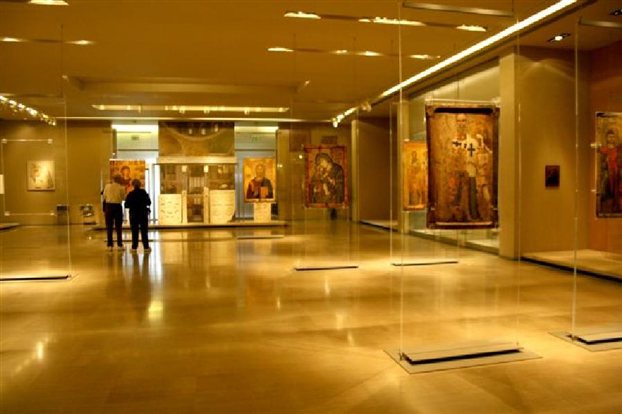
Μουσεία και αρχαιολογικοί χώροι με χειμερινό ωράριο ως τον Ιούνιο

Δεν προκηρύχθηκε διαγωνισμός για επιλογή εποχικών υπαλλήλων λόγω εκλογών

Χειμερινό ωράριο για μουσεία και αρχαιολογικούς χώρους, τουλάχιστον ως τον Ιούνιο. Αυτά είναι τα άσχημα νέα για τον πολιτισμό και τον τουρισμό καθώς η προκήρυξη των εκλογών δεν άφησε το περιθώριο της πρόσληψης εποχικών υπαλλήλων μέσω της διαδικασίας του ΑΣΕΠ, όπως είναι επιβεβλημένο.

Οσον αφορά την καθυστέρηση πάντως, το ΥΠΠΟ δηλώνει ότι την σχετική άδεια έλαβε μόλις στις 29 Of March, γεγονός που δεν του επέτρεψε την έγκαιρη προκήρυξη του διαγωνισμού. Και πάλι όμως προσλήψεις θα γίνουν μόνον για 680 υπαλλήλους αντί των 1000, που είχαν προσληφθεί πέρυσι αλλά και πάλι δεν έφταναν

Ετσι λοιπόν τα μουσεία θα συνεχίσουν να λειτουργούν ως τις 3 το μεσημέρι ενώ οι αρχαιολογικοί χώροι ως τις 3 or 5 μ. μ. με εξαίρεση την Ακρόπολη που είναι ανοικτή ως τις 7.

Υπάρχει ωστόσο και ένα καλό νέο, το οποίο ανακοίνωσε η γενική γραμματέας του υπουργείου Πολιτισμού κυρία Λίνα Μενδώνη, ότι από του χρόνου και ως το 2015, θα γίνονται και άλλες προσλήψεις με επτάμηνες συμβάσεις (πάντα μέσω ΑΣΕΠ), στο πλαίσιο ευρωπαϊκών προγραμμάτων για κοινωφελή έργα.

Source : tovima.gr