Ι. NANOS CONSTRUCTION

Name: Ι. NANOS CONSTRUCTION
Address: TH.SAKELLARIDI 24 54248
City: THESSALONIKI
Profession: CIVIL ENGINEER EDE
Phones: 2310324690 – 6974493023
WebPage:
eMail: nanosi@otenet.gr
Region: Central Macedonia
City: Thessaloniki Center
Category: Construction companies
Subcategory: Construction

Comments:
TECHNICAL COMPANY OF CONSTRUCTION STUDIES-  
I SAVE AT HOME – 
ENERGY PROJECTS (INSPECTIONS ETC.) –  
ARBITRARY ARRANGEMENTS –
RESIDENTIAL RENOVATIONS, STORES

by www.hellinika.gr

THE LETTER “N” AND ITS Abolition

THE LETTER "N" AND ITS Abolition By Spyros Markos, director of the 3rd Primary School of Larissa THE CYPRUS GOES TO EVEREST AND ASK FOR A SANDWICH WITH CHEESE AND TOMATO AND PEPPER AND ONION. THE GREEK CALLS HIM JOKING: "YOU, THE CYPRIOTS, WHAT TO SAY ALL "N" ADD TO THE END... DO YOU WANT SOMETHING ELSE INSIDE"; WHEN, SHOCKED BY THE OBSERVATION, THE CYPRUS SAYS HESITATINGLY: " ALSO PUT A LITTLE ZAMBOO AND BEIKO. .." Each letter of the Greek Alphabet emits a sound and an image. Every word was put by the "Namers", precisely and not randomly and has a direct relationship of Cause and Causation, between Signifier and Signified. * The "N" tunes the brain.* *Recently (1996) in the Medical Journal MEDIZIN-JOURNAL in Germany, a scientific paper was published, according to which: "The pronunciation of the letter 'N' transports oxygen to the brain and that it was no coincidence that the fact of placing 'N' in the exact middle of the Alphabet - in the first Greek Alphabet with the 27 letters". also, at Harvard, by medical investigations it was established. that the recitation of the Homeric Epics in the original, besides the others, it's good for the heart, as a breathing exercise.* And I am entitled to ask: Why we became pursuers of "N"; As a combat instructor and author of the book: DYSLEXIA, Athena 1994, GREEK LETTERS Publications, 6the Edition, I am justified in asking, but also to recommend at the end: The Greek language has now taken a form such that it does not need other extremes. But I wonder: Is it a coincidence that we removed the letter "N" at the end of words and our textbooks write "area" (!), instead of area! In the school aids, however, we read "the area N", i.e. N is preserved there, while the official State in the books (MINISTRY OF, Pedagogical Institute) they have abolished it !! Why this extreme?; Why do we officially teach arbitrarily constructed rules in our schools, B.C. yesterday I met the Mayor (the friend, the Council etc.). The letter N is organic and when we cut it it hurts. It's like cutting off our little finger.. If anyone objects that this is an insignificant detail, we should tell him that "detail holds the Parthenon"! But let me remember here the beautiful, ironic text of Od. Elytis: "FOR AN OPTICS OF SOUND", where it ends, "No Herod would have dared to order such genocide, like that of the final -N-, εκτός κι αν του' λειπε η οπτική του ήχου». The G. Ritsos also wrote: "And the words veins are. Blood flows inside them". Unfortunately, Nevertheless, we find out today, that after Ni, it's the turn of the final Sigma (s). Some journalists on the channels are already saying: "the method", the "street", "the complete! accession" (!)... They thus arbitrarily cultivate a negative language pattern in our youth with the enormous power of the media and the school powerless to react, but also society to passively accept this development as almost fatal. After all this I formulate the following opinion and submit to your Congress my own "Theory" on the matter in question: The unique musicality of the Greek Language and its impact on the spiritual clarity of man is being studied internationally. *The letter "N" positively stimulates the brain and activates the person to think correctly.* *The final Sigma calms the person. This is also accepted by modern Psychiatry.* The Ancient Greeks knew all this and it is no coincidence that only we, the Greeks, we say: "I said goodbye to Ni and Sigma" and we don't say with other letters (even though we have other letters at the end of the words), because Ni activates our mind to think correctly and Sigma calms our soul, after we speak in public or in private. Modern Psycholinguistics accepts that Language and Thought are born simultaneously and evolve in parallel and constitute at all times an inseparable unity. *Language embodies Thought and Thought transmutes into Language.* It is a coin with two sides.. There cannot be one side, without the other. There could be no Greek Thought without the Greek Language. It is a fact that the quality and quantity of "records" in Thought determines the mental level of each people. Therefore, the mental level also determines the ability to create Culture. * The Greek Alphabet, in the course of his thousands of years he was originally: Ideographic, then the Pictorial was coined, then we arrived at Grammographic, then in Spelling (Linear A and B) and finally the current Photographic was established, which is unsurpassed and to which the creation of the Greek Language and the Greek Universal Culture is due.* We have a duty to preserve, as the apple of an eye, the Greek Language and to resist its abuse.

THE LETTER “N” AND ITS Abolition
By Spyros Markos, director of the 3rd Primary School of Larissa
THE CYPRUS GOES TO EVEREST AND ASK FOR A SANDWICH
WITH TURIN AND DOMATAN AND PEPPERIAN AND CHERMYDIN.
THE GREEK CALLS HIM JOKING:
"YOU, THE CYPRIOTS, WHATEVER TO SAY ALL OF IT “N” ADD TO THE END…
YOU WANT SOMETHING ELSE INSIDE”;
WHEN, SHOCKED BY THE OBSERVATION, THE CYPRUS SAYS HESITATINGLY:
” ALSO PUT A LITTLE ZAMBOO AND BEIKO. ..”
Each letter of the Greek Alphabet emits a sound and an image.
Every word was put by the "Namers", accurately and not randomly
and has a direct relationship of Cause and Causation, between Signifier and Signified.
* The “N” tunes the brain.*
*Relatively recently (1996) in the Medical Journal MEDIZIN-JOURNAL
in Germany, a scientific paper was published, according to which:
"Pronouncing the letter 'N' transports oxygen to the brain
and that the placement of the "N" was no accident
right in the middle of the Alphabet – in the first Greek Alphabet with the 27 letters".
also, at Harvard, by medical investigations it was established.
that the recitation of the Homeric Epics in the original, besides the others,
it's good for the heart, as a breathing exercise.*
And I have the right to ask:
Why we became pursuers of "N";
As a combat instructor and author of the book: DYSLEXIA,
Athena 1994, GREEK LETTERS Publications, 6the Edition,
I am justified in asking, but also to recommend at the end:
The Greek language has now taken a form such that it does not need other extremes.
But I wonder:
Is it a coincidence that we removed the letter "N" at the end of words and our textbooks write "area" (!), instead of area!
In the school aids, however, we read "the area N", i.e. N is preserved there, while the official State in the books (MINISTRY OF, Pedagogical Institute) they have abolished it !!
Why this extreme?;
Why do we officially teach arbitrarily constructed rules in our schools, B.C. yesterday I met the Mayor (the friend, the Council etc.).
The letter N is organic and when we cut it it hurts.
It's like cutting off our little finger…
If anyone objects that this is an insignificant detail, we should tell him that "detail holds the Parthenon"!
But let me remember here the beautiful, ironic text of Od. Elytis:
"FOR AN OPTICS OF SOUND", where it ends,
“No Herod would have dared to order such genocide,
like that of the final -N-, unless his’ the vision of the sound was missing".
The G. Ritsos also wrote:
"And the words veins are. Blood flows inside them".
Unfortunately, Nevertheless, we find out today, that after Ni,
it's the turn of the final Sigma (s).
Some journalists on the channels are already saying:
"the method", the "street", "the complete! accession" (!)…
They thus arbitrarily cultivate a negative language pattern in our youth with the immense power of the media
and the school unable to react, but also society to passively accept this development as almost fatal.
After all this I formulate the following opinion and submit to your Congress my own "Theory" on the matter in question:
The unique musicality of the Greek Language is studied internationally
and its impact on man's spiritual clarity.
*The letter "N" stimulates the brain positively and activates a person to think correctly.*
*The final Sigma calms the man down.
Modern Psychiatry also accepts this.*
The Ancient Greeks knew all this and it is no coincidence
that only we, the Greeks, we say:
"I said goodbye to Ni and Sigma" and
we do not say in other letters (even though we have other letters at the end of the words),
because Ni activates our mind to think correctly and Sigma calms our soul, after we speak in public or in private.
Modern Psycholinguistics accepts that Language and Thought are born simultaneously and evolve in parallel and constitute at all times an inseparable unity.
*Language embodies Thought and Thought is transmuted into Language.*
It is a coin with two sides.
There cannot be one
side, without the other.
There could be no Greek Thought without the Greek Language.
It is a fact that the quality and quantity of "records" in Thought determines the mental level of each people.
Therefore, the mental level also determines the ability to create Culture.
* The Greek Alphabet, in the course of his thousands of years he was originally:
Ideographic, then the Pictorial was coined, then we arrived at Grammographic, then in Spelling (Linear A and B) and finally, the current Photographic system was established, which is unsurpassed and to which the creation of the Greek Language and the Greek Universal Culture is due.*
We have a duty to preserve, as the apple of an eye, the Greek Language and to resist its abuse.
THE LETTER “N” AND ITS Abolition

THE LETTER “N” AND ITS Abolition
By Spyros Markos, director of the 3rd Primary School of Larissa
THE CYPRUS GOES TO EVEREST AND ASK FOR A SANDWICH
WITH CHEESE AND TOMATO AND PEPPERIAN AND ONION.
THE GREEK CALLS HIM JOKING:
"YOU, THE CYPRIOTS, WHATEVER TO SAY ALL OF IT “N” ADD TO THE END…
YOU WANT SOMETHING ELSE INSIDE”;
WHEN, SHOCKED BY THE OBSERVATION, THE CYPRUS SAYS HESITATINGLY:
” ALSO PUT A LITTLE ZAMBOO AND BEIKO. ..”
Each letter of the Greek Alphabet emits a sound and an image.
Every word was put by the "Namers", accurately and not randomly
and has a direct relationship of Cause and Causation, between Signifier and Signified.
* The “N” tunes the brain.*
*Relatively recently (1996) in the Medical Journal MEDIZIN-JOURNAL
in Germany, a scientific paper was published, according to which:
"Pronouncing the letter 'N' transports oxygen to the brain
and that the placement of the "N" was no accident
right in the middle of the Alphabet – in the first Greek Alphabet with the 27 letters".
also, at Harvard, by medical investigations it was established.
that the recitation of the Homeric Epics in the original, besides the others,
it's good for the heart, as a breathing exercise.*
And I have the right to ask:
Why we became pursuers of "N";
As a combat instructor and author of the book: DYSLEXIA,
Athena 1994, GREEK LETTERS Publications, 6the Edition,
I am justified in asking, but also to recommend at the end:
The Greek language has now taken a form such that it does not need other extremes.
But I wonder:
Is it a coincidence that we removed the letter "N" at the end of the words?
and our textbooks write "area" (!), instead of area!

In the school aids, however, we read "the area N", i.e. there it is kept
the N, while the official State in the books (MINISTRY OF, Pedagogical Institute)
they have abolished it !!
Why this extreme?;
For whom
why we officially teach made up rules in our schools
arbitrarily, B.C. yesterday I met the Mayor (the friend, the Council etc.).
The letter N is organic and when we cut it it hurts.
It's like cutting off our little finger…
If anyone objects that this is an insignificant detail, will
we must tell him that "detail holds the Parthenon"!
But let me remember here the beautiful, ironic text of Od. Elytis:
"FOR AN OPTICS OF SOUND", where it ends,
“No Herod would have dared to order such genocide,
like that of the final -N-, unless his’ the vision of the sound was missing".
The G. Ritsos also wrote:
"And the words veins are. Blood flows inside them".
Unfortunately, Nevertheless, we find out today, that after Ni,
it's the turn of the final Sigma (s).
Some journalists on the channels are already saying:
"the method", the "street", "the complete! accession" (!)…
They thus arbitrarily cultivate a negative language pattern in our youth with the immense power of the media
and the school unable to react, but also society to passively accept this development as almost fatal.
After all this I formulate the following opinion and submit to your Congress my own "Theory" on the matter in question:
The unique musicality of the Greek Language is studied internationally
and its impact on man's spiritual clarity.
*The letter "N" stimulates the brain positively and activates a person to think correctly.*
*The final Sigma calms the man down.
Modern Psychiatry also accepts this.*
The Ancient Greeks knew all this and it is no coincidence
that only we, the Greeks, we say:
"I said goodbye to Ni and Sigma" and
we do not say in other letters (even though we have other letters at the end of the words),
because Ni activates our mind to think correctly and Sigma calms our soul, after we speak in public or in private.
Modern Psycholinguistics accepts that Language and Thought are born
at the same time and evolve in parallel and constitute at all times one
inseparable unity.
*Language embodies Thought and Thought is transmuted into Language.*
It is a coin with two sides.
There cannot be one
side, without the other.
There could be no Greek Thought without the Greek Language.
It is a fact that the quality and quantity of "records" in Thought determines the mental level of each people.
Therefore, the mental level also determines the ability to create Culture.
* The Greek Alphabet, in the course of his thousands of years he was originally:
Ideographic, then the Pictorial was coined, then we arrived
in Grammar, then in Spelling (Linear A and B) and
finally, the current Photographic system was established, which is unsurpassed
and to which is due the creation of the Greek Language and the
of Greek Universal Culture.*
We have a duty to preserve, as the apple of an eye, the Greek Language and to resist its abuse.

“… it's not an orchestra, it's a revolution …”

From: http://www.o-klooun.com/anadimosiefseis/den-einai-orxistra-einai-epanastasi#.U4uOoHaVBRx

“… is not orchestra, it's a revolution …”

You see it and you want to cry. Out of emotion ; Out of admiration; Out of grief for ours; I don't know. Many years ago a man in Venezuela set out to make a dream come true. It was Jose Abreu who collected children from every poor corner of his country and began to teach them music to draw them away from crime, the drugs, the misery and dangers it carries with it!!!
His plan was called el Systema.
A few years later, 250.000 (!) children learned music, and school orchestras began to be formed. Orchestras across the country surpassed the 100 and of these the 90 they are symphonic !
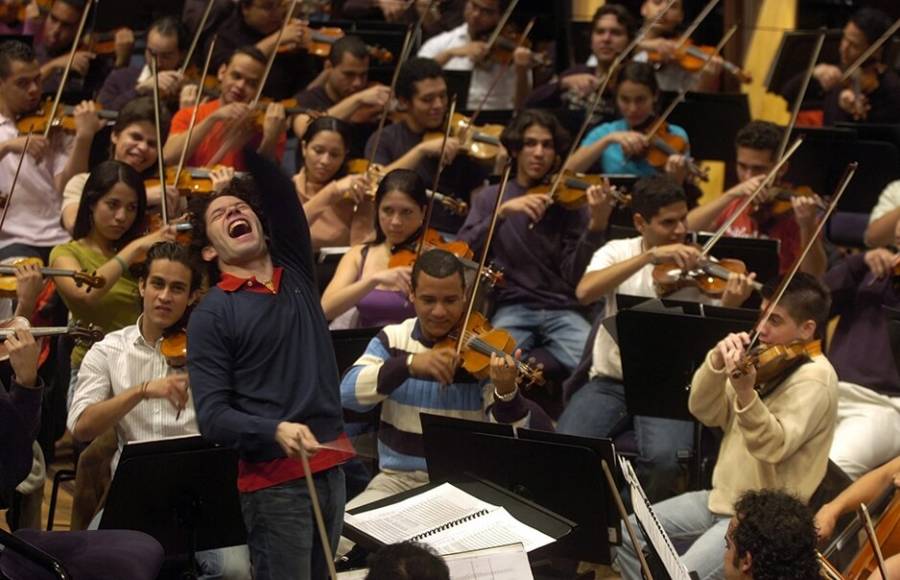
The best of these young musicians gather in central orchestras, με κορυφή την Ορχήστρα Σιμόν Μπολιβάρ, που αυτή την εποχή διευθύνει άλλο ένα προϊόν του el Sistema, the 28-year-old conductor Gustavo Dudamel, που είναι επίσης εδώ και λίγους μήνες ο νέος μαέστρος της Φιλαρμονικής του Λος Άντζελες.
Edgar grew up in one of the roughest neighborhoods in Caracas. He was afraid to leave his house and afraid to come back. Only music could distract him from the bad situation he was experiencing. He went to his neighborhood El Sistema branch and asked for a trumpet. They couldn't find him. But they gave him a bassoon. Now, Edgar believes that bassoon saved his life. El Sistema could be the name of a revolutionary organization from the 1930s. Perhaps this comes to mind because El Sistema was born and developed in Venezuela, a country that fought for many years for its independence but also for the abolition of totalitarian regimes.
El Sistema is a thought born in the mind of Jose Antonio Abreu, of an economist who loved people and music more than anything else. Abreu believed that, however poor a man may be, if he can access the music, his life will change. And he turned out to be absolutely right.

0Abreu

The beginning – the development
In 1975 Jose Antonio Abreu tried to create one orchestra where the musicians, instead of each studying alone, they would all study together.
There was already a similar experience in Venezuela, where school students would go after school to large halls and prepare their homework for the next day together.
This was not some kind of innovation in the way of studying. Simply, most parents worked late and, if the children returned to their neighborhoods, they would avoid studying as a result of which the country maintains its low educational level.
Additional, crime and drug use were rampant. So, the children were in danger at every step. Abreu was able to find children who had some musical talent as well as teachers from all over Venezuela.
His first orchestra, its National Youth Symphony Orchestra Venezuelas, was created on 12 of February 1975 and gave her first concert on 30 April of the same year.
Very quickly he connected with other orchestras and also recorded with many well-known conductors. THE orchestra it soon became a magnet for many young people. Very soon more and more people wanted to study Tchaikovsky, Mozart or Berlioz and almost everyone wanted to attend her concerts orchestras.

0simon

Any outside observer would think that all this effort would have no chance of success.
Abreu and his colleagues argued that they would succeed.
Their central message to the youth of the whole country was "Play and fight".
But the first ones who had to fight for the success of the program were themselves. They put all their energy and all their faith into’ this purpose.
Four years after her timid beginning orchestras, at 20 of February 1979, ο Abreu παίρνει το πράσινο φως να επεκτείνει το πρόγραμμα. Τώρα μπορεί κάθε πόλη ή και κάθε γειτονιά να δημιουργήσει τη δική της orchestra που θα αποτελείται από παιδιά και νέους. Each child will choose an instrument, he will take it for free and meet with the rest of the children in large halls to study under the direction of the best teachers in the country. Naturally, the program went through enormous difficulties.
Its funding was reduced in times of crisis – it spent several n Venezuela– causing Abreu and his team to fight hard to keep it alive.
But today, El Sistema, which is now developed into nucleos (cores), is under his supervision 150 youth orchestras and 70 children's orchestras, που βρίσκονται σχεδόν σε όλες τις πόλεις της Venezuelas. The country's best musicians are channeled into orchestra young Simon Bolivar, which is also the central one orchestra of the program. Το πρόγραμμα Τα παιδιά της προσχολικής ηλικίας αρχίζουν να δουλεύουν πάνω στην εκφραστικότητα του σώματος και τον ρυθμό.
Η ενθάρρυνση των παιδιών να κρατήσουν το σώμα τους ενεργό την ώρα που παίζουν, είναι ένα από τα κλειδιά της ανάπτυξης του προγράμματος. At the age of five, τα παιδιά παίρνουν τα πρώτα τους όργανα, usually wooden flutes and percussion. At the same time they also join a choir, έτσι ώστε να αρχίσουν να συνηθίζουν στην ομαδική δουλειά. At the age of seven, τα παιδιά μπορούν να πάρουν το πρώτο έγχορδο ή πνευστό τους όργανο. Μπορούν να αλλάζουν όργανα, but they are not encouraged to do so often. Η αρχική τους εκπαίδευση περιλαμβάνει τραγούδι και μελέτη του οργάνου.
Συχνά συγκεντρώνονται στο παίξιμο μίας και μόνο νότας έτσι ώστε να αποκτήσουν την αίσθηση της ποιότητας του ήχου για το όργανό τους. There are three levels of daily study: Στο πρώτο, children work with the whole orchestra, in the second they play in smaller ensembles and in the third they study individually. At all these levels, each child's teacher is the same. Αυτό έχει ως αποτέλεσμα η διαδικασία εκμάθησης να προχωράει πιο γρήγορα, καθώς ο δάσκαλος γνωρίζει από νωρίς τα δυνατά και τα αδύνατα σημεία κάθε μαθητή.
Οι μαθητές παίζουν μπροστά σε κοινό όσο το δυνατόν περισσότερο, πράγμα που μειώνει το άγχος της έκθεσης καθώς η συναυλία γίνεται φυσικό μέρος της καλλιτεχνικής διαδικασία. also, οι νέοι μουσικοί ενθαρρύνονται να παρακολουθούν άλλες ορχήστρες νέων έτσι ώστε να παίρνουν έμπνευση από αυτούς. Από πολύ νωρίς τα παιδιά παίζουν και με άλλες ορχήστρες πέρα από τη δική τους. Μάλιστα συμμετέχουν ακόμη και στην orchestra Simon Bolivar, in which the best musicians of the country become regular members.
Ο βασικός σκοπός του El Sistema είναι να δημιουργήσει την αίσθηση της ασφάλειας και της χαράς στους νέους μουσικούς, χτίζοντας ταυτόχρονα την αυτοπεποίθησή τους μέσα από την αίσθηση της αξίας του ατόμου μέσα στην ομάδα. Η πειθαρχία δεν είναι το βασικότερο κομμάτι της διαδικασίας αλλά, όταν δεν είναι αποτέλεσμα πίεσης, considered a useful tool. Η παρακολούθηση των μαθημάτων δεν είναι υποχρεωτική. Children participate for themselves, τους φίλους και τους δασκάλους τους.
Χωρίς σκληρή δουλειά από την πλευρά των μαθητών, the program would be headed for certain failure. Nevertheless, η διασκέδαση και το παιχνίδι δεν ξεχνιέται ποτέ.
Η μεγάλη πλειονότητα των δασκάλων και των στελεχών κάθε πυρήνα, προέρχεται από παλαιότερους σπουδαστές του προγράμματος. Είναι εκείνοι που καταλαβαίνουν καλύτερα τους στόχους και τις ανάγκες της διαδικασίας, είναι εκείνοι που καταλαβαίνουν πώς αισθάνονται οι νέοι μουσικοί. Οι δάσκαλοι ασχολούνται με κάθε παιδί ξεχωριστά.
Αν κάποιο παιδί λείψει δύο συνεχείς φορές από το μάθημα, they go to his house to see what's going on. Ο στόχος τους δεν είναι να κάνουν παρατήρηση στο παιδί, αλλά να συζητήσουν μαζί του τους λόγους για τους οποίους δεν ήρθε στα μαθήματα,so that they make it feel better.
Often, οι πυρήνες προσαρμόζουν κατά ένα ποσοστό τη λειτουργία τους στις ανάγκες των παιδιών. Το El Sistema έχει πλέον μια σειρά από συγκεκριμένους κανόνες, που μέσα στα χρόνια λειτουργίας του, have proven effective. For example, σε μουσικό επίπεδο, οι υπεύθυνοι του προγράμματος έχουν βρει ότι είναι καλύτερα να επιλέγουν την απλούστερη δυνατή ενορχήστρωση, έτσι ώστε να παίζουν μαζί όλα τα παιδιά και να βγάζουν πολύ δυνατό ήχο.
Of course, η ενορχήστωση αλλάζει όσο τα παιδιά ανεβαίνουν επίπεδο. Όμως ο δυνατός ήχος που παράγεται από πολλά όργανα που παίζουν μαζί παραμένει. As her manager says orchestraς νέων Simon Bolivar, Gustavo Dudamel, «όταν παίζουμε για παράδειγμα την Πέμπτη του Beethoven, η Πέμπτη γίνεται το πιο μεγάλο και πιο σημαντικό ζήτημα του κόσμου». Οι ορχήστρες ασχολούνται με τα έργα των γνωστών και μεγάλων κλασικών συνθετών αλλά και με πολλά έργα από το ρεπερτόριο των συνθετών της Λατινικής Αμερικής, που είναι άλλωστε και πολύ πιο κοντά στους ήχους που έχουν τα παιδιά στο αυτί τους από τη στιγμή που γεννήθηκαν. Το πρόγραμμα συνεργάζεται πολύ στενά με τους γονείς των παιδιών.
When a child turns two or three years old, οι υπέυθυνοι του προγράμματος συναντούν τους γονείς του και τους εξηγούν όλες τις λεπτομέρειες και τις δυσκολίες που μπορεί να συναντήσουν. Όταν τα παιδιά παίρνουν τα πρώτα τους όργανα, οι δάσκαλοι μιλούν στους γονείς για τον τρόπο με τον οποίο πρέπει να συμπεριφέρονται στα παιδιά και να τα ενθαρρύνουν στη μελέτη τους. Από τη στιγμή που ένα παιδί αποφασίζει να μπει σε μια orchestra, he gets a scholarship. Αυτό αποτελεί τιμή για την οικογένειά του αλλά έχει και πρακτική αξία: το παιδί δεν θα χρειαστεί πλέον να φύγει από το πρόγραμμα επειδή πρέπει να δουλέψει.
Το El Sistema ξεκίνησε περισότερο από αγάπη στα παιδιά και λιγότερο από αγάπη στη μουσική. Η έμφαση βρίσκεται στην ανάπτυξη της κοινότητας και στην αλληλεγγύη. The teachers, οι μαθητές και οι γονείς βρίσκονται σε μια ατμόσφαιρα αλληλοσεβασμού και αγάπης που τους κάνει να νιώθουν ασφαλείς και ευτυχισμένοι. Μέσα σε μια χώρα που πέρασε πολύ δύσκολες στιγμές, το να νιώθει κανείς ότι κρατάει τη ζωή του στα χέρια του είναι πολύ θετικό πράγμα. Και τα παιδιά του El Sistema όχι μόνο νιώθουν ότι μπορούν να ζήσουν όσο όμορφα θέλουν, αλλά και ότι μπορούν να αλλάξουν τον κόσμο.
Η αναγνώριση Οι περισσότερο παγκόσμιοι οργανισμοί έχουν αναγνωρίσει το El Sistema ως ένα σπουδαίο κοινωνικό πείραμα στο βαθμό που κατόρθωσε να μειώσει τη φτώχεια και να ανεβάσει το μορφωτικό επίπεδο του λαού της Venezuelas. But at the same time, it is also a great music learning program. Countries like Argentina, Australia, Bolivia, Brazil, Canada, η Κόστα Ρίκα, Cuba, Ecuador, Peru, η Σκοτία και πολύ πρόσφατα οι περισσότερες πολιτείες της Βόρειας Αμερικής, θέλησαν να το δοκιμάσουν. Ίσως κανείς δεν περίμενε πριν από μερικά χρόνια ότι μια χώρα που έχει περάσει από δεκάδες μεγάλα προβλήματα, like the Venezuela, could be a model for so many countries.
On a purely musical level, νέοι που ξεκίνησαν μέσα από το El Sistema βρέθηκαν μέσα στα χρόνια σε μερικές από τις καλύτερες ορχήστρες σε ολόκληρο τον κόσμο. But also the central one orchestra of the program, or orchestra young Simon Bolivar, is considered today as one of the most important. Gustavo Dudamel has also played a major role in this development, ο διευθυντής της orchestras, που ξεκίνησε κι αυτός ως ένας σπουδαστής του προγράμματος. Dudamel was born on 1981 in a family of musicians. Ο πατέρας του ήταν τρομπονίστας και η μητέρα του δασκάλα ωδικής. Το κύριο όργανό του ήταν το βιολί αλλά πολύ γρήγορα, at just fourteen years old, began to study conducting orchestrawith Jose Antonio Abreu himself as a teacher.
Ο Dudamel άρχισε να κερδίζει τον ένα διαγωνισμό μετά τον άλλο και πολύ γρήγορα η αξία του αναγνωρίστηκε από μαέστρους όπως ο Claudio Abbado και ο sir Simon Rattle. Έχει ηχογραφήσει τέσσερις δίσκους με την orchestra new Simon Bolivar and several more with other orchestras.
Από τον περασμένο Σεπτέμβριο είναι διευθυντής της Φιλαρμονικής του Los Angeles, με την οποία ερμήνευσε στην εναρκτήρια βραδιά την Πρώτη συμφωνία του Gustav Mahler, έργο που ηχογραφήθηκε και κυκλοφόρησε σε dvd αλλά και μέσω του i-tunes. Naturally, ο Dudamel δεν εγκατέλειψε την orchestra young Simon Bolivar, with which it will continue to appear throughout the world. THE orchestra έχει προκαλέσει το ενδιαφέρον των μεγαλύτερων φεστιβάλ κι έχει εμφανιστεί στις περισσότερες πόλεις της Ευρώπης και της Αμερικής, όχι μόνο επειδή αποτελεί το προϊόν ενός τόσο σημαντικού κοινωνικού πειράματος, but also because it is one of the most dynamic musical ensembles. Σε μια κοινωνική πραγματικότητα που κάνει τους ανθρώπους να απομονώνονται όλο και περισσότερο, σε έναν κόσμο όπου η καχυποψία έχει αντικαταστήσει τη διάθεση για επικοινωνία, or orchestra νέων Simon Bolivar αποδεικνύει ότι μπορεί να υπάρξει μια διαφορετική προοπτική. Για να νιώσει κανείς πόση χαρά μπορεί να κρύβει η αγάπη για τη μουσική και πάνω απ’ όλα πόση ελπίδα μπορεί να έχει το να μοιράζεσαι αυτή την αγάπη, he just has to listen to them perform Danzon No 2 by Arturo Marquez.
Or even more, to see them, while hunched over their sheet music, to stand up at the explosive finale.

Click HERE for the two VIDEOS

1. Simón Bolívar Youth Orchestra of Venezuela

“… it's not an orchestra, it's a revolution …”

From: http://www.o-klooun.com/anadimosiefseis/den-einai-orxistra-einai-epanastasi#.U4uOoHaVBRx

“… is not orchestra, it's a revolution …”

You see it and you want to
crying. Out of emotion ; Out of admiration; Out of grief for ours; Not
know. Many years ago a man in Venezuela
set out to make a dream come true. It was Jose Abreu who collected
children from every poor corner of his country and began to learn them
music to draw them away from crime, the drugs, the
misery and the dangers it carries with it!!!
His plan was called el Systema.
A few years later, 250.000 (!)
children learned music, and school orchestras began to be formed.
Orchestras across the country surpassed the 100 and of these the 90 is
symphonic !
The best of these youngsters
musicians gather in central orchestras, topped by the Orchestra
Simon Bolivar, who at this time runs another el product
System, the 28-year-old conductor Gustavo Dudamel, which is also here
and a few months the new conductor of the Los Angeles Philharmonic.
Edgar grew up in one of the most
tough neighborhoods of Caracas. He was afraid to leave his house and
he was afraid to turn around. Only music could distract him from her
bad situation he was experiencing. She went to her El Sistema branch
his neighborhood and asked for a trumpet. They couldn't find him. Of
but they gave a bassoon. Now, Edgar believes that this bassoon of his
save life. El Sistema could be the name of a revolutionary
organization since the 1930s. Perhaps this comes to mind
because El Sistema was born and developed in Venezuela, a country that fought for many years for its independence but also for the abolition of totalitarian regimes.
El Sistema is a thought that
born in the mind of Jose Antonio Abreu, of an economist who
more than anything he loved people and music. O
Abreu believed that, however poor a man may be, if he can
access music, his life will change. And it turned out
that he was absolutely right.

0Abreu

The beginning – the development
In 1975 Jose Antonio Abreu tried to create one orchestra where the musicians, instead of each studying alone, they would all study together.
There was already a similar experience in Venezuela,
where the students of the schools went after school to large
halls and they were all preparing their work together for the next day.
This was not some kind of innovation
in the way of studying. Simply, most parents worked late
and, if the children returned to their neighborhoods, they would avoid to
study, with the result that the country maintains its low educational level
level.
Additional, crime and use
drugs were very common. So, children were at risk in each
step them. Abreu was able to find kids who had some talent in the
music but also teachers from all over Venezuela.
His first orchestra, its National Youth Symphony Orchestra Venezuelas, was created on 12 of February 1975 and gave her first concert on 30 April of the same year.
Very quickly he connected with other orchestras and also recorded with many well-known conductors. THE orchestra
it soon became a magnet for many young people. Very soon though
more wanted to study Tchaikovsky, Mozart or Berlioz and
almost everyone wanted to attend her concerts orchestras.

0simon

Any outside observer would think that all this effort would have no chance of success.
Abreu and his colleagues argued that they would succeed.
Their central message to the youth of the whole country was "Play and fight".
But the first ones who had to compete
for the success of the program were the same. They put in all the energy
and all their faith p’ this purpose.
Four years after her timid beginning orchestras,
at 20 of February 1979, Abreu gets the green light to
extend the program. Now every city or even every neighborhood can
create her own orchestra where
will consist of children and young people. Each child will choose an instrument,
he will get it for free and meet up with the rest of the kids in big
halls to study under the instruction of her best teachers
country. Naturally, the program went through enormous difficulties.
Its funding was reduced in times of crisis – it spent several n Venezuela– causing Abreu and his team to fight hard to keep it alive.
But today, El Sistema, where it is
now developed into nucleos (cores), is under his supervision 150
youth orchestras and 70 children's orchestras, which are found in almost all of them
its cities Venezuelas. The country's best musicians are channeled into orchestra young Simon Bolivar, which is also the central one orchestra
of the program. The preschool children program
they start working on the expressiveness of the body and the
pace.
Encouraging children to keep it
their bodies active while playing, is one of its keys
program development. At the age of five, the children
they get their first instruments, usually wooden flutes and percussion.
At the same time they also join a choir, so that they start to get used to it
in group work. At the age of seven, children can
pick up their first string or wind instrument. They can change
instruments, but they are not encouraged to do so often. Their original
training includes singing and studying the instrument.
They often concentrate on playing one
and just a note so that they get a sense of its quality
sound for their instrument. There are three levels of daily study: At
first, children work with the whole orchestra,
in the second they play in smaller ensembles and in the third they study individually.
At all these levels, each child's teacher is the same. This
it results in the learning process going faster,
as the teacher knows early on the strengths and weaknesses of each
student.
Students perform in front of an audience as long as
as much as possible, which reduces exposure anxiety as the
concert becomes a natural part of the artistic process. also, the
young musicians are encouraged to attend other youth orchestras as well
so that they get inspiration from them. Children play from a very early age
and with other orchestras besides their own. In fact, they are still participating
and in orchestra Simon Bolivar, in which the best musicians of the country become regular members.
The main purpose of El Sistema is to
create a sense of security and joy in young people
musicians, while building their self-confidence through it
sense of value of the individual within the group. Discipline is not the
most basic part of the process but, when it is not a result
pressure, considered a useful tool. Attending the lessons does not
is mandatory. Children participate for themselves, the friends
and their teachers.
No hard work on their part
students, the program would be headed for certain failure. Nevertheless, or
fun and the game is never forgotten.
The vast majority of teachers and
of the stems of each core, comes from his former students
program. They are the ones who best understand the goals and
process needs, they are the ones who understand how
young musicians feel. Teachers engage with each child
separately.
If a child misses two in a row
times from the lesson, they go to his house to see what's going on. THE
their goal is not to observe the child, but yes
discuss with him the reasons why he did not come to
lessons,so that they make it feel better.
Often, cores adjust by one
rate their operation to the needs of the children. El Sistema has
now a series of specific rules, which over the years
of its operation, have proven effective. For example, The day for the draw of the two lucky ones
musical level, the program managers have found that it is
better to choose the simplest possible orchestration, so that
all the children play together and make a very loud sound.
Of course, the orchestration changes as the
guys level up. But the loud sound produced by many
instruments playing together remains. As her manager says orchestras
young Simon Bolivar, Gustavo Dudamel, "when we play for example the
Thursday of Beethoven, Thursday becomes the biggest and most important
issue of the world". The orchestras deal with the works of the well-known and
of great classical composers but also with many works from their repertoire
Latin American composers, which is also much closer
to the sounds that children have in their ear from the moment they
were born. The program works very closely with their parents
children.
When a child turns two or three years old,
the people in charge of the program meet his parents and explain to them
all the details and difficulties they may encounter. Emotions are the language that the body uses to communicate its needs
children get their first instruments, teachers talk to
parents about how they should treat children
and to encourage them in their study. Since a child
decides to enter one orchestra,
he gets a scholarship. This is an honor for his family but he has
and practical value: the child will no longer need to leave the
program because it has to work.
El Sistema started more than
love of children and less than love of music. The emphasis is on
in community development and solidarity. The teachers, the
students and parents are in an atmosphere of mutual respect and
love that makes them feel safe and happy. Inside a
country that went through very difficult times, the feeling of being held
his life in his hands is a very positive thing. And the children of El
Sistema not only feel that they can live as beautifully as they want, but
and that they can change the world.
The recognition The most global
organizations have recognized El Sistema as a great social
experiment to the extent that it succeeded in reducing poverty and raising it
educational level of its people Venezuelas.
But at the same time, it is also a great music learning program.
Countries like Argentina, Australia, Bolivia, Brazil, Canada, or
Costa Rica, Cuba, Ecuador, Peru, Scotland and very recently
most North American states, they wanted to
try. Perhaps no one expected a few years ago that a country
which has gone through dozens of major problems, like the Venezuela, could be a model for so many countries.
On a purely musical level, young people who
started through El Sistema found themselves over the years in some of
the best orchestras in the whole world. But also the central one orchestra of the program, or orchestra
young Simon Bolivar, is considered today as one of the most important.
Gustavo Dudamel has also played a major role in this development, The
its director orchestras, which started
and he as a student of the program. Dudamel was born on
1981 in a family of musicians. His father was a trombonist and
his mother is a music teacher. His main instrument was the violin but very
quickly, at just fourteen years old, began to study conducting
orchestrawith Jose Antonio Abreu himself as a teacher.
Dudamel started winning the one
competition after another and very quickly his value was recognized by
conductors such as Claudio Abbado and Sir Simon Rattle. It has been recorded
four discs with her orchestra new Simon Bolivar and several more with other orchestras.
It's been since last September
director of the Los Angeles Philharmonic, with which he performed in
opening night Gustav Mahler's First Symphony, work that
it was recorded and released on DVD as well as via i-tunes. Naturally, The
Dudamel did not abandon her orchestra young Simon Bolivar, with which it will continue to appear throughout the world. THE orchestra
has sparked the interest of the biggest festivals and has
appeared in most European and American cities, no
only because it is the product of such an important social
experiment, but also because it is one of the most dynamic musical ensembles.
In a social reality that makes people to
are increasingly isolated, in a world where suspicion has
replace the willingness to communicate, or orchestra
young Simon Bolivar proves that there can be a different
perspective. To feel how much joy love can hide
the music and above’ all how much hope sharing can have
this love, he just has to listen to them perform Danzon No
2 by Arturo Marquez.
Or even more, to see them, while hunched over their sheet music, to stand up at the explosive finale.

Click HERE for the two VIDEOS

1. Simón Bolívar Youth Orchestra of Venezuela

our breath, Your review