Tag Archives: tovima.gr

Women also fought in ancient times

This shows the bronze statuette of a female figure in the Museum fur Kunst und Gewerbein

Not only men fought in Roman antiquity, but also the women and even with the same weapons! At least this is what the bronze statuette of a female figure shows, located at Museum of Art and Industry, in Hamburg and now under new study is now considered, that she was a female gladiator.

With long groomed hair and wearing only a loincloth, that is, bare-breasted, this woman is represented with one hand raised holding the gladiators' small curved sword _sicca_ and seems to be celebrating a victory. Her head turns to the ground _looking perhaps at the defeated opponent; _ while her knee is bandaged again, as gladiators used to do. So until today the small statue was considered to depict an athlete. In particular, the sword was interpreted as a string (the instrument of athletes for scraping from their bodies, of the powder and oil with which they anointed the skin). The different view comes from researcher Alfonso Manas of the University of Granada, which lists the data:

First of all, this is only the second depiction of a female gladiator, which is known to us. The other one, which is in the British Museum comes from a relief of Halicarnassus. And this rarity, as Manas says perhaps also indicates the rarity of the phenomenon. As far as the written sources are concerned, only twelve records exist, referring to female gladiators. All of them were of low social class, i.e. slaves, therefore their breasts remained uncovered, contrary to, what was going on with the gymnasts. One more thing is, that about 200 μ. X. under Septimius Severus, their presence in the arenas was banned.

There is, however, a problem _as far as this particular statuette is concerned_ with the fact, that female gladiators must also have worn various protective gear on their bodies, depending on the men. That is, helmets, chest or shoulder fittings etc. But the gladiator of Hamburg, it doesn't bring anything, not even her helmet and this causes the researchers to be surprised. Another parameter besides, which they themselves raise regarding her nudity is the attempt to arouse eroticism in the militarily raised Romans, who would thus have the opportunity to see women in traditionally male roles. However, the sources do not mention anything of the sort, rather than just the expression of admiration for the "fair competition" of women as well.

Source : tovima.gr

The Return of Madame Soussou

In Athens, the performance by 16 April at the Greek World Theater

Seventy years old this year Madame Soussou and celebrates it with the performance that started from the State Theater of Northern Greece and from Thursday, 26 April will be performed in Athens at the Hellenic World Theater. At the same time, a large retrospective exhibition of the career of Dimitris Psathas is being inaugurated (1907-1979) in life and in the theater: personal and professional, with his family but also at the press offices of Eleftheros Vima and Neos, photos as well as rich – anecdote – material from his performances, starting from the rehearsals and reaching the premieres, will adorn the foyer on Piraeus Street, from the archive of the Psathas family, under the supervision of Lena Nitsou's granddaughter- Mat.

But who is Madame Soussou and how did she manage to stay so alive: Bigoted and unacceptable, Madame Soussou began as a cartoon in the pre-war weekly "Family Treasure" (1939), became a book (1941), number of occupancy inspections, play (1942), motion picture (1948), radio broadcast (1950), tv series (1972 and 1986). At the same time, it was translated into many languages ​​and was performed at home and abroad.

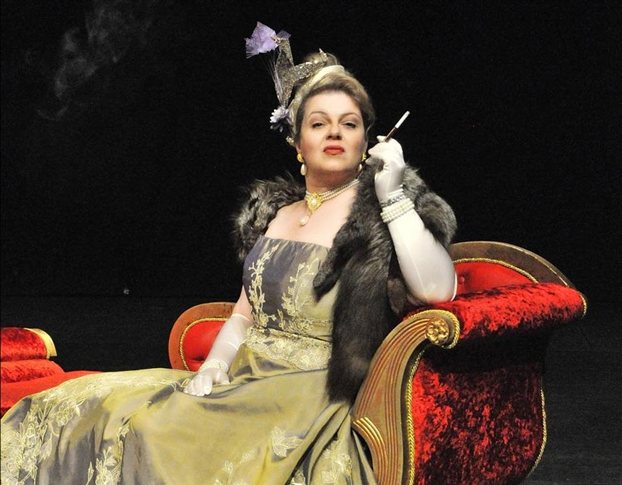
The creator himself writes: "Soloupi spartan. Style imposing. Nose slightly turned up. Pose. Cap on the top of the head m’ a red wing that soars as a challenge to the universe. Tall, xeracian. Woman or Phenomenon; Head back. Her chin up, her nose higher, her eye on chaos. Whoever stands in front of her feels like a merman. Her gaze barely admits to touching the visible things of our humble world, and when it does it takes on tones of condescension… Poverty; You have to look closely to see it. Her style, which comes from a dynamic soul, spreads and dispels the impression of poverty – a body armored constantly fighting against poverty itself, as if he is struggling every moment to defeat her and succeeds triumphantly. He is holding a pair of rusted facades, raises hand slowly, raises eyebrows with later, moves his head back and looks ap’ the unfathomable yonder heights of an unshakable self-confidence the poor creatures of God who happen to circulate around her…”. Nicknamed the "tower mistress of Vouthoula", or better "Bythula" – at Plato's Academy, as she called the neighborhood from which she started to reach …Kolonaki.

Inspired by a real person, a neighbor of Psathas himself to whom he dedicated it, "Madame Soussou" was first uploaded on 1942 with Mrs. Katerina and Emilios Veakis, in the Katerina theater, of Victoria Square. Mary Aroni and Anna Panagiotopoulou followed. Marika Nezer was in the cinema, on TV Georgia Vasiliadou while on TV Anna Paitazi and then Anna Panagiotopoulou.


THE IDENTITY OF THE SHOW
"Madame Sousou" by Dimitris Psathas – NTNG. Directed by Giorgos Armenis, sets-costumes Yiannis Metzikof, music by Giorgos Christianakis, choreography by Alexandra Tsotanidou, lighting Tasos Dailidis.

They play: Fotini Baxevani, Kostas Santas, Vassilis Evtaxopoulos, Thalia Skarlatou, Dimitris Siakaras, Thalia Skarlatou et al.

WHEN & POU "THEATER" of the "Hellenic World" Cultural Center / Antigone Hall, Piraeus 254, Taurus, tel. 212 254 0300 Premiere, Thursday 26 April 2012, at 21.00 Tickets 24 – 21 – 18 – 15 – 12 euro


Source: tovima.gr

"Έφυγε" Dimitris Mitropanos

Dimitris Mitropanos, of the most characteristic folk voices of Greek song, he fell silent on Tuesday morning after suffering a heart attack. Recently, the performer had fought hard to overcome the serious health problems he was facing.

He was lucky during his career to interpret not only great composers and poets and lyricists but above all to make their songs his own. Simple, Doric, substantive, without tricks and tricks he donated his voice to songs and especially to the history of folk songs.

In the mid-60s and at the urging of Grigoris Bithikotsis, whom he met at a gathering of his uncle's company, in which he sang, visited Columbia. There Takis Lampropoulos met Giorgos Zambetas, next to whom he will work in "Dawns".

He remembers Zambeta as his great teacher and second father. As he has stated, "Zampetas is the only person in the song who helped me without expecting anything. With all my other partners I got something and gave something". The 1966 Mitropanos meets for the first time with Mikis Theodorakis and performs parts of "Romiosyn" and "Axion Esti" in a series of concerts in Greece and Cyprus.

The 1967, Mitropanos records his first 45-track record, with the song "Thessaloniki". It was preceded by the recording of the song "Lost Lilac", but which was censored by the Junta and never released.

In the path he carved on the path of the popular artist, the 1972 it is an important station: the composer Dimos Moutsis and the poet-lyricist Manos Eleftheriou release "Agios Fevrourios", with performers Mitropanos and Petri Salpeas, marking a milestone in Greek music.

In July of 1999, Mitropanos and Moutsis will meet again on stage at Irodeion with Dimitra Galani and soprano Julia Souglakou for two musical evenings as part of the Athens Festival. These concerts are recorded live and released on a double CD two months later.

Followed by "The Road to Kythira" by Giorgos Katsaros and "The Synaxaria" by Giorgos Hatzinassios, projects of high quality but also of great impact in Greek society.

In his long career in Greek singing, Dimitris Mitropanos collaborated with the greatest creators of folk and art song. George Zampetas, Mikis Theodorakis, Municipality of Moutsis, Apostolos Kaldaras, Takis Mousafiris ("The two of us" etc.), Christos Nikolopoulos ("Make Decisions" in lyrics by Lefteris Papadopoulos), Yannis Spanos ("Mitropanos sings Spano") were the composers with whom he was professionally associated, building a career intertwined with the Greek folk music tradition, until the end of the 80s.

His participation in records by Lakis Papadopoulos (with the song "Ya na s’ take revenge") and Nikos Portokaloglou ("I close and come") they highlight at the time the wide range of his interpretation and herald a shift in his interpretation, which would lead to a series of records that greatly changed the concept of good modern folk song.

The collaborations with Marios Tokas and Filippos Grapsa ("Our national loneliness" and "Company with a sun") combine folk texture and feeling with the deeper meaning of lyrics and the use of more sophisticated words. Alongside, the resonance of the songs in society and the commercial success highlight these creations as tools but also symptoms of the evolution of Greek society.

The very important collaboration with Thanos Mikroutsikos with the album "Stou Aiona tin Paraga", in verses by Alki Alkaiou, Costa Laha, Linas Nikolakopoulou and Giorgos Kakoulidis, is a shift of the performer to even more "artistic" routes, again maintaining the identity of the layman.

Mitropanos continues on the same paths, with songs by Mikroutsikos, Korakaki, Moukidis, Papadimitriou et al. in the second half of his decade 1990 and at its beginnings 2000.

From the last works of the Thessalian aoidos, "Tell me t’ truly yours" with music by Stefanos Korkolis and lyrics by Eleana Vrachalis and Nikos Moraitis, but also the live recording "There's also the zeibeki", from the program – ode to the national dance of Greece together with Themis Adamantidis and Dimitris Bassis, as well as the album "In Diapason", which contains 12 folk songs and a blues ballad. Among the songs on the album, the song "I ekdromi" by Yiannis Miliokas stands out, which was written for the performer's return to discography after a serious health problem.

In June 2011, with the album "Here we are" Stamatis Kraunakis and Dimitris Mitropanos, met for the first time in the discography. This first joint album was an offer of "Vima" to its readers...

The medical bulletin
Dimitris Mitropanos died of acute pulmonary edema. In an announcement, issued by the HYGEIA hospital, is mentioned:

«Ο ασθενής Δημήτριος Μητροπάνος διεκομίσθη στο νοσοκομείο ΥΓΕΙΑ σήμερα το πρωί λόγω οξέως διαρροϊκού συνδρόμου και εμέτων. Στη συνέχεια παρουσίασε αιφνιδίως δύσπνοια.

Μετεφέρθη στη Μονάδα Εντατικής Θεραπείας, όπου αντιμετωπίστηκε για οξύ πνευμονικό οίδημα από το οποίο και κατέληξε την 11η πρωινή».

Source : tovima.gr

Βαμμένα κόκκινα αυγά… here and 2.500 years

Γιατί το αυγό συνδέθηκε με την αναγέννηση και την ανανέωση, ήδη από τον 5ο π.Χ. century

More than 2.500 χρόνια συμβολισμού για τη θρησκεία έχουν τα αυγά που αυτές τις ημέρες βάφουμε κόκκινα και τσουγκρίζουμε λέγοντας «Χριστός Ανέστη». Διότι πράγματι το αυγό συνδέθηκε επί χιλιετίες με την αναγέννηση και την ανανέωση, αρχικά τις πρώτες μέρες της άνοιξης, ενώ στη συνέχεια υιοθετήθηκε ως σύμβολο του χριστιανισμού. Και αυτό επειδή το αυγό προσφέρεται για τη νοερή απεικόνιση του κύκλου της ζωής, η οποία για πολλά φυτά και ζώα αρχίζει την άνοιξη.

Οι πρώτες ιστορικές μαρτυρίες συμβολισμού του αυγού στη θρησκεία χρονολογούνται το 500 B.C. Στην περίοδο των Αχαιμενιδών το περσικό ημερολόγιο ήταν επηρεασμένο από τον ζωροαστρισμό και η εαρινή ισημερία, η πρώτη ημέρα του ημερολογιακού τους έτους, ήταν γιορτή, όπως βλέπουμε και σε ανάγλυφο από την Περσέπολη (500 e.g.), όπου ευγενείς παριστάνονται να κρατούν στα χέρια αυγά. Η εαρινή ισημερία γιορτάζεται, in fact, ακόμη και σήμερα με το βάψιμο αυγών και την κατανάλωσή τους.

Η πρώτη, in any case, βεβαιωμένη χρήση του αυγού ως χριστιανικού συμβόλου τοποθετείται στη Ρωμαϊκή περίοδο. Η ρωμαϊκή θρησκεία, besides, είχε επηρεαστεί σε μεγάλο βαθμό από τις πραγματείες του Ιπποκράτη, όπου η εκκόλαψη αυγών συχνά αναφερόταν σε σύγκριση με τη γέννηση των ανθρώπων. Στο «Περί φύσεως παιδίου», συγκεκριμένα, ένα βρέφος που γεννιέται, περιγράφεται σε αναλογία με ένα κοτοπουλάκι που σπάει το κέλυφος του αυγού.

Κατά τον 1ο μ.Χ. αιώνα συναντάται για πρώτη φορά και η σύνδεση του αυγού με τις ταφές: Στη Ρώμη βρέθηκε τάφος παιδιού που χρονολογείται γύρω στο 50-175 μ. X. και σύμφωνα με τους αρχαιολόγους, «κάτω από το αριστερό χέρι του ενταφιασμένου υπάρχει το αυγό μιας κότας, το οποίο στα ταφικά συμφραζόμενα πιθανότατα δεν είναι απλά μια προσφορά τροφής, αλλά ίσως και μια μνεία στην εσχατολογική αναγέννηση».

Στην νεκρόπολη του Βατικανού εξάλλου βρέθηκε ένα παιδί ενταφιασμένο με πλήθος κτερισμάτων, μεταξύ των οποίων και αυγά! Και εδώ οι ανασκαφείς πιστεύουν ότι το αυγό πιθανότατα ήταν ένα «σύμβολο αναγέννησης, μιας νέας ζωής που θα ισοστάθμιζε την αδικία ενός πρόωρου τέλους».

Αυτές οι δύο ταφές ίσως εκπροσωπούν τα πρώιμα χριστιανικά ταφικά έθιμα, καθώς το αυγό ήταν στενά συνδεδεμένο με την ιδέα της αναγέννησης και αυτό ήδη από τα χρόνια του Ιησού Χριστού:Zoe, death, resurrection. Οπως αναφέρει εξάλλου ο μεγάλος θρησκειολόγος Νίλσον, «το αυγό είναι μια εμφανώς ζωντανή και αδρανής ουσία που εμπεριέχει την πιθανή αρχή μιας ζωής, και εκείνο που έχει μια τέτοια ζωογόνο δύναμη πρέπει αναγκαστικά να ξυπνά ή να τροφοδοτεί τις ζωτικές δυνάμεις εκείνων στους οποίους προσφέρεται».

Nevertheless, δεν υπάρχουν πολλά ιστορικά στοιχεία που να συνδέουν το αυγό με τον Ιησού. Στη Βίβλο οι αναφορές είναι ελάχιστες, σύμφωνα με την ορθόδοξη παράδοση ωστόσο, η Μαρία Μαγδαληνή έφερνε βρασμένα αυγά στον τάφο του Ιησού. Τα αυγά, κατά την παράδοση πάντα, πήραν ένα φωτεινό κόκκινο χρώμα, το χρώμα του αίματος, όταν εκείνη είδε ότι ο Ιησούς είχε αναστηθεί.

Μια άλλη ιστορία λέει πως, όταν η Μαρία Μαγδαληνή πήγε στον αυτοκράτορα της Ρώμης Τιβέριο για να του πει ότι ο Ιησούς είχε αναστηθεί, he replied: «Οσο αναστήθηκε ο Ιησούς, άλλο τόσο τούτο το αυγό είναι κόκκινο», αλλά μόλις τέλειωσε τη φράση του το αυγό πήρε ένα ζωηρό κόκκινο χρώμα.

Η άνοιξη, in any case, είναι μια περίοδος γιορτής και σημαίνει ένα νέο ξεκίνημα, είτε πρόκειται για την έναρξη του έτους, την ελευθέρωση από τη δουλεία της Αιγύπτου ή την ανάσταση του Σωτήρα.

Source : tovima.gr

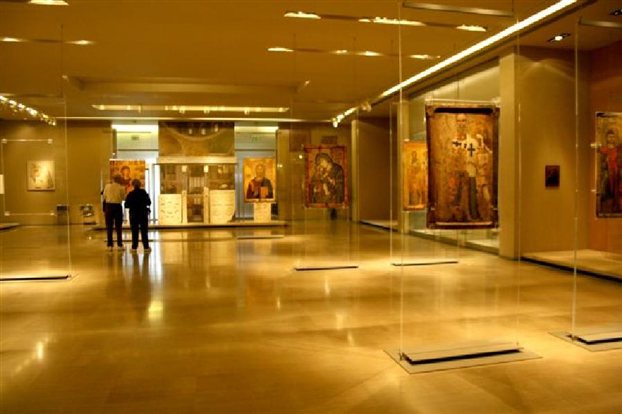
Μουσεία και αρχαιολογικοί χώροι με χειμερινό ωράριο ως τον Ιούνιο

Δεν προκηρύχθηκε διαγωνισμός για επιλογή εποχικών υπαλλήλων λόγω εκλογών

Χειμερινό ωράριο για μουσεία και αρχαιολογικούς χώρους, τουλάχιστον ως τον Ιούνιο. Αυτά είναι τα άσχημα νέα για τον πολιτισμό και τον τουρισμό καθώς η προκήρυξη των εκλογών δεν άφησε το περιθώριο της πρόσληψης εποχικών υπαλλήλων μέσω της διαδικασίας του ΑΣΕΠ, όπως είναι επιβεβλημένο.

Οσον αφορά την καθυστέρηση πάντως, το ΥΠΠΟ δηλώνει ότι την σχετική άδεια έλαβε μόλις στις 29 Of March, γεγονός που δεν του επέτρεψε την έγκαιρη προκήρυξη του διαγωνισμού. Και πάλι όμως προσλήψεις θα γίνουν μόνον για 680 υπαλλήλους αντί των 1000, που είχαν προσληφθεί πέρυσι αλλά και πάλι δεν έφταναν

Ετσι λοιπόν τα μουσεία θα συνεχίσουν να λειτουργούν ως τις 3 το μεσημέρι ενώ οι αρχαιολογικοί χώροι ως τις 3 or 5 μ. μ. με εξαίρεση την Ακρόπολη που είναι ανοικτή ως τις 7.

Υπάρχει ωστόσο και ένα καλό νέο, το οποίο ανακοίνωσε η γενική γραμματέας του υπουργείου Πολιτισμού κυρία Λίνα Μενδώνη, ότι από του χρόνου και ως το 2015, θα γίνονται και άλλες προσλήψεις με επτάμηνες συμβάσεις (πάντα μέσω ΑΣΕΠ), στο πλαίσιο ευρωπαϊκών προγραμμάτων για κοινωφελή έργα.

Source : tovima.gr

Concerts in the spirit of Holy Week

Pergolesi's Stabat Mater by M. Monday at the "Olympia" theater

Pergolesi's overwhelming "Stabat Mater" is performed on Holy Monday afternoon (at 18.00) in the foyer of the National Opera- Olympia Theater, with free admission for the public. This is one of the most popular musicalizations of the well-known medieval hymn which inspired several composers: the soloistsTriantafyllia GeorgiadouandAmalia Avlonitis accompanied by the Baroque Orchestra of the Ateneum International Artistic Center.
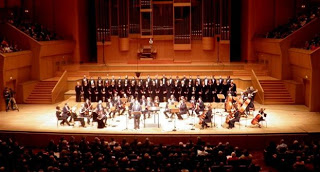
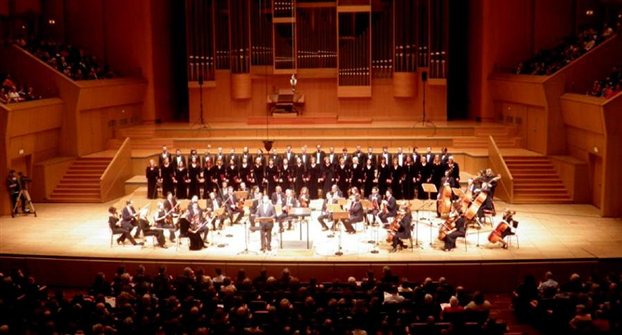
On Holy Wednesday, the established Easter concert of the ELLS includes works by Vivaldi (Mother was standing), Gabriel Foret (Requiem) and Aaron Jay Kernis (Celestial music). The Lyric Orchestra is conducted byMiltos Logiadis and soloists areMaria Mitsopoulou, TheDimitris Kasioumisand theNikos Spanos.Performed by the ELS Choir andFrixos Mortzos(kintinuo-ecclesiastical organ).
On Holy Wednesday, besides, the State Orchestra of Athens underVasilis Christopoulos, in the context of her performances at the Athens Concert Hall, will present the oratorio "The Seven Last Discourses of Christ on the Cross", by Haydn as well as his "Burial".Dimitris Mitropoulou.They are participatingKaoli Isiki(soprano), orEleni Voudouraki (interlocutor), TheAntonis Koronaios(tenor) and thePetros Magoulas(bass) as well as the ERT Choir.
He presents the "Burial" of Mitropoulos, Nevertheless, and the State Orchestra of Thessaloniki under its artistic directorAlexander Myrat also on Holy Wednesday at the Concert Hall of the Macedonian capital. The program also includes his "Christ's" SymphonyHarilaou Perpessa but also his work "Tomb of Life".Christos Hatzis, of a Greek composer who has been settled in Canada for decades.


At the Acropolis

The Byzantine sounds and melodies from the hymns, the chants and mournful songs of Tradition will have the first word in the concert that will be given on the evening of Holy Tuesday at the Acropolis Theater on Hippocratous Street. The veteran has artistic supervisionChronis Aidonidiswho is already participating. They interpret oDimitris Basis, orNektaria Karantzis, 30choir members and masters of traditional Greek music.
Source : tovima.gr

Τα χρώματα του Πάθους

Ο Απόστολος Χαντζαράς παρουσιάζει έργα εμπνευσμένα από τη βυζαντινή ζωγραφική

Οι μέρες το καλούν, η άνοιξη μας καλεί να δούμε με πιο αισιόδοξα χρώματα το «Δωδεκάορτο», από τον Ευαγγελισμό μέχρι τη Σταύρωση, την Ανάσταση και την Ανάληψη. Τίποτε άλλο εκτός από τον Επιτάφιο Θρήνο και την Αποκαθήλωση, δεν είναι πιο αισιόδοξο. Ο Απόστολος Χαντζαράς πήγε τα χρώματά του πέρα από τις παραδοσιακές σχολές της βυζαντινής ζωγραφικής, και εκθέτει τα δώδεκα έργα του στην Αίθουσα Τέχνης Σκουφά (Cap 4, Kolonaki). Αυτή είναι η πρώτη φάση του «Ήλιου», της πορείας του ζωγράφου προς Ανατολάς.

Source : tovima.gr