Egon Wolff's Paper Flowers, At the Ilisia Theater

Ilisia theater will present in alternating repertoire the play "The inspector is coming", Egon Wolff's work titled "Paper Flowers" each Monday and Tuesday, from 8 October 2012.

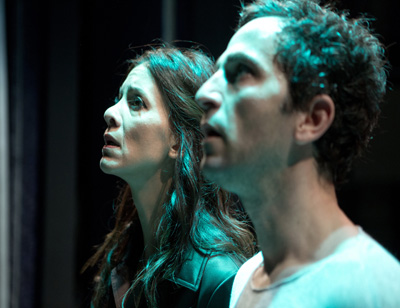
Chilean author Egon Wolff's masterpiece "Paper Flowers", will be presented by Katerina Lechou and Aris Servetalis, directed by Kostas Filippoglou, which is in the final stretch of rehearsals with the two protagonists, in order to discover and illuminate the aspects of this very special work.

It is a gritty and poetic exploration of human nature in search, claims, begs and defeats in the struggle for love, acceptance, imposition and dominance. A revealing anatomy of the never-ending battle of the sexes, of classes, of ideologies and diversity, that makes up this beautiful and wild world.

The performance of "Paper Flowers" at "Ilisia", goes up translated by Eva Bitha, scenery- costumes by Yannis Metzikof, lighting by Melina Masha, special constructions of Guy Stefanos, music by Lost Bodies and with the artistic collaboration of Frosos Korrou. The production is by Dimitris and Thodoris Marosoulis. Photographs by Thomas Chrysochoidis. Artistic direction Grigoris Valtinos.

For the project
 The first performance of "Paper Flowers" was given in Santiago 1970 and was considered by many to be Wolff's best work, since it reflects the "keys" of his perspective as a whole: the social gap between the privileged class and the fringe, the struggle between individuals and the isolation of people in their microcosm, the violence perpetrated by society itself, but also people's need for love and tenderness. The poetic discourse of the work enriches the strong structure and contemporary style of Wolff's dramaturgy. Metaphors and symbols are used in each scene progressively until relationships are established between the characters and cause the viewer to become emotionally involved in the relentless conflict between the two heroes. Barracuda is one of “Los rotos”, a poor devil, marginal, homeless, desperate. But he is also cunning, manipulative, completely heartless. He breaks into the house of Eva, who is his opposite: civilized, refined, honest and clear. The conflict between them could happen anywhere, so Eva's apartment eventually becomes a global battleground..

For the author
Εgon Wolff
Egon Wolff was born on 1926 in Santiago, Chile, from German parents, who believed in conservative education and adherence to traditional values ​​and ethics, beliefs that led Father Wolff to the decision to put his son in a military school, from their age 14 years, in order to distance him from his already apparent artistic nature. But his mother's rich library and especially Thomas Mann's books, of Kafka, by James Joyce and William Faulkner, they had already exerted their own influence on young Egon, who wrote his first novel entitled "Twilight" at age 16 years. A severe bout of pneumonia and his fragile health could only thwart his father's plans for a military career, so Egon Wolff studied chemical engineering. He worked for several years in this field, in the field of commerce and industry, which gave him the opportunity to mingle with people from different strata of society and to understand the essence of the issue of "class difference" that he would later depict in his works. At the same time, he began to cultivate playwriting, influenced mainly by Arthur Miller and Tennessee Williams. His source of inspiration and biggest supporter was Carmen Pena, whom he married 1953. The 1960 won a Fulbright Scholarship and attended the Yale School of Drama. Only after the age of 53 years Wolff devoted himself exclusively to writing, although from the 1979 he taught at the Escuela de Teatro at the University of Santiago. Deeply politicized, he could not but most of his works reflect the tension that existed in Chile between the rich and the poor. When Wolff's first play "The Owl House" was staged 1958, Chile enjoyed a democratic period, but tensions between social classes were intense, as in other Latin American countries: in the countryside between the peasants and the landowners and in the cities between the workers and the middle class, a continuous struggle that manifested itself especially after the elections and the victory of Salvador Allende 1970, year that "Paper Flowers" went up in Santiago. Works by Egon Wolff have been translated into 19 languages ​​and have been presented in 27 Countries. Other works of his: "The Invaders" (1963), "Tell me about Laura" (1985), "Dinner Invitation" (1993), "Behind Closed Doors" (2000), "The Crossroads" (2000), "The recommendation" (2003).

A few words about the director
Kostas Filippoglou
Kostas Filippoglou began his theater studies in Athens and continued his education abroad with teachers such as Peter Brook, Ariane Mnuskin, and theater organizations such as the Théâtre de Complicité. From the 1985 worked as an actor mainly with the "Theama" group of Yiannis Kakleas and the "Theater of the South" in Amore. From the 1999, he works mainly abroad with the Complicite theater group, taking part in the group's performances and workshops in M. Britain, Europe and the USA. From the 1997 has taught acting and theater both in Greece, as an assistant professor in the theater department of the University of Patras, as well as abroad at the Complicite laboratories, in MATAN, Israel, in the USA at the Lee Strasberg Institute, at the Actor's Studio, at the Actor's Center etc.

The 2011-2012 directed and acted in the play "Civil Disobedience" performed at the "Kakogiannis Foundation" in Athens and at the "Artos" theater in Nicosia. He also wrote and directed the play "Orestes-Electra 0-1", which was played at Bios in Athens and Cyprus. His Autumn 2012 will play in Paris at the theater “Bouf du Nord”, the collective creation "Ekti Epirus", with dramatist Daniel Pennac, directed by Lilo Baur and produced by Peter Brook.

Source : culturenow.gr

GP of Japan: Vettel closer to the title


With Alonso out of battle from the first turn and them 25 points of victory in the pocket, Vettel could not have imagined a better result for himself and his team.
This development is the worst possible for the Spanish Ferrari driver, who remains in charge in the drivers' championship, but with a small difference from the second. Just four points, with five games left, is essentially something that gives new dynamics and interest to the league.

In the first turn of the race Kimi Raikkonen's front spoiler rested on Alonso's rear tire, destroying it. Alongside, Romein Grosjean clashed with Mark Webber and Bruno Senna over Nico Rosberg, thus imposing the entry of the safety car on the track.

Ο Vettel, having started from the pole position, maintained first place during the race, even having the speed that allowed him not to be threatened by anyone. Second, with quite a difference, Massa finished, while Kobayashi completed the podium. Jenson Button completed the top ten, Lewis Hamilton, Kimi Raikkonen, Nico Hulkenberg, Pastor Maldonado, Mark Webber and Daniel Ricciardo.

overall ranking of the match:
Position
Guide
Club
Year
Degrees
1
Sebastien Vettel
Red Bull-Renault
1:28:56.247
25
2
Felipe Massa
Ferrari
+20.639 secs
18
3
Kamui Kobayasi
Sauber
+24.538 secs
15
4
Jenson Button
McLaren-Mercedes
+25.098 secs
12
5
Lewis Hamilton
McLaren-Mercedes
+46.490 secs
10
6
Kimi Raikkonen
Lotus Renault
+50.424 secs
8
7
Nico Hulkenberg
Force India- Mercedes
+51.159 secs
6
8
Pastor Maldonado
Williams-Renault
+52.364 secs
4
9
Mark Webber
Red Bull-Renault
+54.675 secs
2
10
Daniel Ricciardo
Toro Rosso-Ferrari
+1:06.91 secs
1
The general ranking of manufacturers:
Position
Club
Degrees
1
Red Bull Racing-Renault
324
2
McLaren-Mercedes
283
3
Ferrari
263
4
Lotus-Renault
239
5
Mercedes
136
The general classification of the championship:
Position
Guide
Club
Degrees
1
 Fernando Alonso
 Ferrari
194
2
 Sebastian Vettel
 Red Bull Racing
190
3
 Kimi Raikkonen
 Lotus-Renault
157
4
 Lewis Hamilton
 McLaren-Mercedes
152
5
  Mark Webber
 Red Bull Racing
134
6
 Jenson Button
 McLaren-Mercedes
131
7
Nico Rosberg
 Mercedes
93
8
  Romain Grosjean
 Lotus-Renault
82
9
 Felipe Massa
 Ferrari
69
10
 Sergio Perez
 Sauber-Ferrari
66


Source : autotriti.gr

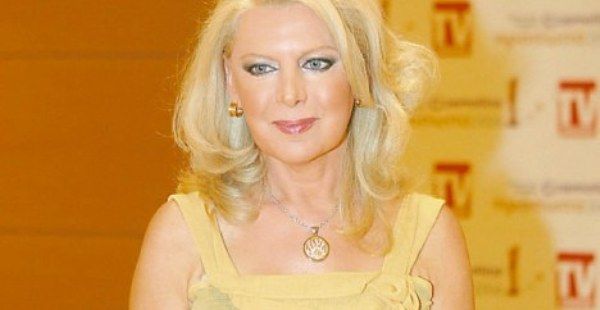
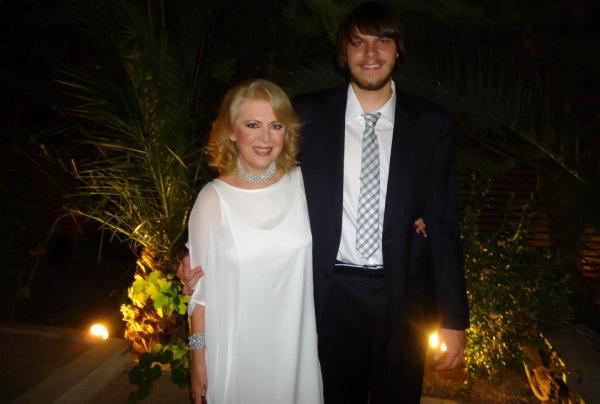
Elena Akrita : The confession about the adoption of her son

On the show "WED A WED" and the presenter Tassos Tryphonos was spoken by Elena Akrita. In fact, for the first time, openly discussed the issue of her son's adoption, Paul, but also how he decided to tell him.

"I adopted my son when he was 3 months old baby and, until the 18 of, this was a subject I never brought up. I did the same in the interviews I gave. I told them "you can ask me about everything, but let the word adoption not be mentioned anywhere, until my son comes of age. Now, since he came of age, I also have his consent, as the adult that he is, and i can talk", Elena Akrita admitted.

"It was a very difficult and quite painful process. It's not easy when you've raised a child, from 3 months, and the only mother he's ever known is you, tell him everything. Nevertheless, you have to do it. Then I went through a lot of trouble. I read many books, I worked with child psychologists - who didn't tell me much- and around 4 with 5 For years I wanted him to know. I didn't want him to go to elementary school and hear it from some other kid. From the 5 he knew the truth. This truth I worked with him and he never asks me many things. If all this is a thorn in the soul, I don't know that. It might be. What really moved me once when we were talking and I was telling him about his biological mother - that he can go and meet her, to talk to her etc- he asked me "and how will I say it?";”. And I told him "as you like and as you want!”. "I will tell her, lady, because my mom is you!”. I will never forget this moment in my life. I was very moved!», he confessed, including,  Elena Akrita to Tassos Tryphonos.

Source : yupiii.gr

Egon Wolff's Paper Flowers, At the Ilisia Theater

Ilisia theater will present in alternating repertoire the play "The inspector is coming", Egon Wolff's work titled "Paper Flowers" each Monday and Tuesday, from 8 October 2012.

Chilean author Egon Wolff's masterpiece "Paper Flowers", will be presented by Katerina Lechou and Aris Servetalis, directed by Kostas Filippoglou, which is in the final stretch of rehearsals with the two protagonists, in order to discover and illuminate the aspects of this very special work.

It is a gritty and poetic exploration of human nature in search, claims, begs and defeats in the struggle for love, acceptance, imposition and dominance. A revealing anatomy of the never-ending battle of the sexes, of classes, of ideologies and diversity, that makes up this beautiful and wild world.

The performance of "Paper Flowers" at "Ilisia", goes up translated by Eva Bitha, scenery- costumes by Yannis Metzikof, lighting by Melina Masha, special constructions of Guy Stefanos, music by Lost Bodies and with the artistic collaboration of Frosos Korrou. The production is by Dimitris and Thodoris Marosoulis. Photographs by Thomas Chrysochoidis. Artistic direction Grigoris Valtinos.

For the project
 The first performance of "Paper Flowers" was given in Santiago 1970 and was considered by many to be Wolff's best work, since it reflects the "keys" of his perspective as a whole: the social gap between the privileged class and the fringe, the struggle between individuals and the isolation of people in their microcosm, the violence perpetrated by society itself, but also people's need for love and tenderness. The poetic discourse of the work enriches the strong structure and contemporary style of Wolff's dramaturgy. Metaphors and symbols are used in each scene progressively until relationships are established between the characters and cause the viewer to become emotionally involved in the relentless conflict between the two heroes. Barracuda is one of “Los rotos”, a poor devil, marginal, homeless, desperate. But he is also cunning, manipulative, completely heartless. He breaks into the house of Eva, who is his opposite: civilized, refined, honest and clear. The conflict between them could happen anywhere, so Eva's apartment eventually becomes a global battleground..


For the author
Εgon Wolff
Egon Wolff was born on 1926 in Santiago, Chile, from German parents, who believed in conservative education and adherence to traditional values ​​and ethics, beliefs that led Father Wolff to the decision to put his son in a military school, from their age 14 years, in order to distance him from his already apparent artistic nature. But his mother's rich library and especially Thomas Mann's books, of Kafka, by James Joyce and William Faulkner, they had already exerted their own influence on young Egon, who wrote his first novel entitled "Twilight" at age 16 years. A severe bout of pneumonia and his fragile health could only thwart his father's plans for a military career, so Egon Wolff studied chemical engineering. He worked for several years in this field, in the field of commerce and industry, which gave him the opportunity to mingle with people from different strata of society and to understand the essence of the issue of "class difference" that he would later depict in his works. At the same time, he began to cultivate playwriting, influenced mainly by Arthur Miller and Tennessee Williams. His source of inspiration and biggest supporter was Carmen Pena, whom he married 1953. The 1960 won a Fulbright Scholarship and attended the Yale School of Drama. Only after the age of 53 years Wolff devoted himself exclusively to writing, although from the 1979 he taught at the Escuela de Teatro at the University of Santiago. Deeply politicized, he could not but most of his works reflect the tension that existed in Chile between the rich and the poor. When Wolff's first play "The Owl House" was staged 1958, Chile enjoyed a democratic period, but tensions between social classes were intense, as in other Latin American countries: in the countryside between the peasants and the landowners and in the cities between the workers and the middle class, a continuous struggle that manifested itself especially after the elections and the victory of Salvador Allende 1970, year that "Paper Flowers" went up in Santiago. Works by Egon Wolff have been translated into 19 languages ​​and have been presented in 27 Countries. Other works of his: "The Invaders" (1963), "Tell me about Laura" (1985), "Dinner Invitation" (1993), "Behind Closed Doors" (2000), "The Crossroads" (2000), "The recommendation" (2003).

A few words about the director
Kostas Filippoglou
Kostas Filippoglou began his theater studies in Athens and continued his education abroad with teachers such as Peter Brook, Ariane Mnuskin, and theater organizations such as the Théâtre de Complicité. From the 1985 worked as an actor mainly with the "Theama" group of Yiannis Kakleas and the "Theater of the South" in Amore. From the 1999, he works mainly abroad with the Complicite theater group, taking part in the group's performances and workshops in M. Britain, Europe and the USA. From the 1997 has taught acting and theater both in Greece, as an assistant professor in the theater department of the University of Patras, as well as abroad at the Complicite laboratories, in MATAN, Israel, in the USA at the Lee Strasberg Institute, at the Actor's Studio, at the Actor's Center etc.

The 2011-2012 directed and acted in the play "Civil Disobedience" performed at the "Kakogiannis Foundation" in Athens and at the "Artos" theater in Nicosia. He also wrote and directed the play "Orestes-Electra 0-1", which was played at Bios in Athens and Cyprus. His Autumn 2012 will play in Paris at the theater “Bouf du Nord”, the collective creation "Ekti Epirus", with dramatist Daniel Pennac, directed by Lilo Baur and produced by Peter Brook.

Source : culturenow.gr