Despina Vandi: Η μετακόμιση και οι λεπτομέρειες του νέου σπιτιού της οικογένειας

Μια πολυτελής μεζονέτα στη Βούλα με minimal λεπτομέρειες γυαλιού αποτελεί τη νέα φωλιά για τη Δέσποινα Βανδή, τον Ντέμη Νικολαΐδη και τα παιδιά τους, Μελίνα και Γιώργο.

Η μετακόμιση ολοκληρώθηκε την περασμένη Παρασκευή, τη μέρα που η οικογένεια κοιμήθηκε για πρώτη φορά στην ολοκαίνουργια κατοικία της. Minimal έπιπλα, δύο μεγάλες κουζίνες, μία μεγάλη πισίνα και ένα γυμναστήριο είναι μόνο κάποιες λεπτομέρειες της νέας οικίας που φιλοξενεί εδώ και πέντε ημέρες τη λαμπερή οικογένεια.

Source : yupiii.gr

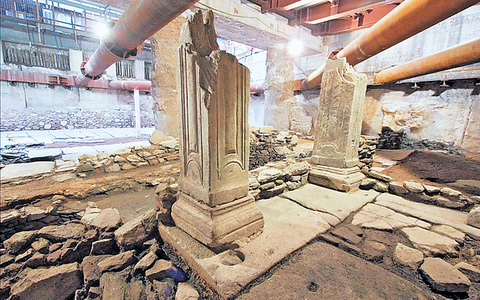
The city below Thessaloniki

The "City under the City" has a myriad of small and big secrets and amazing stories. If they come to light, attract and delight people.

1.000 from the 10.000 subway findings make their way to the Archaeological Museum of Thessaloniki and the Museum of Byzantine Culture
This will be done next year in Thessaloniki as well, where the ancient neighborhoods excavated during the metro works will "speak".
The best witnesses when people are gone are, most, the works of their hands, movable and immovable. Some, the second ones, they will go to the Pavlos Melas camp, regardless of what eventually happens with the byzantine crossroads at Venizelos station. The mobiles, which exceed one hundred thousand, they will have their place in some building of the camp, where visitable archaeological warehouses will operate.
This plan takes time to materialize. The competent prehistoric bureaus – classical and Byzantine antiquities, which have been digging for so many years along the entire length of the metro axis, prepare in the 2014 a long periodical exhibition with two strands. One will be hosted at the Archaeological Museum of Thessaloniki and the other at the Museum of Byzantine Culture.

From the cemeteries
The Archaeological Museum of Thessaloniki will present the rich findings from the excavations of the IST’ Ephorate of Prehistoric and Classical Antiquities. Emphasis will be placed on the findings found in two cemeteries ? the western one at the New Railway Station and the Democracy Square Station, the east at the Fountain.
Currency, vessels, lamps, jewelry, figurines, tools, clay vessels, spice jars will be on display. Among them the golden wreaths that had been placed as gifts. Findings from residential and building remains found at the Agia Sofia stations will be placed with them, University, Euclid.

More than 1.000 archaeological findings of the Byzantine period, which reconstruct parts of the history of Thessaloniki from the 4th century to the present, will be presented in the section of the exhibition organized by the 9th Ephorate of Byzantine Antiquities at the Museum of Byzantine Culture.
The protagonist here will be the main road axis of the city, large parts of which were exposed under today's Egnatia. The decumanus of the Romans, the Middle Street or Avenue of the Byzantines, with the laboratories, the residences, community service projects, it remained almost the same for centuries and testifies to the "secular" face of the city.

Of the approx 100.000 findings of the period, will be exposed 1.000. Among them: coins of different denominations, vessels, lamps, glass vials, women's and men's jewelry of all kinds and materials (pectoral crosses, glass and copper bracelets, gold, copper and silver rings), utility items from shops – laboratories – houses, as well as all kinds of grave goods.

"REASON FOR STUDY"
"It's a very good occasion to show the public what the city was hiding in its bowels", says the general secretary of Culture Lina Mendoni. “How important her past is. But also to give him something in return for the suffering he suffered because of the works."
The general secretary reminds that something similar was done with great success in Athens, where the exhibition "The city under the city" presented at the Museum of Cycladic Art was a great success.
He even emphasizes that this large periodical exhibition, which will last one year, it will provide motivation and occasion for the scientific study of the findings.

THE TWO TEMPLES
Off the main road, the exhibition on Byzantine Thessaloniki will highlight both early Christian churches found within the two cemeteries, east and west from the city center: a 7th century temple and a three-aisled early Christian basilica.

Source : ethnos.gr

Το dieselπρόσωπο του Golf GTI

Το GTI των diesel, θα είναι στη Γενεύη. Η VW παρουσιάζει επίσημα, στην μεγάλη διεθνή έκθεση της ελβετικής πόλης, την έκδοση GTD της έβδομης γενιάς του Golf.
Πέρασαν 31 χρόνια από το πρώτο Golf GTD και τασυστατικάπαραμένουν τα ίδια και στη νέακαυτήπετρελαιοκίνητη έκδοση του γερμανικού best seller.

Κάτω από το καπό, συναντάμε τον 4κύλινδρο 2.0 TDI με τεχνολογία common rail και turbo. Το μηχανικό σύνολο αποδίδει 184 PS and 380 Nm μέγιστης ροπής από τις 1.750 σ.α.λ.. Στη βασική του έκδοση ο κινητήρας συνδυάζεται με μηχανικό κιβώτιο 6 relations, ενώ προαιρετικά υπάρχει και το αυτόματο, διπλού συμπλέκτη, DSG επίσης 6 relations. Το λογότυπο της έκδοσης, δικαιολογείται με θαυμαστό τρόπο, τόσο από τις επιδόσεις, όσο και από την κατανάλωση.

Η επιτάχυνση από στάση, στα 100 km/h, έρχεται σε 7,5 seconds, με την τελική ταχύτητα να αγγίζει τα 229 km/h. Την ίδια ώρα, η VW ανακοινώνει μέση κατανάλωση 4,2 λτ/100χλμ. and CO2 emissions, στα 109 γρ/χλμ, τιμές που με το DSG είναι ελαφρώς πιο τσιμπημένες (4,7 λτ/100χλμ και 122 γρ/χλμ.).

Η διπλή απόληξη της εξάτμισης, ο διαχύτης, η μεγάλη αεροτομή και οι ζάντες αλουμινίου 17 ιντσών με τα ελαστικά 225/45, ενισχύουν την πολεμική εικόνα του αυτοκινήτου, ενώ ανάλογα σπορ είναι και η ατμόσφαιρα στο εσωτερικό. Η διάθεση του Golf GTD θα αρχίσει αμέσως μετά τη Γενεύη, με τις τις τιμές για τη γερμανική αγορά να ξεκινούν από 29.350 euro.

Source : autotriti.gr

The city below Thessaloniki

The "City under the City" has a myriad of small and big secrets and amazing stories. If they come to light, attract and delight people.

1.000 from the 10.000 subway findings make their way to the Archaeological Museum of Thessaloniki and the Museum of Byzantine Culture
This will be done next year in Thessaloniki as well, where the ancient neighborhoods excavated during the metro works will "speak".
The best witnesses when people are gone are, most, the works of their hands, movable and immovable. Some, the second ones, they will go to the Pavlos Melas camp, regardless of what eventually happens with the byzantine crossroads at Venizelos station. The mobiles, which exceed one hundred thousand, they will have their place in some building of the camp, where visitable archaeological warehouses will operate.
This plan takes time to materialize. The competent prehistoric bureaus – classical and Byzantine antiquities, which have been digging for so many years along the entire length of the metro axis, prepare in the 2014 a long periodical exhibition with two strands. One will be hosted at the Archaeological Museum of Thessaloniki and the other at the Museum of Byzantine Culture.

From the cemeteries
The Archaeological Museum of Thessaloniki will present the rich findings from the excavations of the IST’ Ephorate of Prehistoric and Classical Antiquities. Emphasis will be placed on the findings found in two cemeteries ? the western one at the New Railway Station and the Democracy Square Station, the east at the Fountain.
Currency, vessels, lamps, jewelry, figurines, tools, clay vessels, spice jars will be on display. Among them the golden wreaths that had been placed as gifts. Findings from residential and building remains found at the Agia Sofia stations will be placed with them, University, Euclid.

More than 1.000 archaeological findings of the Byzantine period, which reconstruct parts of the history of Thessaloniki from the 4th century to the present, will be presented in the section of the exhibition organized by the 9th Ephorate of Byzantine Antiquities at the Museum of Byzantine Culture.
The protagonist here will be the main road axis of the city, large parts of which were exposed under today's Egnatia. The decumanus of the Romans, the Middle Street or Avenue of the Byzantines, with the laboratories, the residences, community service projects, it remained almost the same for centuries and testifies to the "secular" face of the city.

Of the approx 100.000 findings of the period, will be exposed 1.000. Among them: coins of different denominations, vessels, lamps, glass vials, women's and men's jewelry of all kinds and materials (pectoral crosses, glass and copper bracelets, gold, copper and silver rings), utility items from shops – laboratories – houses, as well as all kinds of grave goods.

"REASON FOR STUDY"
"It's a very good occasion to show the public what the city was hiding in its bowels", says the general secretary of Culture Lina Mendoni. “How important her past is. But also to give him something in return for the suffering he suffered because of the works."
The general secretary reminds that something similar was done with great success in Athens, where the exhibition "The city under the city" presented at the Museum of Cycladic Art was a great success.
He even emphasizes that this large periodical exhibition, which will last one year, it will provide motivation and occasion for the scientific study of the findings.

THE TWO TEMPLES
Off the main road, the exhibition on Byzantine Thessaloniki will highlight both early Christian churches found within the two cemeteries, east and west from the city center: a 7th century temple and a three-aisled early Christian basilica.

Source : ethnos.gr