To MINI… and in a professional version!The diesel version of Dacia Duster The diesel version of Dacia Duster The diesel version of Dacia Duster The diesel version of Dacia Duster

MINI has officially announced that at the Geneva Motor Show it will present the MINI Clubvan concept which is a small business van.

The Clubvan Concept, which will debut in March at the Geneva International Motor Show, it is a small van for commercial use, which is based on the chassis of the well-known Clubman. It is natural that in order to take on a more professional... character, the rear seats were removed from the Clubvan, while the rear large windows were replaced by polycarbonate panels.

Subsequently, a divider was installed that separates and protects the driver and passenger from the rear area, since it is to be used to transport materials. For the insurance of these materials there are 6 elastic straps, while at the back there is also another 12 volt socket.

Source : autotriti.gr

Refresh for the Aston Martin Vantage

At the Geneva Motor Show the British company will present the renewed Vantage range, with changes in the aesthetics but also in the mechanical parts.

It can, for the Greek data at least, the judgment to place cars like the Aston Martin Vantage in the realm of… imagination, however, this does not prevent its British creators from continuing its development. So much for aesthetics, as well as performance, through the occasion-selective upgrade of its mechanical parts. More specifically, as Aston Martin announced today, the "basic" Vantage, which wears the familiar from the 2008 V8 engine of 426 horses and 4,7 liter, works with either a six-speed manual transmission, or now with the new 7-speed SportShift II, which came to replace the corresponding 6-speed having a shorter final ratio while ensuring more immediate changes. The changes to the steering and braking system are also "borrowed" from the larger Vantage S. More detailed, the steering column is new, while the hanger is now faster (with reason 15:1 instead of 17:1) and with a better feeling now. From now on, the front brakes now consist of diameter discs 380 mm. combined with 6-piston calipers. In the renewed version of the 8-cylinder Vantage, HillStart Assist has also been integrated into the braking system. The cycle of changes in the field of performance complete the biggest vs 10 mm. tire tread width, both front and back.

In the field of design, source of inspiration for the "small" Vantage V8 was the larger "S" version but also the collector N400. So, the front bumper stands out for its new design, its larger air intakes and lower height. Back, the Vantage V8 now features an even more impressive bumper, with a new and more attractive aerodynamic diffuser. From now on, the 'S' version remains as it was, with the 8 cylinder engine still performing 436 horses at 7.300 rpm. and 490 Nmropis on 5.000 rpm. End, the top 12-cylinder version of the Vantage "wears" the well-known 6-liter engine of Aston Martin, which yields 517 horses and 570 Nm ensuring an acceleration from stop to first 100 km/h in just 4,2 δλ. and top speed 305 km / h.

Source : 4troxoi.gr

Greek-German teenage alliance

Documentary film production workshop with Greek and German students during the crisis

What could be the result of a collaboration between Greek and German students?, the common characteristic of which is that they prefer to see the world through the lens of the camera; What would the Greek children like to show the Germans from their country; But also what would the Germans like to show the Greeks from their own country;
 
Questions like the above have been put on the table for a few months now through an ambitious plan of "cultural cooperation and exchange of hospitality" between Greece and Germany. Greeks in Germany and Germans in Greece under the veil of support of the Creative School in Bergis Gladbach, Germany (in collaboration with the Screenagers creative network), of the Goethe Institute of Athens and Story Doc, of the Greek educational institute for the promotion of the documentary.

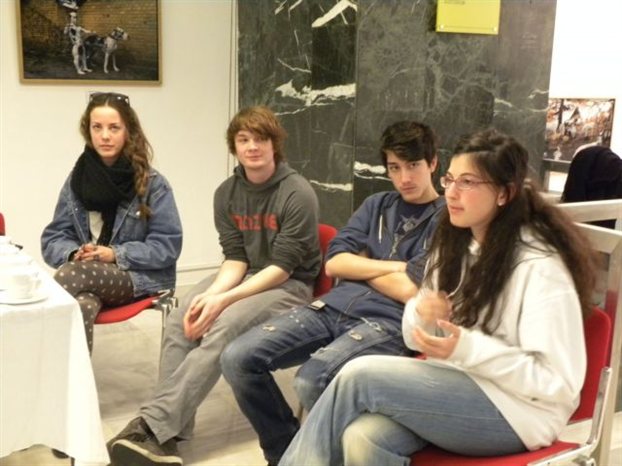
Six German kids from Bergis Gladbach, Cologne and six Greek kids from Athens (ages range from 15 to 20 years) shared endless hours in Athens and Bergis Gladbach for a joint exploration of their countries. The results are recorded by their cameras. Everyone's goal is to reveal unknown aspects of Greek and German life and reality in the time of the economic crisis.

In order to find the children who would represent Greece, visits were made to 22 schools of the Attica basin (indicatively the Zografou High Schools, Byron, Keratsini and Nea Ionia). During the seminars that followed in four schools (20 children per school), the "tremendous awareness of children in machines of digital capabilities" was noticed, said Mr. Costas Spyropoulos of Story Doc, who co-directed the seminars. “It was incredible to see how perfectly the children handled valuable cameras 27.000 euro". The children were selected based on the script they had written, while the production direction of the overall program is Dieter Bongaardz, German screenwriter, documentarian and writer and his compatriot Vera Scheffler who runs the film institute in Greece and Germany. From the Greek side, the participation of the Goethe Institute is extremely important for the successful development of the project thanks to the tireless efforts of Mrs. Sofia Michailidou and the cultural events manager Mrs. Juliane Steiner.

Euro crisis and debt relief articles are multiplying at an alarmingly rapid rate and with them buried memories, prejudices and intolerances come alive again. The historical memories and experiences of the two world wars come to the fore, with the Germans once again playing a dominant role in a ruthless economic war that we now experience on a daily basis. Opinions and attitudes favor the generation of new conflicts. But also collaborations.

In yesterday's (Monday 20 February) presentation held at the Goethe Institute, Greek and German children participating in the process spoke to representatives of the press about their effort. "We are together to find a common language" characteristically said 18-year-old Michael. "We are not talking specifically about Merkel but we are working together and that is the important thing".

"We all know what's happening in Greece because the Mass Media take care of it," 15-year-old Anastasia told us. “But the news of civilization does not travel. It wouldn't matter to talk about Merkel. Better to learn what you don't know than to reproduce what you do know".

Therefore, the unknown aspects of the social life of both countries were in the priorities of the four-member teams who undertook the creation of the films. The ultimate goal of the effort is mutual understanding and contribution to an inter-ethnic/intercultural dialogue in order to overcome prejudices, misinterpretations, even hostilities, which are cultivated, sometimes exaggerated in the public sphere by opinion leaders and individual media outlets.

The first and second films were shot in Germany. At one, through the personal stories of two young people we follow the events in a house under occupation in Cologne. The second film shot in Germany concerns the activities of a musical band created by second-generation Spanish immigrants with Cuban roots.. Their parents were in their thirties during the Spanish Civil War when they immigrated to Germany.

The subject of the third film is the meeting itself 12 children who program. The first part of it was shot in Germany and the second will be shot here by the same group. The core of the second part will be the revelation to the Germans of how hard a 17-year-old Greek student works while trying to enter the University.

Future film plans to be shot in Greece will be a film about an astronomer set against the backdrop of the Observatory, one for the case of a teacher who teaches hearing impaired children free of charge and one for the construction of the footbridge in Kifissia at the height of the College from the voluntary work of the students and donations from the family who lost their child at the same spot.

"We went to Germany to dispel stereotypes," said 16-year-old Marianna. "To show that we can do things together".
The recent events in the center of Athens with the destruction of the Atticon hall and other buildings, they did not discourage the children. On the contrary, one of the projects they would like to work on is a film about the buildings between Syntagma and Omonia. "The attack on the halls brought out a different one “quality” violence," said 21-year-old Ruben, one of the oldest children in the group.

What does Greek mean to Germans and what does the opposite mean?; "We cannot judge two nations by the behavior of two heads of state, i.e. two people" believes Anastasia. "Things must be said objectively. Judgments should be everyone's business." For Michael, however, "Greeks have ugly gray buildings, but inside you are colorful. On the contrary, we have beautiful buildings but inside we are gray".

"I have heard of the Germans that they are arrogant, narrow-minded, with absolute ideas for the Greeks" says 15-year-old Eleni for her part. “Gee’ they think that all Greeks are lazy, irresponsible and thinking only of their own interests".

Maybe with this joint effort, some will begin to think differently.

Source : tovima.gr

Kostas Gavras: "Greece is a victim"

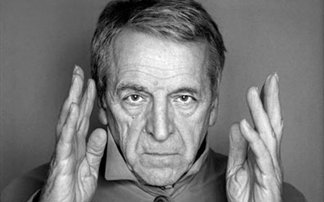
The Greek director Kostas Gavras, known for his film Z, spoke yesterday from Paris about the consequences of the crisis in Greece, giving a gloomy picture of what he thinks is happening in Europe at the moment.

 The director referred to a new world war, with the economy as the battlefield and Greece as the first victim.

"Greece is one of the first victims of an economic war. This is the third world war" said Kostas Gavras, who participated yesterday in the support events for Greece. The famous director spoke harshly about Germany:

“All the atrocities of the Germans, the brutality, it is something incredible how the Germans went to such extremes. Those who sold so many things in Greece, who caused so many scandals in Greece, paying each other to buy their products. They forget that now. Ms. Merkel doesn't care," he said characteristically.

According to Gavras, "this terrible crisis can be a very good opportunity to fundamentally change the Greek state. Those who didn't pay taxes, those ministers who received gifts from’ the foreigners. These are all unacceptable things, these must change substantially".

Kostas Gavras also referred to the phrase "we ate together" by Theodoros Pagalos, stressing that “We didn't all eat them together. Those at the table ate them. The others had crumbs around them and today those who had crumbs have nothing. This is the great drama in Greece".

End, the director wished the Greeks "courage and optimism" saying that "this misery too will pass".

Source : protothema.gr

Year of Brettakos 2012

100 Years Since His Birth

Lyrics from his poems will be projected on screens at 21 Of March, while a series of stamps and books dedicated to him will be published

I have already left my heart on earth / to knock alone. (That's what it is / the poetry). To be able to have it / the children in their sacks, to move her / the travelers. And the bitter ones / that ran out of sun, ν΄ακούν / his flame inside her. It is one of the verses of Nikiforos Vrettakos that will be shown on the subway screens, of the electric and tram at 21 Of March, for World Poetry Day.
The deeply humanistic poetry of Brettakos, his sensitivity and rage at injustice, they will meet today's Greek of bankruptcy and disappointment.
The 2012 has been declared the Year of Nikiforos Vrettakos, on the occasion of 100 years since his birth (1912, Crokes of Laconia), celebration coinciding with the 21 years since his death (1991).
One of the most important representatives of modern Greek literature, Brettakos connected his life and work with the spiritual, political and social quests of Hellenism in the second half of the 20th century.
Emotional, defender of justice, of freedom, of equality, of nature, he felt unable to put the wealth of the world into words. The man, he said, is "living water".

His work, awarded with many awards (State Prize for Poetry 1940, 1956 and 1982, Ourani Foundation Award, Excellence of the Academy of Athens, of which he became a regular member 1986 etc.), will be re-evaluated at a scientific conference they are planning for the 9-10 November the National Book Center and the Benaki Museum.
They will be discussed there, also, the meeting of poetry with ideology and history.
Vrettakos was a fighter for life and a fighter of the Left. He took part in the Greco-Italian war 1940-1941 and then to the National Resistance through the EAM. During the dictatorship, he exiled himself to Europe.
Events

The Year Nick. Vrettakou will be celebrated with various events of EKEVI, in collaboration with agencies and institutions, as with the Society of Writers, in an evening of poetry and music (21 Of March, Bacaro). The Sparta Public Library will also be actively involved, where by the desire of the poet himself and with the care of his son, director Kostas Vrettakou, his record has been given (6.000 books, personal items, 3.600 published poems, 4.000 manuscripts, 950 letters etc.). The Library plans interesting educational programs, while ELTA will issue a series of stamps dedicated to the poet.
EKEBI is planning yet another thematic stand, digitization of material from the N Archive. Brettakou, a mobile exhibition?tribute, support of translations of works by Mr.
also, three new editions for Nikiforos Vrettakos are expected within it 2012, a scrapbook of rare and anecdotal material, four volumes with notes and texts, as well as a selection from his correspondence (ed. River).

Source : ethnos.gr

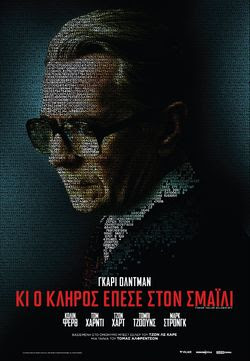
WE RECOMMEND : "And the Lottery Fell to Smiley"

Gary Oldman, Colin Firth and Tom Hardy lead an all star cast in a sensational, spy thriller, which is a film adaptation of John Le Carré's best-seller of the same name.

George Smiley, a recently retired MI6 agent, he makes honorable efforts to adapt to his new life, outside the secret services. When a corrupt agent will make his appearance again, informing that there is a "stud" in their circles, Smiley will be forced to re-enter the grim world of espionage. His mission… to investigate which of his former trusted associates, betrayed both himself and his country.  His investigation will focus on four suspects – all of whom are experienced and successful agents – but past enmities and friendships, they will make it difficult to identify what is eroding the integrity of the British service from within.

The book, on which the film is based, published in Greek by Kastaniotis publications, entitled "And the Lot Fell on Smiley".

Reviews

Reviews of the Greek press

“Argon, ritual rhythms and labyrinthine script path spy thriller at its best - a la 60s and 70s- delivery of the species. Real directorial finesse from Swedish master Thomas Alfredsson, with a quietly melancholy, great Gary Oldman” – Athinorama

“…Based on the novel by John Le Carré, the quintessentially British, in style and style, mystery thriller, premiered at the Venice Film Festival, featured in this year's awards and is nominated for three Oscars…” – Flix.gr

“…"And the Lottery Fell on Smiley" is a very beloved film for those who of course love the atmosphere of the Cold War films that excelled in its decades 1960 and his 1970. You can't overlook that everything in the costumes and sets is carefully placed, has a reason to exist, it matters_ objects are living organisms…” – The Step

Reviews of the foreign press

“It perfectly conveys the style of the 70s and reminds of a good old school movie” – Washington Post

“A movie about… big ones” – Boston Globe

“Alfredson's cool approach leaves you speechless” – Film.com

“Clever story full of puzzles and mystery” – New York Times

Watch the trailer

Source : athensmagazine.gr

Greek-German teenage alliance

Documentary film production workshop with Greek and German students during the crisis

What could be the result of a collaboration between Greek and German students?, the common characteristic of which is that they prefer to see the world through the lens of the camera; What would the Greek children like to show the Germans from their country; But also what would the Germans like to show the Greeks from their own country;
 
Questions like the above have been put on the table for a few months now through an ambitious plan of "cultural cooperation and exchange of hospitality" between Greece and Germany. Greeks in Germany and Germans in Greece under the veil of support of the Creative School in Bergis Gladbach, Germany (in collaboration with the Screenagers creative network), of the Goethe Institute of Athens and Story Doc, of the Greek educational institute for the promotion of the documentary.

Six German kids from Bergis Gladbach, Cologne and six Greek kids from Athens (ages range from 15 to 20 years) shared endless hours in Athens and Bergis Gladbach for a joint exploration of their countries. The results are recorded by their cameras. Everyone's goal is to reveal unknown aspects of Greek and German life and reality in the time of the economic crisis.

In order to find the children who would represent Greece, visits were made to 22 schools of the Attica basin (indicatively the Zografou High Schools, Byron, Keratsini and Nea Ionia). During the seminars that followed in four schools (20 children per school), the "tremendous awareness of children in machines of digital capabilities" was noticed, said Mr. Costas Spyropoulos of Story Doc, who co-directed the seminars. “It was incredible to see how perfectly the children handled valuable cameras 27.000 euro". The children were selected based on the script they had written, while the production direction of the overall program is Dieter Bongaardz, German screenwriter, documentarian and writer and his compatriot Vera Scheffler who runs the film institute in Greece and Germany. From the Greek side, the participation of the Goethe Institute is extremely important for the successful development of the project thanks to the tireless efforts of Mrs. Sofia Michailidou and the cultural events manager Mrs. Juliane Steiner.

Euro crisis and debt relief articles are multiplying at an alarmingly rapid rate and with them buried memories, prejudices and intolerances come alive again. The historical memories and experiences of the two world wars come to the fore, with the Germans once again playing a dominant role in a ruthless economic war that we now experience on a daily basis. Opinions and attitudes favor the generation of new conflicts. But also collaborations.

In yesterday's (Monday 20 February) presentation held at the Goethe Institute, Greek and German children participating in the process spoke to representatives of the press about their effort. "We are together to find a common language" characteristically said 18-year-old Michael. "We are not talking specifically about Merkel but we are working together and that is the important thing".

"We all know what's happening in Greece because the Mass Media take care of it," 15-year-old Anastasia told us. “But the news of civilization does not travel. It wouldn't matter to talk about Merkel. Better to learn what you don't know than to reproduce what you do know".

Therefore, the unknown aspects of the social life of both countries were in the priorities of the four-member teams who undertook the creation of the films. The ultimate goal of the effort is mutual understanding and contribution to an inter-ethnic/intercultural dialogue in order to overcome prejudices, misinterpretations, even hostilities, which are cultivated, sometimes exaggerated in the public sphere by opinion leaders and individual media outlets.

The first and second films were shot in Germany. At one, through the personal stories of two young people we follow the events in a house under occupation in Cologne. The second film shot in Germany concerns the activities of a musical band created by second-generation Spanish immigrants with Cuban roots.. Their parents were in their thirties during the Spanish Civil War when they immigrated to Germany.

The subject of the third film is the meeting itself 12 children who program. The first part of it was shot in Germany and the second will be shot here by the same group. The core of the second part will be the revelation to the Germans of how hard a 17-year-old Greek student works while trying to enter the University.

Future film plans to be shot in Greece will be a film about an astronomer set against the backdrop of the Observatory, one for the case of a teacher who teaches hearing impaired children free of charge and one for the construction of the footbridge in Kifissia at the height of the College from the voluntary work of the students and donations from the family who lost their child at the same spot.

"We went to Germany to dispel stereotypes," said 16-year-old Marianna. "To show that we can do things together".
The recent events in the center of Athens with the destruction of the Atticon hall and other buildings, they did not discourage the children. On the contrary, one of the projects they would like to work on is a film about the buildings between Syntagma and Omonia. "The attack on the halls brought out a different one “quality” violence," said 21-year-old Ruben, one of the oldest children in the group.

What does Greek mean to Germans and what does the opposite mean?; "We cannot judge two nations by the behavior of two heads of state, i.e. two people" believes Anastasia. "Things must be said objectively. Judgments should be everyone's business." For Michael, however, "Greeks have ugly gray buildings, but inside you are colorful. On the contrary, we have beautiful buildings but inside we are gray".

"I have heard of the Germans that they are arrogant, narrow-minded, with absolute ideas for the Greeks" says 15-year-old Eleni for her part. “Gee’ they think that all Greeks are lazy, irresponsible and thinking only of their own interests".

Maybe with this joint effort, some will begin to think differently.

Source : tovima.gr

our breath, Your review