Tag Archives: Uncategorized

Θριαμβεύει η Αντιγόνη στο Λονδίνο

Η αρχαία τραγωδία σε σύγχονη σκηνοθεσία της Πόλυ Φίντλεϊ κάνει την έκπληξη

Η «Αντιγόνη» του Σοφοκλή θριαμβεύει στο Λονδίνο και κερδίζει το βρετανικό κοινό μέσα από την παράσταση του Εθνικού Θεάτρου της Αγγλίας, όπου και παρουσιάζεται αυτή την εποχή. Η αρχαία τραγωδία, στην πλήρως εκσυγχρονισμένη σκηνοθεσία της 29χρονης σκηνοθέτιδας Πόλυ Φίντλεϊ (Polly Findlay), he's got, κυριολεκτικά, κάνει την καλοκαιρινή έκπληξη αποσπώντας διθυραμβικές κριτικές τόσο για την οπτική της όσο και για ερμηνείες των πρωταγωνιστών. Για «συγκλονιστική αναβίωση» γράφουν οι Financial Times, για «εξαιρετικές ερμηνείες» ο Observer και οι Times. Ο Κρίστοφερ Εκλεστον (Christopher Eccleston) που υποδύεται τον Κρέοντα και η Τζόντι Γουίτακερ (Jodie Whittaker) που ερμηνεύει την Αντιγόνη ηγούνται ενός θιάσου που δεν αφήνει κανέναν ασυγκίνητο. Ξεχωρίζει και ο Τζέιμι Μπάλαρντ (Jamie Ballard) στον ρόλο του (τυφλού) μάντη Τειρεσία, με μισοκαμένο πρόσωπο.

Τοποθετημένη μέσα σε ένα γραφείο της εποχής μας, που κατά τη διάρκεια της παράστασης μετατρέπεται σε κυβερνητικό γραφείο, η «Αντιγόνη» στην εκδοχή της Φίντλεϊ παραπέμπει, ευθέως, στο σύγχρονο πρόσωπο της εξουσίας. Πίσω από το γραφείο δεσπόζει καθισμένος ο Κρέων ενώ ο Χορός, μια σειρά από πολιτικούς και στρατιωτικούς συμβούλους, συζητά για την αποστολή ενός δελτίου Τύπου που αφορά στο τέλος του Θηβαϊκού Πολέμου.

Με την αρωγή του σκηνογράφου (Σούτρα Γκίλμουρ / Soutra Gilmour) και του μεταφραστή (η παράσταση χρησιμοποιεί τη μετάφραση του 1980 του Nτον Τέιλορ / Don Taylor), η Φίντλεϊ, που καταπιάστηκε για πρώτη φορά με το αρχαίο δράμα, χτίζει έναν σύγχρονο κόσμο όπου το ιδιωτικό με το δημόσιο μπλέκονται σε μια ανελέητη αντιπαράθεση. Τολμηρή αλλά σίγουρη για τις επιλογές της η σκηνοθέτις χωρίς να προδώσει τον μύθο, τον τοποθετεί στα γρανάζια της πολιτικής εξουσίας του 21ου αιώνα. «Μήπως τελικά το γράμμα του νόμου έχει κι αυτό τα όριά του;», αναρωτιέται μέσα από την «Αντιγόνη» και μαζί το κοινό που μοιάζει σαν να ανανακάλυψε ξανά τον Σοφοκλή.

Απλή και κατανοητή, αυτή η «Αντιγόνη», σύμφωνα πάντα με τους κριτικούς, καταφέρνει να μείνει πιστή στον Σοφοκλή και να επιβεβαιώσει ότι κείμενα όπως αυτό δεν ανήκουν τυχαία στα μεγάλα κλασικά και διαχρονικά: Γιατί εξακολουθούν να λειτουργούν στο σήμερα με τη μορφή του κατεπείγοντος.

 Source : tovima.gr

Fewer in Museums, more in the archaeological sites

Decrease in Museum visitors in the month of February 2012 and even in percentage 23,7%, as well as a reduction in collections by 42,2% in relation to its corresponding month 2011 shows the recent survey of movement of Museums and Archaeological Sites presented on Tuesday.

However, a different picture emerges in the archaeological sites with an increase in visitors by 39,9% and reduction of the corresponding collections in percentage 45,8% in relation to its corresponding month 2011.

During his first two months 2012 a decrease is observed 19,3% to Museum visitors as well as a reduction 34,3% in receipts in relation to its corresponding period 2011.

The same is not the case, however, in the picture presented by the visits to the archaeological sites during its first two months 2012. On the contrary, an increase is observed 35,6% to visitors and reduction 30,1% in receipts in relation to its corresponding period 2011.

The survey of the movement of Museums and Archaeological Sites produces results from the year 1970, with collection from the Archaeological Resources and Expropriations Fund (CAP ) of the Ministry of Culture and Tourism of the data referring to the number of visitors and the receipts from the allocated tickets to Museums and archaeological sites.

Source : tovima.gr

Music and theater go up… on the hill

Tiny, Farantouri, Protoper, Mahairitsas but also "Don Juan", "Horse" and "Our Great Circus" meet at the festival

Interesting music and theatrical performances, some of which go up for the first time, will host the '1st Festival on the Hill'. These are a series of events that will take place in the months of July and September at Veakeio Theater of Piraeus, Giving the city residents the opportunity to enjoy the art in combination with a wonderful, natural environment. It can be his first attempt, Fri.’ All this "Festival on the Hill" aspires to become an institution and to be a reference point in the domestic artistic becomes in the coming years..

Festival program focuses on two main axes, the music and theater. The concert of Thanos Mikroutsikos and Maria Farantouri stands out from the program of the program., which will take place at 5 July. The important Greek composer and the performer of the great creators will meet for the first time on stage. Why, Although they have common music backgrounds and have deleted both careers for many years, He had never been able to find themselves alongside a live night. And definitely their first meeting will be of great interest. John Koutras will be with them as well.
In the same space, at 17 July, Alkistis Protopsaltis and Evanthia Reboutsika will give a concert, which will present live -new songs from the recent, Their common album entitled "For Where You Pull Hope". Michalis Tzouganakis will also sing on the hill (11/7), But also Lavrentis Mahairitsas with Dimitris Starova and Zenovia Arvanitidis.

In terms of theatrical events, at 2 July will premiere in Veakio the show "OK FROM’ the shack », of the "Barefoot Order" theater group, directed by Kostas Kazakou, Starring Yiannis Bostanzoglou, Paul Orkopoulos, Athos Danelli et al.. also, The public will have the opportunity to enjoy the project "Don Juan, Return », Directed by George Kimoulis (3/7), The wonderful work of Jacob Campanellis "Our Great Circus" from the State Theater of Northern Greece, With George Armenis and with the participation of Stavros Xarhakos (6/9), But also Aristophanes' "Horse", Directed by Stamatis Fasoulis starring Petros Filippides.

Source : ethnos.gr

Our heritage is not for sale

Reactions to the practice of the Thyssen-Bornemisza museum to auction a project to finance its needs

You would sell a museum's work to deal with its financial problems; The question for a country like Greece, whose multitude of museums are devoted to the preservation and promotion of antiquities, it could only be hypothetical. How would it be possible to hammer her cultural heritage… Some things anyway, even in times of complete collapse of values, remain high.
The director of the great Spanish museum Thyssen-Bornemisza did, however. His excuse is serious, since the museum is facing a problem of survival, which intensified with the financial crisis. But his act is also daring, after handing over one of the paintings in his collection to be auctioned by Christie's. Similar action in Greece would be hard to imagine. Not only with regard to the sale of antiquities and more generally of works and objects that have been classified as monuments, because this is expressly prohibited by the Constitution and the Archaeological Law, but also contemporary works, which can be freely traded.
On the other, American museums have been selling their works for years for various reasons. The essential difference with Spain is that for the first time, at least admittedly, this move is due to financial difficulties. Regardless of whether the work of the romantic landscape painter John Constable reaches the asking sum of 21 million. sterling, the director of Thyssen-Bornemisza opens a window sealed well to this day, regarding the management of museums internationally.

Intangible heritage
“Even if it was allowed by law, even if I had permission to do so, I would never sell a work of the museum" answers the question professor Mr. Nikos Stampolidis, director of the Museum of Cycladic Art, one of the few private archaeological museums in the country. “Only over my dead body!» is the reaction of Dr. Angeliki Kottaridis, which as head of IZ’ The Ephorate of Antiquities is responsible for the Museum of the Royal Tombs of Vergina, the archaeological museums of Pella and Veria, as well as the Byzantine Veria.
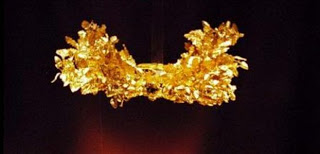
After all, the difference between an ancient object and a modern work of art is telling, since a work of painting or sculpture was produced to be sold, unlike antiquities, which are excavation findings and were once people's properties. "They are material works, but their status is immaterial," emphasizes Mrs. Kottaridis. "I mean, what could I sell?; A golden ivory piece from Philip's bed;».
According to the existing institutional framework however, the sale of works for the National Gallery (and for modern art museums) it is not prohibitive. However, its director Mrs. Marina Lambraki-Plaka is negative about any possibility of a sale. "Personally, I wouldn't dare. I could never make such a decision, even in a last resort" he declares.

The suggestions
Therefore, the question of financial support for museums remains. Thus, the search for new ways of financing them is imperative. “As a last resort I would ask prospective buyers to “adopt” a project, but leaving it in place, to the museum" suggests Mr. Stampolidis, while flexibility and ingenuity are required for Mrs. Kottaridis: "When the Americans sell the right to participate in an excavation instead 3.000 dollars and when the people of Skopje and the Bulgarians do the same to 1.500 dollars for two weeks, it is clear that what we also need is a new cultural strategy" he says.
She would also "sell" participation in workshops that would manufacture products with the ancient know-how – woven, ceramics, metal works, pictures -, which will then be marketed. Also DVD, games and online applications. But also the networking of archaeological sites to provide more services to visitors. Why don't all these things happen?;
"We are ready for the change of the institutional framework regarding the management of museums" says the general secretary of the Ministry of Culture Mrs. Lina Mendoni. "Because with the current laws, a donation may never reach the body for which it is intended, and this because of its registration in the regular budget, and the Archaeological Resources Fund, which has the responsibility of producing copies and other products for the sales, it is outdated a long time ago" she admits.
"A necessary condition is to break the taboos and institutions of the TAP and to take into account’ considering the logic of the market" concludes Mrs. Mendoni. And it seems that today this is not only necessary. It is mandatory.

Stacked in warehouses
Small clay lamps, evenly between them, by the hundreds. Fragments of vessels by the thousands. Forcedly piled up in the warehouses of museums or the Ephoria of Antiquities, many finds of the excavations that do not present a special archaeological interest remain in disuse. Their concession is prohibited, despite the proposals that have been made to sell or donate them to museums, educational institutions and in general to foreign bodies that promote ancient Greek culture.
«Δεν υπάρχει λόγος να πωληθούν γιατί η οικονομική τους αξία δεν είναι τέτοια που να λύνει κάποιο πρόβλημα. On the contrary, και το μικρότερο από αυτά έχει την ιδιαίτερη σημασία του για τους επιστήμονες» λέει η αρχαιολόγος κυρία Αγγελική Κοτταρίδη. Για τον καθηγητή κ. Νίκο Σταμπολίδη ωστόσο αποτελούν μια ευκαιρία προβολής της χώρας: «Μπορεί να πωληθούν ή να δωρηθούν, με την προϋπόθεση όμως πάντα ότι θα φέρουν τα στοιχεία τηςταυτότητάςτους και ότι θα εκτίθενται σε κοινόχρηστους χώρους. Γιατί έτσι θα μπορούσε να αποτελούν ένα κομμάτι της πολιτιστικής μας κληρονομιάς σε άλλον τόπο».

Source : tovima.gr

In Ceramic: Dreams and nightmares with Angela

The work of George Sevastikoglou, written before 55 years, ENKE fesolar uploads, in a yard, before sunset

Migration. Athens of today. Losses. Angela arrives from her village with a suitcase dreams of working maid. The fate of the classes. The mastrian, the sepsis, the folk blues, Italian cinema, a Greece fighting. Memorandums and judgment. Deadlock. Courtyard and history. Basement. DREAMS GOOD IN DUVARY 1×1. Survival and futility. Insecurity, a’ a place where people catch a arm only on Sundays.
"OR ”Angela” It is Greece that fights between dreams and nightmares, "says EKE Fezolari, who directs George Sevastikoglou's flagship work, "Angela", in a courtyard in Kerameikos (Ceramic 28) From today. The show is played before sunset, with food and drink to be allowed, like a summer cinema, as a Greek feast, with natural light in a courtyard in the city center, at 20.00, While the Athenian sun gives the city its most beautiful colors… George Sevastikoglou with "Angela", expresses the "new reality that came from the civil war and formed the petty bourgeois society and theater in post -war Greece…»

In a closed society suffering from poverty and delinquency, Angela dares and falls in love. Falls in love with the weak, the poor man, the 'pure' Lambro. It upsets its unconventional character against Stratos's establishment. Angela is right in the right. Defends girls' rights, of Lambro, of Tasia. Is looking for the truth that will redeem them. Is not afraid, does not mourn and does not sprinkle. Rebelled. Are on the side of the weak, As all revolutionaries are, But her love arrives to go against a whole society.

By closing them 55 (was written the 1957), Middle the "Angela" now, How can he contact Greece today, of the crisis and the memorandums; "OR ”Angela” is modern because it affects the adversity of life, Not only because of the poverty of money but also social values ​​and laws, ”EKE Fezolari replies. 'In the face of Stratos we recognize the looting of the state, the exploitation of human rights, The sabotage and the nonsense of our own political system ».

"Angela" reminds us, according to him, 'How nothing should be considered self -evident. Life is won with small daily battles. Angela fights for our lost dignity, our forgotten ideals, our trampled dreams, and for the love we left because it was difficult… Symbolizes cleaners and migrants, But mostly all of us who are struggling for a better life against vulgarity and today's impasses, in memorandums and in huts, looking for in vain a light of light ».
What is his "Angela"; 'Angela is Athens, is Mama Roma, is Melina, It is Greece that is pulsating, struggling. Between the folk song, In Derie and Seva with Bellou and Kazantzidis sounds, but also in the rock 'n’ roll? and from the beaches of Attica, the moons in Sounio to the current degraded center of Metaxourgio, Next to red lanterns and bought dreams ».

For a hometown
«1950. A Greece that is chilled. Trying to heal her wounds, survive to dream again, an ideal. 2012. The story repeats. The project is played again with new protagonists… Angela arrives from her village in Athens for a better life. DREAMS that crumble from poverty, hypocrisy and exploitation. Slave in other, struggles to resist. He lives the doomed love. But somewhere there is a hope hiding: ”will live;”… A performance in the center of Athens, For the center of Athens. Made with sensitivity and love for a homeland that is unraveling ». Vicky Papadopoulou (Angela)

THE RATES
The direction of the show is signed by EKE Fezolari, The editing of the stage space and the costumes are by Daphne Koutra and the movement of joy Kotsali. Song: Lola Giannopoulou. In the role of Angela Vicky Papadopoulou. They play: Helen Vergetis, Kostis Kallivretakis, Vassilis Margetis, Constantine Moraitis, Iris Pantazara, Konstantina Takalou, Kalliopi Tzerman.

Source : ethnos.gr

The cultural wealth of the country in digital form

Through the online programs of the relevant ministry

A new era begins for the Ministry of Culture with the implementation of digital programs, which promise to bring the country's cultural wealth to everyone interested. At the same time, they will facilitate citizens by providing information on issues that concern them in relation to antiquities.

Digital tours of monuments and archaeological sites, virtual museums, excavation monitoring, 3D renderings of various monuments, educational programs are some of the benefits of digital convergence of the Ministry of Education for every internet user.

Particularly interesting for scientists is the program "Digital Archaeology: Integrated Excavation Management Information System", which is implemented by the Directorate of the National Archives of Monuments of the YPPO and among others will collect, will store and effectively manage the large number of finds as well as the works of restoration of monuments and their maintenance. At the same time, the citizen who wants to know the status of a property or more generally the progress of his case, will be able to be updated through the corresponding online programs.

There are four central programs currently underway, specifically the archaeological cadastre, the recording of half a million mobile findings, the digitization of the minutes of the advisory councils and finally the simplification of the procedures of the offices of the Ministry of Foreign Affairs, that come into contact with the citizen.

With a total budget 80 million. about euros and funding from the NSRF, the digital convergence began 2010 and will complete the 2014.

Οπως είπε εξάλλου στη συνεδρίαση του Κεντρικού Αρχαιολογικού Συμβουλίου η γενική γραμματέας του ΥΠΠΟ κυρία Λίνα Μενδώνη το πρόγραμμα επιδιώκει να κάνει τον πολίτη κοινωνό της πολιτιστικής μας κληρονομιάς, γιατί μόνον έτσι θα μπορέσει να προστατευθεί αποτελεσματικά, ενώ θα συμβάλει και στη διαφάνεια και τη μείωση της γραφειοκρατίας.

Source : tovima.gr

Horseman of Aristophanes: Directed by Fassoulis with Filippidis and Zouganelis

The HORSEMEN of Aristophanes, the hilarious and topical comedy will be presented this summer directed by Stamatis Fassoulis...
at 20 & 21 July at the Ancient Theater of Epidaurus and on a big tour throughout Greece.

The hilarious, particularly political, but also a dramatically topical comedy by Aristophanes, "HORSE", is this year's summer production of the State Theater of Northern Greece, which presents in co-production with the Acropolis Theatre.

The project is being translated and directed by Stamatis Fasoulis and with Petros Filippidis (Butler) and Yiannis Zouganelis (Paphlagonas) in the leading roles.

"Horsemen" is the first of his works that Aristophanes signs with his name. It is a quintessentially political comedy taught the 424 B.C. in Lenaia, winning first prize. The work is highly critical of the leader of the Democratic Cleons, role played by Aristophanes himself, as no one else dared.

The Horsemen describe the struggle for power between Paphlagona and Allantopolis, parodying the way politics is practiced in order to gain the favor of the citizens. Decisive role in who will prevail in this conflict, the dance of the Knights is playing.

As Paphlagonas confronts Allantopolis, comedy embellishes and mocks the demagoguery of politicians and the viciousness of power, populism and rusfetology, the small party interests but also the naivety that often distinguishes public opinion.  It is probably the most militant satire of Aristophanes, which although refers to persons and situations of the Peloponnesian war, it is completely related to today and the grim reality that our country is experiencing, but through the unique comic look of our great poet.

The sets were designed by Manolis Pantelidakis
The costumes were designed by Deni Vahliotis
The choreography was edited by Betty Dramisiotis
Lighting design by Lefteris Pavlopoulos
Lina Nikolakopoulou wrote the lyrics for the many songs in the show, on music by Giorgos Christiannakis

Two exceptional artists, Petros Filippidis Allantopolis and Yiannis Zouganelis Paflagonas meet for the first time at the Polycleitos Theater. They star with them: Takis Papamattheiou Doulos I(Demosthenes), Pygmalion Dadakaridis Doulos II (Nikias), Giorgos Kavkas Municipality.

Top of the dance: Yiannis Samsiaris.

At the dance they play in alphabetical order: Panagiotis Argyriadis, Dimitris Diakosavvas, Yannis Karaoulis, George Kolovos, Dimitris Kontos, Nikos Ortezatos, George Papageorgiou, Haris Papadopoulos, Michalis Sionas, Christos Stylianou, Nikos Tournakis, Yannis Tsiakmakis, Vangelis Chalkiadakis.

Lame Edgen dances

Source : culturenow.gr