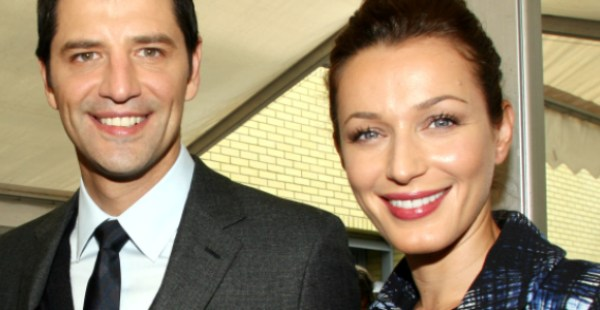
Γιώργος Θεοφάνους : Η γνώμη του για την Πάολα και τον Παντελή Παντελίδη

THE Γιώργος Θεοφάνους έδωσε μια συνέντευξη στο Πρώτο Θέμα και τη Δέσποινα Καμπούρη και μίλησε για τη σχέση του με την μεγάλη κυρία του ελληνικού τραγουδιού Μαρινέλλα, ενώ εξήγησε γιατί έχει αδυναμία στην Ελένη Μενεγάκη και ποια ειναι η γνώμη του για δυο από τις πιο πολυσυζητημένες λαϊκές φωνές της νέας γενιάς, την Πάολα και τον Παντελή Παντελίδη.

«Τη Μαρινέλλα τη θεωρώ οικογένειά μου. Μπορεί να μιλάμε καθημερινά στο τηλέφωνο στις 8 το πρωί για οτιδήποτε εκτός από καλλιτεχνικά. Για το πώς φτιάχνουμε ένα φαγητό, μέχρι κάποια πολύ σοβαρή συμβουλή που μπορεί να μου δώσει σε σχέση με τα παιδιά. Αυτό της το χρωστάω. Την έχω αποθηκευμένη στο “M”, όχι από το “Marinella”, αλλά από τοΜαμά» ανέφερε ο γνωστός συνθέτης.

Alongside, για την προτίμησή του στην Ελένη Μενεγάκη σε σχέση με άλλες τηλεοπτικές παρουσιάστριες είπε: «Στην Ελένη αναγνωρίζω ότι σε όλα αυτά που θα πούμε πίσω και μπροστά από τις κάμερες ή στις συναντήσεις μας στο σχολείο των παιδιών, έχει πάντα μια ευγένεια. Όχι ότι οι άλλοι δεν είναι ευγενείς, αλλά η Ελένη με κάνει και αισθάνομαι άνετα».

End, στην ερώτηση της Δέσποινας Καμπούρη ποιο είναι το σχήμα που θα ήθελε να δει τον χειμώνα, η απάντηση του Γιώργου Θεοφάνους ξαφνιάζει: «Μου αρέσουν τα αυθεντικά πράγματα, όπως αυτό που κάνει φέτος ο Βασίλης Καρράς με την Πάολα και τον Παντελή Παντελίδη. Ο Βασίλης είναι εξαιρετικός άνθρωπος. Πέρα από το ότι είναι καλλιτεχνάρα, είναι από τους πιο καλούς ανθρώπους που έχω γνωρίσει στη ζωή μου και το λέω με το χέρι στην καρδιά. Η Πάολα είναι αυθεντική και ο Παντελίδης δεν είναι πυροτέχνημα, όπως διάβασα πρόσφατα σε κάποιο περιοδικό.  Ο άνθρωπος κάθισε κι έγραψε κάποια πράγματα μέσα από την ψυχή του. Θεωρώ ότι αυτό το σχήμα θα έχει πολύ μεγάλη επιτυχία», reported, ενώ σε άλλο σημείο δήλωσε πως ξεχωρίζει την τραγουδίστρια των Vegas, Μελίνα Μακρή, για την εξαιρετική φωνή της: «Υπάρχουν συγκροτήματα με εξαιρετικές τραγουδίστριες. Πρόσφατα πήγα να δω τη Δέσποινα και τον Αντύπα και έπαθα πλάκα με την τραγουδίστρια των Vegas (Μελίνα Μακρή). Η κοπέλα έχει τρομερή φωνή».

Source : yupiii.gr

Nissan Extrem concept

Με τις τόσες παραλλαγές των SUV και crossover οχημάτων που έχουμε δει, καθώς και με το διαφορετικό χαρακτήρα και τον προορισμό τους, όλοι οι φίλοι του αυτοκινήτου έχουμε αρχίσει να μπερδευόμαστε.

Η Nissan φρόντισε να συμβάλει σε αυτό με τη σειρά της, με την παρουσίαση στην 27η διεθνή έκθεση του Σάο Πάολο ενός δίθυρου compact sport SUV 2+2 θέσεων για την πόλη, που ακούει στο όνομα «Extrem».

Το σίγουρο βέβαια είναι ότι όλα αυτά, κάτι νέο θα γεννήσουν και μια μέρα μια καινούργια έξυπνη ιδέα θα επιβληθεί και θα επικρατήσει.

Επιστρέφοντας στο Extrem θα πρέπει να τονιστεί ότι σχεδιάστηκε ειδικά για τη Bραζιλία, εξ ου και ο εξωτικός χρωματισμός Solar Cortex, γεγονός που αποδεικνύει ακόμη μια φορά πόσο μεγάλο ενδιαφέρον έχουν πλέον αποκτήσει αγορές, για τις οποίες η παγκόσμια αυτοκινητοβιομηχανία κάποτε αδιαφορούσε ή τις έβλεπε ως παρένθετες.

Μέχρι τις 4 Νοεμβρίου λοιπόν, οι επισκέπτες θα βλέπουν στο Σάο Πάολο το αυτοκίνητο που σχεδίασε η Nissan Design America στο San Diego της California, το οποίο φέρει τον 1.6 λίτρων κινητήρα DIG-T, μπολιασμένο και με τεχνολογία από το DeltaWing που είδαμε φέτος στο Le Mans.

Το Extrem θα μπορούσε να προσφέρεται τόσο με τετρακίνηση, όσο και προσθιοκίνητο.

Το ιαπωνικό concept σίγουρα προαναγγέλλει ένα μελλοντικό μοντέλο παραγωγής, που θα κατασκευάζεται από το πρώτο εξάμηνο του 2014 στο εντελώς νέο εργοστάσιο της εταιρείας, στο Resende της πολιτείας του Rio de Janeiro.

Στην πλήρη της δυναμικότητα, αυτή η νέα κατασκευαστική μονάδα θα φθάνει τις 200.000 μονάδες σε ετήσια βάση.

Διαστάσεις

Μήκος: 3.850 mm.
Πλάτος: 1.765 mm.
Ύψος: 1.530 mm.
Μεταξόνιο: 2.450 mm.

Source : 4troxoi.gr

Οι Depeche Mode επιστρέφουν στην Ελλάδα το 2013 (;)

Πληροφορίες σχετικά με την νέα τους παγκόσμια περιοδεία αναμένεται να ανακοινώσουν σύντομα οι Depeche Mode.

Σύμφωνα με το ηλεκτρονικό περιοδικό UnderTheRadar, η έναρξη του πρώτου σκέλους της περιοδείας πρόκειται να γίνει στις 7 of May 2013.

Συνολικά, η περιοδεία φέρεται να περιέχει 34 στάσεις σε ισάριθμες ευρωπαϊκές πόλεις, ανάμεσα στις οποίες συμπεριλαμβάνεται και η Αθήνα στις 10 May.

Η επίσημη ανακοίνωση αναμένεται να γίνει στις 14:30 (ώρα Ελλάδος), σύμφωνα με την αντίστροφη μέτρηση που υπάρχει στην επίσημη ιστοσελίδα της μπάντας.

Εντός της ερχόμενης άνοιξης πρόκειται να κυκλοφορήσει και το δέκατο τρίτο άλμπουμ των Depeche Mode, το οποίο θα διαδεχθεί τοSounds Of The Universe” of 2009.

Source : rocking.gr

Βγήκε ζωντανός από σύγκρουση με 190 km/h

Τύχη βουνό είχε ο οδηγός Diumar Bueno, ο οποίος κατάφερε να βγει ζωντανός από ένα σφοδρό ατύχημα.

Ο άνδρας έκανε δοκιμές στο πλαίσιο του Formula Truck Series της Βραζιλίας. Πρόκειται για μηχανοκινήτους αγώνες ταχύτητας που διεξάγεται με φορτηγά.

Ο Diumar Bueno έβγαινε μια μεγάλη ευθείας περίπου 3 χιλιομέτρων, όταν συνειδητοποίησε ότι τα φρένα δεν λειτουργούσαν! Ο οδηγός πήρε την απόφαση να στρίψει το όχημα στα δα διαχωριστικά από γρασίδι ελπίζοντας να επιβραδύνει πριν τελικά συγκρουστεί με τοίχωμα.

However, η ταχύτητα που είχε αναπτύξει άγγιζε τα 190 km/h. Το όχημα διατήρησε την ταχύτητά του, προσέκρουσε στο τείχος και βγήκε εκτός πίστας. Η απίστευτη σύγκρουση καταγράφηκε σε βίντεο, το οποίο μπορείτε να δείτε παρακάτω.

Αν και το όχημα καταστράφηκε ολοσχερώς, ο Beuno επέζησε. Φυσικά ο τραυματισμός που υπέστη δεν ήταν ασήμαντος αφού έσπασε και τα δύο πόδια και το ένα του χέρι! However, βλέποντας κανείς το βίντεο της σύγκρουσης, δεν θα μπορούσε να πιστέψει ότι ο οδηγός θα έβγαινε ζωντανός…

Δείτε το βίντεο
Source : newsbeast.gr

Sakis Rouvas – Katia Zygouli : They baptized their son!

Under extreme secrecy and in a close circle, with only a few friends and relatives present, Sakis Rouvas and Katia Zygouli baptized their second child.

The Rouva family's son was named Alexandros on Sunday afternoon in a modest ceremony with few guests. According to the Star report, those who attended the ceremony had earlier given their "attendance" at the couple's house in the area of ​​Neo Voutza.

The baptism took place in a church near the family home, while the ceremony was followed by a small party in honor of the novice. Star's camera, in fact, arrested Sakis Rouvas together with the pregnant Katia Zygouli, little Alexander and their older daughter, Anastasia, immediately after baptism, while returning home in their car.

Source : yupiii.gr

Art loves scandal

In Paris, they threw eggs at a performance by Castellucci. In the US, a photo of Christ in urine causes an uproar in the Senate. And in Athens, far-right and extreme Christians demonstrate in the "Smelter". Aesthetic taste and the provocation of political or religious sentiment

Uploading his show Romeo Castellucci "On the concept of the person of the Son of God" in October 2011 at the Theater de la Ville in Paris caused intense polemic. Members of para-religious organizations picketed outside the theater with the dominant slogan "Stop Christianophobia" demanding that the show be stopped, which continued only after the intervention of the police. Not the next day, and despite increased security measures, spectators were attacked with eggs and oil.
The events provoked angry reactions, with the Italian director himself commentating by paraphrasing Jesus. "I forgive them because they don't know what they are doing," Castellucci specifically said. "I forgive them because they are ignorant and their ignorance is much more arrogant and harmful because it has to do with faith".
A few months earlier, in any case, the staging of the same work in Athens as part of the Greek Festival had gone smoothly. Any objections from the viewers were left at the level of private commentary, with a computable part being identifiable, perhaps, with a recent one, then, phrase of the critic of the British "Guardian" after the London "station" of the show. “Despite the shocking warnings, felt more slightly bored than morally offended," wrote Michael Billington referring to, obviously, in the recurring motif of the well-dressed son rolling up his sleeves to change the diapers of his elderly father who gets dirty and dirty on everything, with an oversized reproduction of Antonello da Messina's "Savior of the World" dominating the background of the scene.
The Athenian performances of another "blasphemous" play went on just as "calmly", the rise of which in Paris also caused strong reactions in parareligious and far-right circles. The reason for it «Golgota Picnic» of Argentina's Rodrigo Garcia, which we saw just last June at the Athens Festival and referred to the life of Christ through harsh images of the consumer society. As for the "Tolerance Orgy", another subversive performance by the Belgian "heretical" artist Jan Fabre which "traveled" to Athens in the summer of 2009, the image of Jesus with a cross in his hand taking part in the casting of a fashion photographer was one of the mildest in the whole spectacle…
In this context, the heterochronized reactions to Lena Kitsopoulou's performance "Athanassios Diakos: The return' and, more recently, what happened in the theater "Foundry" on the occasion of the Greek uploading of his work Terence McNally "Body of Christ" they could also be surprising for reasons beyond the obvious and much-discussed in recent days.
Where are they due?; In an ever-escalating climate of tension fueled by the clash of extremes; In "ethical populism" which according to some is being encouraged (and) by a portion of the mass media; At some random juncture; In all of these together; Or maybe something else;
The truth is that the "shock" in art with the vehicle "blasphemy" has a precedent in recent years in our country. A typical example is the de-fixation of the work of the Belgian Thierry de Cordier from the Outlook exhibition on 2003, about a month and a half after its inauguration and after it had already been visited by more than 20.000 individuals. A few years later, the 2007, the confiscation of Eva Stefani's video from the Art Athina exhibition and the subsequent arrest of the director of the event for "violation of the obscenity law and insulting symbols of the Greek state" once again brought to the fore the debate about censorship and the existence or non-existence of limits in art.

Shock and awe in a cruel world
Does art still have the power to shock?; Does this make sense in an age where with a simple "click" on the Internet, everyone gains access to even the harshest images; What emotion follows the “oh!» of the initial shock; The above questions were the focus of a large investigation conducted about a month ago by the "Times" of New York.
For two weeks, critics, artists, intellectuals and readers participated in the public debate which was held against the backdrop of the amateur film "The Innocence of Muslims", which caused events of incredible ferocity in the Arab world (its echo also reached our country), the sentencing of members of the all-female punk band Pussy Riot in Russia, but also the re-exhibition of Andres Serrano's much-discussed photo "Piss Christ" in a New York gallery.
The presentation of this photo – which depicts Jesus "drenched" in urine – the 1989 provoked strong reactions in the US Senate and led to the modification of the art grants regime. In this case, the prospect of its new presentation led to efforts to revive the "culture war". The reaction of a Republican senator who accused President Barack Obama of "religious hypocrisy" is typical, calling on him to condemn the photo with the same harshness he used against the film profane for Muhammad.
In an interview granted to the "Times" critic Maggie Nelson, author of the book “The Art of Cruelty: an estimate", disagrees with director Michael Haneke's view that art, reflecting the cruelty of the world, "rushes the viewer into independence". She said characteristically: "I like it when artists face the unmanageable consequences of their work instead of trying to hide it behind press comments “my job is not hard, the world is cruel”. Artists are not moralists or psychologists. I'd rather admit that, depicting shocking or violent behaviour, we always raise tough questions about voyeurism, the sadism, masochism and erotic arousal and that these challenges are not always under the control of the artist".

Turn to conservatism
In an earlier interview with "Vima" Jan Fabre discerned a more general shift towards conservatism. "Ten years ago I participated in a festival and if someone left in the middle of the show, the people in charge said: “a, something important is happening here, something new”. Now they tremble at this kind of reactions of the people. They are afraid of bad reviews, the impact this may have on grants or private sponsorships.'.
For Fabre the term challenge is identified with the enlivening of the mind. "However, I never intended to provoke, to create a scandal" he said in the same interview. "I'm just talking about things that interest me and it just so happens that some people get provoked. But that is not my starting point. Often people are quick to label anything provocative,what they don't understand, The,what they can't put into a category or something they don't want to deal with seriously, to contact him. But no serious work of art begins with the intention of provoking".
British opera director Graham Vick has also seen a turn towards conservatism in recent years, another "terrible child" of the European scene. On the occasion of his debut in Greece a few years ago, he himself confessed to "Vima" that he has suffered many personal attacks from time to time and keeps folders full of hate messages.
What meaning does he give to the words "risk", "challenge" and "scandal"; "Risk is the driving force. The challenge makes me narrow minded, while I find the scandal useless. I'm usually called provocative when I don't mean to be. I want to have one in front of me “bet”, but it is not in my intentions to create scandals…».

From Roosevelt's rage to the "broken" kiss
What was the most shocking moment in 20th century Art?; With this question, the "New York Times" conducted a poll among its readers as part of a wider related survey. The results brought the first place exhibition "Sensation" at the Brooklyn Museum on 1999 (the then mayor of New York, Rudolph Giuliani, threatened to cut off funding if he did not "take down" the work of Nigerian-born British artist Chris Ofili, which featured a portrait of the Virgin Mary "adorned" with clippings from porn magazines and elephant feces), in the second Stanley Kubrick's "Ringed Orange" and in the third "The Rite of Spring" by Igor Stravinsky, the premiere of which the 1913 there was a huge scandal.
In the opinion of many, this last event in conjunction with the first Exhibition of Modern Art in the USA, which drew the ire of former President Theodore Roosevelt a little earlier, created a new "cultural manifesto" by reducing shock to cultural value.
That the challenge as such does not guarantee artistic quality is of course clear and the Greek public has similar experiences. In a production of "Rusalka" a few years ago at the Lyric Stage, the reactions to the Prince's much-discussed gay kiss turned an admittedly bad production into the season's talking point., which even managed to exceed the borders of our country.
On the other, the "cutting" of the kiss between a nobleman and a servant imposed by state television in the first episode of the BBC serial «Downton Abbey» just a few days ago, constitutes yet another case of censorship and even on the occasion of a subject that has certainly long since ceased to be a taboo.  

Source : tovima.gr

Art loves scandal

In Paris, they threw eggs at a performance by Castellucci. In the US, a photo of Christ in urine causes an uproar in the Senate. And in Athens, far-right and extreme Christians demonstrate in the "Smelter". Aesthetic taste and the provocation of political or religious sentiment

Uploading his show Romeo Castellucci "On the concept of the person of the Son of God" in October 2011 at the Theater de la Ville in Paris caused intense polemic. Members of para-religious organizations picketed outside the theater with the dominant slogan "Stop Christianophobia" demanding that the show be stopped, which continued only after the intervention of the police. Not the next day, and despite increased security measures, spectators were attacked with eggs and oil.
The events provoked angry reactions, with the Italian director himself commentating by paraphrasing Jesus. "I forgive them because they don't know what they are doing," Castellucci specifically said. "I forgive them because they are ignorant and their ignorance is much more arrogant and harmful because it has to do with faith".
A few months earlier, in any case, the staging of the same work in Athens as part of the Greek Festival had gone smoothly. Any objections from the viewers were left at the level of private commentary, with a computable part being identifiable, perhaps, with a recent one, then, phrase of the critic of the British "Guardian" after the London "station" of the show. “Despite the shocking warnings, felt more slightly bored than morally offended," wrote Michael Billington referring to, obviously, in the recurring motif of the well-dressed son rolling up his sleeves to change the diapers of his elderly father who gets dirty and dirty on everything, with an oversized reproduction of Antonello da Messina's "Savior of the World" dominating the background of the scene.
The Athenian performances of another "blasphemous" play went on just as "calmly", the rise of which in Paris also caused strong reactions in parareligious and far-right circles. The reason for it «Golgota Picnic» of Argentina's Rodrigo Garcia, which we saw just last June at the Athens Festival and referred to the life of Christ through harsh images of the consumer society. As for the "Tolerance Orgy", another subversive performance by the Belgian "heretical" artist Jan Fabre which "traveled" to Athens in the summer of 2009, the image of Jesus with a cross in his hand taking part in the casting of a fashion photographer was one of the mildest in the whole spectacle…
In this context, the heterochronized reactions to Lena Kitsopoulou's performance "Athanassios Diakos: The return' and, more recently, what happened in the theater "Foundry" on the occasion of the Greek uploading of his work Terence McNally "Body of Christ" they could also be surprising for reasons beyond the obvious and much-discussed in recent days.
Where are they due?; In an ever-escalating climate of tension fueled by the clash of extremes; In "ethical populism" which according to some is being encouraged (and) by a portion of the mass media; At some random juncture; In all of these together; Or maybe something else;
The truth is that the "shock" in art with the vehicle "blasphemy" has a precedent in recent years in our country. A typical example is the de-fixation of the work of the Belgian Thierry de Cordier from the Outlook exhibition on 2003, about a month and a half after its inauguration and after it had already been visited by more than 20.000 individuals. A few years later, the 2007, the confiscation of Eva Stefani's video from the Art Athina exhibition and the subsequent arrest of the director of the event for "violation of the obscenity law and insulting symbols of the Greek state" once again brought to the fore the debate about censorship and the existence or non-existence of limits in art.


Shock and awe in a cruel world
Does art still have the power to shock?; Does this make sense in an age where with a simple "click" on the Internet, everyone gains access to even the harshest images; What emotion follows the “oh!» of the initial shock; The above questions were the focus of a large investigation conducted about a month ago by the "Times" of New York.
For two weeks, critics, artists, intellectuals and readers participated in the public debate which was held against the backdrop of the amateur film "The Innocence of Muslims", which caused events of incredible ferocity in the Arab world (its echo also reached our country), the sentencing of members of the all-female punk band Pussy Riot in Russia, but also the re-exhibition of Andres Serrano's much-discussed photo "Piss Christ" in a New York gallery.
The presentation of this photo – which depicts Jesus "drenched" in urine – the 1989 provoked strong reactions in the US Senate and led to the modification of the art grants regime. In this case, the prospect of its new presentation led to efforts to revive the "culture war". The reaction of a Republican senator who accused President Barack Obama of "religious hypocrisy" is typical, calling on him to condemn the photo with the same harshness he used against the film profane for Muhammad.
In an interview granted to the "Times" critic Maggie Nelson, author of the book “The Art of Cruelty: an estimate", disagrees with director Michael Haneke's view that art, reflecting the cruelty of the world, "rushes the viewer into independence". She said characteristically: "I like it when artists face the unmanageable consequences of their work instead of trying to hide it behind press comments “my job is not hard, the world is cruel”. Artists are not moralists or psychologists. I'd rather admit that, depicting shocking or violent behaviour, we always raise tough questions about voyeurism, the sadism, masochism and erotic arousal and that these challenges are not always under the control of the artist".

Turn to conservatism
In an earlier interview with "Vima" Jan Fabre discerned a more general shift towards conservatism. "Ten years ago I participated in a festival and if someone left in the middle of the show, the people in charge said: “a, something important is happening here, something new”. Now they tremble at this kind of reactions of the people. They are afraid of bad reviews, the impact this may have on grants or private sponsorships.'.
For Fabre the term challenge is identified with the enlivening of the mind. "However, I never intended to provoke, to create a scandal" he said in the same interview. "I'm just talking about things that interest me and it just so happens that some people get provoked. But that is not my starting point. Often people are quick to label anything provocative,what they don't understand, The,what they can't put into a category or something they don't want to deal with seriously, to contact him. But no serious work of art begins with the intention of provoking".
British opera director Graham Vick has also seen a turn towards conservatism in recent years, another "terrible child" of the European scene. On the occasion of his debut in Greece a few years ago, he himself confessed to "Vima" that he has suffered many personal attacks from time to time and keeps folders full of hate messages.
What meaning does he give to the words "risk", "challenge" and "scandal"; "Risk is the driving force. The challenge makes me narrow minded, while I find the scandal useless. I'm usually called provocative when I don't mean to be. I want to have one in front of me “bet”, but it is not in my intentions to create scandals…».

From Roosevelt's rage to the "broken" kiss
What was the most shocking moment in 20th century Art?; With this question, the "New York Times" conducted a poll among its readers as part of a wider related survey. The results brought the first place exhibition "Sensation" at the Brooklyn Museum on 1999 (the then mayor of New York, Rudolph Giuliani, threatened to cut off funding if he did not "take down" the work of Nigerian-born British artist Chris Ofili, which featured a portrait of the Virgin Mary "adorned" with clippings from porn magazines and elephant feces), in the second Stanley Kubrick's "Ringed Orange" and in the third "The Rite of Spring" by Igor Stravinsky, the premiere of which the 1913 there was a huge scandal.
In the opinion of many, this last event in conjunction with the first Exhibition of Modern Art in the USA, which drew the ire of former President Theodore Roosevelt a little earlier, created a new "cultural manifesto" by reducing shock to cultural value.
That the challenge as such does not guarantee artistic quality is of course clear and the Greek public has similar experiences. In a production of "Rusalka" a few years ago at the Lyric Stage, the reactions to the Prince's much-discussed gay kiss turned an admittedly bad production into the season's talking point., which even managed to exceed the borders of our country.
On the other, the "cutting" of the kiss between a nobleman and a servant imposed by state television in the first episode of the BBC serial «Downton Abbey» just a few days ago, constitutes yet another case of censorship and even on the occasion of a subject that has certainly long since ceased to be a taboo.    

Source : tovima.gr