Speech by a Turkish archaeologist, ship's investigator
Monthly Archives: March 2013
New Alfa Romeo 4C
The Alfa Romeo 4C is at the Geneva Motor Show, while the Italian company had revealed about a month ago its "beauty" and several technical characteristics.
If you consider the car to be nothing more than a means of transport, think again. THE, better, take a few moments to browse the photo of the new Alfa Romeo 4C, in its final production form. Much has been written about the taste and elegance of the Italians, but here they really outdid themselves. Even more so if one connects to this visual effect the history of the name that the specific model carries, as well as its technical characteristics.
So this is Alfa Romeo's new little supercar, which made its first public appearance at the Geneva show. The concept of a "small supercar" might sound funny, but in practice it is about this.
Starting with the dimensions, the 4C does not exceed the 4 meters in length, the moment its width touches the 2 meters and the height reaches just 1,18 meters. The wheelbase, in turn, is less than 2,4 meters. In other words, it is a model with the length and width of a small car… Ferrari.
New engine 240 horses
For the needs of movement, Alfa Romeo engineers took care to develop a new turbocharged engine 1,75 liter, which they did not even place in front, under the hood but in the center of the car. This one works 240 horsepower, transferring the power to the rear axle, through a sophisticated double box, dry clutch, Alfa TCT.
This power, combined with the very low weight of the car, which remains below the 1.000 kilos (thanks to the extensive use of aluminum and carbon fiber) ensures a weight/power ratio marginally below 4, which is one of the best in a production car.
Alfa DNA with Race option
The Alfa Romeo 4C also marks the premiere of the new Alfa DNA selector, which offers the three standard options we have known so far -Dynamic, Natural and All Weather- but he adds one more: the Race, designed to further enhance the driving experience on racetracks.
Alfa Romeo's new small supercar will be built at Maserati's factory, in Modena, Italy. Its availability will start in the coming months, while, according to information, the 2014 we will also see its Stradale version, with increased power 270 horses.
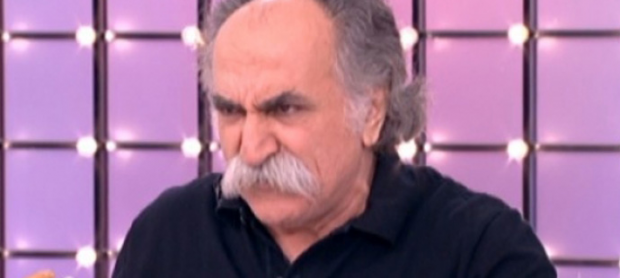
Why Agathon Has His Nerves; "When Eurovision is over, they will pass you by, Mr Iakovidis"
I've been following him for weeks – as long as he can, that is, nobody to follow this merry-go-round of statements, which is something between wild haval and nervous delirium anyway.
In the beginning, it was Iliad's fault ("I won't be upset, if something happens before the final" "I don't know the lady, I don't know her songs"), then mario ("He shouldn't sing rebetika"), then Mazonakis, ("He can't sing"). Then deal with Kiamos, Phoebus ("He turns on the computer and writes fifty songs"), he grumbled at Angeliki and Thomas who forgot, says, to congratulate him, scolded Lazopoulos because the sound in "Tsadiri" was not good and Koza Mostra was discredited, he cursed the journalists who attack him and a disembarker who hinted that he should cut off his mustache and he smashed the windows with Zafiris Melas ("He's a stink dog and a half"). Who's next next?; Merkel, elvis, God, i know, the whole world.
You will tell me, they ask him. And since they ask him, he answers. What I don't understand is why Mr. Agathon Iakovidis (which has a history as well, from,what does it look like, respectable musical education ), considers, how every time a camera turns on him, it should "pop" like a flash-bang grenade. He thinks the noise is good for him; He has collected them for so many years and now the time has come for him to say them; He's a dude and doesn't mince his words and publicity stunts, where everyone supposedly gets along with everyone, he eats them for breakfast; The shock wave of sudden publicity, it's loud and has him a bit dazed; The rebetis and alternative is different; He was born nervous; Unknown.
I guess some people find this whole one man show amusing. Yesterday, to be exact, I heard Giorgos Tsalikis shouting "forget Agathon, set him free we'll have a good time". Not that it surprised me. I know this first hand, how this kind of daring liberalism, which does not obey showbiz "norms" and reminds of "disguised", ordinary people, "sells". That's why she's so attractive to the media - just as nice and happy as a baby playing with his ball, in the middle of the clearing with the hungry tigers. you are welcome, Nevertheless, don't laugh mr. Jacobides, In your baglamadaki, I swear to you, when the Eurovision perch falls, those who now turn up the volume on the microphones and are annoying, they will make you pass like a graphic, grumpy old man. That's how it happens, thus ends this project: at the end, everything, someone is eaten. Usually, the cat.
Source : yupiii.gr
Despina Vandi: The move and the details of the family's new home
A luxurious maisonette in Voula with minimal glass details is the new nest for Despina Vandi, Demi Nikolaidis and their children, Melina and George.
The move was completed last Friday, the day the family first slept in their brand new residence. Minimal furniture, two large kitchens, a large swimming pool and a gym are just some of the details of the new house that has been hosting the glamorous family for five days.
Source : yupiii.gr
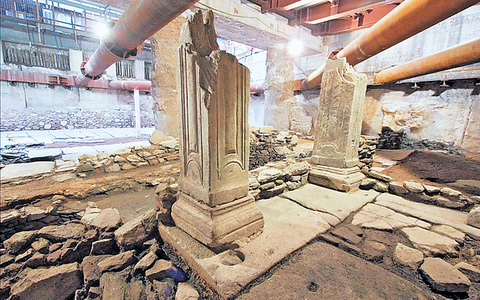
The city below Thessaloniki
The "City under the City" has a myriad of small and big secrets and amazing stories. If they come to light, attract and delight people.
1.000 from the 10.000 subway findings make their way to the Archaeological Museum of Thessaloniki and the Museum of Byzantine Culture
This will be done next year in Thessaloniki as well, where the ancient neighborhoods excavated during the metro works will "speak".
The best witnesses when people are gone are, most, the works of their hands, movable and immovable. Some, the second ones, they will go to the Pavlos Melas camp, regardless of what eventually happens with the byzantine crossroads at Venizelos station. The mobiles, which exceed one hundred thousand, they will have their place in some building of the camp, where visitable archaeological warehouses will operate.
This plan takes time to materialize. The competent prehistoric bureaus – classical and Byzantine antiquities, which have been digging for so many years along the entire length of the metro axis, prepare in the 2014 a long periodical exhibition with two strands. One will be hosted at the Archaeological Museum of Thessaloniki and the other at the Museum of Byzantine Culture.
From the cemeteries
The Archaeological Museum of Thessaloniki will present the rich findings from the excavations of the IST’ Ephorate of Prehistoric and Classical Antiquities. Emphasis will be placed on the findings found in two cemeteries ? the western one at the New Railway Station and the Democracy Square Station, the east at the Fountain.
Currency, vessels, lamps, jewelry, figurines, tools, clay vessels, spice jars will be on display. Among them the golden wreaths that had been placed as gifts. Findings from residential and building remains found at the Agia Sofia stations will be placed with them, University, Euclid.
More than 1.000 archaeological findings of the Byzantine period, which reconstruct parts of the history of Thessaloniki from the 4th century to the present, will be presented in the section of the exhibition organized by the 9th Ephorate of Byzantine Antiquities at the Museum of Byzantine Culture.
The protagonist here will be the main road axis of the city, large parts of which were exposed under today's Egnatia. The decumanus of the Romans, the Middle Street or Avenue of the Byzantines, with the laboratories, the residences, community service projects, it remained almost the same for centuries and testifies to the "secular" face of the city.
Of the approx 100.000 findings of the period, will be exposed 1.000. Among them: coins of different denominations, vessels, lamps, glass vials, women's and men's jewelry of all kinds and materials (pectoral crosses, glass and copper bracelets, gold, copper and silver rings), utility items from shops – laboratories – houses, as well as all kinds of grave goods.
"REASON FOR STUDY"
"It's a very good occasion to show the public what the city was hiding in its bowels", says the general secretary of Culture Lina Mendoni. “How important her past is. But also to give him something in return for the suffering he suffered because of the works."
The general secretary reminds that something similar was done with great success in Athens, where the exhibition "The city under the city" presented at the Museum of Cycladic Art was a great success.
He even emphasizes that this large periodical exhibition, which will last one year, it will provide motivation and occasion for the scientific study of the findings.
THE TWO TEMPLES
Off the main road, the exhibition on Byzantine Thessaloniki will highlight both early Christian churches found within the two cemeteries, east and west from the city center: a 7th century temple and a three-aisled early Christian basilica.
Source : ethnos.gr
The diesel… face of the Golf GTI
The diesel GTI, will be in Geneva. VW officially presents, at the great international exhibition of the Swiss city, the GTD version of the seventh generation Golf.
They passed 31 years since the first Golf GTD and the “components” they remain the same in the new one “hot” diesel version of the German best seller.
Under the hood, we meet the 4 cylinder 2.0 TDI with common rail and turbo technology. The engine works 184 PS and 380 Nm of maximum torque from 1.750 s.a.l.. In its basic version, the engine is combined with a manual gearbox 6 relations, while the automatic is optionally available, double clutch, DSG too 6 relations. The logo of the publication, it justifies itself in a wonderful way, both from performance, as well as consumption.
Acceleration from standstill, στα 100 km/h, comes to 7,5 seconds, with the top speed touching the 229 km/h. At the same time, VW announces average consumption 4,2 lt/100km. and CO2 emissions, στα 109 g/km, prices that with the DSG are slightly more stingy (4,7 lt/100km and 122 g/km).
The double ending of the exhaust, the diffuser, the large spoiler and alloy wheels 17 inches with the tires 225/45, reinforce the car's martial image, while the atmosphere inside is correspondingly sporty. The availability of the Golf GTD will begin immediately after Geneva, with prices for the German market starting at 29.350 euro.
The city below Thessaloniki
The "City under the City" has a myriad of small and big secrets and amazing stories. If they come to light, attract and delight people.
1.000 from the 10.000 subway findings make their way to the Archaeological Museum of Thessaloniki and the Museum of Byzantine Culture
This will be done next year in Thessaloniki as well, where the ancient neighborhoods excavated during the metro works will "speak".
The best witnesses when people are gone are, most, the works of their hands, movable and immovable. Some, the second ones, they will go to the Pavlos Melas camp, regardless of what eventually happens with the byzantine crossroads at Venizelos station. The mobiles, which exceed one hundred thousand, they will have their place in some building of the camp, where visitable archaeological warehouses will operate.
This plan takes time to materialize. The competent prehistoric bureaus – classical and Byzantine antiquities, which have been digging for so many years along the entire length of the metro axis, prepare in the 2014 a long periodical exhibition with two strands. One will be hosted at the Archaeological Museum of Thessaloniki and the other at the Museum of Byzantine Culture.
From the cemeteries
The Archaeological Museum of Thessaloniki will present the rich findings from the excavations of the IST’ Ephorate of Prehistoric and Classical Antiquities. Emphasis will be placed on the findings found in two cemeteries ? the western one at the New Railway Station and the Democracy Square Station, the east at the Fountain.
Currency, vessels, lamps, jewelry, figurines, tools, clay vessels, spice jars will be on display. Among them the golden wreaths that had been placed as gifts. Findings from residential and building remains found at the Agia Sofia stations will be placed with them, University, Euclid.
More than 1.000 archaeological findings of the Byzantine period, which reconstruct parts of the history of Thessaloniki from the 4th century to the present, will be presented in the section of the exhibition organized by the 9th Ephorate of Byzantine Antiquities at the Museum of Byzantine Culture.
The protagonist here will be the main road axis of the city, large parts of which were exposed under today's Egnatia. The decumanus of the Romans, the Middle Street or Avenue of the Byzantines, with the laboratories, the residences, community service projects, it remained almost the same for centuries and testifies to the "secular" face of the city.
Of the approx 100.000 findings of the period, will be exposed 1.000. Among them: coins of different denominations, vessels, lamps, glass vials, women's and men's jewelry of all kinds and materials (pectoral crosses, glass and copper bracelets, gold, copper and silver rings), utility items from shops – laboratories – houses, as well as all kinds of grave goods.
"REASON FOR STUDY"
"It's a very good occasion to show the public what the city was hiding in its bowels", says the general secretary of Culture Lina Mendoni. “How important her past is. But also to give him something in return for the suffering he suffered because of the works."
The general secretary reminds that something similar was done with great success in Athens, where the exhibition "The city under the city" presented at the Museum of Cycladic Art was a great success.
He even emphasizes that this large periodical exhibition, which will last one year, it will provide motivation and occasion for the scientific study of the findings.
THE TWO TEMPLES
Off the main road, the exhibition on Byzantine Thessaloniki will highlight both early Christian churches found within the two cemeteries, east and west from the city center: a 7th century temple and a three-aisled early Christian basilica.
Source : ethnos.gr