Tag Archives: tovima.gr

From ancient Olympia to the ideal of Olympism

Great exhibition in Berlin on the religious, political and social person of the city

A bridge of culture, of trust and cooperation between Greece and Germany is being built these days in Berlin, a few steps away from the old cold war wall: The Martin-Gropius-Bau Museum in Niederkirchnerstrasse - opposite the German Ministry of Economy- is preparing to welcome the exhibition "Olympia: Myth, worship, matches", which will give German visitors the opportunity to get to know the place, the people, the everyday life and history of the holy city-symbol of the Olympic Games and to witness the birth of the sports ideal.

On the occasion of the Olympic Games starting in London in a few days, the exhibition will present to 3.500 sq.m. through 1.000 exhibits the sacred site of ancient Olympia and many aspects of ancient Greek worship and daily life "known to you Greeks, but unknown to the general public of Europe, which we must demonstrate and explain", pointed out Gereon Zyvernich, director of the Martin-Gropius-Bau Museum, during a press conference in Athens, at noon on Tuesday 24 July, which was also attended by the Deputy Minister of Education, of religion, Culture and Sports (Ministry of Health) Kostas Tzavaras, the director of the Hellenic Cultural Foundation Eleftherios Economou, the general secretary of Culture of the Ministry of Culture Lina Mendoni and the general director of Antiquities and Cultural Heritage Maria Andreadaki-Vlazaki.

"Through the exhibition it becomes clear what Greece has offered to Europe", the German director commented and the Greek deputy minister remarked that in our troubled times, and on the day of the celebration of 38 years since the restoration of democracy in Greece, "Olympia marks the course of human civilization, opposes the eternal to the perishable and sends a powerful message that reminds us that “Greek way” continues to inspire and move the peoples of the world".

The report is structured in three main thematic sections. The first presents the history of the ancient sanctuary of Olympia from the beginning of the 1st BC. millennium to the end of the Roman times, the political dimension of Olympia and its contribution to the formation of Hellenism are demonstrated and presented, through vows, representations on vases and other findings, the religious function of the sanctuary, the deities and heroes that were worshiped and the cult ceremonies that took place there.

The second section traces the history of excavations and research in ancient Olympia, by French archaeologists’ first it 1829 and by German archaeologists the 1875, following the thread of archaeological excavations in the area up to the present day.

The third section focuses on sport in Olympia and its social significance. In the rooms that will host this module, visitors to the exhibition will see records, dumbbells and other sports instruments and through angiography and digital representations will be informed about the types of ancient sports. They will also have the opportunity to admire portraits of distinguished spectators of the Games as well as coins and medals that confirm the pan-Hellenic importance of the Games.

1.000 exhibits – 150 are exhibited in a world premiere

Most of the exhibits in the exhibition come from Greek museums, mainly from the Archaeological Museum of Olympia, the National Archaeological Museum and the Numismatic Museum. Overall 564 ancient works will depart for Berlin, together with three modern copies, two models and eight modern commemorative medals. In the exhibition they lend exhibits in total 21 major European museums and institutions, including the Louvre Museum, the Vatican Museum, the Archaeological Museum and Sculpture Gallery of Munich and the National Museum of Rome.

150 Greek findings from excavations of the last decade in Mycenae and elsewhere will be presented for the first time to the general and scientific public and will be published in the catalog accompanying the exhibition.

Exactly 40 years after the last exhibition on the subject of the Olympic Games in Germany, the 1972, at the Munich Olympiad, for the first time such a large number of Greek exhibits cross the borders and are loaned outside of Greece, "an event that expresses trust and is a manifestation of the close bond between the two countries", underlined the director of the Martin-Gropius-Bau Museum.

The exhibition, which is prepared by 2010, organized by the initiative of the Hellenic Cultural Foundation in Berlin and co-organizers the Martin-Gropius-Bau Museum, the Ministry of Education, of religion, Culture and Sports, the German Archaeological Institute and the Berlin State Museums Antiquities Collection and is under the auspices of the President of the Hellenic Republic and. Karolos Papoulias and the President of the Federal Republic of Germany Mr. Joachim Gauck.

Catalogs in German, in English and Greek accompany the exhibition, with essays and descriptions of the exhibits, fruit of cooperation 60 distinguished Greek and foreign scientists.

However, the ambitious exhibition seems like an expensive luxury for the poor economy of the Greek state, the director of the Hellenic Cultural Foundation Eleftherios Economou, answering a question, clarified that "the Greek government was not burdened at all with the costs of the organization". German and Greek private individuals support the exhibition with sponsorships, including the German Savings Banks and the Greek institutions Latsis and Leventis, while Qatar will finance the publication of the English and Greek catalogs.

The exhibition will be hosted by 30 August 2012 until 7 January 2013 at the Martin-Gropius-Bau Museum in Berlin and will then be transferred to Doha, Qatar, where it will be presented at the Sports and Olympic Museum from 28 Of March 2013 until the end of October 2013, supplemented by an appendix on the history of the modern Olympic Games, where evidence from the Athens Games will be presented 1896 and 2004. The final destination of the exhibition will be the National Archaeological Museum of Athens, where we will see her in the winter 2014.

Source : tovima.gr

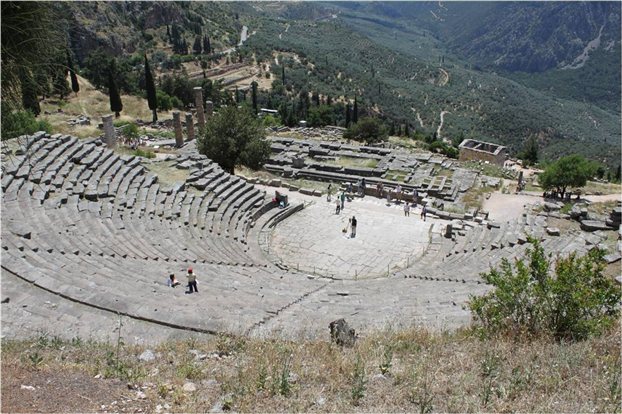
Delphi opened after 37 years of silence

"Here, Greek children, liberate your country" sounded Aeschylus' "Persians".

"Here, Greek children, free your country" said Yiannis Vogiatzis, performing passages from Aeschylus' Persians and as the reverberation of his voice shook the theater at Delphi the audience burst into applause. July 21st is a day that will be etched in everyone's memory, since the ancient theater of Delphi opened after 37 years of silence, for a one and only show with favorite artists, under the auspices of the Athens Festival and the Ministry of Education and Culture.
At the "doors" of the theater, as Vassilis Papavasiliou called the theatrical and musical event, Yiannis Vogiatzis interpreted passages of ancient drama from Aeschylus' Persians, Nikos Karathanos, who is also the director of the show, by Euripides' raging Hercules, Helen Kokkidou from Sophocles' Antigone, Lydia Koniordou performed Iphigenia's Monologue and the introduction from Medea, Olia Lazaridou recited Orphic hymns, Vassilis Papavasiliou read excerpts from the work Bread and Wine, Reni Pittaki performed excerpts from Ornithes and Marissa Triantafyllidou from the dance of Aeschylus' Agamemnon.
The opening of the show was made by the New Greek Quartet, composed of Giorgos Demertzis (first violin), Dimitris Xandrakis (second violin), David Bogorad (viola) and Angelos Liakakis (cello), and presented Maurice Ravel's "Five Greek Melodies"., with the participation of soprano Lenia Zafeiropoulou and Mozart's "Quinteto for Clarinet", with the participation of Dionysis Grammenos Zafeiropoulos, who performed pieces from "36 Greek Dances" by Nikos Skalkotas.
The performance organized following the initiative of former minister Tatianna Karapanagiotis, in order to highlight one of the most important monuments of antiquity, watched approx 800 spectators, since the theater was full, except where there were no safe seats.
"At first I had a doubt, it seemed to me that the motive was pre-election, but when I went to the theater the space defeated me" said the president and artistic director of the Athens Festival George Loukos at the press conference for the presentation of the event.
The ancient theater of Delphi is among the ancient Greek theaters that are preserved in good condition. It is located inside the sanctuary of Apollo, specifically in its northwest corner, in contact with the precincts of the mosque.
The 1927 Angelos Sikelianos and Eva Palmer-Sikelianou revived the Delphic Festivals, in the context of which Prometheus Bound was taught, the first since ancient times, performance in the ancient theater of Delphi.
The 1930, at the second and last Delphic Festivals Prometheus Bound was presented again, together with the Iketides of Aeschylus. A limited number of performances were then given, from the National Theatre, the Art Theater and other troupes.
The budget of the project of the restoration of the theater of Delphi which is to be included in the NSRP of the Region of Central Greece, is 1,3 million. euros and should be completed by the middle of it 2015.
Source : tovima.gr

The ancient Greek past of the Burrot in the light

The research has been conducted since last May by an American University

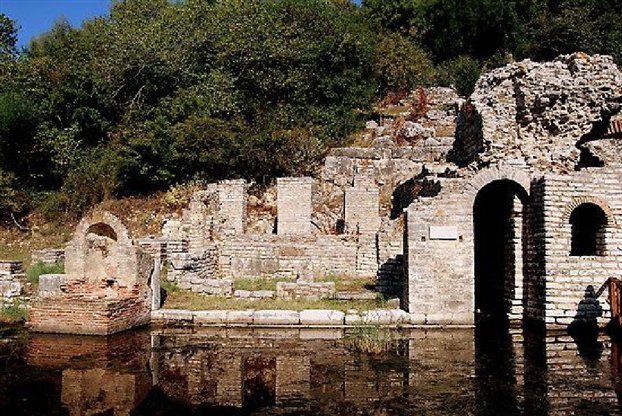
A wooden plow of the 7th BC. century they traced to 6,5 meters deep the members of the American archaeological mission of the University of Notre Dame in the ancient city of Buthroto in Albania. The object came to light during last week's excavations and is of great importance, as it is the first wooden find not only in the area but in the entire Balkans.

Besides, it should be considered, that it is Greek, as in the 7th BC. century the Greek colony of Bouthrotos was founded, which later in the Roman era also experienced a great flourishing and subsequently acquired a Christian diocese.

This plow that is, which was kept submerged in water, like all the ruins of the ancient coastal city it comes from the first Greek years of Vothrotos' life. Something very important, because the surviving remains of the city date back to the Roman and Byzantine eras.

The research has been carried out since last May by the American archaeological mission of the University Our Lady of Indiana under the archaeologist David Hernandez, which he first collected for this purpose 55 experts including archaeologists, anthropologists, bioarchaeologists, geneticists, historians as well as students from Albania, USA, Italy, Hungary, Hellas, Czech Republic etc. An important find this year was also the propylon of a building that had high columns and a floor paved with stone slabs.

also: More than 250 were the coins of various eras that came to light testifying to the developed relations of Bouthrotus with the countries of the Mediterranean throughout antiquity. The vessels, especially those of the 4th and 3rd BC. century is of exceptional quality and art, a proof of the high standard of living of the inhabitants but also of the range of trade. Copper objects, buckles, jewelry and glassware, spatulas but also parts of sculptures (mainly extremities: hands and feet) complement this year's harvest, while a pleasant surprise from the Middle Ages was a whistle that was probably used to call hawks.

Moreover, the surface archaeological research in the area proved to be particularly important, during which Paleolithic and Neolithic bones and objects were collected, such as ceramics, which prove the oldest habitation in the area.
Bouthroto is in the distance 20 about kilometers from Agioi Saranda and was a city that was preserved over the centuries by changing rulers.

After the Romans in the early Christian years it was one of the twelve cities that made up the province of Epirus, in the Middle Ages it is even mentioned as an important fortress. After the conquest of Constantinople by the Franks, it passed to the Despot of Epirus while the conquerors alternated (Sicilians, Navarros, Venetians Mr. a.) with interest mainly for its rich fish farms. As a city it was abandoned in the 15th century due to its wet soil.

Source: tovima.gr

Durs Greenbein: I have a duty towards Greek culture, the ancient and the modern

The German poet who published a poem about Greece in the newspaper "Die Zeit" talks about the new European climate

"Good political luck," Durss Greenbein wished me on the other end of the phone line at the end of our two-hour conversation, which took place two 24 hours before the June 17 election. The 49-year-old multi-award-winning German poet and writer, one of the most important "voices" of his country after reunification, is of particular interest to our country: not only has he translated works of Ancient Greek Literature but he was also one of the seven fellow artists who responded to the recent call of the newspaper "Die Zeit" by writing a poem (the "Ekloge") for Greece.

Mr. Greenbein, I say let's start with your recent poem about Greece in the newspaper "Die Zeit". It works, truth, the inspiration on demand;
"I confess that this is not the way I work. Neither poetry nor any other form of intellectual and artistic expression is good to be produced to order. However, in recent years I have often been asked to write something as a comment or as a reaction either to politics or to the wider social reality, in everything that happens around us. Most of the time I refuse. I am not Bertolt Brecht…».

In this case, why did you accept?;
"All seven poets who responded to the newspaper's invitation share a common interest in Greek history. I personally felt that I had a certain duty towards Greek culture, not only in the ancient but also in the modern. So within this framework I was convinced to do it. Of course, there was also a satirical aspect to all this…».

What was your real purpose with this poem?; A comment, let's say, on the Greek issue;
"Look, we are facing a rather complex situation. A poet, a spiritual man, it is certainly in favor of Greece. The ordinary taxpayer, Nevertheless, the head of the family, he probably sees things a little differently. He feels that he should give more and more money for Greece, for the European South to say better, and even in a case with doubtful results. I myself am in favor of human solidarity, I don't believe so much in terms like productivity growth, fiscal discipline or the need for violent reforms. I think the problem would be better solved or even handled differently…».


That is, how;
“I would not be opposed to the establishment of a special tax for the South. We Germans have the experience of Reunification which, I think so, could be applied in this case to North relations – South. There are differences in culture, but if one wants to have hopes of success, must handle the matter with the same patience and generosity that prevailed in the relationship between West and East Germany at the time of Reunification. Even now the taxpayer in my country has to pay a sum for the reconstruction of Germany. This was accepted by the Germans without a problem until now. Only recently have objections been raised because there are now areas in the West that are objectively poorer than the East…».


And you say that a possible tax for the European South would be more easily accepted;
"I'm not saying he would be more easily accepted, I say that I personally find it more efficient. It is my political belief, if you want. I feel the strengthening of the South as a debt of the North, but I prefer it in the form of free sponsorship. Undoubtedly, we rely heavily on the South. In Spain, in Italy, in Greece we escape in the summer after a winter of hard work. We like to go on holiday to the other half of Europe where the climate and lifestyle are different. We need diversity and this is what we must promote. It took me several years to realize that the monetary union idea might not be such a good idea after all…».

From what point of view;
"And from aesthetics. The euro is the ugliest currency we've ever had, national coins were more tasteful… Jokes aside though, I think this was all wrong. Until recently I had a more idealistic view. I thought that as long as there was money and it flowed, that was good. Now I believe that all this money may have ended up hurting the countries of the South. The situation is more or less similar to,what happens in big city families. The second generation finds everything ready and then loses all motivation for initiative, creation, development of economic activity. My peers in West Germany experienced something like this: they had plenty of support and didn't need to do much on their own. Coming from the East, I did not know this. I had no money at all, I had to struggle alone to build something from scratch…».

So you believe in the "lazy" Southern European theory;
"I deeply believe that the Greeks are a dignified and proud people. From now on, it seems that with the advent of the euro, a new type of consumer was created in the South. With the easiest way to get loans developed, your country became over-indebted because consumption went up too much and that's something the northern countries benefited from. They gave loans, so that Southerners could buy goods. Now that's over, except that the Greeks did not take care to develop their own production, nor the service sector. All they did was invest in construction companies or real estate. I saw this with my own eyes some years ago, during his Olympic preparations 2004. Now we see that the Olympic properties remain unfortunately underutilized… The negative consequences of dependence on the flow of the euro were not immediately perceived because it was perceived to be in everyone's interest. Now the money tap is closed, the banks are screaming… Unfortunately, that's not all…».

But what else?;
"The main problem is that relations between peoples are being poisoned. National envy is on the rise and I find that appalling… After all, it's probably not a good idea to lend money to friends…».

So you are against the euro…
"I am in favor of the political union of Europe. I believe in a Europe without borders, which will enhance diversity and cultural exchanges. This I consider essential and constructive and not to push for reforms which are probably not only terribly difficult to implement but also their results are dubious…».


However, monetary union was not a step in the direction of wider integration;
"The truth is that there was one “entanglement” of economies, a mix, and that was a good idea. Cat’ thus the danger of hostilities in Europe was put aside, and we all believed that this was a possibility which we had now put behind us for good. But now we clearly see the dangers that have arisen. The euro is falling apart, it pits the nations against each other. I think direct aid from one country to another, without the intervention of Brussels, would be more effective. A Marshall Plan, let's say. I have the impression that Germany has been unfairly targeted…».

what do you mean;
"I really don't understand why the Germans have such a bad name in Greece since this bureaucratic and inefficient Brussels system is really responsible. In fact, for a long time the Germans were guarantors of the good development of Greece, others were the countries that sought its abandonment. It is unfair to present Germany as an enemy…».


However, there are times when things are heard that provoke Greek public opinion. For the statements of Mr. Schäuble, let's say, just before the election what do you say;
"They were unlucky, actually. It was a blatant interference in the internal affairs of the country and I do not agree with it at all. I understand that they touched the Greeks in their pride and strong sense of independence. And if I were Greek, this would bother me…».

You would say that there is an anti-Greek climate at the moment in Germany;
“Among certain fools only. From now on, the yellow press, or “Bild” for example, indeed it fosters a climate that is not conducive to good relations. The truth is that there is a fear that saving the South is an increasingly expensive story. I personally think that the need for information exchange between the two countries is more necessary than ever and I am surprised that it is not happening to the extent that it is needed…».


That is;
“For me it would be very helpful if there was one “network” exchange between spiritual people, university professors and respected journalists of the two countries so that public opinion in both Germany and Greece can be informed objectively and soberly at all levels… No breakouts, without crowns, without guile. In the mass media, in universities, everywhere. Above’ we are all peoples, friends and allies…».

History warns…
Durs Greenbein sounds impressively knowledgeable about prof’ us: knows the names of the Greek political parties and their leaders, he asks anxiously about the possibility of social unrest in our country due to the worsening of the economic crisis, but para’ all this he believes that it would be appropriate to develop a bilateral information exchange "network" in order to better inform the public opinion both in Greece and in Germany. He hopes to return to our country soon. His scheduled Megaron Plus lecture a few months ago was canceled for practicals, as he explains, reasons but he hopes that he will soon have the opportunity to meet the Greek public…

Fri.’ all that, as it says, he does not know the party landscape in Greece well, Greenbein comments on the strengthening of the extreme right in our country. "The truth is, I don't know how left-wing the leftists are and how right-wing the right-wingers are," he says. "All this is unclear. However, I do not see a militaristic movement that could actually lead to a dictatorship. One hears incendiary voices, but nothing more. I believe that people have indeed learned something from their history, but I don't know if they have learned the right thing. However, the warning of History is very strong in their bones and for’ this I am sure they are not going to let a dictatorship come. It is also one of the main reasons why no one wants to remove Greece from the bailout…».


When and where:
Titles by Durs Greenbein that have been released in Greek: "The Astronomer" (Little Bear, 2012), "Of the snow or Descartes in Germany" (Cedar, 2007), "Remote Inscription" (Hyperion, 1997)

Source : tovima.gr

Anniversary for the Acropolis Museum, new actions, five million. visitors

His fame has spread worldwide, its prestige is internationally enforced

Three years today for the Acropolis Museum with its visitors touching the 5 millions, his fame to have spread throughout the world and his prestige to be enforced internationally.

An anniversary that is justifiably celebrated with pride in this particularly critical period for the country, let alone the museum, even in this last year it operated with its own revenue without burdening the state budget. "Some people think that culture and museums are unnecessary luxuries in difficult times. We experienced other things", said the president of the Acropolis Museum at noon, professor Mr. Dimitris Pandermalis. "We saw ordinary people being moved by their walk through the halls of the museum and taking a deep breath escaping from the gray everyday life. Visitors watching next to the burnt statues of the Persian disaster, the masterpieces born soon after, they automatically draw the parallel with the possibilities of the day after today's financial crisis", he added.

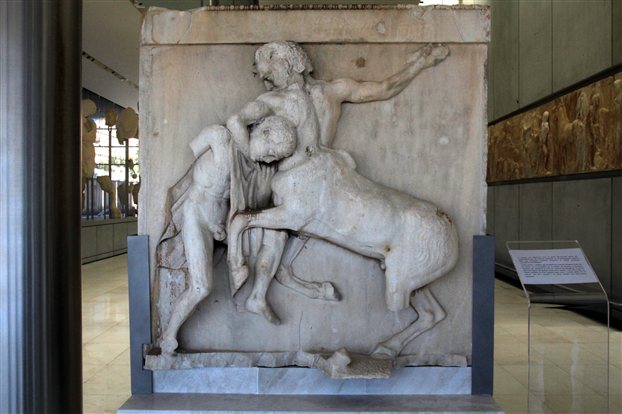
With the halls glowing with Attic light and the luster of marble statues, especially for today and to the sounds of live classical music, the museum welcomes the public _ already increased from the previous month _ with changes, improvements, welding of fragments to the sculptures that thus take on a more complete form but also with the exposure of the two metopes that were taken down from the Parthenon to save them from decay.

"The Acropolis Museum has played a leading role these years in an international dialogue with the other museums of the world and abolished stereotypes", said the acting Minister of Culture Mrs. Tatiana Karapanagiotis on the occasion of the anniversary. And as for the Parthenon Sculptures that are in the British Museum: "I wish they would come! But even if they don't come back, we already have a miracle here. An amazing museum, magical and mostly ours!», he added. Εχοντας παρακολουθήσει άλλωστε τη γέννησή του από την περίοδο των ανασκαφών ακόμη, after recording with her lens the whole process step by step and from the beginning to the end Mrs. Karapanagioti could feel it like her home.

Regarding her tenure at the Ministry of Culture, the minister had an interesting experience to report: "I understood that the public works, at least what I got to know at the Ministry of Foreign Affairs", he said. "When you are outside you can criticize easily, but from the inside you realize the difficulty of things. So I will be more lenient from now on". The promotion of NSRF projects and the opening hours of museums and archaeological sites were her priorities, which were served flawlessly despite the shortness of her presence in the ministry. In the context of her responsibilities, she also referred the issue of the old Acropolis museum (on the rock) to the joint body of KAS and KSNM with the question of its preservation or demolition.

However, a "funny" incident prevented her and the general secretary of the Ministry of Foreign Affairs (until that moment) Mrs. Lina Mendoni, το όνομα της οποίας αναφέρεται στην επόμενη κυβέρνηση να φθάσουν στην ώρα τους καθώς ο φύλακας από την είσοδο της οδού Μακρυγιάννη δεν τις αναγνώρισε και δεν επέτρεψε να περάσουν!

Νέες δράσεις ανήγγειλε εξάλλου ο κ. Παντερμαλής με πρώτη την επέκταση του καφενείου του ισογείου, όπου ήμασταν καθισμένοι, στον εξωτερικό χώρο πάνω από την ανασκαφή. Μουσείο της ανασκαφής πρόκειται να δημιουργηθεί από κάτω ακριβώς, όπου θα εκτεθούν περί τα 1500 ευρήματα, που βρίσκονται τώρα στις αποθήκες. As for the highlighting of the excavation itself, which is about 3 acres… beware of the Bank of Greece that "cut" the museum's reserve. Specifically, as said by Mr. Pandermal from the 3,7 million. only euros remained 900.000, so the sponsor is now being sought to help carry out the project, for which one year is required anyway.

The action on the theme of light in antiquity is interesting, which will start on 27 June. Triggered by the golden lamp that lit the eternal light at the springs in Erechtheion, iconic exhibits of the museum, such as the bronze trireme – lamp, which was also found in Erechtheion will be marked in their showcases while a special brochure will be distributed at the entrance.

Τον Ιούλιο θα παρουσιασθεί εξάλλου η μικρή έκθεση για το χρώμα που διατηρείται ακόμη στα αρχαϊκά γλυπτά του μουσείου βάσει έρευνας, η οποία βρίσκεται σε εξέλιξη. Η Πεπλοφόρος Κόρη, a mold of which is colored with the colors resulting from this study, will be the proposal of the scientists of the Acropolis Museum on the subject. "So far the coloring of the Daughter has changed three times", characteristically said Mr. Pandermalis also assuring that the final result will have significant deviations from the painted archaic sculptures, presented by German scientists a few years ago.

Source : tovima.gr

Restoration of the ancient theater of Sparta

Υπογράφηκε η σύμβαση για την ανάθεση της μελέτης του έργου

Στο δρόμο της αποκατάστασης μπαίνει το αρχαίο θέατρο της Σπάρτης ύστερα από υπογραφή της σύμβασης για την ανάθεση της μελέτης του έργου. Την αρχιτεκτονική αποτύπωση, την τεκμηρίωση των στοιχείων του θεάτρου και τις προτάσεις για την συντήρηση και εν τέλει για την αποκατάστασή του θα περιλάβει η μελέτη, η οποία θα υλοποιηθεί μέσω δωρεάς ύψους 111.000 ευρώ από το Ιδρυμα Σταύρος Νιάρχος.

Πρόκειται για μία πρωτοβουλία του «Διαζώματος», στα γραφεία του οποίου άλλωστε υπογράφηκε η σύμβαση από τον πρόεδρό του κ. Σταύρο Μπένο και τον μελετητή αρχιτέκτονα – engineer Mr. Γουλιέλμο Ορεστίδη, παρουσία του κ. Μανόλη Κορρέ, καθηγητή του Εθνικού Μετσόβιου Πολυτεχνείου.

Η μελέτη περιλαμβάνει τις αρχιτεκτονικές αποτυπώσεις του μνημείου, την καταγραφή της παθολογίας του, την έρευνα αρχείου και την συλλογή φωτογραφικού υλικού και λοιπών τεκμηρίων για τις ανασκαφικές έρευνες, την καταγραφή και τη διερεύνηση διάσπαρτων αρχιτεκτονικών μελών και τέλος τις προτάσεις για την αποκατάσταση και ανάδειξη του θεάτρου.

Να σημειωθεί ότι το ρωμαϊκό θέατρο της Σπάρτης είναι ένα από τα μεγαλύτερα θέατρα της αρχαίας Ελλάδας καταλαμβάνοντας περί τα 14.000 T. μ. στην ακρόπολη της Σπάρτης. Στην αρχαιότητα θεωρείται ότι μπορούσε να φιλοξενήσει περί τους 16.000 spectators, σήμερα όμως είναι ορατό μόνον ένα μέρος του καθώς δεν έχει ανασκαφεί πλήρως.

Το συνολικό πλάτος του θεάτρου είναι 114 μέτρα και το κοίλον του ήταν χωρισμένο σε δύο διαζώματα (θέατρο και επιθέατρο). Το κυρίως θέατρο είχε εννέα κερκίδες με 30 σειρές εδράνων ενώ το επιθέατρο είχε 16 with 20 σειρές εδράνων. Πάνω από το επιθέατρο μάλιστα και περιμετρικά σε αυτό είχε κατασκευαστεί στοά ώστε να καταφεύγουν εκεί οι θεατές σε περίπτωση βροχής. Οσο για τη σκηνή αρχικώς ήταν ξύλινη και κινητή (μεταφερόταν πάνω σε τροχούς) αλλά αργότερα κατασκευάσθηκε μόνιμη από πέτρα. Ιδιαίτερο ενδιαφέρον παρουσιάζει εξάλλου ο ανατολικός αναλημματικός τοίχος του κοίλου, πάνω στο λευκό μάρμαρο του οποίου αναγράφονταν τα ονόματα των αξιωματούχων της πόλης σε ετήσια βάση αποτελώντας έτσι ένα «λίθινο» αρχείο της Σπάρτης.

Το θέατρο εγκαταλείφθηκε περί τον 4ο μ. X. αιώνα ενώ στο Μεσαίωνα το κοίλον του καλύφθηκε από οικίες, χωρίς να λείψουν και από αυτό το μνημείο, οι αφαιρέσεις λίθων προκειμένου να χρησιμοποιηθούν για νεώτερες κατασκευές.

Source : tovima.gr

Antigone triumphs in London

The ancient tragedy in a modern direction by Polly Findlay surprises

"Antigone" by Sophocles triumphs in London and wins the British public through the performance of the National Theater of England, where it is presented at this time. The ancient tragedy, in the completely modernized direction of 29-year-old director Polly Findlay (Polly Findlay), he's got, literally, makes the summer surprise, receiving rave reviews both for its visuals and for the performances of the protagonists. The Financial Times writes about a "shocking revival"., for "outstanding performances" by the Observer and The Times. Christopher Eccleston (Christopher Eccleston) who plays Creon and Jodie Whittaker (Jodie Whittaker) who interprets Antigone lead a troupe that leaves no one unmoved. Jamie Ballard also stands out (Jamie Ballard) in his role (blind) fortune teller Teiresia, with a half-burnt face.

Placed inside an office of our time, which during the performance turns into a government office, the "Antigone" in Findlay's version alludes, directly, in the modern face of power. Behind the desk, Creon dominates seated while Horus, a number of political and military advisers, discusses sending a press release regarding the end of the Theban War.

With the help of the scenographer (Gilmour Sutra / The Gilmour Sutra) and the translator (the show uses his translation 1980 by N. Taylor / Don Taylor), Findlay, who first grappled with ancient drama, he builds a modern world where the private and the public are entangled in a merciless confrontation. The director is bold but confident in her choices without betraying the legend, places him in the gears of political power in the 21st century. "Perhaps the letter of the law also has its limits;», wonders through "Antigone" and together with the audience that seems to have rediscovered Sophocles.

Simple and understandable, this "Antigone", according to all critics, manages to remain faithful to Sophocles and to confirm that texts like this do not accidentally belong to the great classics and timeless: Because they still work today in the form of emergency.

 Source : tovima.gr