Charles Gounod – Faust from the Lyric Stage at the Athens Concert Hall

One of the most popularFrench operas, which is based on the first part of his well-known tragedyGoethite, presents the NationalLyric Stageat20 January 2012and foronly eight performances, in theAthens Concert Hall– HallAlexandra Trianti. The masterpiece of French romanticism with the famous arias, the great choral and ballet performances of Walpurgis Night, is presented under the musical direction of Myron Michaelidis and directed by Renato Tzanella.
It is one of the world's favorite grands opéras, which has been presented in Greece since the 90s. It is based on Goethe's famous tragedy, where the aged scientist Faust sells his soul to Mephistopheles, in exchange for youth and love. At the heart of the opera is not so much Faust himself as Margarita, who is transformed by love and ultimately pays dearly for her choices.
He conducts the orchestra of the National Opera for the first time after assuming his duties as the artistic director of the Greek National Opera, the chief musician Myron Michaelidis, who has conducted some of the most important symphony orchestras, as among others, the Berlin Symphony Orchestras, of Rome, of Jerusalem and Mexico, the Philharmonic of Bucharest and Bratislava, the Prague Radio Orchestra, as well as all Greek orchestras.
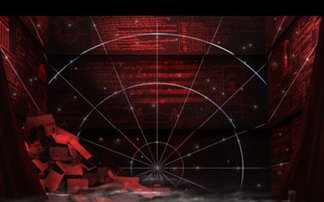
The director and director of the ELS Ballet, Renato Zanellawith many years of service in the direction of the ballet of the Vienna State Opera, sets the case in an old empty classroom. There, in front of blackboards full of knowledge, Faust alone, tormented by the fundamental questions of life, of death, love, of happiness. Inside his clouded mind he meets Mephistopheles, who enticed Margarita, convinces him to sign the deal with the devil.
Zanella notes: "My approach moves away from both the supernatural and the religious element and places man and his weaknesses at the heart of the matter. Faust really becomes young again, or simply Mephistopheles shows him what he wants to see; They really leave the room to travel to other places and have the most amazing adventures, or maybe they never leave the classroom; Is this hall Faust's head?, filled with so much information that it cannot tell the real from the imaginary; My work moved in this direction thanks to the help and amazing, unique capture of Alessandro Camera (scenery), Carla Ricotti(suits) and Vinicio Kelly(illuminations)».
A multitude of leading Greek and foreign performers participate in the production. The role of Faust will be performed by American tenor Eric Cutler, who has appeared in the last years in the biggest Lyric Theaters of the world, such as New York's Metropolitan Opera, the Royal Opera of London and the Paris Opera, while his appearance with Anna Netrebko the MET, in Bellini's Puritans is considered one of the high lights of his career.
Margarita is performed by Alexia Voulgaridou, the leading Greek soprano who carries out an extremely important career abroad, with appearances at leading theaters such as the Royal Opera, the Scala of Milan, and the Berlin State Opera, while he has collaborated with Riccardo Muti, among others, Ronaldo Villazon, Sir Colin Davies, Andrea Bocelli, but also Isabelle Hyper in the film "Deux" by Werner Schroeter. Voulgaridou has sung with great success the role of Margarita in Rome, Basel as well as the Ravenna festival.
Mephistopheles is performed by Paata Boursoulatze, the famous Georgian bass, extremely popular with opera audiences in Greece as well. Boursoulage has performed leading roles at the Metropolitan in New York, in Milan's Scala, in the Vienna Opera and in many other theaters around the world. Last summer the Athenian audience applauded him in Verdi's Nabucco, in the Conservatory of Herod Atticus.
The distribution is completed by leading Greek soloists such as Dimitris Platanias, who was warmly applauded at Verdi's Masquerade Dance presented at the ELLS, in December, Dimitris Kasioumis, Irini Karayanni and Ines Zikou. In the second distribution we find among others, the recently awarded with the Grand Prize of the Greek music critics Tselia Kostea, Askar Abdrajakov and many other famous singers.
Nikos Vassiliou conducts the ELLS choir. The ELS Ballet participates, choreographed by Renato Zanella.
Faust at a Glance
The composer / Charles Gounod was born in Paris in 1818 and took his first piano lessons from his mother. He studied at the Paris Conservatory and the 1839 won the famous Prize of Rome for the cantata of Ferdinand. In Italy he studied the works of Palestrina and other compositions of church music. Later, thanks to Fanny and Felix Mendelssohn he came into contact with the music of JS Bach. The 1851 composed his first opera, Sappho. The 1859 Faust made the composer known throughout the world. They were followed by the French themed Mireille (1864), which has recently come to the fore again, and the opera Romeo and Juliet (1867), based on Shakespeare. In addition to lyrical works, Gounod also composed symphonies, while during the last years of his life he was particularly involved in works of religious music, oratorios, functions, motet. He died of cerebral congestion on 1893.
The project / Opera in five acts, Faust is based on a poetic text by Jules Barbier and Michel Carré, who drew their material from Carré's play Faust and Margarita (1850), as also from Part I of Faust, by Johann Wolfgang von Goethe (1808) in its French translation by Gerard de Nerval (1828). A typical sample of French grand opera - grand opéra- and the first of its kind to be so successful worldwide, Faust remained the most popular lyric work until about World War II. It began as an opéra comique with nonsensical dialogues and was gradually transformed, during a decade, to suit the tastes of the global audience. The term opéra comique - comic opera- does not hint at comic elements, but it concerns structural and aesthetic features, one of which is prose dialogues. From Goethe Faust keeps only the narrative and skips the philosophical background: the aged scientist Faust sells his soul to Mephistopheles, in exchange for youth and love. At the heart of the opera is not so much Faust himself as Margarita, who is transformed by love and ultimately pays dearly for her choices.
Premieres / As a comic opera, with prose dialogues, Faust premiered at the Paris Lyric Theater on 19 Of March 1859. In its majestic version, with dialogues set to music and ballet, given by the Paris Opera on 3 Of March 1869. The play opened at the New York Metropolitan Opera on 22 October 1883.
From the National Opera, which started operating the 1939/40 as part of the National – then Royal- Theater, Faust first appeared on 12 November 1959 starring Nikos Hatzinikolaou (Faust), Zoe Vlachopoulos (Daisy) and Nikos Moschonas (Mephistopheles). The orchestra and choir were conducted by Antiochos Evangeliatos, while the direction was by Leo Nedomanski.
Summary
Act I / Germany, 16the century. In his workshop, Faust, an elderly scientist, he reasons that his investigations have yielded nothing, while on the contrary, they made him bypass life and love. He tries to kill himself, he curses science and faith and asks for help from dark forces. Mephistopheles appears, who tempts him with an image of the innocent Margarita and proposes the following agreement: he will serve Faust on earth in return for Faust serving him in Hell. The poison in Faust's cup turns into an elixir of youth, the old scientist transforms into a charming young man and together with Mephistopheles sets out to conquer the world.
Act II / At the gates of the city students, soldiers and villagers rejoice. Valentine leaves for the war with his friend Wagner and entrusts his sister Margarita to his young friend Zibel. Mephistopheles treats the crowd to wine and sings a hymn to the "golden calf". He speaks badly of Margarita and when Valentine defends her honor, his sword breaks in the air. Valentine and company recognize dark supernatural forces and resist the sign of the cross. Mephistopheles, Faust and the villagers dance a waltz. Margarita appears to whom Faust expresses his admiration.
Act III / Zibel, in love, leaves a bouquet in Margarita's garden. Faust asks Mephistopheles to find him a gift as well, and he leaves a jewelry box and a mirror on the girl's doorstep. Margaret reflecting on her encounter with Faust, he sees the gifts: in a few minutes the demure girl has transformed into a flirtatious young woman, who together with Martha's neighbor welcome Faust and Mephistopheles in the garden. She leaves Faust alone to kiss her, but after he leaves, alone, at her window, wishes to return. This is indeed what happens, and with the help of Mephistopheles it is certain that the young Faust will dissuade her.
Act D / Faust abandoned Margaret pregnant. She gave birth to the child and lives as an outcast from society. He prays in the church, but she is stopped by Mephistopheles and a chorus of demons. She finishes her prayer, όμως τρομοκρατείται όταν ο Μεφιστοφελής την καταριέται. As Valentine returns from the war, Zibel asks him to forgive his sister. As Valentine enters her residence, Faust and Mephistopheles arrive, who carelessly sings an ironic serenade to Margarita. Valentine comes out, he sees the two of them, he understands what has happened and attacks Faust. Mephistopheles intervenes in the sword fight, resulting in Faust killing Valentine, who before he cools off manages to curse his sister.
Act V / Witches have surrounded Faust and Mephistopheles. In a cave Faust meets queens and courtesans of other times. Mephistopheles promises him the love of the most important and beautiful women in history. The orgy night lasts until it blows. At dawn Faust sees Margaret as a vision and calls her. Mephistopheles helps him enter the prison where the girl is being held after killing her child. Only a mortal hand can save Margaret from her fate, and Faust intends to give her his, but she has put her faith in God. In his delirium he sees Faust's hands stained with blood, she pushes him away and passes out. Mephistopheles shouts that Margarita has been judged: She is protected because of her faith and penance. It is enough for him to drag Faust with him to Hell. Margaret ascends into the heavens as angels sing that she is saved.
In the context of its social pricing policy, ELLS has reduced ticket prices for the Faust production, which are now configured as follows: €22, €40, €60, €80 / childish, student €13.
Music directionMyron Michaelidis
Direction – Choreography – KinesiologyRenato Zanella
SceneryAlessandro Camera
SuitsCarla Ricotti
LightingVinicio Kelly
Choir DirectionNikos Vassiliou
Distribution
Faust Eric Cutler (20,22,24,27,29/1)
WILL. (21,25,28/1)
Margarita Alexia Voulgaridou (20,22,24,27,29/1)
Tselia Costea (21,25,28/1)
Mephistopheles Paata Bourjulatze (20,22,29/1) Tasos Apostolou (21,25,28/1)
Askar Abdrajakov (24, 27/1)
Valentine Dimitris Platanias (20,22,24,27/1)
Dionysis Sourbis (21,25,28,29/1)
Wagner Dimitris Kasioumis (20,22,24,27,29/1)
Dionysis Tsantinis (21,25,28/1)
Zibel Irini Karayanni (20,24,27/1)
 Georgia Iliopoulou (21,22,25,28,29/1)
Martha Ines Zikou (20,22,24,27/1)
Angeliki Kathariou (21,25,28,29/1)
The Orchestra participates, the Choir and Ballet of the National Opera
Info
Location
Athens Concert Hall, Vasilissis Sofias and Kokkalis 1, Athena
Date
Premiere Friday 20 January 2011. Performance dates: 20, 21, 22, 24, 25, 27, 28, 29 January 2012. Start time 20.00
Ticket prices
€22, €40, €60, €80. Children's, student €13
Ticket sales
From the coffers of the Athens Concert Hall, Bas. Sophia & Boney
Monday-Friday 10 am-6 pm. and Saturday 10 a.m.-2 p.m
during the days of the performances: Monday-Friday 10 a.m.- 8.30 p.m. /
Saturday 10 a.m.-2 p.m. & 6 Creation "regarding the modern administration and the European ones- 8.30 p.m. Sunday 6 p.m.-8.30 p.m
Homer 8 operating hours: Monday-Friday 10 a.m.- 4 p.m.
Telephone Purchase of Tickets – 210 7282333
& from the Funds of the OLYMPIA THEATER, Academy 59-61, Athena
Daily 9.00–21.00. Tel. sales 210 3662 100, 210 3612 461, 210 3643 725, Electronic pre-sale: www.megaron.gr – GROUP TICKETS Tel. 210 3711 342, SUBSCRIBER SERVICE Tel. 210 3711 381
 Source : culturenow.gr

Charles Gounod – Faust from the Lyric Stage at the Athens Concert Hall

One of the most popularFrench operas, which is based on the first part of his well-known tragedyGoethite, presents the NationalLyric Stageat20 January 2012and foronly eight performances, in theAthens Concert Hall– HallAlexandra Trianti. The masterpiece of French romanticism with the famous arias, the great choral and ballet performances of Walpurgis Night, is presented under the musical direction of Myron Michaelidis and directed by Renato Tzanella.
It is one of the world's favorite grands opéras, which has been presented in Greece since the 90s. It is based on Goethe's famous tragedy, where the aged scientist Faust sells his soul to Mephistopheles, in exchange for youth and love. At the heart of the opera is not so much Faust himself as Margarita, who is transformed by love and ultimately pays dearly for her choices.
He conducts the orchestra of the National Opera for the first time after assuming his duties as the artistic director of the Greek National Opera, the chief musician Myron Michaelidis, who has conducted some of the most important symphony orchestras, as among others, the Berlin Symphony Orchestras, of Rome, of Jerusalem and Mexico, the Philharmonic of Bucharest and Bratislava, the Prague Radio Orchestra, as well as all Greek orchestras.
The director and director of the ELS Ballet, Renato Zanellawith many years of service in the direction of the ballet of the Vienna State Opera, sets the case in an old empty classroom. There, in front of blackboards full of knowledge, Faust alone, tormented by the fundamental questions of life, of death, love, of happiness. Inside his clouded mind he meets Mephistopheles, who enticed Margarita, convinces him to sign the deal with the devil.
Zanella notes: "My approach moves away from both the supernatural and the religious element and places man and his weaknesses at the heart of the matter. Faust really becomes young again, or simply Mephistopheles shows him what he wants to see; They really leave the room to travel to other places and have the most amazing adventures, or maybe they never leave the classroom; Is this hall Faust's head?, filled with so much information that it cannot tell the real from the imaginary; My work moved in this direction thanks to the help and amazing, unique capture of Alessandro Camera (scenery), Carla Ricotti(suits) and Vinicio Kelly(illuminations)».
A multitude of leading Greek and foreign performers participate in the production. The role of Faust will be performed by American tenor Eric Cutler, who has appeared in the last years in the biggest Lyric Theaters of the world, such as New York's Metropolitan Opera, the Royal Opera of London and the Paris Opera, while his appearance with Anna Netrebko the MET, in Bellini's Puritans is considered one of the high lights of his career.
Margarita is performed by Alexia Voulgaridou, the leading Greek soprano who carries out an extremely important career abroad, with appearances at leading theaters such as the Royal Opera, the Scala of Milan, and the Berlin State Opera, while he has collaborated with Riccardo Muti, among others, Ronaldo Villazon, Sir Colin Davies, Andrea Bocelli, but also Isabelle Hyper in the film "Deux" by Werner Schroeter. Voulgaridou has sung with great success the role of Margarita in Rome, Basel as well as the Ravenna festival.
Mephistopheles is performed by Paata Boursoulatze, the famous Georgian bass, extremely popular with opera audiences in Greece as well. Boursoulage has performed leading roles at the Metropolitan in New York, in Milan's Scala, in the Vienna Opera and in many other theaters around the world. Last summer the Athenian audience applauded him in Verdi's Nabucco, in the Conservatory of Herod Atticus.
The distribution is completed by leading Greek soloists such as Dimitris Platanias, who was warmly applauded at Verdi's Masquerade Dance presented at the ELLS, in December, Dimitris Kasioumis, Irini Karayanni and Ines Zikou. In the second distribution we find among others, the recently awarded with the Grand Prize of the Greek music critics Tselia Kostea, Askar Abdrajakov and many other famous singers.
Nikos Vassiliou conducts the ELLS choir. The ELS Ballet participates, choreographed by Renato Zanella.
Faust at a Glance
The composer / Charles Gounod was born in Paris in 1818 and took his first piano lessons from his mother. He studied at the Paris Conservatory and the 1839 won the famous Prize of Rome for the cantata of Ferdinand. In Italy he studied the works of Palestrina and other compositions of church music. Later, thanks to Fanny and Felix Mendelssohn he came into contact with the music of JS Bach. The 1851 composed his first opera, Sappho. The 1859 Faust made the composer known throughout the world. They were followed by the French themed Mireille (1864), which has recently come to the fore again, and the opera Romeo and Juliet (1867), based on Shakespeare. In addition to lyrical works, Gounod also composed symphonies, while during the last years of his life he was particularly involved in works of religious music, oratorios, functions, motet. He died of cerebral congestion on 1893.
The project / Opera in five acts, Faust is based on a poetic text by Jules Barbier and Michel Carré, who drew their material from Carré's play Faust and Margarita (1850), as also from Part I of Faust, by Johann Wolfgang von Goethe (1808) in its French translation by Gerard de Nerval (1828). A typical sample of French grand opera - grand opéra- and the first of its kind to be so successful worldwide, Faust remained the most popular lyric work until about World War II. It began as an opéra comique with nonsensical dialogues and was gradually transformed, during a decade, to suit the tastes of the global audience. The term opéra comique - comic opera- does not hint at comic elements, but it concerns structural and aesthetic features, one of which is prose dialogues. From Goethe Faust keeps only the narrative and skips the philosophical background: the aged scientist Faust sells his soul to Mephistopheles, in exchange for youth and love. At the heart of the opera is not so much Faust himself as Margarita, who is transformed by love and ultimately pays dearly for her choices.
Premieres / As a comic opera, with prose dialogues, Faust premiered at the Paris Lyric Theater on 19 Of March 1859. In its majestic version, with dialogues set to music and ballet, given by the Paris Opera on 3 Of March 1869. The play opened at the New York Metropolitan Opera on 22 October 1883.
From the National Opera, which started operating the 1939/40 as part of the National – then Royal- Theater, Faust first appeared on 12 November 1959 starring Nikos Hatzinikolaou (Faust), Zoe Vlachopoulos (Daisy) and Nikos Moschonas (Mephistopheles). The orchestra and choir were conducted by Antiochos Evangeliatos, while the direction was by Leo Nedomanski.
Summary
Act I / Germany, 16the century. In his workshop, Faust, an elderly scientist, he reasons that his investigations have yielded nothing, while on the contrary, they made him bypass life and love. He tries to kill himself, he curses science and faith and asks for help from dark forces. Mephistopheles appears, who tempts him with an image of the innocent Margarita and proposes the following agreement: he will serve Faust on earth in return for Faust serving him in Hell. The poison in Faust's cup turns into an elixir of youth, the old scientist transforms into a charming young man and together with Mephistopheles sets out to conquer the world.
Act II / At the gates of the city students, soldiers and villagers rejoice. Valentine leaves for the war with his friend Wagner and entrusts his sister Margarita to his young friend Zibel. Mephistopheles treats the crowd to wine and sings a hymn to the "golden calf". He speaks badly of Margarita and when Valentine defends her honor, his sword breaks in the air. Valentine and company recognize dark supernatural forces and resist the sign of the cross. Mephistopheles, Faust and the villagers dance a waltz. Margarita appears to whom Faust expresses his admiration.
Act III / Zibel, in love, leaves a bouquet in Margarita's garden. Faust asks Mephistopheles to find him a gift as well, and he leaves a jewelry box and a mirror on the girl's doorstep. Margaret reflecting on her encounter with Faust, he sees the gifts: in a few minutes the demure girl has transformed into a flirtatious young woman, who together with Martha's neighbor welcome Faust and Mephistopheles in the garden. She leaves Faust alone to kiss her, but after he leaves, alone, at her window, wishes to return. This is indeed what happens, and with the help of Mephistopheles it is certain that the young Faust will dissuade her.
Act D / Faust abandoned Margaret pregnant. She gave birth to the child and lives as an outcast from society. He prays in the church, but she is stopped by Mephistopheles and a chorus of demons. She finishes her prayer, όμως τρομοκρατείται όταν ο Μεφιστοφελής την καταριέται. As Valentine returns from the war, Zibel asks him to forgive his sister. As Valentine enters her residence, Faust and Mephistopheles arrive, who carelessly sings an ironic serenade to Margarita. Valentine comes out, he sees the two of them, he understands what has happened and attacks Faust. Mephistopheles intervenes in the sword fight, resulting in Faust killing Valentine, who before he cools off manages to curse his sister.
Act V / Witches have surrounded Faust and Mephistopheles. In a cave Faust meets queens and courtesans of other times. Mephistopheles promises him the love of the most important and beautiful women in history. The orgy night lasts until it blows. At dawn Faust sees Margaret as a vision and calls her. Mephistopheles helps him enter the prison where the girl is being held after killing her child. Only a mortal hand can save Margaret from her fate, and Faust intends to give her his, but she has put her faith in God. In his delirium he sees Faust's hands stained with blood, she pushes him away and passes out. Mephistopheles shouts that Margarita has been judged: She is protected because of her faith and penance. It is enough for him to drag Faust with him to Hell. Margaret ascends into the heavens as angels sing that she is saved.
In the context of its social pricing policy, ELLS has reduced ticket prices for the Faust production, which are now configured as follows: €22, €40, €60, €80 / childish, student €13.
Music directionMyron Michaelidis
Direction – Choreography – KinesiologyRenato Zanella
SceneryAlessandro Camera
SuitsCarla Ricotti
LightingVinicio Kelly
Choir DirectionNikos Vassiliou
Distribution
Faust Eric Cutler (20,22,24,27,29/1)
WILL. (21,25,28/1)
Margarita Alexia Voulgaridou (20,22,24,27,29/1)
Tselia Costea (21,25,28/1)
Mephistopheles Paata Bourjulatze (20,22,29/1) Tasos Apostolou (21,25,28/1)
Askar Abdrajakov (24, 27/1)
Valentine Dimitris Platanias (20,22,24,27/1)
Dionysis Sourbis (21,25,28,29/1)
Wagner Dimitris Kasioumis (20,22,24,27,29/1)
Dionysis Tsantinis (21,25,28/1)
Zibel Irini Karayanni (20,24,27/1)
 Georgia Iliopoulou (21,22,25,28,29/1)
Martha Ines Zikou (20,22,24,27/1)
Angeliki Kathariou (21,25,28,29/1)
The Orchestra participates, the Choir and Ballet of the National Opera
Info
Location
Athens Concert Hall, Vasilissis Sofias and Kokkalis 1, Athena
Date
Premiere Friday 20 January 2011. Performance dates: 20, 21, 22, 24, 25, 27, 28, 29 January 2012. Start time 20.00
Ticket prices
€22, €40, €60, €80. Children's, student €13
Ticket sales
From the coffers of the Athens Concert Hall, Bas. Sophia & Boney
Monday-Friday 10 am-6 pm. and Saturday 10 a.m.-2 p.m
during the days of the performances: Monday-Friday 10 a.m.- 8.30 p.m. /
Saturday 10 a.m.-2 p.m. & 6 Creation "regarding the modern administration and the European ones- 8.30 p.m. Sunday 6 p.m.-8.30 p.m
Homer 8 operating hours: Monday-Friday 10 a.m.- 4 p.m.
Telephone Purchase of Tickets – 210 7282333
& from the Funds of the OLYMPIA THEATER, Academy 59-61, Athena
Daily 9.00–21.00. Tel. sales 210 3662 100, 210 3612 461, 210 3643 725, Electronic pre-sale: www.megaron.gr – GROUP TICKETS Tel. 210 3711 342, SUBSCRIBER SERVICE Tel. 210 3711 381
 Source : culturenow.gr

It means light

Betty Arvanitis's brilliance comes from her power to wrinkle her image.

"How did Arvaniti grow up like this?;» comments a viewer. "It is impossible that she left her hair white, it will be a wig" he responds, more benevolent, her friend. "Whew, so it will be. What; Only we will grow;» replies the first one. Coming out of the theater on Kefallinia street, after the end of the show "Fonissa", this female poetry seemed indifferent. My mind was fixed on the last scene of the play, where Betty Arvanitis, playing the heroine of Papadiamantis and balancing on a wooden board, meets death "between divine and human justice". But when a week later she opened the door to her apartment in Lycabettus, Betty Arvanitis was herself: tall lean body, gray form, sports shoes, not a trace of make-up. And then, if i could, I would inform that woman that Betty Arvanitis is not growing. Polite and approachable, she welcomes me and leads me to the sunny patio of her house. As he prepares coffee, I notice that there are books and shells everywhere. "reasonable", think of, “her son, Alexis Stamatis, is a writer". Later, she will also solve my question about the shells: "I have been a swimming champion young. I swim for two hours non-stop. I don't do diving but it's okay to take out a shell and it's not a big deal".
Theater is an addiction; No. It is great love.
This year you are performing "Fonissa", a person who kills to rescue little girls from the cruel fate of women. Our age can give birth to "killers"; I do not believe that we are currently experiencing, in Europe at least, as much oppression as females. Quite the opposite. Sometimes one sees an overactivity of women and an imitation of male models. Now we have mastered many things.
But in the end, maybe we are trapped in thousands of roles and this is our new oppression; This works as a trap to an extent. Women and men are not the same, they are equal. The mistake is to imitate the other sex and not to conquer the liberties of your own. Okay, I'm not against, but why become a boxer and be a woman; Why waste so much power trying to outrun them where they won't take you; I am a big believer in women and their perspective. There is another patience, another piece of wisdom, they love man more, maybe because they give birth to him.
In "Slayer" for the needs of the role you transform into an old woman. How do you feel at that moment?; Freedom. Great freedom When an actress is trapped in her image, it is impossible for her to interpret anything else because she constantly has a mirror in front of her. It works narcissistically and hinders the depth of the role. If you say I'm nothing or rather if you say I'm crap you feel a tremendous freedom.
But this year you overdid it.Indeed, but i like it. When the pictures came out I really didn't recognize myself. But you can't play the "Slayer" and not look old. Anyway, I'm a big woman, I am not something else. This is the reality.
What is your relationship with time?; I can't say I'm happy growing up. But I also believe something else: that no one can lose alone, somewhere he has to win. Maybe in wisdom. Of course I'm not saying that you become wise. But you have to become something. Otherwise you just lose; Pity. I have set a goal to "exploit" the passage of time, not just take advantage of me. The fact that I've probably exhausted my vanity also plays a role. Don't talk too much, of course. I'm not a woman who goes around sloppy. And I dress up and paint and care about those things. However, you have to somehow understand this journey and I am interested in that. I'm still curious.
In recent years, if we exclude "The Cherry Orchard" you have a series of tough women. They are opposite roles that's why you choose them; No, they are important. Some roles for women of a certain age and older, they are not so good-natured, see you here. I'm interested in these women because I'm interested in their cracks. Of course, in "Fonissa" what is much more important than all this is the path to madness, this "raises her mind".
In general, however, you have always had the role of a lady since childhood, the serious. I never did the engine. Maybe my physique wasn't helping either. I never used to meow meow, the cute little girl. I was never represented by this type of woman not even in my life anyway.
From the films of the Greek cinema in which you starred, what taste has remained with you; They were made with love, with innocence and we generally had a great time. But you know what happens; I never thought it was something important. I have always done theater and a well-researched theater at that. But the cinema finally stays, the cinema, these movies. So I think that apart from very few cases of excellent films they are generally overpriced. But we had very good comedians. We were little pots. Ε, yes now, slowly, what can we say.
You see them today; Whole; No. I can't stand it. I generally don't watch TV
And you don't do TV either.I've done some things in the past that were interesting. No, I don't want to act on TV because the jobs are too sketchy. I believe that when you don't invest time, when you say I will do something in a week, it can't be good. I consider myself very lucky to be able to not do TV. Of course, I don't blame anyone who plays because I certainly understand the reasons why this happens. Of course some things are done that are good and I would gladly do them. On the other hand, I'm not so sure, because I am so devoted to the theater after all that I hardly have any time.
What do you think about the new Greek cinema?; For the latest hits we have at international festivals; I am a fan of the new Greek cinema. I believe it very much. In recent years I have been absent because I didn't happen to have any proposal that interested me. I think there are two or three people who are very worthwhile and I think something very good will come out of this story.
You have been married three times and divorced twice. What have you demystified in love?; Nothing. The only thing I can say is that love if it does not turn into love is stillborn. It cannot be valid as a passion forever. I think it has duration but also great potential for conversion.
You became a very young mother. It was the most important role in your life; I divide people between those who have children and those who don't. That kind of experience that another person is more important than you, it works to a very great extent deeply and against individualism, it shrinks your ego. Of course, when you have a child at a very young age, you gain some and you lose some. When you're young, you feel motherhood like a game. You don't really understand her. Later, of course, you come out victorious from the fact that you have a small age difference with your child. However, I think that women should have children at a mature age, around there at 30.
A mother-son relationship is more special than a mother-daughter relationship; I think it is, as respectively father daughter bond. There is this "eroticism" in the relationship.
And when this son grows up and the mother becomes a mother-in-law from a daughter-in-law, how does he deal with it?; Dot. The point is that when you love your son you love the one he loves. I, at least, love my son's wife very much.
You read your son's books before they are published; It is possible that I do not read them; We have a meaningful relationship, a relationship that says everything. I am strict with him. When I read his books before they are published I occasionally have observations. Then of course, I don't have any and I like them a lot. And he is strict with my work. He doesn't give me thumbs up at everything. Many times he has made comments to me that are very constructive indeed. Anyway, beyond the normal love I feel as a mother for my son, I appreciate him very much. I believe him.
I gather from what you say that you are not an oppressive mother who interferes in other people's lives.No. At all. Sometimes I push him into other things. I mean don't wear this thing like that. Put that on. Eat. These classics, I do and he laughs.
You understand the young people who are currently leaving our country;Extremely well. I understand that on a personal level. I would leave too, even though what I'm saying isn't right. At one point I even thought that I'm glad I'm not young.
Do you think that only politicians are to blame for the crisis or do you agree with the old saying we ate it together; No, we ate together is not true. But I believe and want to believe that we citizens also have a responsibility. What are we children who direct us; If we are children, let us suffer. We have all lived outside of reality to some degree. Anyway, I think the thing has gotten out of hand, it is no longer the politicians who rule but the markets. We made the monster without thinking.
Have you considered going into politics?; Never. This is not my terrain. Like no one told us to be actors and they beat us when we don't act well, nobody told these people to become politicians either. Talented people must enter. What to do;
You maintain a theater in Kypseli, an area with its problems. You think something is going wrong in the center; Fortunately, we haven't experienced anything bad. Sometimes when a black family passes by from outside and I hear the kid speak Greek I get emotional. Of course, Greece cannot raise so many people, but on the other hand, what is the fault of these people; I don't know, we live well with our environment.
How difficult it is to be an actor and manage a theater at the same time;I could never have done it without Vassilis Poulantzas, my husband. I'm not good at minutes at all and it's a great support to have someone who loves this job and participates so substantially to the point of doing translations.
But it is difficult to work together with your partner; No. Only when we work together do we not fight. We may argue because we have different opinions on some issues, but we have no disagreements at work. Perhaps, because we want the same things I believe.
The theater fits into the crisis; I think so. Theater endures and this is proven every day. However, I believe that strict choices will now be made, because people will not have money to go every day.
For the audience, what do you have to say?; I believe that every audience gets the show they deserve. There are times when you may be tired, to have a thousand things on your mind and go on stage and put on an amazing show because you had a good audience. The new guys especially are amazing. They are so open to accept and also to reject. They don't have that apron: on Saturday we will go to the theater, we will do our best, we will sit, we will be bored and think about how to go to the tavern afterwards.
You are repulsed; Theatrical and non-theatrical; I have lost some roles because their age has passed, but beyond that I cannot say that I am wronged. In any case, each role accumulates on top of the other and the experiences accumulate. In my life I would like to have taken more trips that weren't because of theater. But maybe I didn't want it that much after all, because it was in my hand.
What do you think is the best age for a woman?; Forty because she has overcome insecurities while still being desirable. He knows what he wants most.
As a young woman, you had insecurities; Of course, like all people. I didn't quite have a sense of self of my potential. I experienced the age crisis in 30. I thought I grew up too much. Totally crazy, now that i think about it. My mom used to tell me that, that life is long and I didn't believe it. Then I understood. I mean, there is a lot of scope for a woman. We don't age as fast as we think when we're young.
 Source : tovima.gr

Beyoncé : She just became a mom!

As everything shows, Beyoncé finally gave birth to her daughter!
The news was brought to light by the television network E! Entetainment through its website and according to the information, the 30-year-old star and Jay-Z's daughter came into the world on Saturday night 7 January 2012, by caesarean section. In fact, the publication also revealed that the baby's name will be Blue Ivy Carter.
Several famous friends of the couple confirmed the happy event, via their personal twitter pages -among them Rihanna who wrote: “Welcome to the world Princess Carter! With love, aunt rihanna".
Yet, the New York Daily News confirms that at Lenox Hill Hospital in New York, where Beyoncé reportedly entered using the name Ingrid Jackson, security measures have been increased: Features, it is reported that workers were forced to hand over their mobile phones, while the security cameras stopped recording.
A representative of the famous couple has not officially confirmed the news so far, however, this time, everything indicates that this is not yet another unfounded rumor, like the one that was released a few days ago.
Source : yupi.gr

WRC : Ostberg... 2012!

Mands Ostberg has renewed his collaboration with the Ford team for the next season. The Norwegian driver has been with the team since 2010, year he took part in two rounds.

However, this year started the year very strong, climbing the second step of the podium, in the opening match in the Sweden match. The 24-year-old driver finished in sixth place, winning 88 degrees.

«It is important to me that we continue the development, with a good program, a competitive car and with many chances to try for the best possible result», Ostberg said.

Source : sport-fm.gr

Jonathan Meese: Exhibition at Bernier-Eliades

The Bernier-Eliades gallery presents the first solo exhibition in Greece of the German artist Jonathan Meese. The artist will attend the opening, on Thursday 12 January, 2012, 20:00-22:00

 Jonathan Meese (Gen. 1970, Tokyo) appeared on the international art scene the 1998 and today he is considered one of the most successful proponents of contemporary art. He is known for his versatile work, which includes exuberant tables (which confuse personal hieroglyphs and collages), facilities, ecstatic performances, sculptures, designs and sets for theatrical performances.
In this exhibition the artist will present a series of new sculptures and paintings.
At the core of Meese's work remains an unrelenting sense of history,from which figures emerge, symbols and objects that later become a mythological universe that completes his work and pulls the viewer into it by force.
Meese unfolds his materials on large surfaces and places mythological figures on them, collage, colors and quotes in a powerful and expressive way. In his work one can see a special look towards the most aggressive or tragic figures of history. Personalities like Nero, Imhotep, Caligula, Stalin, Mussolini, Hitler, they have appeared in his works and may coexist with Meese's own self-portraits, but also references from literary passages of history or ideological and political statements.
His new paintings, it is the fruit of a new phase of exploration of the medium. The paintings overflow with collages, slogans and graffiti, balancing somewhere between humor and violence. The artist orchestrates a clash between varnishes and impastos, dynamic strokes and fine lines.
His sculptures emerge from a personal mythological universe that combines the forces of good and evil with references to antiquity, history and contemporary popular culture.
 Works by Jonathan Meese are in many public and private collections, such as: MOMA-New York, Center Pompidou-Paris, Louisiana Museum of Modern Art-New Zealand, Saatchi Collection. He has taken part in important exhibitions such as: Berlin Biennale, 1998, “Generation Z“, PS1-New York, 1999, “New Blood“, Saatchi Collection-London, 2004, “Dionysiac“, Center Pompidou-Paris, 2005. In December 2010 the MOCA-North Miami museum, hosted a large solo exhibition of the artist.
He has made important performances, among which: the improvisation for Wagner's Parsifal at the Staatsoper;, Berlin, 2005, and Noël Coward is Back, at Tate Modern, 2006.
The 2010 designed the scenery for the world premiere of the opera "Dionysus", a new opera by Wolfgang Rihm based on Nietzsche's last cycle of poems "Dionysus-Dithyrambs".
Jonathan Meese lives and works in Berlin.
Info
Bernier-Eliades site, Heptachalkou 11, Thisio, Athena
Opening date Thursday 12 January, 20:00-22:00. Duration: 12 January – 1 Of March 2012. Hours of operation: Tr- Fri. 10:30-18:30, Sat 12:00-16:00
Information Tel.: 210 3413 937
Source : culturenow.gr

"In the plastic"…and the Citroen C1

Together with the "brother" of Peugeot 107, Citroen C1 also received a renewal. And in this case, the changes are found mainly in the aesthetics of the front end but also in the less CO2 of the engine (99 g/km).
The Citroen C1 is entering a new renewal phase. Citroen's mini model has adopted quite noticeable changes in its appearance that make it look clearly more attractive and modern. As in Peugeot 107, the designers of the French brand intervened mainly in the front end of the car, upgrading it significantly. The addition of LED daytime running lights is also interesting. New linings and equipment elements are also found inside the car with elements such as a new audio system with bluetooth and a USB port.
In the relevant announcement of Citroen, special emphasis is also placed on the flexibility of the C1, both in the cabin with luggage space ranging from 139 to 700 liters depending on the position of the folding seats, as well as on the road since it is emphasized that the turning circle of the car is 9,63 meters.
At the engine level, we see that the 3-cylinder 1,000 engines of 68 horsepower has received significant modifications in order to produce just 99 gr / km. CO2. Understandably so, with this number the Citroen C1 does not "pay" road tax.
Source : autotriti.gr