Our heritage is not for sale

Reactions to the practice of the Thyssen-Bornemisza museum to auction a project to finance its needs

You would sell a museum's work to deal with its financial problems; The question for a country like Greece, whose multitude of museums are devoted to the preservation and promotion of antiquities, it could only be hypothetical. How would it be possible to hammer her cultural heritage… Some things anyway, even in times of complete collapse of values, remain high.
The director of the great Spanish museum Thyssen-Bornemisza did, however. His excuse is serious, since the museum is facing a problem of survival, which intensified with the financial crisis. But his act is also daring, after handing over one of the paintings in his collection to be auctioned by Christie's. Similar action in Greece would be hard to imagine. Not only with regard to the sale of antiquities and more generally of works and objects that have been classified as monuments, because this is expressly prohibited by the Constitution and the Archaeological Law, but also contemporary works, which can be freely traded.
On the other, American museums have been selling their works for years for various reasons. The essential difference with Spain is that for the first time, at least admittedly, this move is due to financial difficulties. Regardless of whether the work of the romantic landscape painter John Constable reaches the asking sum of 21 million. sterling, the director of Thyssen-Bornemisza opens a window sealed well to this day, regarding the management of museums internationally.

Intangible heritage
“Even if it was allowed by law, even if I had permission to do so, I would never sell a work of the museum" answers the question professor Mr. Nikos Stampolidis, director of the Museum of Cycladic Art, one of the few private archaeological museums in the country. “Only over my dead body!» is the reaction of Dr. Angeliki Kottaridis, which as head of IZ’ The Ephorate of Antiquities is responsible for the Museum of the Royal Tombs of Vergina, the archaeological museums of Pella and Veria, as well as the Byzantine Veria.
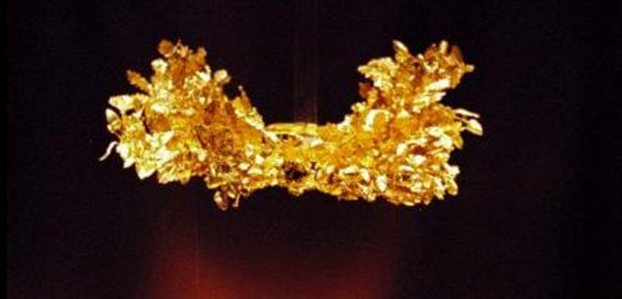
After all, the difference between an ancient object and a modern work of art is telling, since a work of painting or sculpture was produced to be sold, unlike antiquities, which are excavation findings and were once people's properties. "They are material works, but their status is immaterial," emphasizes Mrs. Kottaridis. "I mean, what could I sell?; A golden ivory piece from Philip's bed;».
According to the existing institutional framework however, the sale of works for the National Gallery (and for modern art museums) it is not prohibitive. However, its director Mrs. Marina Lambraki-Plaka is negative about any possibility of a sale. "Personally, I wouldn't dare. I could never make such a decision, even in a last resort" he declares.

The suggestions
Therefore, the question of financial support for museums remains. Thus, the search for new ways of financing them is imperative. “As a last resort I would ask prospective buyers to “adopt” a project, but leaving it in place, to the museum" suggests Mr. Stampolidis, while flexibility and ingenuity are required for Mrs. Kottaridis: "When the Americans sell the right to participate in an excavation instead 3.000 dollars and when the people of Skopje and the Bulgarians do the same to 1.500 dollars for two weeks, it is clear that what we also need is a new cultural strategy" he says.
She would also "sell" participation in workshops that would manufacture products with the ancient know-how – woven, ceramics, metal works, pictures -, which will then be marketed. Also DVD, games and online applications. But also the networking of archaeological sites to provide more services to visitors. Why don't all these things happen?;
"We are ready for the change of the institutional framework regarding the management of museums" says the general secretary of the Ministry of Culture Mrs. Lina Mendoni. "Because with the current laws, a donation may never reach the body for which it is intended, and this because of its registration in the regular budget, and the Archaeological Resources Fund, which has the responsibility of producing copies and other products for the sales, it is outdated a long time ago" she admits.
"A necessary condition is to break the taboos and institutions of the TAP and to take into account’ considering the logic of the market" concludes Mrs. Mendoni. And it seems that today this is not only necessary. It is mandatory.

Stacked in warehouses
Small clay lamps, evenly between them, by the hundreds. Fragments of vessels by the thousands. Forcedly piled up in the warehouses of museums or the Ephoria of Antiquities, many finds of the excavations that do not present a special archaeological interest remain in disuse. Their concession is prohibited, despite the proposals that have been made to sell or donate them to museums, educational institutions and in general to foreign bodies that promote ancient Greek culture.
"There is no reason for them to be sold because their economic value is not such as to solve a problem. On the contrary, and the smallest of them has its special importance for scientists" says archaeologist Mrs. Angeliki Kottaridis. For Professor Mr. Nikos Stampolidis, however, are an opportunity to promote the country: “They can be sold or donated, provided, however, that they bring her details “identity” them and that they will be exposed in public areas. Because in this way they could be a part of our cultural heritage in another place".

Source : tovima.gr
Our heritage is not for sale

Reactions to the practice of the Thyssen-Bornemisza museum to auction a project to finance its needs

You would sell a museum's work to deal with its financial problems; The question for a country like Greece, whose multitude of museums are devoted to the preservation and promotion of antiquities, it could only be hypothetical. How would it be possible to hammer her cultural heritage… Some things anyway, even in times of complete collapse of values, remain high.
The director of the great Spanish museum Thyssen-Bornemisza did, however. His excuse is serious, since the museum is facing a problem of survival, which intensified with the financial crisis. But his act is also daring, after handing over one of the paintings in his collection to be auctioned by Christie's. Similar action in Greece would be hard to imagine. Not only with regard to the sale of antiquities and more generally of works and objects that have been classified as monuments, because this is expressly prohibited by the Constitution and the Archaeological Law, but also contemporary works, which can be freely traded.
On the other, American museums have been selling their works for years for various reasons. The essential difference with Spain is that for the first time, at least admittedly, this move is due to financial difficulties. Regardless of whether the work of the romantic landscape painter John Constable reaches the asking sum of 21 million. sterling, the director of Thyssen-Bornemisza opens a window sealed well to this day, regarding the management of museums internationally.

Intangible heritage
“Even if it was allowed by law, even if I had permission to do so, I would never sell a work of the museum" answers the question professor Mr. Nikos Stampolidis, director of the Museum of Cycladic Art, one of the few private archaeological museums in the country. “Only over my dead body!» is the reaction of Dr. Angeliki Kottaridis, which as head of IZ’ The Ephorate of Antiquities is responsible for the Museum of the Royal Tombs of Vergina, the archaeological museums of Pella and Veria, as well as the Byzantine Veria.
After all, the difference between an ancient object and a modern work of art is telling, since a work of painting or sculpture was produced to be sold, unlike antiquities, which are excavation findings and were once people's properties. "They are material works, but their status is immaterial," emphasizes Mrs. Kottaridis. "I mean, what could I sell?; A golden ivory piece from Philip's bed;».
According to the existing institutional framework however, the sale of works for the National Gallery (and for modern art museums) it is not prohibitive. However, its director Mrs. Marina Lambraki-Plaka is negative about any possibility of a sale. "Personally, I wouldn't dare. I could never make such a decision, even in a last resort" he declares.

The suggestions
Therefore, the question of financial support for museums remains. Thus, the search for new ways of financing them is imperative. “As a last resort I would ask prospective buyers to “adopt” a project, but leaving it in place, to the museum" suggests Mr. Stampolidis, while flexibility and ingenuity are required for Mrs. Kottaridis: "When the Americans sell the right to participate in an excavation instead 3.000 dollars and when the people of Skopje and the Bulgarians do the same to 1.500 dollars for two weeks, it is clear that what we also need is a new cultural strategy" he says.
She would also "sell" participation in workshops that would manufacture products with the ancient know-how – woven, ceramics, metal works, pictures -, which will then be marketed. Also DVD, games and online applications. But also the networking of archaeological sites to provide more services to visitors. Why don't all these things happen?;
"We are ready for the change of the institutional framework regarding the management of museums" says the general secretary of the Ministry of Culture Mrs. Lina Mendoni. "Because with the current laws, a donation may never reach the body for which it is intended, and this because of its registration in the regular budget, and the Archaeological Resources Fund, which has the responsibility of producing copies and other products for the sales, it is outdated a long time ago" she admits.
"A necessary condition is to break the taboos and institutions of the TAP and to take into account’ considering the logic of the market" concludes Mrs. Mendoni. And it seems that today this is not only necessary. It is mandatory.

Stacked in warehouses
Small clay lamps, evenly between them, by the hundreds. Fragments of vessels by the thousands. Forcedly piled up in the warehouses of museums or the Ephoria of Antiquities, many finds of the excavations that do not present a special archaeological interest remain in disuse. Their concession is prohibited, despite the proposals that have been made to sell or donate them to museums, educational institutions and in general to foreign bodies that promote ancient Greek culture.
"There is no reason for them to be sold because their economic value is not such as to solve a problem. On the contrary, and the smallest of them has its special importance for scientists" says archaeologist Mrs. Angeliki Kottaridis. For Professor Mr. Nikos Stampolidis, however, are an opportunity to promote the country: “They can be sold or donated, provided, however, that they bring her details “identity” them and that they will be exposed in public areas. Because in this way they could be a part of our cultural heritage in another place".

Source : tovima.gr

Paleologos – Mitrogiannis : How Mazonakis provoked the marriage proposal!

Tatiana Stefanidou hosted Alexandra Paleologos on the show "Mila". The actress spoke, including, for her marriage to Vangelis Mitrogiannis, but also for their best man, George Mazonakis.

Referring to her husband, with whom they knew more than ten years before they finally became a couple, the protagonist of the series "Kings" stated: "We were not stuck (before the relationship). And I don't think either of them had that in mind. Everyone had a life, his relationships… We had not thought about it ", while when asked if one is jealous of the other, he replied: "It simply came to our notice then, I am very relaxed. My husband is not jealous either, and he is relaxed ".

Alongside, revealed how the marriage proposal was made: "No official proposal was made with a single stone and such… We had in mind to happen and we had gone out one night with George Mazonakis and he asked us when we would get married and so it turned out".

Source : yupi.gr

7-fast manual transmission from BMW

The German automaker may not officially announce it, but rumors and spy photos want it to develop a manual transmission 7 relations.

After the last generation of Porsche 911 which is also the first car in the world with a manual transmission 7 relations, BMW is next. The company may not announce it officially, however, photos have been leaked online that want her to develop said technology. It is still unknown in which models we will see the box in question, and when, but sources say that BMW is looking very closely at the case of incorrect gear changes, which can prove disastrous.

For this reason, and because when you have to manage many relationships in fast driving the mistake is not long in coming, the company is developing a system that will use a special type of fluid, which will harden or soften, allowing the driver specific changes and avoiding the error! This technology will even be able to be used in a manual transmission up to 8 relations

Source :  autotriti.gr

In Ceramic: Dreams and nightmares with Angela

The work of George Sevastikoglou, written before 55 years, ENKE fesolar uploads, in a yard, before sunset

Migration. Athens of today. Losses. Angela arrives from her village with a suitcase dreams of working maid. The fate of the classes. The mastrian, the sepsis, the folk blues, Italian cinema, a Greece fighting. Memorandums and judgment. Deadlock. Courtyard and history. Basement. DREAMS GOOD IN DUVARY 1×1. Survival and futility. Insecurity, a’ a place where people catch a arm only on Sundays.
"OR ”Angela” It is Greece that fights between dreams and nightmares, "says EKE Fezolari, who directs George Sevastikoglou's flagship work, "Angela", in a courtyard in Kerameikos (Ceramic 28) From today. The show is played before sunset, with food and drink to be allowed, like a summer cinema, as a Greek feast, with natural light in a courtyard in the city center, at 20.00, While the Athenian sun gives the city its most beautiful colors… George Sevastikoglou with "Angela", expresses the "new reality that came from the civil war and formed the petty bourgeois society and theater in post -war Greece…»

In a closed society suffering from poverty and delinquency, Angela dares and falls in love. Falls in love with the weak, the poor man, the 'pure' Lambro. It upsets its unconventional character against Stratos's establishment. Angela is right in the right. Defends girls' rights, of Lambro, of Tasia. Is looking for the truth that will redeem them. Is not afraid, does not mourn and does not sprinkle. Rebelled. Are on the side of the weak, As all revolutionaries are, But her love arrives to go against a whole society.

By closing them 55 (was written the 1957), Middle the "Angela" now, How can he contact Greece today, of the crisis and the memorandums; "OR ”Angela” is modern because it affects the adversity of life, Not only because of the poverty of money but also social values ​​and laws, ”EKE Fezolari replies. 'In the face of Stratos we recognize the looting of the state, the exploitation of human rights, The sabotage and the nonsense of our own political system ».

"Angela" reminds us, according to him, 'How nothing should be considered self -evident. Life is won with small daily battles. Angela fights for our lost dignity, our forgotten ideals, our trampled dreams, and for the love we left because it was difficult… Symbolizes cleaners and migrants, But mostly all of us who are struggling for a better life against vulgarity and today's impasses, in memorandums and in huts, looking for in vain a light of light ».
What is his "Angela"; 'Angela is Athens, is Mama Roma, is Melina, It is Greece that is pulsating, struggling. Between the folk song, In Derie and Seva with Bellou and Kazantzidis sounds, but also in the rock 'n’ roll? and from the beaches of Attica, the moons in Sounio to the current degraded center of Metaxourgio, Next to red lanterns and bought dreams ».

For a hometown
«1950. A Greece that is chilled. Trying to heal her wounds, survive to dream again, an ideal. 2012. The story repeats. The project is played again with new protagonists… Angela arrives from her village in Athens for a better life. DREAMS that crumble from poverty, hypocrisy and exploitation. Slave in other, struggles to resist. He lives the doomed love. But somewhere there is a hope hiding: ”will live;”… A performance in the center of Athens, For the center of Athens. Made with sensitivity and love for a homeland that is unraveling ». Vicky Papadopoulou (Angela)

THE RATES
The direction of the show is signed by EKE Fezolari, The editing of the stage space and the costumes are by Daphne Koutra and the movement of joy Kotsali. Song: Lola Giannopoulou. In the role of Angela Vicky Papadopoulou. They play: Helen Vergetis, Kostis Kallivretakis, Vassilis Margetis, Constantine Moraitis, Iris Pantazara, Konstantina Takalou, Kalliopi Tzerman.

Source : ethnos.gr

In Ceramic: Dreams and nightmares with Angela

The work of George Sevastikoglou, written before 55 years, ENKE fesolar uploads, in a yard, before sunset

Migration. Athens of today. Losses. Angela arrives from her village with a suitcase dreams of working maid. The fate of the classes. The mastrian, the sepsis, the folk blues, Italian cinema, a Greece fighting. Memorandums and judgment. Deadlock. Courtyard and history. Basement. DREAMS GOOD IN DUVARY 1×1. Survival and futility. Insecurity, a’ a place where people catch a arm only on Sundays.
"OR ”Angela” It is Greece that fights between dreams and nightmares, "says EKE Fezolari, who directs George Sevastikoglou's flagship work, "Angela", in a courtyard in Kerameikos (Ceramic 28) From today. The show is played before sunset, with food and drink to be allowed, like a summer cinema, as a Greek feast, with natural light in a courtyard in the city center, at 20.00, While the Athenian sun gives the city its most beautiful colors… George Sevastikoglou with "Angela", expresses the "new reality that came from the civil war and formed the petty bourgeois society and theater in post -war Greece…»

In a closed society suffering from poverty and delinquency, Angela dares and falls in love. Falls in love with the weak, the poor man, the 'pure' Lambro. It upsets its unconventional character against Stratos's establishment. Angela is right in the right. Defends girls' rights, of Lambro, of Tasia. Is looking for the truth that will redeem them. Is not afraid, does not mourn and does not sprinkle. Rebelled. Are on the side of the weak, As all revolutionaries are, But her love arrives to go against a whole society.

By closing them 55 (was written the 1957), Middle the "Angela" now, How can he contact Greece today, of the crisis and the memorandums; "OR ”Angela” is modern because it affects the adversity of life, Not only because of the poverty of money but also social values ​​and laws, ”EKE Fezolari replies. 'In the face of Stratos we recognize the looting of the state, the exploitation of human rights, The sabotage and the nonsense of our own political system ».

"Angela" reminds us, according to him, 'How nothing should be considered self -evident. Life is won with small daily battles. Angela fights for our lost dignity, our forgotten ideals, our trampled dreams, and for the love we left because it was difficult… Symbolizes cleaners and migrants, But mostly all of us who are struggling for a better life against vulgarity and today's impasses, in memorandums and in huts, looking for in vain a light of light ».
What is his "Angela"; 'Angela is Athens, is Mama Roma, is Melina, It is Greece that is pulsating, struggling. Between the folk song, In Derie and Seva with Bellou and Kazantzidis sounds, but also in the rock 'n’ roll? and from the beaches of Attica, the moons in Sounio to the current degraded center of Metaxourgio, Next to red lanterns and bought dreams ».

For a hometown
«1950. A Greece that is chilled. Trying to heal her wounds, survive to dream again, an ideal. 2012. The story repeats. The project is played again with new protagonists… Angela arrives from her village in Athens for a better life. DREAMS that crumble from poverty, hypocrisy and exploitation. Slave in other, struggles to resist. He lives the doomed love. But somewhere there is a hope hiding: ”will live;”… A performance in the center of Athens, For the center of Athens. Made with sensitivity and love for a homeland that is unraveling ». Vicky Papadopoulou (Angela)

THE RATES
The direction of the show is signed by EKE Fezolari, The editing of the stage space and the costumes are by Daphne Koutra and the movement of joy Kotsali. Song: Lola Giannopoulou. In the role of Angela Vicky Papadopoulou. They play: Helen Vergetis, Kostis Kallivretakis, Vassilis Margetis, Constantine Moraitis, Iris Pantazara, Konstantina Takalou, Kalliopi Tzerman.

Source : ethnos.gr

Volvo is preparing a compact SUV

The compact premium SUV sub-segment is on fire, and Volvo doesn't intend to stay out of the game for much longer., as he prepares the smallest member of the XC "family"., the XC30.
Premium downsizing

When the 2004 BMW launched the X3, the "descent" of premium companies into smaller and smaller categories of leisure vehicles began, something that continued with the X1. "Premium downsizing" is not only about SUVs, but in all categories of vehicles, as prestigious companies have no reason not to expand their buying public. Even Porsche, which surprised many when it presented the Cayenne, it was such a success that it is now feverishly preparing a smaller model, the Cajun. The Audi, also, started from Q7, continue with Q5, followed by the Q3 and has the even smaller Q1 in the works.

The XC30 and the competition
The same applies to Volvo, which after the large XC90 and XC70 and the medium XC60, is preparing their small and medium-sized "little brother"., the XC30. The car will compete with the BMW X1, Audi Q3 and Range Rover Evoque, but also the Mercedes GLC and Saab 9-4X, when they go into production.

The information so far
The news has been circulating for some time that the Swedish brand is preparing the five-door version of the C30. The logic, Well, says that this model will be relied upon by the Volvo people to build its crossover variant, the XC30. The first data indicate that its total length will be at 4.350 mm., while it is said that it will have both two-wheel drive and four-wheel drive versions. All this is not just rumours, as the CEO of Volvo himself, Mr. Stefan Jacoby, told the British press that the development of the Volvo XC30 is now a priority for the company. It is still too early to know the detailed technical data of the car, but the relevant sources state that from a technical point of view it will be based on the C30, while in terms of design it will also carry elements from the larger XC60.

When do we expect it?;
In each case, the final form of the car is not expected to be seen before its second half 2013. Until then, you are one of the lucky ones, as we exclusively have espionage at our disposal, digitally edited photo of the car.

Source : autotriti.gr

our breath, Your review