More articles at source.
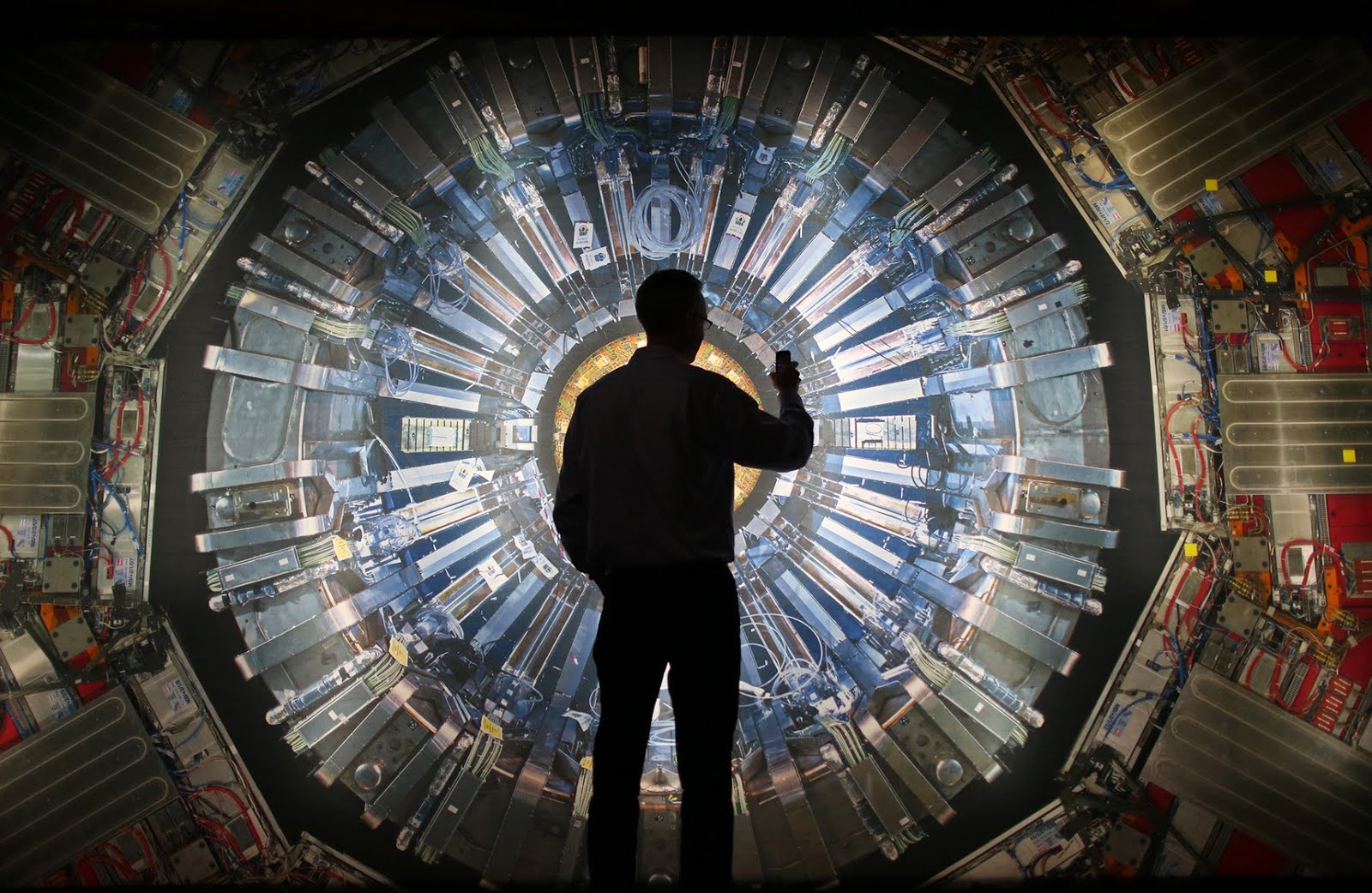
Columbia University Physics Professor Michael Tuts speaks to the audience Thursday 27 April 2017 and time 19:30 at the Eugenides Foundation Amphitheater. At the invitation of the Columbia University alumni association in Greece, professor Michael Tuts will give a single talk with a central axis three questions: -Why are we interested in the Higgs boson?; -How they discovered it 6.000 scientists at CERN; -What is the next step; Professor Michael Tuts' research focuses on High Energy Experimental Physics. He headed the US research team that participates in the ATLAS experiment, one of the 4 main experiments implemented at the Large Hadron Collider (LHC) at CERN. In addition to theoretical research, Michael Tuts reaches out to the general public and explains abstract and difficult scientific concepts in an understandable way. This will be followed by the screening of the digital show: "Phantom of the Universe" in the New Digital Planetarium. There will be two performances (by Dimitra Papanastassopoulou is published by Dioptra Publications 20:45 and 21:30). From the 'speed race' of protons at the world's largest particle accelerator at CERN to the Big Bang and the 'emerging' Universe, but also the descent to’ a basement in South Dakota, almost 1.500 m below the Earth's surface, the show will introduce viewers to the multifaceted research on dark matter. Entry to the event is free.
Columbia University Physics Professor Michael Tuts speaks to the audience Thursday 27 April 2017 and time 19:30 at the Eugenides Foundation Amphitheater. At the invitation of the Columbia University alumni association in Greece, professor Michael Tuts will give a single talk with a central axis three questions: -Why are we interested in the Higgs boson?; -How they discovered it 6.000 scientists at CERN; -What is the next step; Professor Michael Tuts' research focuses on High Energy Experimental Physics. He headed the US research team that participates in the ATLAS experiment, one of the 4 main experiments implemented at the Large Hadron Collider (LHC) at CERN. In addition to theoretical research, Michael Tuts reaches out to the general public and explains abstract and difficult scientific concepts in an understandable way. This will be followed by the screening of the digital show: "Phantom of the Universe" in the New Digital Planetarium. There will be two performances (by Dimitra Papanastassopoulou is published by Dioptra Publications 20:45 and 21:30). From the 'speed race' of protons at the world's largest particle accelerator at CERN to the Big Bang and the 'emerging' Universe, but also the descent to’ a basement in South Dakota, almost 1.500 m below the Earth's surface, the show will introduce viewers to the multifaceted research on dark matter. Entry to the event is free.