Robots are taking the places of the poor

Income inequality soared from 2010-2015 between him 20% of the wealthiest households and the 20% of the poorest in the US. The gap between the two categories has grown rapidly by 29.200 dollar. annually on 189.000 dollar. the space between it 2010-2015, according to an investigation by the Bloomberg news agency. But of great interest is the fact that income inequality has widened due to the phenomenon of automation that has eliminated jobs, low-skilled workers. Computers and robots tend to replace low-skilled workers, while on the contrary, they act as complements for highly skilled workers. According to Sand Sparber, associate professor and head of the department of economics at Colgate university "new technological findings have contributed to the replacement of low- and medium-skilled workers, while they act as a supplement for workers in very highly skilled industries".
But this radical change may continue. According to research published last March by PwC, the 38% of US jobs is at risk of being automated by its beginnings 2030. In fact, said research points out that in the US, the risk of automation is greater than in Britain. Indicatively, the financial and insurance industry in the US will undergo greater changes than in Britain, since the workers in Geraia Albion have a higher level of expertise in the financial industry. However, the industries in the US most exposed to the risk of automation are trade, transport and processing, as the level of workers in these industries is lower. Companies' habit of hiring part-time workers widens income inequality. The three US regions with the greatest inequality between households are in California (San Jose, San Francisco), in Austin and Seattle.
The 4 strongest 4 cylinder on the planet

Once upon a time, it was a big deal when any car broke their barrier 300 horses. Now it seems almost any performance car can hit that range – even with four cylinders under the hood.
His GIANNI Tsirogiannis (gt@newsauto.gr)
The wonders of the supercharger, direct fuel injection and variable valve timing allow engineers to extract huge amounts of power from smaller engines, than ever before. Here we've singled out the four most powerful 4-cylinder cars available on the US market.
Mercedes-Benz AMG A45
AMG's model hides the world's most powerful four-cylinder production engine. If you are in Europe, you can also get this motor on the A45. When AMGs started to become available 45, they caught the impressionable easily 355 horsepower in performance. The engineers showed the fuse again when they renewed the cars. We're certainly not complaining.
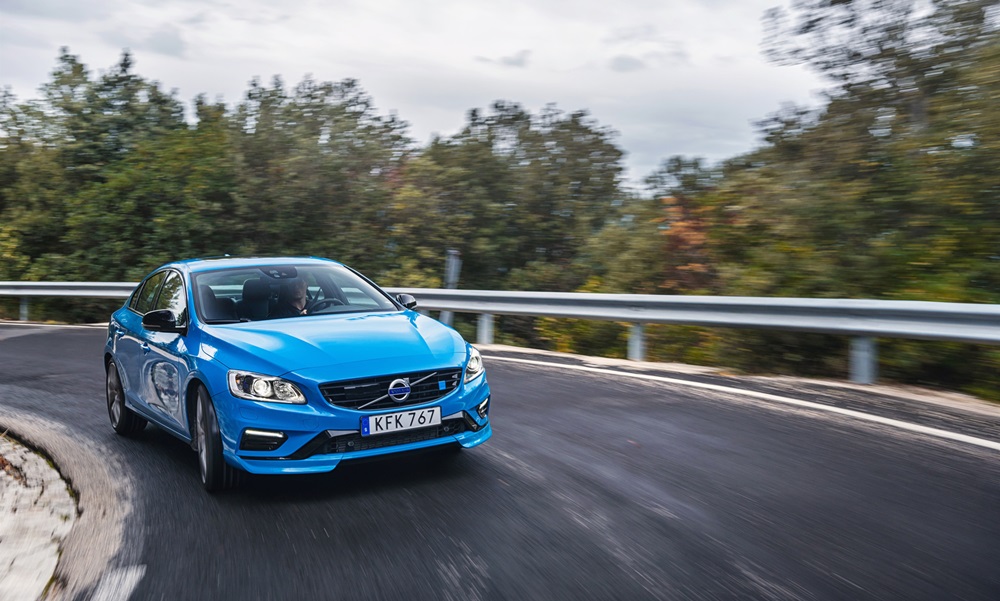
Volvo S60/V60 Polestar
Painted in the brand's signature blue, the Polestar versions of the S60 and V60 immediately stand out. Most of the time, Nevertheless, it's a blue flash, which crosses the former 100 km/h in just 4,4 sec. Wormwood, fast and extremely capable, thanks to the properly adjusted suspension and the Brembo brakes. Polestar twins are among the favorite cars with "tabletop" performance.

Suzuki Swift Sedan Revealed

Suzuki presents the new Dzire. This is a new version of the Swift that comes to be placed in the category of compact sedan models.
Η Maruti Suzuki, as the branch of the Japanese brand operating in India is called, reveals to us the new Dzire that will be available in the local market and some more in Asia.
The new Dzire is essentially the sedan version of the new generation Suzuki Swift. So, it rides on the same new platform and shares all mechanical parts. The well-known atmospheric engine takes care of the movement of the model 1,2 liters with 83 horsepower and a diesel at 1.300 cubic centimeters with 75 horses (the company does not have a diesel engine in the range of the new Swift).
End, the image and interior of the model are familiar, while Suzuki does not currently mention how much larger the luggage compartment is compared to the hatchback version.

If Porsche made a motorcycle…

We present the project to you… high voltage “618”.
Before you get excited let us tell you that this is not an official Porsche project, but an idea of ​​the Spanish designer Miguel Angel Bahri.
It bears the title 'Porsche 618’ and influences from the models 911 turbo, 918 and 919 and belongs to the electric two-wheelers. Although as the years go by we will see more and more of these - something that happens with cars too- there is nothing to suggest that Porsche intends to enter motorcycle production, immediately at least.
However, this concept helps you envision the future.
Read more at Homme.gr.

5 "strange" specialties in the Automotive Industry

In our everyday life, we get in our car and head to our destination or enjoy driving the way we all do. We rarely think about how many specialties are required to create the vehicle we have acquired and we almost never imagine that among them there are some "strange" or "unexpected" ones.. We present you 5 specialties that you didn't imagine were hiding behind your car, before it is produced.

The creator with clay
The body of each new mass-produced model is first made with clay, in natural size, to ascertain its proportions and details and make the necessary changes. It may seem simple but it is not at all. It is estimated that for this preform of each new model are required -on average- about 2,5 tons of clay and 10.000 hours of work from the team of sculptors who will shape the final shape.
The tailor
Hand-built cars or customized versions of some of the mass-produced models require skilled workers who know their job very well and have talent in their field. One of them is the tailor who will undertake to check the quality of the fabric or leather with which he will dress the interior of a vehicle according to the customer's wishes. The hand or machine stitching they handle must be flawless and it is estimated that they need approx 30 meters of suitable thread to complete each vehicle. Their work takes time, to get it right.

Continue at source ...

Digital transformation is changing Greek banks

More Articles at Source.
In a time horizon of about three years from today, the results of the digital transformation of Greek banks will be visible throughout the structure of financial institutions. This was emphasized by staff members from the four systemic banks, in a discussion organized in its context 4 digital finance forum.   In the panel in which Stefanos Mytilineos participated, deputy general manager of Electronic Business of Piraeus bank, Sotiris Sirmakezis, general manager, Group Chief Digital & Technology Officer της Eurobank, Damianos Charalambidis, Acting General Manager, Chief Digital Officer and Retail Banking Products of Alpha Bank and Nikos Christodoulou, general manager of Operational Support of the National Bank and the Group, common was the finding that the digital transformation of banks and the cooperation between them to achieve this goal, it can have generally positive effects on the economy and society.   Alongside, the speakers pointed out the great importance for the successful outcome of the project that the support of employees of every level will have in this effort, with the correct distribution of roles and responsibilities and of course, education.
Regarding the use of alternative banking channels (internet, mobile banking) but also the use of electronic payments, it was pointed out that despite the big boost given due to the imposition of capital controls – and continues in its first trimester 2017 – there is still considerable distance to cover in relation to other European countries.
All managers mentioned the importance of 'trust'’ of the customer base in the institution of banks in general, which will have a decisive role in the new era of competition that opens up more widely in the provision of financial products and services and in which companies participate, fintech (use of new technologies in the financial industry) etc.
More generally at the conference it was pointed out that with the financial sector entering an era of differentiated and more customer-centric services, the use of new solutions and infrastructures is also necessary, that will enable banks and insurance organizations to offer this new generation of services. Big data, Internet of Things, cloud services, are just some of the terms that have now entered the financial sector for good, such as, of course, the issue of information systems security, which is very high on all priority lists.
The infrastructure required includes products and solutions, both from the hardware and business software side, and more generally are considered key to the next generation of services to be offered by companies in the financial sector, while at the same time helping to improve the experience provided to customers, as well as in reducing operating costs.
As pointed out, the widespread use of digital technologies in the field of banking services, it doesn't mean the brick-and-mortar store is headed for abolition. On the contrary, digital technologies are coming to offer extensive possibilities in terms of improving the customer experience within a radically changing banking, offering more options.
In GREECE, banks are starting to adopt this new approach and the first stores where digital technologies are starting to be used to offer a different level of service to consumers, are starting to make their appearance, was emphasized during the discussion.

How to make cool strawberry fridge dessert

Connecting to the source…
There is no better way to welcome May than with a cool dessert that will remind us of summer; If you were looking for a dessert for the tables you will organize from now on, you just found it. The next good news is that it includes jelly, strawberries and cream - ingredients that children never resist.   What will you need?   1 bag of strawberry jelly 15 small strawberries 2 glasses of milk (or 400ml) 3 tablespoonfuls of custard powder 2 tablespoons of sugar 200 grams of plant-based pastry cream

Digestive biscuits for serving
What should you do?   Step 1   Dissolve the jelly with a glass of boiling water and add another glass of cold water. Leave it in the fridge for 45 minutes.   Continue here…